The next time you run into your state representative or senator, ask about his or her health care coverage. It’s not a personal question because there’s an excellent chance you’re paying for his health care, along with his spouse’s.
And if your representative or senator remains on the state payroll for 10 years or more, you’ll be paying for his health care coverage as long as you both shall live because the state, unlike most employers, continues to pay the full cost of health insurance for its retirees and, need I add, their spouses.
It’s one of the interesting issues raised during the primary campaign by Republican gubernatorial candidate Oz Griebel, who suggested, but didn’t make enough of, the need to rethink how the state provides benefits to retirees.
Griebel had a significant issue here but he raised it at the start of the Fourth of July weekend and the story was picked up only by the CTMirror and another online outlet. It richly deserves further airing once the candidates for governor are determined. We’ll see.
At present, all public employees with a minimum of 10 years’ state service qualify for full health benefits when they retire — not just regular state employees, but also everyone elected or appointed to various commissions or agencies.
To be eligible, an individual has to work more than half time, which sort of qualifies legislators who are in session for three months in even numbered years and five months in odd numbered years. This isn’t exactly more than half time, but it is fair to point out lawmakers are on call for committee work, special sessions and constituent services and requests all year. They also receive part-time pay, $28,000 to the rank and file and up to $38,000 for leaders.
But it’s also fair to point out this schedule doesn’t prevent about 70 percent of the 187 members of the General Assembly from working at other jobs, many with law firms and other companies that are quite pleased to have them informally representing the firms’ interests in Hartford.
Three House members work for state employees’ unions, as did Speaker Christopher Donovan, even while he was Democratic majority leader. He quit after becoming speaker to keep opponents from using his union job “as a reason to put into the public eye questions about my motivations,†he once explained.
The state’s pathetic ethics rules allow these legislators to vote on bills that affect their other professions and even their employers, as long as the legislation doesn’t specifically benefit them.
Nearly half of the General Assembly’s current members have served long enough to collect lifetime health benefits when they retire. Of course, they and hundreds of former legislators hardly make a dent in the ranks of state employees currently enjoying retirement without the burden of paying for health insurance. According to the state comptroller, the state presently provides insurance coverage for 42,000 retirees and their spouses at an average cost of $13,400 per person.
Griebel, who has been running a poor third in the three-way race for the Republican gubernatorial nomination, sees starting with members of the General Assembly as a first step in changing the way the state provides retirement benefits for its employees.
He chose legislators because, he told CTMirror reporter Jacqueline Rabe, “he routinely hears stories how legislators are motivated to seek re-election because of the retiree health benefits they are entitled to after 10 years.
“You’ll hear statements of, ‘I have to serve one more year to qualify for the health care benefits,’†Griebel said.
“One More Year for Health Care Benefits.†Not exactly bumper sticker material.
Dick Ahles is a retired broadcast journalist from Simsbury. He can be reached by e-mail: dahles@hotmail.com.


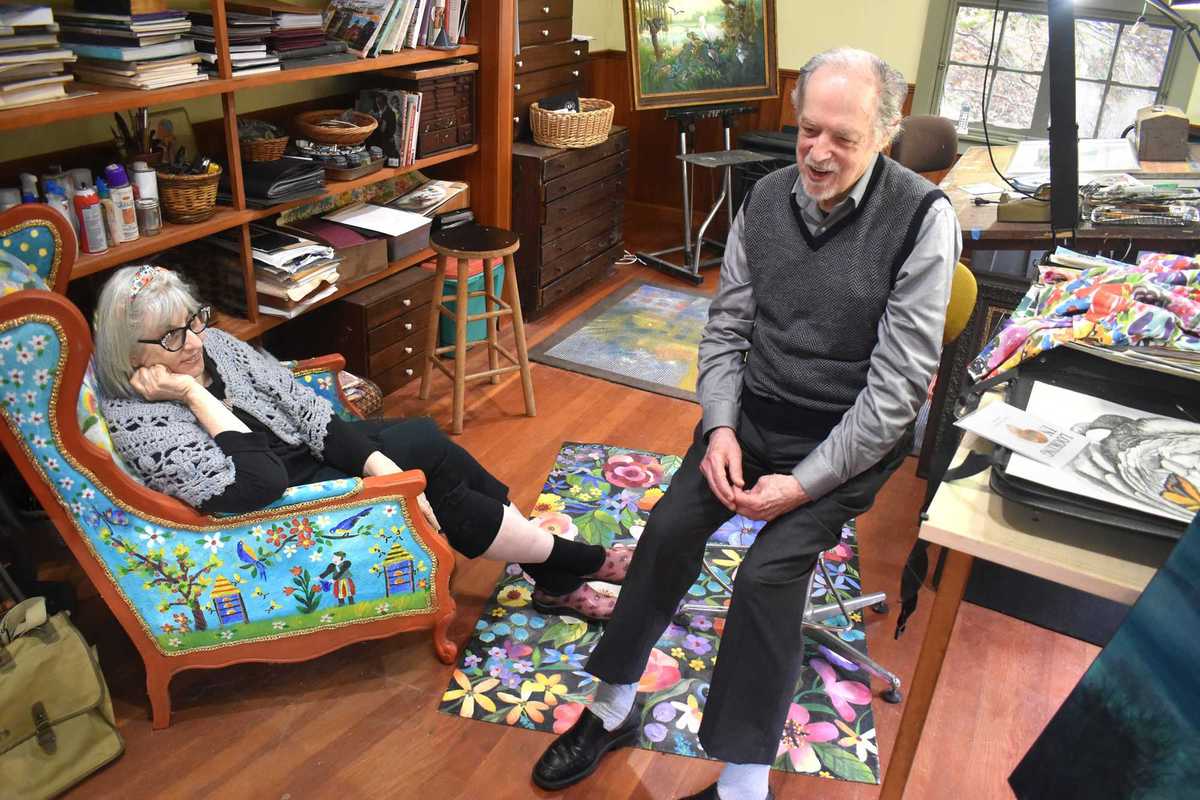
 Justine and Victor Valla in their studio with a painting of Victor’s,”Jonah and the Whale.” Robin Roraback


 A ceramic vase by Kathleen Heidemann.Provided
  Joy Brown’s delightful ceramic sculptures.Provided