Latest News
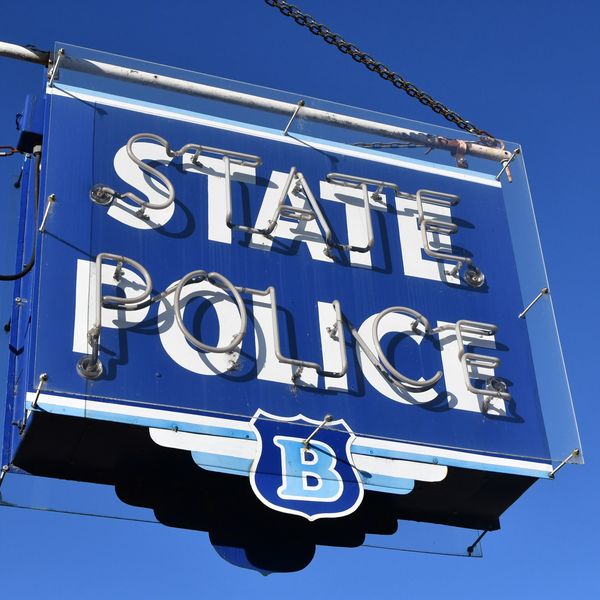
Police Blotter: Troop B
Feb 04, 2026
Police Blotter: Troop B
The following information was provided by the Connecticut State Police at Troop B. All suspects are considered innocent until proven guilty in a court of law.
Salisbury slide out
On the morning of Jan 25, Neve Kline, 18, of Salisbury was driving south on Salmon Kill Road in Salisbury when she lost control of the vehicle while rounding a curve on the snowy road. The Subaru Outback she drove struck a utility pole and sustained disabling damage, and Kline sustained minor injuries and was transported to Sharon Hospital by Salisbury EMS. Kline was ultimately issued an infraction for traveling too fast for conditions.
Two truck collision on Route 44
Around noon on Jan. 26, Deforest Benjamin, 62, and Barrett Wiltsie, 65, both of Cornwall Bridge, were plowing a driveway in a company Ford F-250 Super Duty on Route 44 in Norfolk when they backed into the roadway. While doing so, an oncoming Chevrolet Silverado K1500 struck the rear of the truck. The driver of the Silverado, Richard Peppe, 64, of North Canaan, and a passenger, Daniel Peppe, 31, of Pittsfield, Massachusetts, were transported to Charlotte Hungerford Hospital for possible injuries. Benjamin was issued a written warning for unsafe backing for the incident.
Single car accident on snow-packed road
Just before 6 a.m. on Jan. 27, Victoria Grosclaude, 24, of Colebrook was driving west on Route 182 in Norfolk when she slid off the snowy road and into the wire rope guardrail. She was uninjured in the incident but her Subaru Crosstrek was disabled and had to be towed from the scene. The investigating officer issued Grosclaude an infraction for traveling too fast for conditions.
Snowy road accident
On the afternoon of Jan. 27, Keith Bodwell, 43, of West Cornwall was driving north on Route 128 near the intersection with Route 125 in Cornwall when he lost control of his vehicle on the slippery roadway. The car slid off the road and into the wire rope guardrail, sustaining disabling damage. Bodwell reported no injuries from the incident. He was issued an infraction for traveling too fast for conditions.
Post office parking lot mishap
Around noon on Jan. 27, Wayne Collier, 73, of Falls Village was parking in the Falls Village Post Office parking lot when his Dodge Ram 1500 struck a neighboring Subaru Crosstrek owned by Karen Toth, 55, also of Falls Village. He left the scene following the incident. The two drivers ultimately exchanged information and Toth requested that no enforcement action be taken.
Sharon rear-end
On the afternoon of Jan. 29, Ross Rosenberg, 84, of Millbrook, New York was attempting to turn left towards Sharon Health Care Center from Route 343 when he was rear-ended by a trailing vehicle, a Jeep Cherokee driven by Illian Lacey, 19, of Rhinebeck, New York. Lacey reportedly did not see Rosenberg’s turn signal. Neither driver was injured, but Rosenberg’s Toyota Corolla had to be towed from the scene. Lacey was issued a warning for following too closely.
Failure to appear arrest
Just after midnight on Jan. 31, Michael Jardine, 42, of Falls Village was arrested by troopers for failure to appear in the second degree. He was released on a $500 cash bond and is scheduled to appear at Torrington Superior Court on Feb. 11.
The Lakeville Journal will publish the outcome of police charges. Send mail to P.O. Box 1688, Lakeville, CT 06039, Attn: Police Blotter, or email editor@lakevillejournal.com
Keep ReadingShow less
Speed readers are not cameras.
Photo by Christian Murray
“When they averaged it out, it came to almost 33,000 citable events a month on just six roads,”
Sharon First Selectman Casey Flanagan
Town leaders across northwest Connecticut are moving cautiously on speed cameras, despite a state law passed in 2023 that allows municipalities to install them.
In town after town, officials say speeding remains a concern on local roads — especially on through roads and in residential areas — but questions about cost, staffing and public support have slowed efforts to move forward.
Supporters of speed cameras argue the technology can slow traffic and improve safety, particularly in communities with limited police coverage. Critics worry cameras could turn small towns into “speed traps,” raise concerns about surveillance, and argue that they disproportionately burden low-income households.
Washington is the only town in Litchfield County to adopt speed cameras so far, and town officials there say the program is showing results.
“Speeds are coming down,” said Washington First Selectman Jim Brinton, since cameras were installed in May 2025. “We had tried everything to change driver behavior, from speed bumps to offering more education. It’s the only option that is showing positive results.”
Elsewhere in the region, the response has been more skeptical.
In Kent, voters overwhelmingly rejected a proposed speed camera ordinance by a 391–100 margin in January 2025.
“I’m concerned about the atmosphere cameras create,” Kent resident Lianna Gantt said during a public hearing before the vote. “Are we turning our town into a speed trap?”
Interviews with the first selectmen in North Canaan, Falls Village, Sharon and Kent — along with responses from officials in Salisbury and Cornwall — show a shared concern about speeding, but little momentum toward adopting cameras. Officials cited cost, the need for staff to review violations, enforcement limits and uncertainty about whether residents would support the programs.
That hesitation mirrors the picture statewide. Since the law took effect, only 11 municipalities across Connecticut have implemented speed cameras.
A new law, but a complicated path
The process for towns to implement speed cameras is extensive and, for many small towns, daunting. Before cameras can be installed, a municipality must adopt a local ordinance authorizing their use and present a traffic enforcement plan at a public hearing. The ordinance is then put before residents at a town meeting or referendum for a vote.
Any approved plan must then be submitted to the Connecticut Department of Transportation for review. Towns must also install camera equipment — a potentially costly step — and complete a mandatory public awareness period of at least 30 days before issuing citations.
After the warning phase, drivers may be fined $50 for a first violation and $75 for subsequent offenses if they are traveling more than 10 miles per hour over the posted speed limit — meaning a camera in a 25-mph zone would not be triggered until a vehicle reaches at least 35 mph. Camera systems are operated by third-party vendors, which provide images of alleged violations to the town for review.
Under state law, each alleged violation must be reviewed and approved by a qualified municipal employee, contracted agent or law enforcement officer before a fine is mailed. Many small towns say this requirement places a heavy administrative burden on limited staff, particularly those without resident state troopers.
Motorists who fail to pay a fine are referred to collections, though they may request a hearing to contest the citation.

Sharon studies cameras after traffic analysis
With Kent having voted down the program, Sharon appears to be the town in the region furthest along in considering speed cameras.
First Selectman Casey Flanagan said the town is studying whether cameras could help address speeding concerns after a traffic study found widespread violations on several local roads.
The study, conducted by Dacra Tech, a traffic enforcement software provider, examined six locations, including Route 41 south of Rhynus Road, as well as Calkinstown Road west of Williams Road.
“When they averaged it out, it came to almost 33,000 citable events a month on just six roads,” Flanagan said. “Some of these numbers are quite staggering.”
The findings raised safety concerns but also highlighted practical challenges. Sharon does not have a resident state trooper to review images, meaning responsibility for evaluating potential violations would likely fall to a town employee.
“We need to figure out who is going to review the pictures and determine whether or not a citation gets mailed out,” Flanagan said.
“That could be me, or we could hire someone and have that be their sole responsibility,” he said.
Flanagan said vendors have told town officials that citation volumes typically decline after cameras are installed as driver behavior changes. Still, he said Sharon is not rushing to a decision.
The town has already implemented other traffic-calming measures, including speed humps on Hilltop Road, though Flanagan said such measures have limited reach.
“We’re very limited in our tools,” he said. “When there’s no local police presence, residents look to the Board of Selectmen for help.”
Whether a speed camera ordinance would pass at a town meeting remains uncertain. Flanagan did not dismiss the possibility, saying it was not out of the question.
North Canaan favors speed feedback signs over tickets
In North Canaan, officials say speeding remains a concern — particularly in residential areas — but cameras are not currently under consideration.
“No one has been asking for it,” First Selectman Jesse Bunce said.
Instead, the town is focused on expanding its use of digital speed feedback signs, which display drivers’ speeds in real time but do not issue tickets. Bunce said the signs have proven effective at slowing traffic.
“For now, this is the direction we’re going,” he said.
North Canaan has expanded its use of the signs through the state-supported Connecticut Speed Management Program and is in the process of installing them along Route 44, near the Green, and on Sand Road, between Falls Village and North Canaan.
The program provides the town with detailed data on vehicle speeds collected at those locations.
“Once we have that data, we can evaluate what to do next,” Bunce said, adding that any move toward speed cameras would require further study and would not happen anytime soon. He also said it is unclear whether residents would support such a proposal.
Falls Village tests, then pulls back
Falls Village explored the use of speed cameras shortly after the 2023 law was passed but ultimately stepped back following a short-term data collection effort.
About 18 months ago, the town installed a temporary speed camera provided by a third-party vendor on Beebe Hill Road for 30 days. The device did not issue tickets and was used solely to study traffic patterns.
First Selectman David Barger said the results challenged assumptions about the extent of speeding in the area.
“We found out the speed was not as great as we thought it was,” Barger said. “It was more perception than reality.”
The town continues to rely on other tools to address speeding, including speed feedback signs, which Barger said remain effective for most drivers.
“For many drivers, they legitimately forget how fast they are going – they may have something on their mind – and speed feedback signs are good,” he said. “But there are some people who will just ignore them and need to be fined.”
Barger said the town explored cameras strictly for safety reasons.
“The only reason we would want speed cameras is for safety,” Barger said. “It would not be a revenue generator.”
Barger said the program would be costly and require additional staff time. Estimates for a two-way camera ranged from $26,000 to $28,000, he said.
Falls Village does not have a resident state trooper to review images, meaning that responsibility would fall to town staff, with Barger saying it might be left to him.
He said the town may revisit the program in the future and would likely study Johnson Road and Sand Road as potential locations.
Salisbury and Cornwall: no immediate plans
Salisbury has no plans at this time to pursue speed cameras, First Selectman Curtis Rand said in an email.
Still, Rand remains open to the concept. Speaking at a January meeting of the Board of Selectmen, he said, “I don’t think anyone is against the concept of a mechanical way of lowering speed.”
Cornwall likewise has no plans in the near term to introduce speed cameras.
Kent: no plans to revisit the program
In Kent, town officials say the issue of automated speed enforcement is settled.
First Selectman Eric Epstein, who took office in November, said there are no plans to revisit speed cameras following last year’s town vote.
“Not going to bring it up,” Epstein said. “The town was very clear. They didn’t want it.”
Washington offers a nearby example
While most towns in northwest Connecticut remain hesitant, Washington offers a nearby example of how automated enforcement has worked in practice.
The town unanimously approved a speed camera ordinance at a meeting in December 2024 and began issuing citations in May, following years of resident complaints and unsuccessful attempts at traditional traffic enforcement.
Since implementation, Washington has issued 13,748 citations totaling about $696,000 in fines, with roughly $525,000 collected as of late January, according to Brinton.
The town reviews images in-house. A constable examines the photos provided by a third-party vendor, a process that now takes about 10 hours per week. Brinton said the workload was far heavier at the outset.
“It was pretty overwhelming at first,” Brinton said. “The sheer volume of citations initially issued caused a lot of struggles.”
While Brinton stopped short of recommending cameras for every community, he said Washington’s experience shows the technology can be effective when tailored to local conditions.
“Every town and every municipality is different,” he said. “But it has worked for us.”
Keep ReadingShow less
Students wore black at Housatonic Valley Regional High School Friday, Jan. 30, while recognizing a day of silence to protest Immigration and Customs Enforcement.
Mia Dirocco
FALLS VILLAGE — In the wake of two fatal shootings involving Immigration and Customs Enforcement agents in Minnesota, students across the country have organized demonstrations to protest the federal agency. While some teens have staged school walkouts or public protests, students at Housatonic Valley Regional High School chose a quieter approach.
On Friday, Jan. 30, a group of HVRHS students organized a voluntary “day of silence,” encouraging participants to wear black as a form of peaceful protest without disrupting classes.
The idea was spearheaded by junior Sophia Fitz, who said she wanted a way for students to express their concerns while remaining in school.
“What really inspired me was that I was feeling very helpless with these issues,” Fitz said. “Staying educated with what’s going on in not only our country but globally can be very stressful as a teenager. Kids right now are feeling very hopeless and want to do something, but don’t know how.”
Teachers Peter Verymilyea and Damon Osora were on board with the idea early on, describing it as a peaceful and respectful way for students to express their beliefs.
Assistant Principal Steven Schibi also backed the effort, emphasizing the importance of student participation.“I think it’s important for us to listen to students,” he said. “And they have to learn how to have a voice in such a way that it’s not disruptive.”
After discussions with Superintendent Melony Brady-Shanley and Principal Ian Strever, school administrators agreed that participation would be optional and that students could choose whether to wear black or not.
Schibi, along with several staff members, participated in the movement by wearing black themselves. Math department chair Kara Jones was among the participating teachers. “Everybody deserves their voice, so I’d rather do the day of silence than everybody stay home,” she said.
Among HVRHS students who supported the protest, at least one cited concern for friends affected by immigration enforcement.
Sophomore Peyton Bushnell said he felt anxious, fearing for the safety of friends and acquaintances. “I think it’s all really messed up,” Bushnell said. “I have a lot of Hispanic friends, and I worry if there’s ICE in Great Barrington, if they came here [and] deported my friends. I can’t even imagine.”
Bushnell said Fitz’s initiative encouraged him to speak more openly about the issue.
Senior Molly Ford echoed that sentiment. “I think it’s a peaceful way to protest and I think it’s the best way to do so,” Ford said.
Many students wore black to show support, and senior Victoria Brooks shared her thoughts on what it meant to her. “It means following along in a form of advocacy alongside other students,” Brooks said.
Some students declined to comment when asked about the protest. Others said they were unaware the protest was taking place. Three seniors interviewed during lunch said they would have participated had they known, calling it a “neat idea.”
Not all students were convinced of the protest’s impact. A group of juniors questioned whether it would make a difference.
“I think that it is good that we’re trying to do something,” one student said. “But I’m not sure how much the silence aspect of it will help, but I think that it’s good that we’re trying.”
Some students questioned the efficacy of the protests, including a group of seniors who offered their opinions. They expressed the belief that the protests were “pointless,” and that President Donald Trump probably didn’t even know that HVRHS existed.
“I just don’t think it’s the best way to go about it. Like, what is us being silent and wearing black gonna do,” one of the seniors said.
Senior Cohen Cecchinato voiced his opposition to the protests in another interview.
“The staying silent, I think, is for the lives that were lost, which I agree with,” Cecchinato said. “But I think that wearing black, like the movement that it’s behind, the people that are putting it into place in our school are doing it because it’s like the ‘F ICE’ movement or the abolish ICE movement, which I think is just wrong.”
Other students said they believed political protests don’t belong in school.
“I just don’t think we should bring politics into school,” one senior said. Another added, “I think it’s causing … a really big divide and people are using it to be advantageous to themselves and their own beliefs.”
However, one senior expressed a sharply critical view of the protest. Senior Ashton Osborne dismissed students who chose to wear black or participate in the demonstration and criticized organizer Sophia Fitz. He also said he strongly supported the federal immigration agency and added that if he were old enough, he would want to work for ICE.
The comments reflected a minority viewpoint among students.
Mia DiRocco, Hannah Johnson and Peter Austin are seniors at Housatonic Valley Regional High School and participants in The Lakeville Journal’s student journalism program, which produces HVRHS Today.
Keep ReadingShow less
Walter Earle DeMelle, Jr.
Feb 04, 2026
LAKEVILLE — Walter Earle DeMelle Jr., 82, of Lakeville, passed away peacefully surrounded by family on Feb. 1, 2026.
He met his loving wife of 57 years, Susan Sullivan DeMelle, in middle school and they were married in Aug. 1968.
Born June 3, 1943, in Worcester, Massachusetts to Walter and Lucille DeMelle, he graduated from Natick High School in 1961 and Hobart & William Smith Colleges in 1965. He taught English at Hawaii Preparatory Academy on the Big Island in the 1960s and earned a Master’s Degree in Library Science at Rutgers University.
He served as Director of the Edsel Ford Memorial Library at The Hotchkiss School from 1970 to 2012, where he vastly expanded the collection, welcomed the surrounding community, and led the school in technological advancement and information literacy. He oversaw a six-fold increase in the library’s capacity, several major renovations, and the recovery from a devastating middle-of-the-night sprinkler system malfunction which had him running like never before (or since) to save as many books as possible. He purchased one of the first Apple computers in the Northwest corner in the early 1980s, and pioneered the expansion of the library’s audiovisual collections, offering music, films and documentaries to the campus and local community.
Walter’s kindness, encouragement and reassurance helped countless students adapt to the rigors of life at Hotchkiss. He co-created the School’s Human Relations and Sexuality program in the 1970s, and taught public speaking. He was an honorary member of the Class of 1976, which created the first endowed fund established by a Hotchkiss class in order to support the development of the resources of the Edsel Ford Library. He was instrumental in developing the School’s Archives, and led an Oral History Project in which he interviewed many of the School’s prominent alumni from the 20th century.
Throughout his career, he served as a consultant to libraries across the United States and globally to guide their renovations and digital transitions from the Dewey Decimal system.
He loved to travel, both professionally and with family, visiting China, Turkey, Europe and the United Kingdom extensively.
Survived by his wife Susan, sons Jeffrey and Brendan, sister Susan Kerrissey, sisters-in-law Nancy Sullivan and Pamela DeMelle, daughter-in-law Christine Rose DeMelle, grandson Luca, best friend Ron Carlson, and extended family. Predeceased by his brother Arthur DeMelle, father Walter and mother Lucille DeMelle.
A Celebration of Life is planned for Summer 2026.
In honor of his life, please consider a donation to East Mountain House, the non-profit end-of-life care home in Lakeville. https://eastmountainhouse.org/donate/
Keep ReadingShow less
loading