CORNWALL — The Cornwall Woman’s Society Rummage Sale is a standout for more reasons than just its wonderfully old-fashioned name. There’s a lot to be said for the treasure- and bargain-hunting potential of a sale when people plan cross-country vacation trips to coincide with the three-day event.
This year’s July 17 to 19 sale will mark its 60th year. It grew from the basement of the UCC Parish House to taking up all available space at the church, Town Hall and Mohawk Ski Area Lodge combined.
With its countless donated items of endless varieties, it has become a sort of sprawling outlet mall of pre-owned items.
For the society members and the countless volunteers who help out, preparing for the sale is a weeks-long process of collecting and sorting donations, and then setting up and cleaning up the sale tables.
A chance to help others
It’s hard work, and requires the society to call on a small legion of helpers. But no one complains; it’s a lot of work but its their only fundraiser.
Proceeds pay for scholarships for Cornwall students and annual donations that go to 17 organizations that serve Cornwall, the region and the world.
“We also keep money on hand to be able to donate when there is a major catastrophe in the world,� said Priscilla Mauro, who agreed to talk about the society and offer a look back on the 60 years she has been involved with the rummage sale.
The Woman’s Society has changed little over the years. Its members meet monthly at the church for tea and talk, and they discuss how they can make a difference. They have kept their focus simple and their approach as stress-free as possible, which has kept members with them for decades and continues to attract new ones.
Mauro ran the sale for at least 15 years. She recalled that at the beginning they raised about $1,000 out of the church basement.
“Last year, we brought in about $23,000.� she said.
Tables made the difference
Besides the aforementioned and the obvious, how else has it changed over the years?
“Tables,� Mauro said. “It may sound a little silly, but the whole approach to the sale changed when we got tables.�
She explained that they couldn’t afford to buy their own folding tables, and those that might be borrowed from elsewhere were always spoken for.
“We used old beds and a sofa that were in the basement to display the sale items. The church had some tables that were so heavy no one could — or wanted to — move them. When they bought new ones, we got the old tables permanently, and we were able to rethink how to do it.�
It was the tables, and the growth of the sale that eventually sent them up to the main floor. (For some reason, men’s clothing was donated in large quantities for a while, and the whole second floor of the parish house was devoted to those garments.)
The sale has grown with the support of people who donated pre-sale storage space in their barns and others, such as Steve O’Neill, who Mauro said has a great eye for antiques.
Overall, it’s the sameness each year of the sale that is part of its appeal. People look forward to it and find it a soothing tradition — even when the weather rebels and it is exceptionally hot or rainy.
After the tornado, sale goes on
But one year in the sale’s history stands out for Mauro and a few others.
It was the evening of Monday, July 10, 1989. Mauro recalls there were five women working in the parish house basement and setting up sale tables. Among them were Thalia Scoville and Jan Tenney, and Mauro’s mother, Doris Hart Cross.
“We had been working a long time and none of us happened to be wearing a watch, so I went upstairs to see what time it was,� Mauro said. “As soon as I opened the door I could feel the compression of the air change. The sky turned from dirty purple to jet black before my eyes.�
Mauro hurried back down, to send everyone home, and to get her mother into her car.
“Everyone else got to their cars and took off. It was all happening so quickly, all I could do was get my mother in and tell her to get down and move the car away from the biggest trees. As soon as I did, the wind hit and we watched it peel all the bark from the trees like peeling bananas. We watched the steeple come down on the church.�
Despite the massive destruction of that tornado, no one was killed or badly injured.
And Mauro said the sale went on as usual that year.
“I remember being very grateful everyone got out of there safely, but that we had a lot of glass to clean up before the sale.�
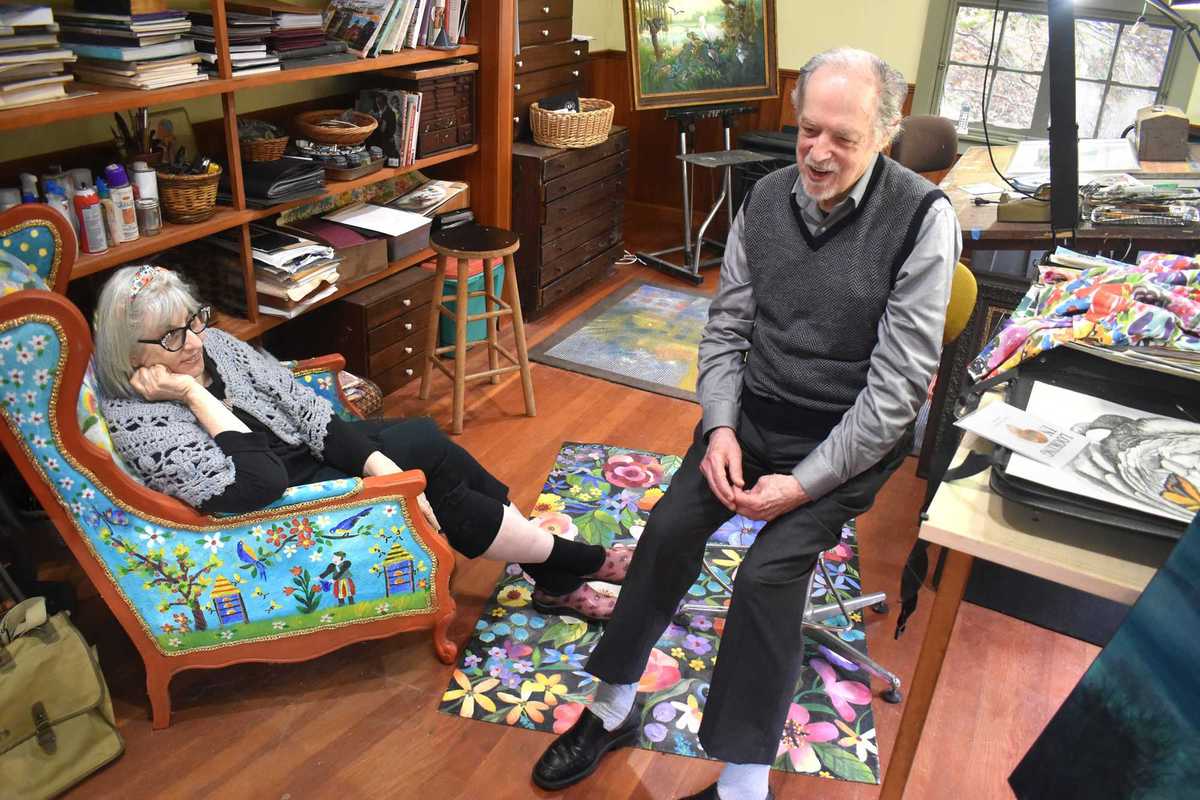
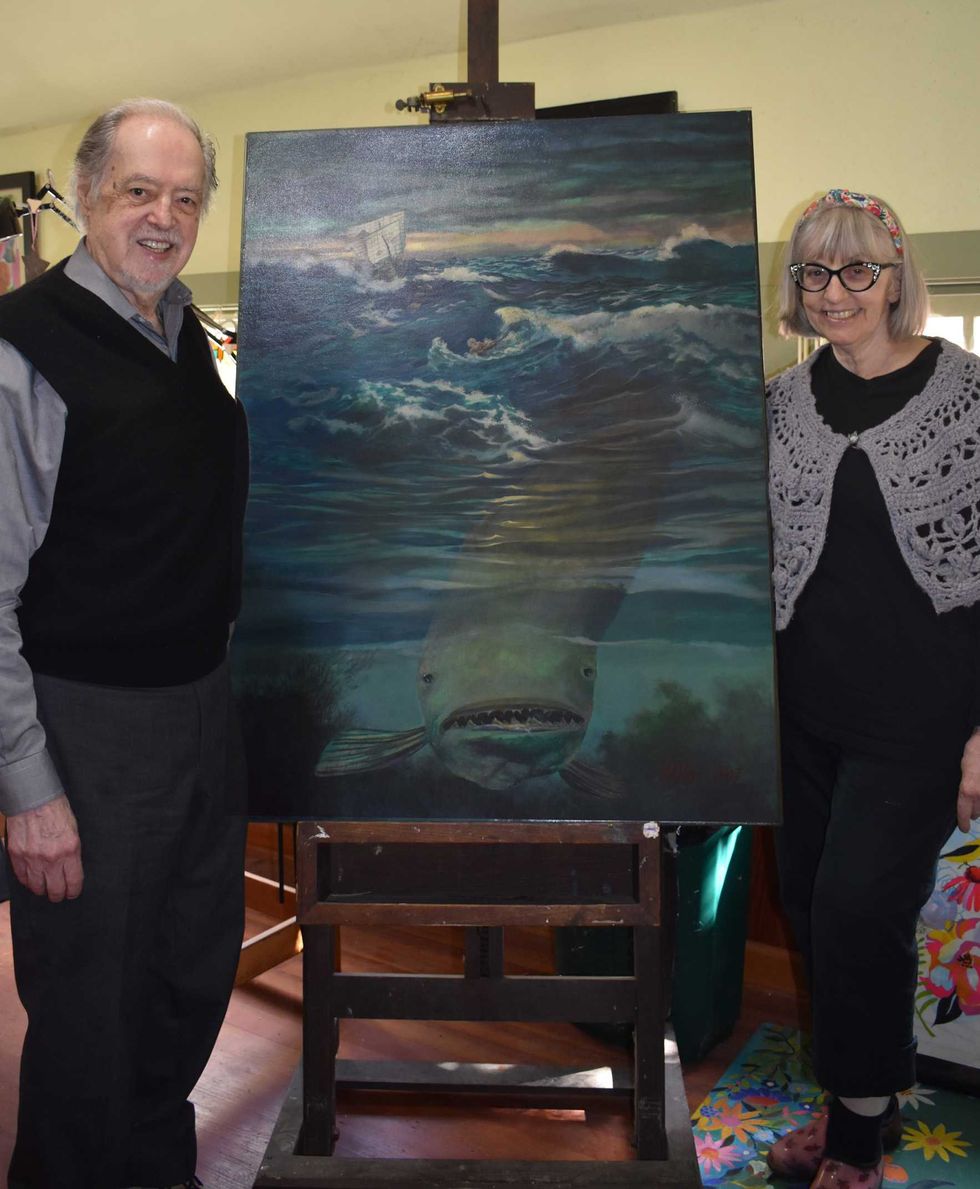 Justine and Victor Valla in their studio with a painting of Victor’s,”Jonah and the Whale.” Robin Roraback

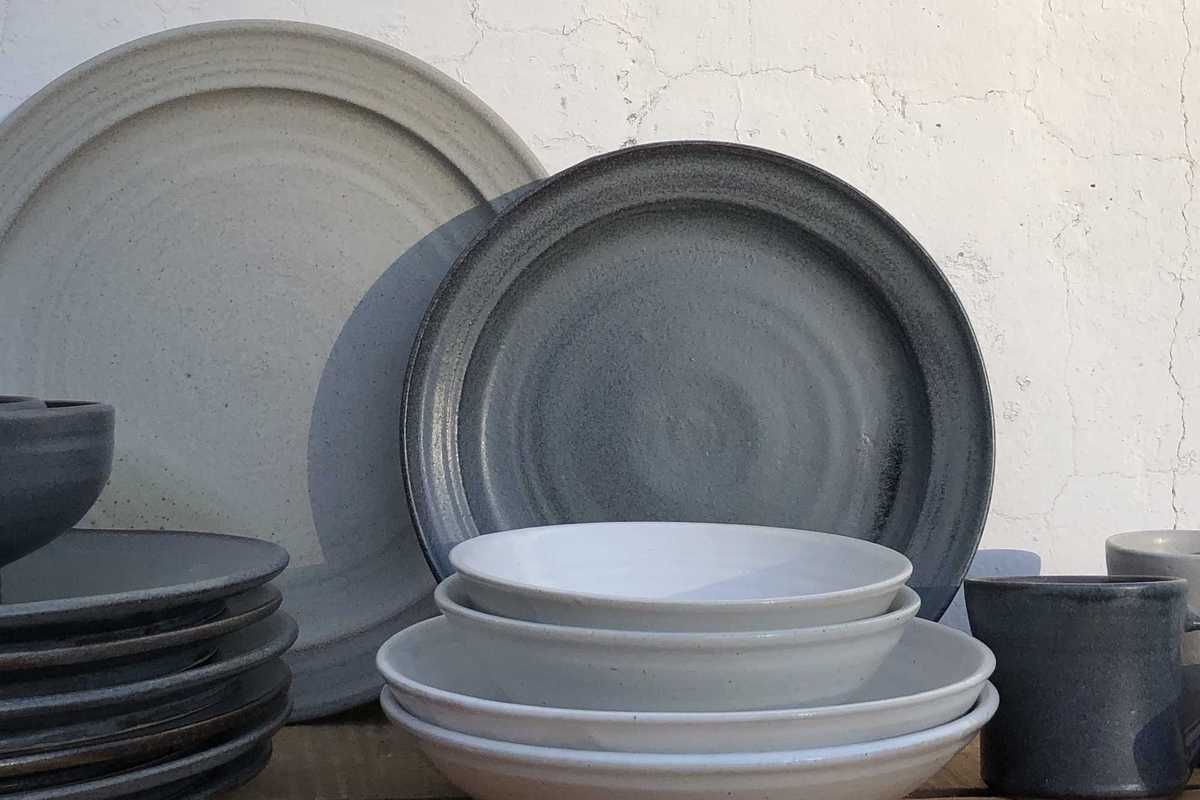
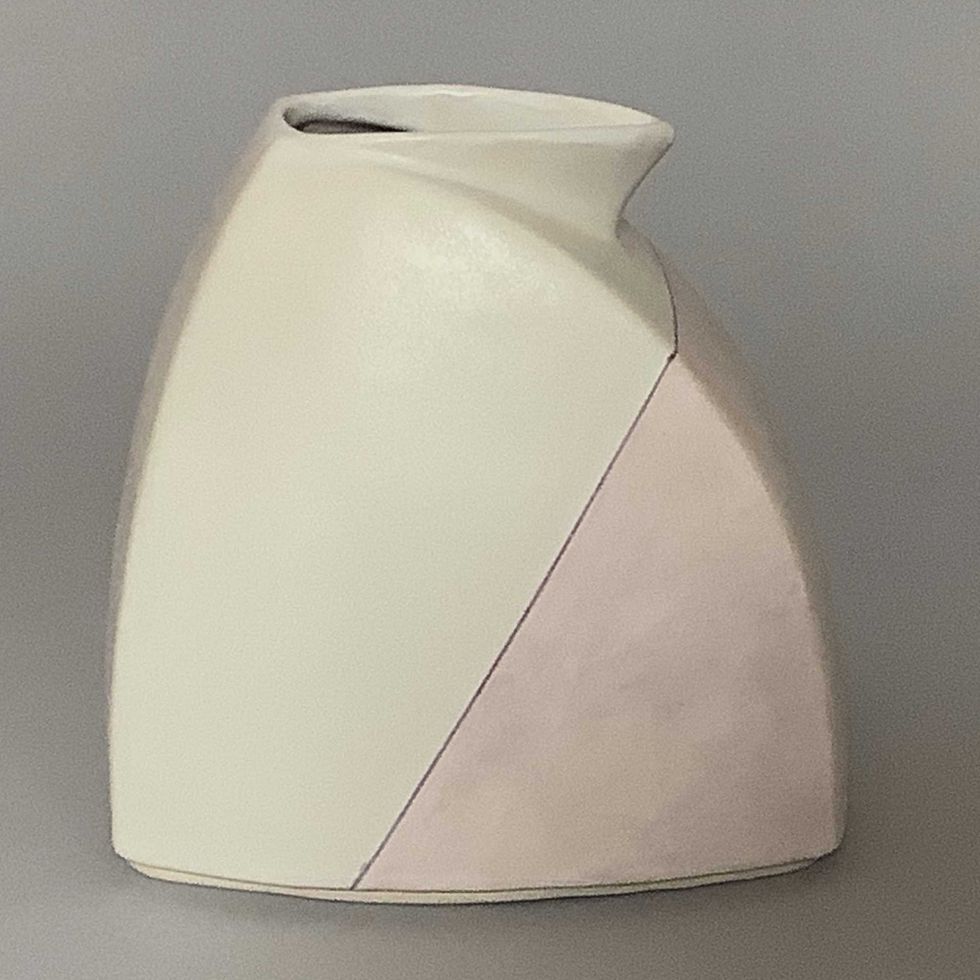 A ceramic vase by Kathleen Heidemann.Provided
 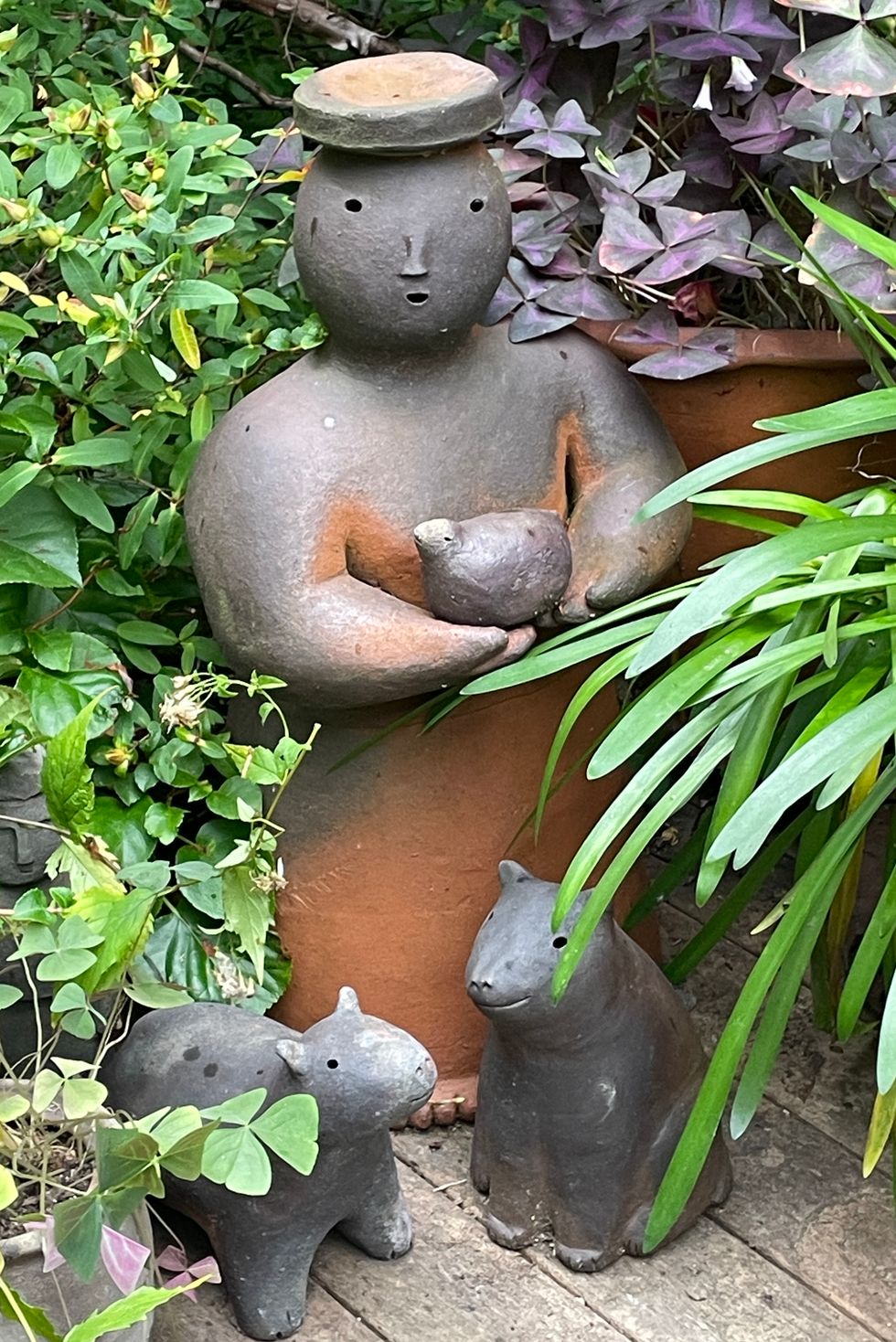 Joy Brown’s delightful ceramic sculptures.Provided