Thomas Blanton, the esteemed director of the National Security Archive at George Washington University, described Washington’s hyper-reaction to WikiLeaks’ transmission of information to some major media in various countries as “Wikimania.�
In testimony before the House Judiciary Committee last Thursday, Blanton urged the Justice Department to cool it. WikiLeaks and newspapers like The New York Times and London’s Guardian, he said, are publishers protected by the First Amendment. The disclosures are the first small installment of a predicted much larger forthcoming trove of non-public information from both governments and global corporations.
The leakers inside these organizations come under different legal restrictions that those who use their freedom of speech rights to publish the leaked information.
u u u
The mad-dog, homicidal demands to destroy the leaders of WikiLeaks by self-styled liberal Democrat and Fox commentator Bob Beckel, the radio and cable howlers and some members of Congress may be creating an atmosphere of panic at the politically sensitive Justice Department. Attorney General Eric Holder has made very prejudicial comments pursuant to his assertion that his lawyers considering how they may prosecute Julian Assange, the WikiLeaks leader.
Mr. Holder declared that both “the national security of the United States� and “the American people have been put at risk.� This level of alarm was not shared by the public statements of defense Secretary Robert Gates and Secretary of State Hillary Clinton, who downplayed the impact of these disclosures.
The attorney general, who should be directing more of his resources to the corporate crime wave in all its financial, economic and hazardous manifestations, is putting himself in a bind.
If he goes after WikiLeaks too broadly using the notorious Espionage Act of 1917 and other vague laws, how is he going to deal with The New York Times and other mass media that reported the disclosures?
u u u
Consider what Harvard Law Professor Jack Goldsmith, who was head of the Office of Legal Counsel in George W. Bush’s Justice Department, just wrote:
“In ‘Obama’s Wars,’ Bob Woodward, with the obvious assistance of many top Obama administration officials, disclosed many details about top secret programs, code names, documents, meetings and the like. I have a hard time squaring the anger the government is directing towards WikiLeaks with its top officials openly violating classification rules and opportunistically revealing without authorization top secret information.�
On the other hand, if Mr. Holder goes the narrow route to obtain an indictment of Mr. Assange, he will risk a public relations debacle by vindictively displaying prosecutorial abuse (i.e., fixing the law around the enforcement bias.) Double standards have no place in the Justice Department.
WikiLeaks is also creating anxiety in the corporate suites. A cover story in the Dec. 20 issue of Forbes magazine reports that early next year a large amount of embarrassing material will be sent to the media by WikiLeaks about a major U.S. bank, followed by masses of exposé material on other global corporations.
Will these releases inform the people about very bad activities by drug, oil, financial and other companies along with corruption in various countries? If so, people may find this information useful. We can only imagine what sleazy or illegal things our government has been up to that have been covered up. Soon, people may reject the those who would censor WikiLeaks. Many people do want to size up what’s going on inside their government in their name and with their tax dollars.
u u u
Wasn’t it Jefferson who said that “information is the currency of democracy� and that, given a choice between government and a free press, he’ll take the latter? Secrecy — keeping the people and Congress in the dark — is the cancer eating at the vitals of democracy.
What is remarkable about all the official hullabaloo by government officials, who leak plenty themselves, is that there never is any indictment or prosecution of government big wigs who continually suppress facts and knowledge in order to carry out very devastating actions like invading Iraq under false pretenses and covering up corporate contractors abuses. The morbid and corporate-indentured secrecy of government over the years has cost many American lives, sent Americans to illegal wars, bilked consumers of billions of dollars and harmed the safety and economic well-being of workers.
As Congreman Ron Paul said on the House floor, why is the hostility directed at Assange, the publisher, and not at our government’s failure to protect classified information? He asked his colleagues which events caused more deaths, “Lying us into war, or the release of the WikiLeaks papers?�
Overreaction by the Obama administration could lead to censoring the Internet, undermining Secretary Clinton’s Internet Freedom initiative, which criticized China’s controls and lauded hacktivism in that country, and divert attention from the massive over-classification of documents by the executive branch.
A full-throttle attack on WikiLeaks is what the government distracters want in order to take away the spotlight of the disclosures on their misdeeds, their waste and their construction of an authoritarian corporate state.
Professor and ex-Bushite Jack Goldsmith summed up his thoughts this way: “The best thing to do … would be to ignore Assange and fix the secrecy system so this does not happen again.�
That presumably is some of what Peter Zatko and his crew are now trying to do at the Pentagon’s famed DARPA unit. That secret initiative may ironically undermine the First Amendment should they succeed too much in hamstringing the Internet earlier advanced by that same Pentagon unit.
Consumer advocate and former presidential candidate Ralph Nader grew up in Winsted and attended The Gilbert School.

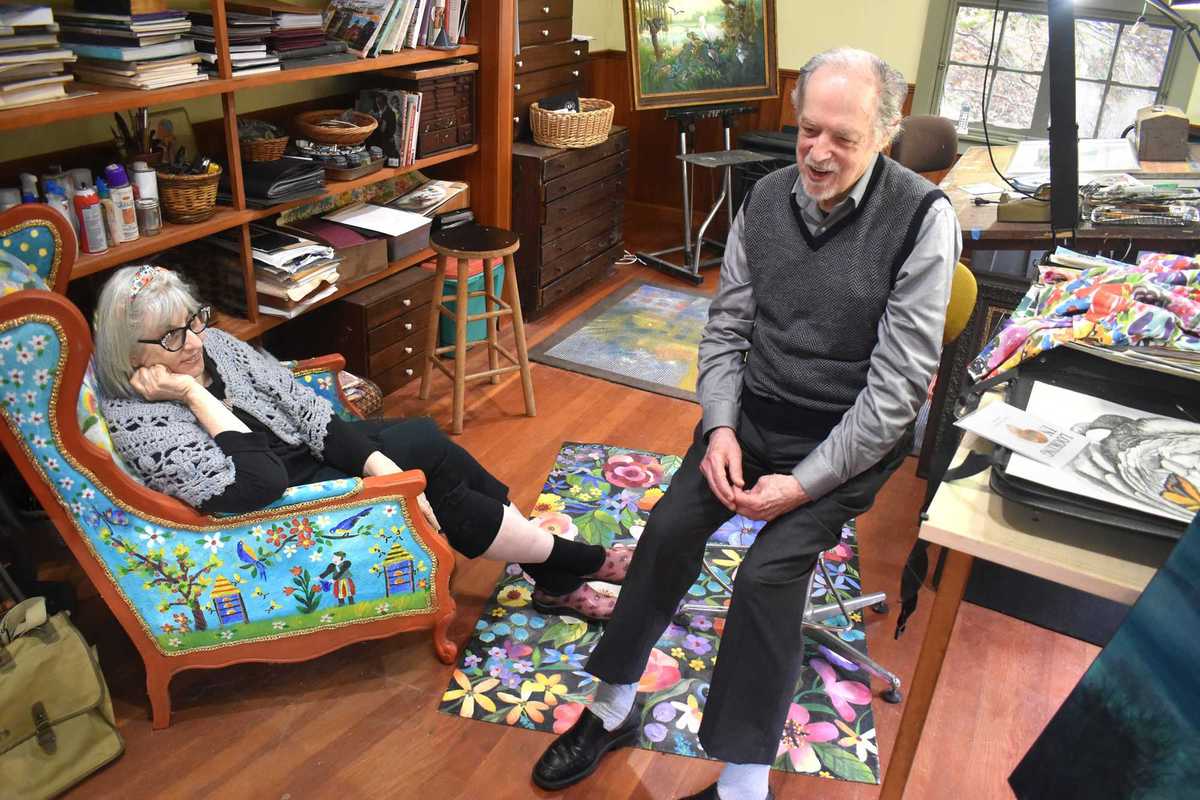
 Justine and Victor Valla in their studio with a painting of Victor’s,”Jonah and the Whale.” Robin Roraback


 A ceramic vase by Kathleen Heidemann.Provided
  Joy Brown’s delightful ceramic sculptures.Provided
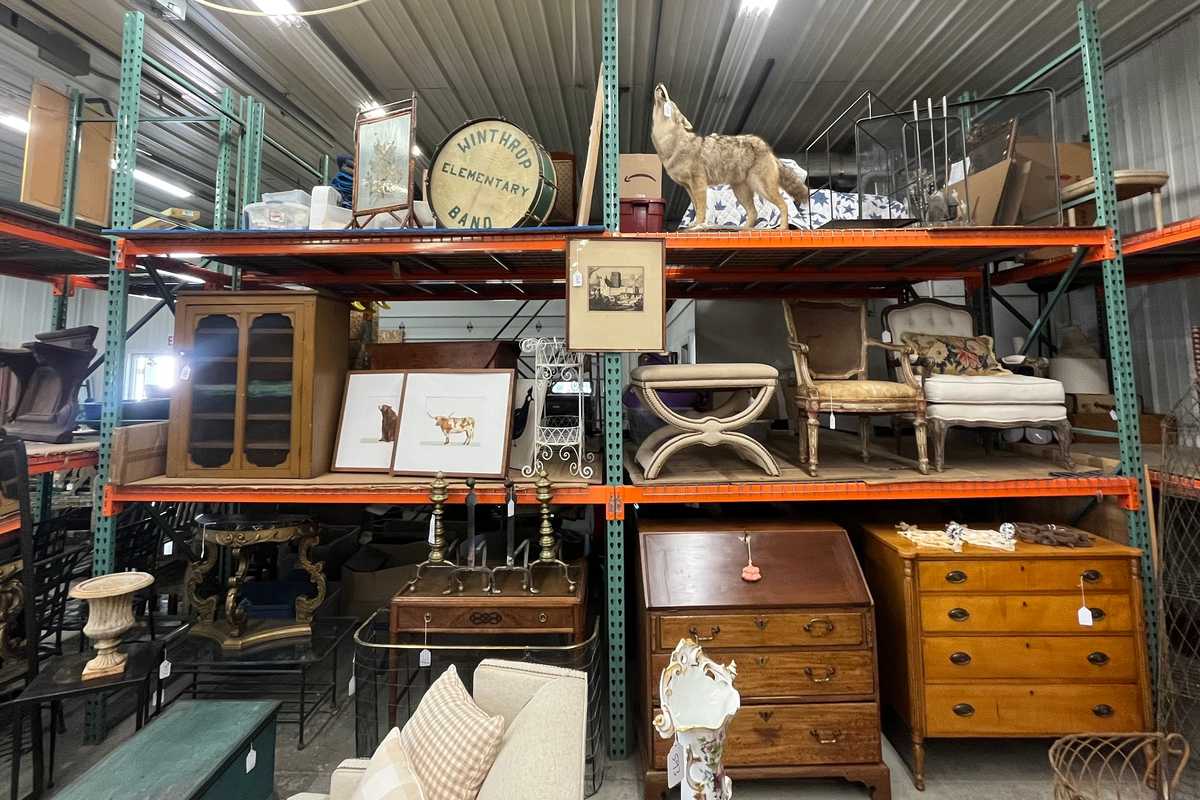
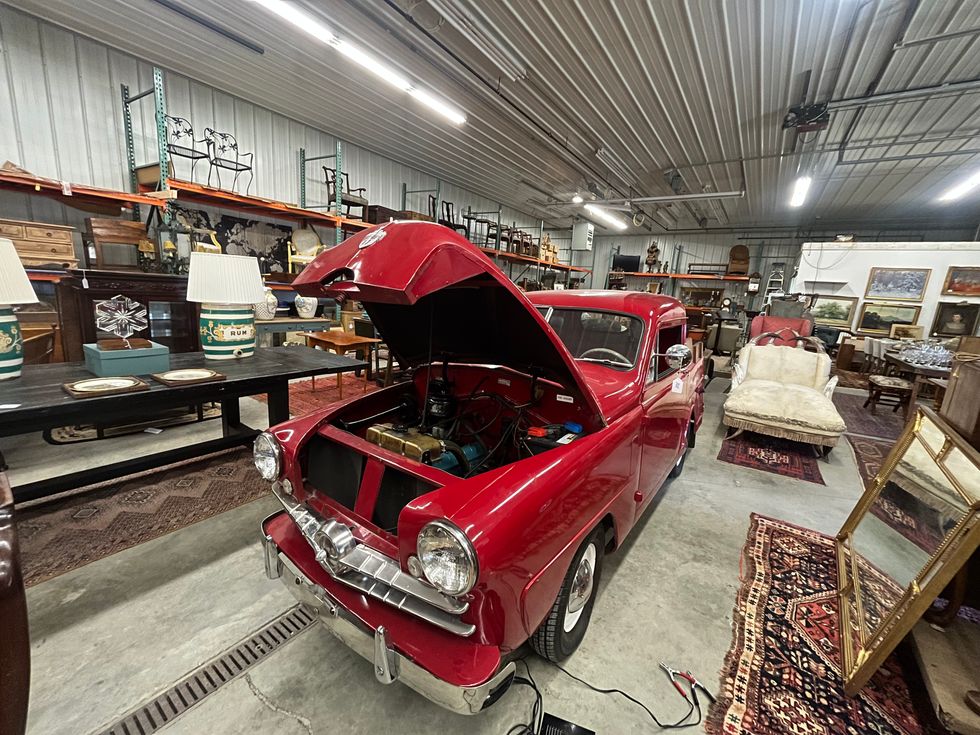 Hundreds of items at Stateline Auctions, including a candy-apple-red Crosley pickup truck.D.H. Callahan