SHARON — Plans to expand and modernize the Hotchkiss Library of Sharon were defeated Thursday night, June 18, by the Zoning Board of Appeals.
Board members denied the library a variance that is needed before the plan can move forward.
The library must now wait six months to present the same plan; or come up with a brand new plan, which it can submit to the board at any time.
This is the third expansion plan for the library that has been denied in the past five years.
“The board is now looking at all of our alternatives both at the state and at the local level as we feel that the library should go ahead with its expansion,� said board member Khurshed Bhumgara. “We are unanimous in this.�
Library board members spent more than a year crafting this plan for modernizing the library, increasing space for young readers and making the collection accessible to all users, including the handicapped, the elderly and parents with young children in strollers. The state has already promised a grant of $1 million to help bring this latest plan to fruition and the Connecticut Trust has provided half the money for the design of the initial plans
The Historic District Commission had given preliminary approval, requesting that they review a larger sample of the pebble dash surface proposed to be applied to the exterior of the addition; and requesting that parking plans be vetted by the commission.
From the Zoning Board of Appeals (ZBA), the library board needed a variance to expand its lot coverage. In the historic center of town, buildings can cover only 20 percent of their lot. The new plan would have covered about 29 percent of the lot, but the library had requested a variance for 31 percent lot coverage to allow for any changes that occurred during construction.
Variances can be granted based on “hardship.� In a letter, the attorney to the Zoning Board of Appeals, Steve Byrne, said that a valid hardship does exist and that the board would be justified if it chooses to give a variance.
The library building was erected more than a century ago, well before zoning regulations were enacted in 1972. Although the minimum lot size in that part of town (the GR-1 zone) is three-quarters of an acre, the library is on .39 acre (about one third). The zoning regulations say that a building can’t cover more than 20 percent of the lot; but even at its larger expanded size, the library would not cover 20 percent of a three-quarter-of-an-acre lot.
At present, the library covers a little more than 12 percent of its lot.
One reason the library board gave for its need to expand is that the present library is not handicapped-accessible. Much of the needed addditional space will make it possible for wheelchair users (as well as mothers with strollers) to enter the library and to access spaces other than those on just the ground floor.
ZBA member Jerry Simonson and Chairman William Trowbridge, discussed a clause in the letter from Byrne, and seemed stymied by a section that distinguished personal hardship from hardships that are particular to the property and its lot.
They discussed it briefly and then voted.
Four of the five regular members present would have had to approve the variance in order for the motion to pass; members Mardee Cavallaro and Jack Dolan voted to approve. Simonson and Trowbridge voted not to approve.
Member Nick Gordon raised his hand with Simonson and Trowbridge but said he was abstaining, because he feels the library does need to expand but he wants to see more alternatives to the plan presented to the board by the library. Chairman Trowbridge agreed.
At the beginning of the meeting, Trowbridge had summarized 12 letters received by the board regarding the library expansion. Eleven were in favor of the expansion. One was opposed.
Those in favor of the plan cited the need for a modern library with computers, adequate space for meetings and book discussions, room for children to read and do crafts and other book-themed activities.
Many letters also cited the need for handicap access.
Sandy Mirabile, a Lakeville resident who owns a building behind the library, was the only one of 16 audience members to speak against the plan. He said he believes an expansion would mar the beauty and historic integrity of the Sharon Green, which is where the library is located.
He had expressed concern at past hearings that the expansion could have a negative effect on his property value. The person who spoke out most emphatically against approving the variance was board member Simonson.
He said he didn’t think the ZBA should make a decision on the variance until after the Planning and Zoning Commission sees the plan and grants a special permit to the library. He stated that he would need to know that fire trucks could get to the new building and that there was adequate parking approved by the Planning and Zoning Board.
Attorney Bill Manasse, representing the library board, noted that attorney Byrne had already submitted a decision stating that the ZBA needs to grant the variance before the plan can be sent to Planning and Zoning.
He said Zoning Enforcement Officer Jamie Casey had also sent the ZBA a letter saying that Planning and Zoning will not consider the library’s plan until the variance has been granted.
Simonson then said that he does not want to grant a variance to the library allowing it to cover 31 percent of the lot because the library board might decide to sell the property to someone else.
“They might sell it to WalMart,� he said.
Cavallaro pointed out that this would probably not be allowed by zoning regulations or the Historic District Commission.
Simonson also said as far as he knows no one has looked into creating an annex for the library, as an alternative to expanding the historic building on the Green.
“Where would you put that annex?� asked Cavallaro, who is a principal with the Best & Cavallaro real estate agency.
“There are lots of properties for sale in town,� Simonson responded.
Library board members said after the meeting that this idea had been considered, but was dismissed as impractical.
He also said that the library could conceivably be moved out of its existing building altogether. He and Manasse both noted that this would require a court order, however. The library building was given to the town by Maria Hotchkiss with the stipulation that it only be used as a public library.
Cavallaro asked architect John Stevens, from the firm of Franzen Architects, which created the plans, why the library can’t expand within its existing footprint. He and board member Bhumgara explained that the expansion is as minimal as possible. About 20 percent of the additional space is taken up by enhancements that would make the library handicapped accessible.
Manasse said he is surprised no one has sued the library yet because it is not accessible. The federal Americans with Disabilities Act, passed in 1990, requires that all public buildings are accessible and safe for handicapped users, especially those with wheelchairs.
Anything smaller, Bhumgara said, would not have met state requirements.
“If we make the expansion smaller,� he added, “we will lose our state grant, because we will no longer be meeting the needs of children, the disabled and the population of Sharon.�

 Models walk the organic runway at HVSFW. Ilan Harel
 Susan Schneider, owner of Shandell’s, creates a variety of products with marbleized surfaces in her Ashley Falls studio.L. Tomaino



 Roger McKee naming the winners with the first place entry over his left shoulder. Patrick L. Sullivan
 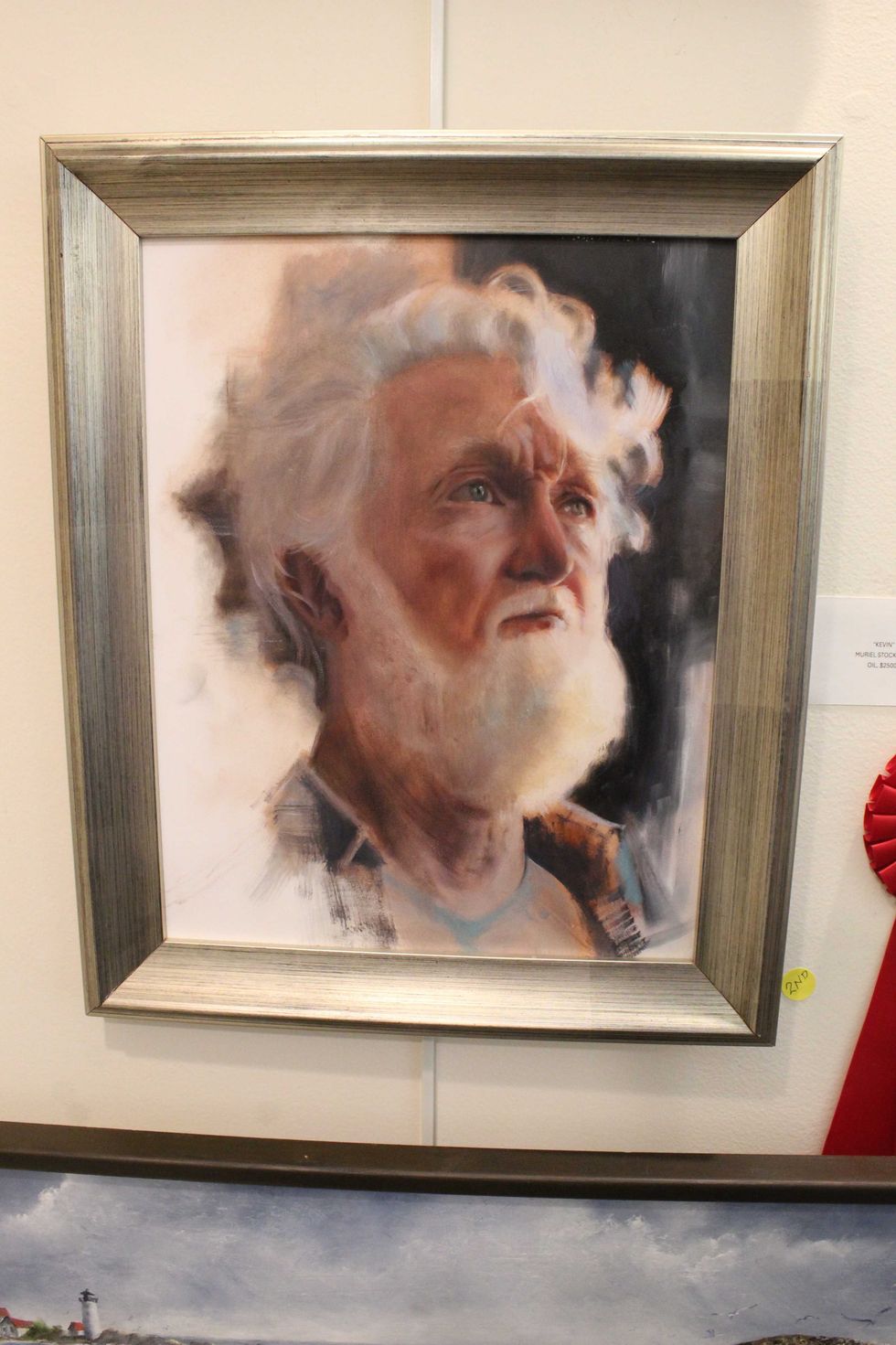 Muriel Stockdale’s “Kevin” took second place in the juried art show at Trinity Episcopal Church.Patrick L. Sullivan