SHARON — Sharon Center School held its annual eighth-grade science fair on June 1. All 14 eighth-grade students took part in the fair, which was organized by science teacher JoEllen Niedeck.
“The students started to pick out their topics in March, then they went out to analyze their data,� Niedeck said. “I encouraged them to use concrete numerical data, because it’s easy to grasp and look at visually.�
The first place award went to Shannon Paton and Helen Shapiro-Albert, who experimented with different techniques in composting.
“They gathered some food scraps and tested them in different conditions,� Niedeck said. “One bag had worms, another did not have worms. They looked at the components of the scrap food and how different vegetables disintegrated.�
The second place award went to Gabriel Plunkett, who tested the effect of video games on a player’s pulse rate.
“He played a variety of video games and used himself as a test subject,� Niedeck said. “He played different kinds of video games, and even played Monopoly to test how each one impacted his pulse rate.�
The third place award went to Patrick Purdy and Stephen Kalogiannis, who used their dirt bikes to determine how angles impact projectile motions.
“They took their dirt bikes and used ramps to see how they could jump further distances with different ramp angles,� Niedeck said. “They videotaped their procedures — and had parental supervision.�
Honorable mention went to Sabrina Walton, who studied which bones and muscles are most often injured.
“She took a survey of the students to find out if they had any bone or muscle injuries in the past and the location of those injuries,� Niedeck said. “She also looked at where the injuries occurred, either at the playground or at home.�
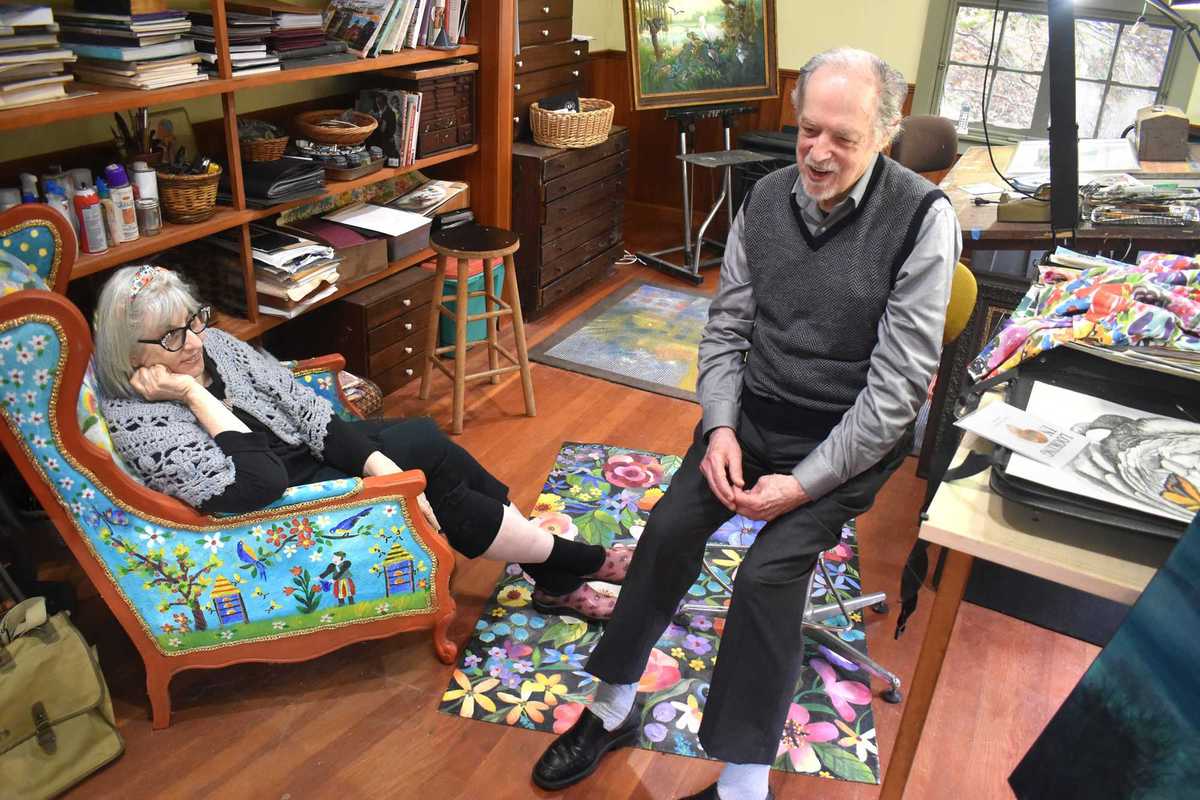
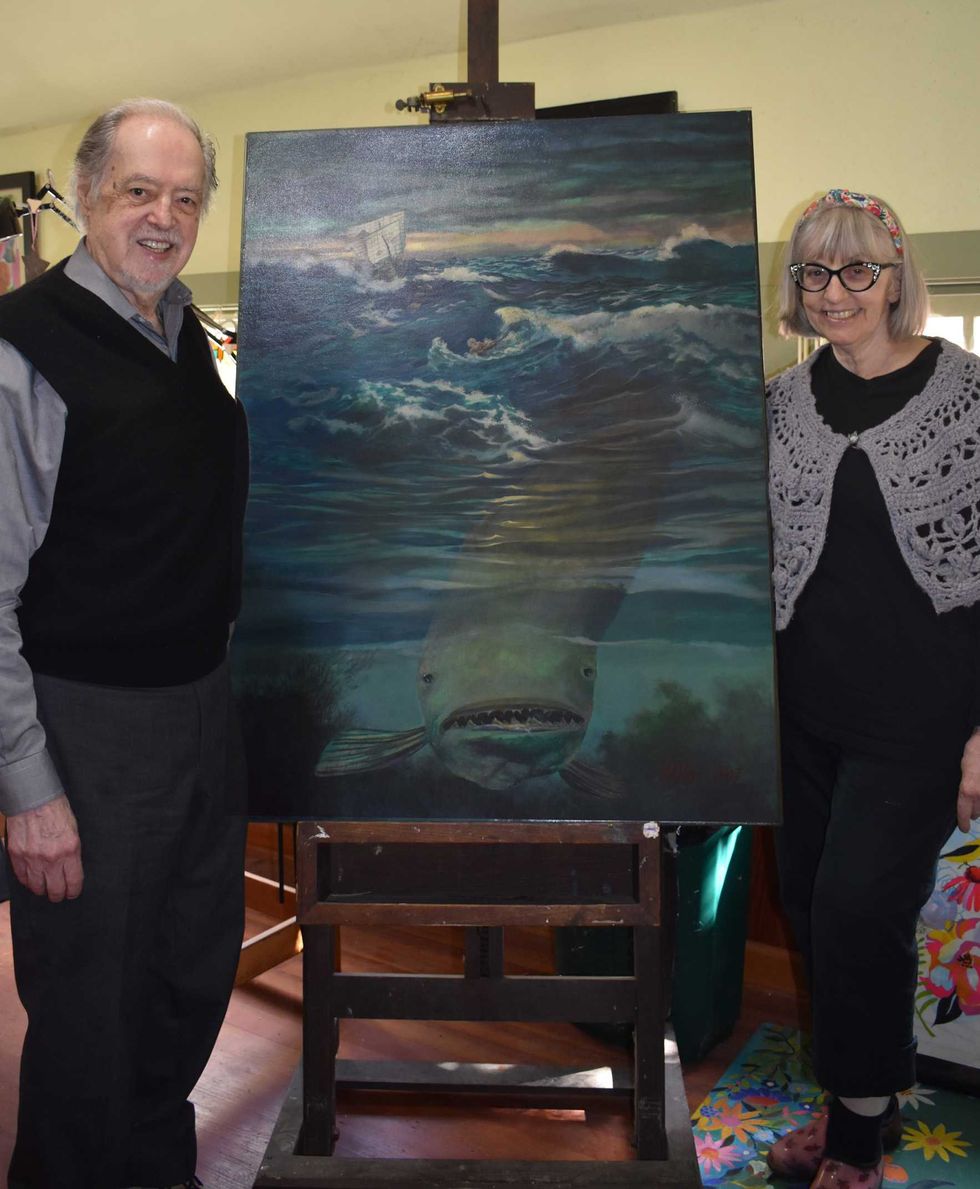 Justine and Victor Valla in their studio with a painting of Victor’s,”Jonah and the Whale.” Robin Roraback

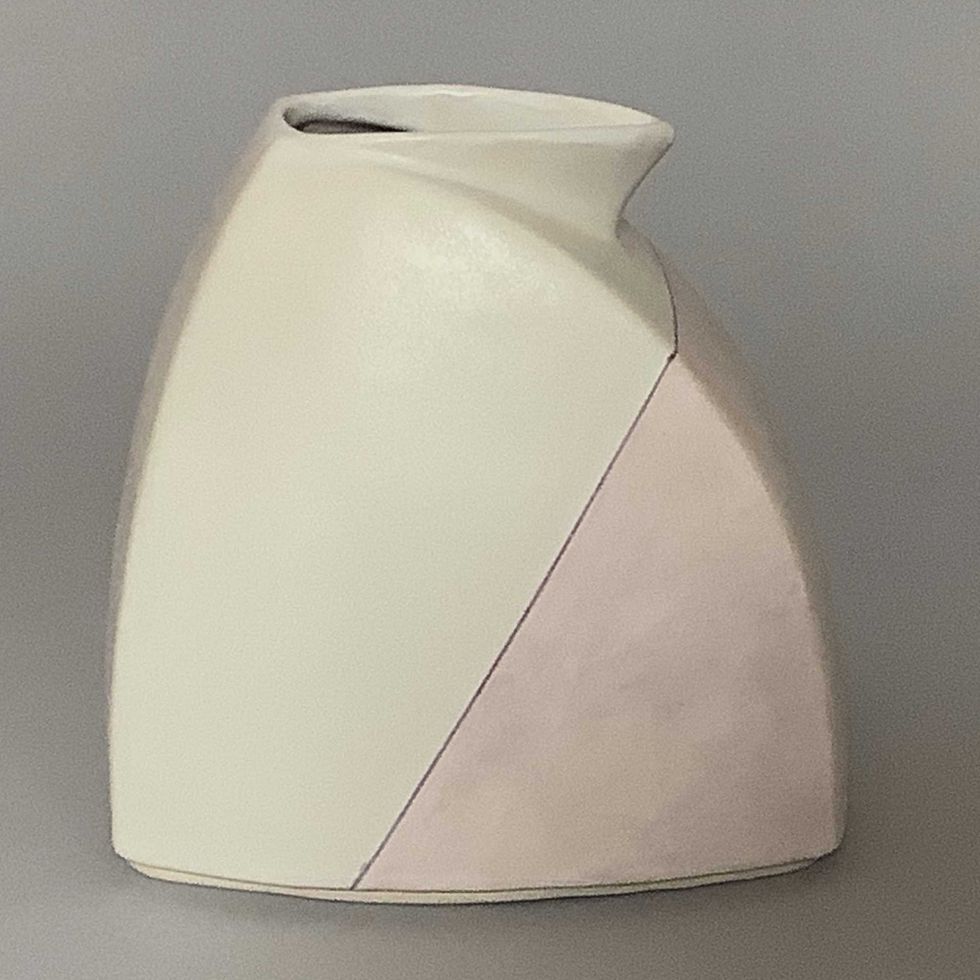 A ceramic vase by Kathleen Heidemann.Provided
 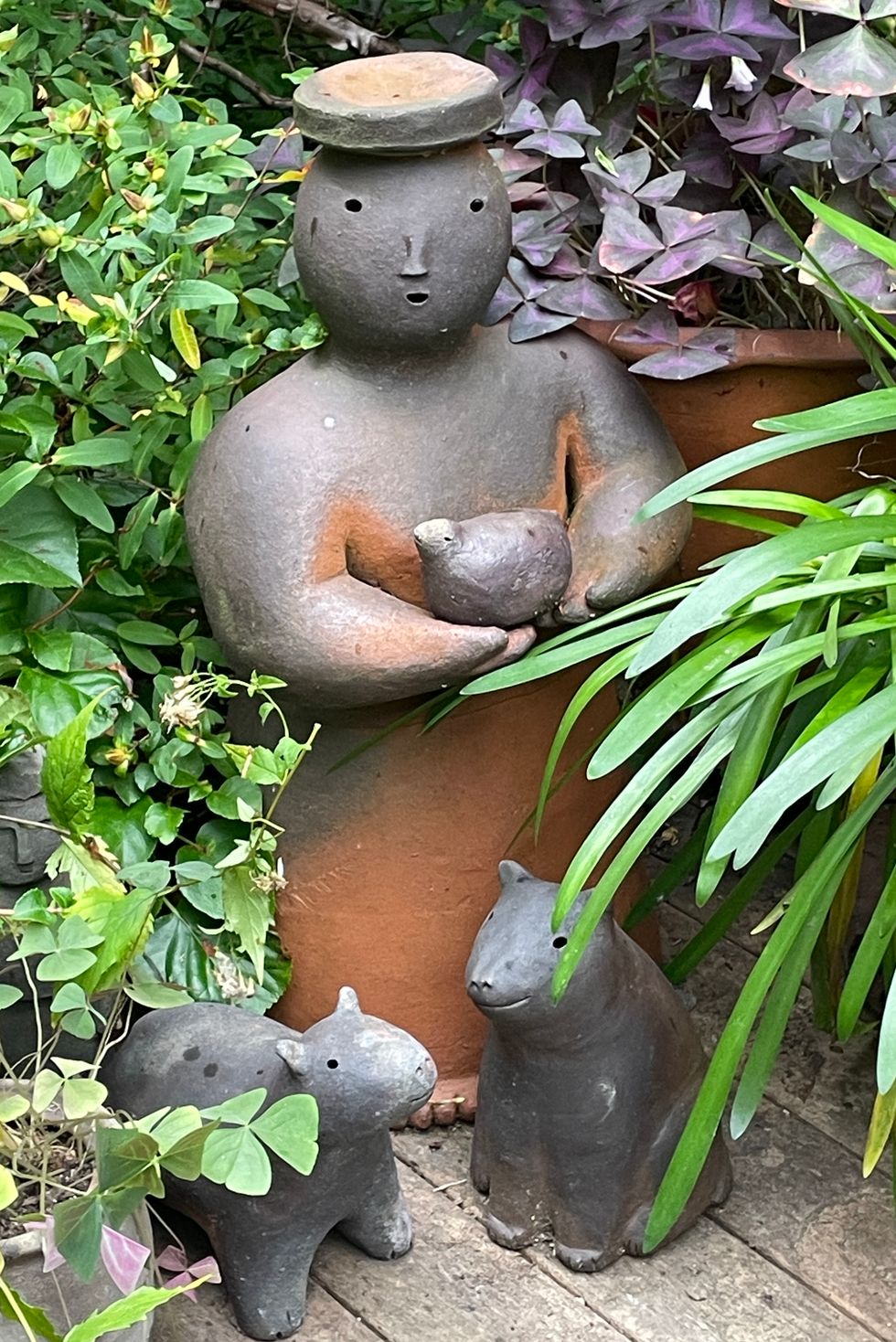 Joy Brown’s delightful ceramic sculptures.Provided