Latest News
Sharon voters reject controversial school budget, 114-99
Alec Linden
May 09, 2026
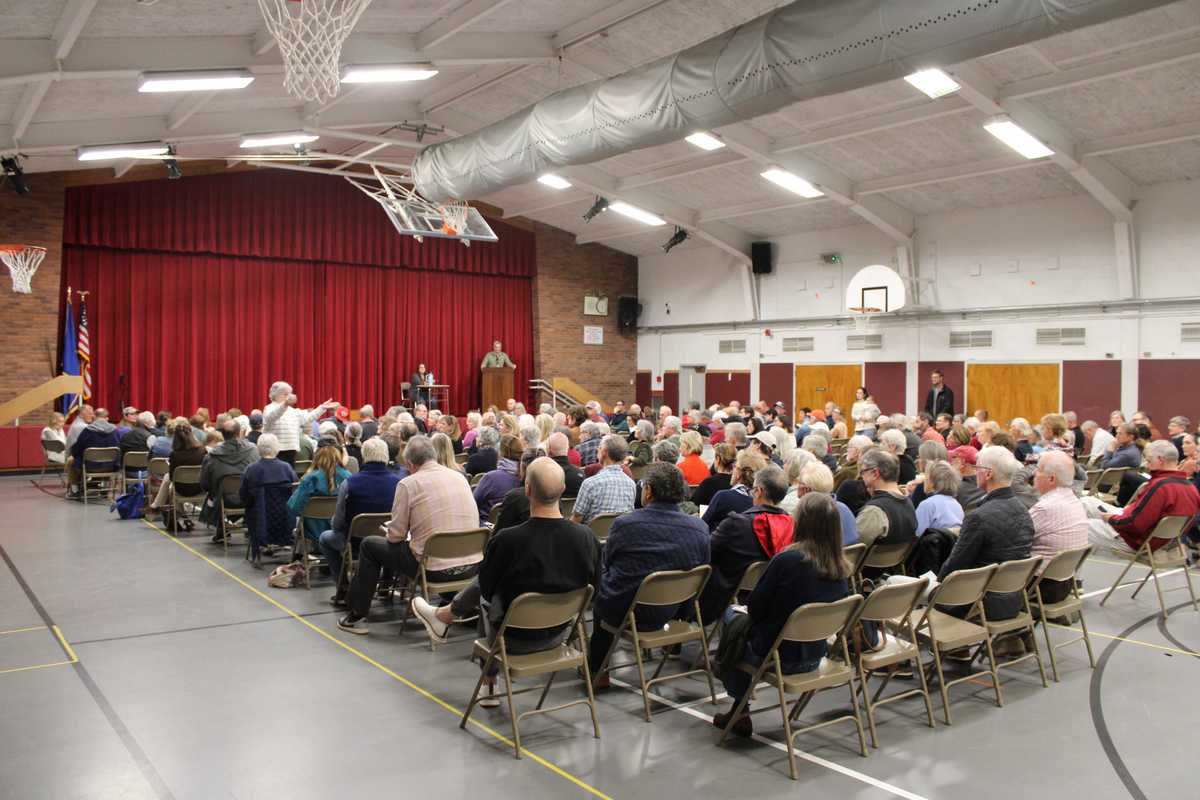
The May 8 town meeting and budget vote were moved from Sharon Town Hall to Sharon Center School to accommodate what officials said was the largest turnout for a Sharon budget meeting in recent years.
Alec Linden
SHARON – More than 200 residents packed the Sharon Center School gymnasium Friday, May 8, where voters narrowly rejected the Sharon Board of Education's proposed 2026-2027 spending plan by a vote of 114-99, sending the budget back to the Board of Finance after weeks of heated debate over school funding.
The rejected proposal – the ninth version of the budget since deliberations began months ago – carried a bottom line of $4,165,513 for the elementary school, unchanged from last year. The flat budget came after the BOF ordered the BOE in early April to remove nearly $70,000 from its spending plan.
The venue for the town meeting and budget vote was moved in advance from Sharon Town Hall to Sharon Center School to accommodate the anticipated crowd.
By 5:50 p.m. Friday evening, cars were already circling the full Sharon Center School lot looking for a spot. First Selectman Casey Flanagan held the door as residents, many with small children in tow or propped up on shoulders, streamed through the SCS door.
Friday’s vote drew by far the largest turnout for a Sharon budget meeting in recent years. By comparison, about 50 members of the public attended the 2023 vote, when both budgets passed unanimously. Attendance rose slightly to 60 in 2024, while fewer than 40 residents showed up last year.
The current 2025-2026 budget also faced a last-minute order from the BOF to reduce its proposal by $70,000, but it did not generate the same level of pushback that this year’s flat proposal brought.
Josh Holden, a Sharon resident of over a decade, stood outside in the late afternoon light as he bounced his two-year-old on his arm. He said he supported funding the school, a sentiment shared by many other young families in town.
“It seems like there’s a wave of families in the daycare that are taking more interest in the school and want to send their kids there,” he said. “I want it to be a good school.”
Many of those young families turned out Friday night, and, in a break of tradition for a town meeting vote, were permitted to speak out during the proceedings for a short public comment period before the formal tally. Many described frustration with what they viewed as inflexibility from the Board of Finance, which has pushed for flat budgets for years while attempting to correct a past accounting error that mistakenly placed capital expenses in the operating budget.
Due to a state law known as the minimum budget requirement, municipalities may not reduce education spending from the previous year, which the BOF has stated has left the BOE with an “inflated” budget.
Emily McGoldrick, who has two children at Sharon Day Care and one entering kindergarten next year, said SCS is primed for success, but it "can’t improve with its hands tied behind its back.”
Anne Vance, former BOE member, echoed McGoldrick’s frustration. “My experience is the Board of Finance does not listen and does not negotiate,” she said.
Others, including BOE Chair Philip O’Reilly, pushed back against claims the school would be underfunded with the current budget. O’Reilly said he supported the proposal because the school is well-funded under its current financial planning, largely due to expected year-end surplus funds and other reserves, totaling close to a quarter million dollars.
Meghan Flanagan, a SCS parent, supported O'Reilly's position.
“I am 100% yes,” she said, adding that “there is money in the school, and the kids are okay."
Flanagan said she was encouraged by the strong display of community engagement and school support. “There are bigger problems that I would like you all to get involved with,” she said, adding that “it’s not a money issue.”
Chip Kruger, another BOE member, also announced his support for the proposal, though Nancy Hegy-Martin, BOE vice chair, said she did not support the plan.
She gestured to the packed gym as testament to the importance of the issue of school funding. “Look around!” she said, “Do you know what a joy it is to see this many young people at a meeting around here?”
After the comment period, the registrars tallied the votes, which were cast by paper ballot due to the large crowd. Usually, the budget vote is conducted via an oral “yea or nay” or a show of hands.
As votes were counted, residents gathered in small groups around the room. Recent Sharon arrivals Jonathan Kupferer and Lara Ditkoff said they entered the meeting undecided, but swayed toward rejecting the proposal after hearing arguments that the denial of $70,000 reflected stubbornness from the Board of Finance. “If it’s such a small amount, why is it such a big deal?” Kupferer said, but noted, “I’m still on the fence.”
Ditkoff agreed, but said she supports funding education as a fundamental value. “Every little bit towards the kids is money well spent,” she said.
After registrars shared the results, many noted the margin of 15 votes was tight.
BOF member John Hecht said that he was disappointed with the outcome – ”unfortunately this was a vote of facts versus emotion.”
“When Philip O’Reilly stood up,” Hecht said of the BOE Chair’s testimony, “that was proof that this budget fully supported Sharon students…no student would be harmed at all by this budget.”
He said he will prioritize working with the BOE and the town as the budget negotiations continue.
BOF Chair Tom Bartram said his takeaway was that “everybody got the message that [the townspeople] really don’t care if it adds to our minimum budget requirement and they want to see more funding get to the school.”
“But I’m just one of six,” he added.
The Board of Finance now must reconvene to find a solution, with discussions expected to continue at its next regular meeting on May 19. If a new budget is not approved by July 1, the town will revert to the current year’s spending plan until a new budget passes – effectively keeping the proposed flat education budget in place for part of the next fiscal year.
Regardless of the outcome, many officials were pleased at the robust display of local politics Friday evening. Walking back to his car after the meeting, Chair O’Reilly said that no matter the vote, “the result is that we have an engaged public… that’s a win for the town.”
“I love it,” said First Selectman Flanagan. “It’s wonderful to see people engaged and I hope that it continues.”
The total town of Sharon spending plan – the combination of the municipal, elementary school and high school budgets, as proposed on Friday night totaled $11,502,187. With Sharon’s contribution to Region One high school expenses, total education spending in town totals $6,056,000. These figures could change as the BOF revisits the budget following Friday’s vote.
Keep ReadingShow less
Liane McGhee
Lakeville Journal
May 06, 2026
Liane McGhee
Liane McGhee
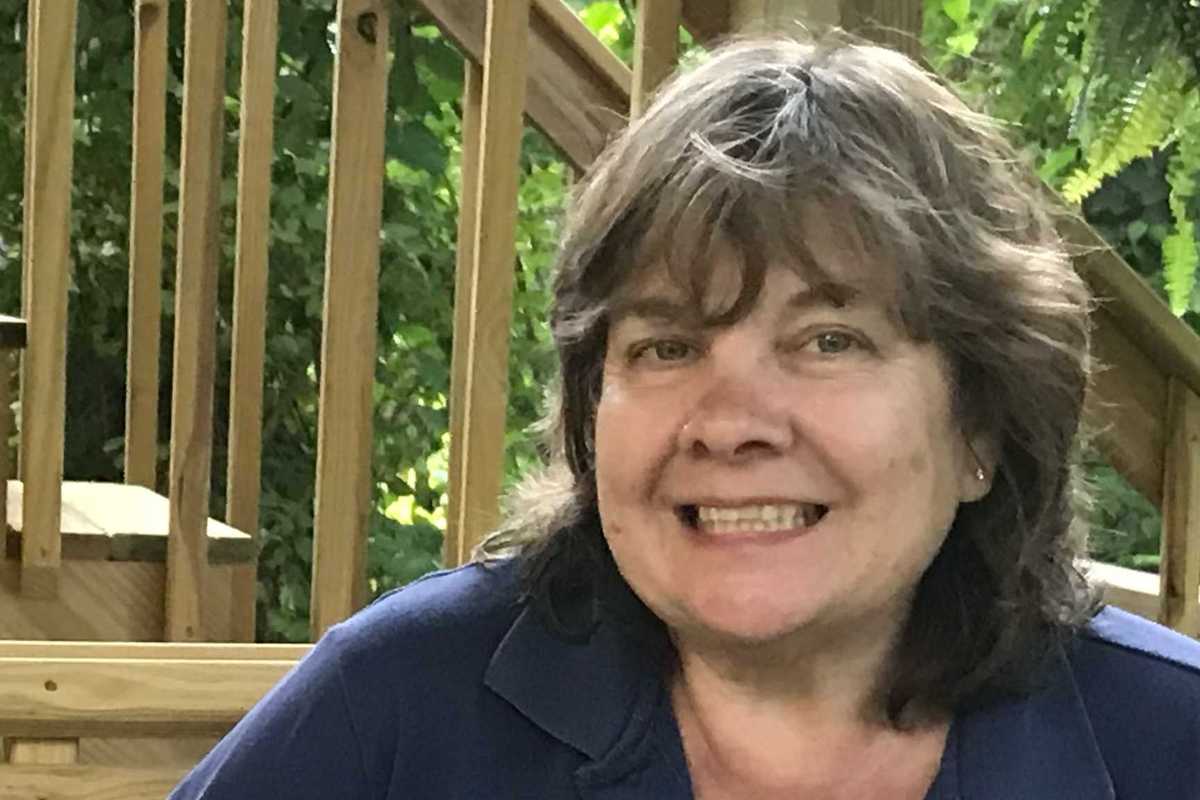
Liane McGhee, a woman defined by her strength of will, generosity, and unwavering devotion to her family, passed away leaving a legacy of love and cherished memories.
Born Liane Victoria Conklin on May 27, 1957, in Sharon, CT, she grew up on Fish Street in Millerton, a place that remained close to her heart throughout her life. A proud graduate of the Webutuck High School Class of 1975, Liane soon began the most significant chapter of her life when she married Bill McGhee on August 7, 1976. Together, they built a life centered on family and shared values.
Liane was a woman of many passions. She found peace in the outdoors, whether she was taking scenic country rides, fishing, or walking her dog. An avid reader and a talented painter, she possessed a creative spirit and a caring heart that extended to all animals. Above all, Liane was most at home when surrounded by her family.
Liane is survived by her devoted husband of nearly 50 years, Bill McGhee. Her legacy continues through her three children: Joshua (Tanya) McGhee, Justin McGhee, and Jaclyn (Joe) Perusse. She was the proud grandmother of Connor, Calia, and Kennedy McGhee, as well as Lillian and Tillman Perusse. She is also survived by her siblings, Larry Conklin and Linda Holst-Grubbe. Liane was predeceased by her parents Martin and Lillian Conklin, and her brother, Robert “Bob” Conklin.
In keeping with Liane’s generous nature, the family requests that, in lieu of flowers, memorial donations be made to Hudson Valley Hospice (by mail to 374 Violet Ave, Poughkeepsie, NY 12601 or online at https://www.hvhospice.org/donate) or to the Millerton Fire Company at PO Box 733, Millerton, NY 12546.
A celebration of life will be held on Friday, May 8, from 4:00 to 7:00 p.m. at Conklin Funeral Home, 37 Park Avenue, Millerton, NY.
Her family will remember her as the strong-willed and caring matriarch who always put them first. She will be deeply missed.
Keep ReadingShow less
‘Women Laughing’ celebrates New Yorker cartoonists
Natalia Zukerman
May 06, 2026
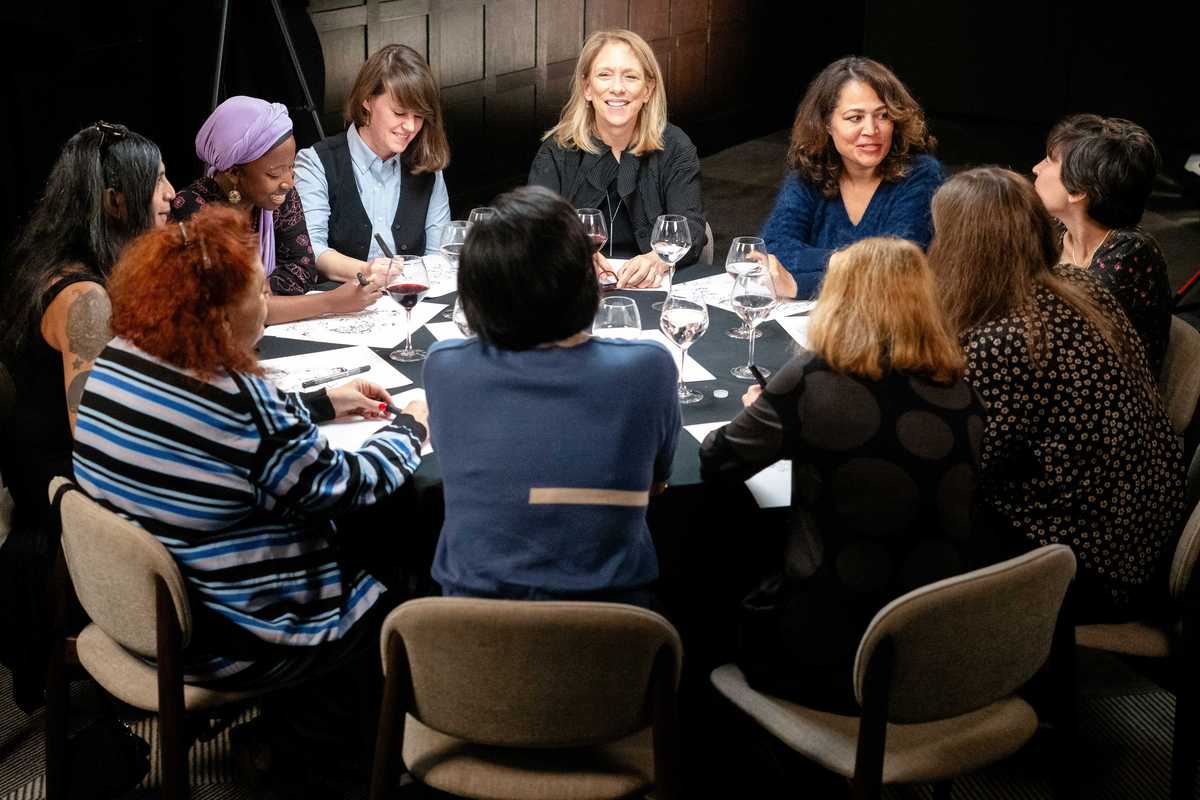
Ten New Yorker cartoonists gather around a table in a scene from “Women Laughing.”
Eric Korenman
There is something deceptively simple about a New Yorker cartoon. A few lines, a handful of words — usually fewer than a dozen — and suddenly an entire worldview has been distilled into a single panel.
There is also something delightfully subversive about watching a room full of women sit around a table drawing them. Not necessarily because it seems unusual now — thankfully — but because “Women Laughing,” screening May 9 at The Moviehouse in Millerton, reminds us that for much of The New Yorker’s history, such a gathering would have been nearly impossible to imagine.
The documentary, directed by longtime New Yorker cartoonist Liza Donnelly and filmmaker Kathleen Hughes, traces the uneven history of women cartoonists at the magazine, from their presence in its earliest issues to their near disappearance by the 1950s. But the film does something more interesting still: it lets us watch these artists at work.
“The idea was talking to these women about their process and where their ideas come from,” Donnelly said. “You get to witness these women drawing in the film, and I draw with them.”
“Women Laughing” includes intimate conversations with some of the most celebrated and groundbreaking cartoonists at The New Yorker, including Roz Chast, Emily Flake, Sarah Akinterinwa, Liana Finck, Amy Hwang and Bishakh Som. Donnelly also speaks with Emma Allen, the magazine’s first female cartoon editor. During a dynamic roundtable discussion with 10 cartoonists, viewers also meet artists Emily Sanders Hopkins, Maggie Larson, Arenza Pena-Popo and Victoria Roberts.
“I will confess that it was what I was most worried about,” Hughes said of the technical challenges presented by filming 10 artists at work. “You have 10 people. That’s 10 microphones, six or seven cameras. We didn’t even have a budget for it, but our crew donated all the gear so that we could get it done.”
Hughes was relieved that not only did it work, but it became one of the most memorable parts of the film.
“Frankly, when you put people together and have them talk on screen, it can get tiresome quickly,” Hughes said. “So I’m glad that nobody listened to me when I said I didn’t think we should do this.”
For Donnelly, whose book “Very Funny Ladies” was the impetus for the film, the documentary offered dimensions the printed page could not. For Hughes, whose previous films have examined weightier subjects like economic inequality and gun violence, entering the world of cartoonists brought its own revelations.
“I really did think that the cartoonists were sort of in charge of what was in the magazine,” Hughes said, laughing. “That was probably the biggest revelation.”
What surprised her most was not just the structure of the magazine’s famously competitive submission process — cartoonists submit batches each week and face frequent rejection — but the sheer persistence required to sustain the work.
“It was inspiring to see the dedication everybody had to the craft,” Hughes said. “And how creative everybody is, not just in making the cartoons themselves, but in supporting themselves through it.”
An audience reaction that has surprised both Donnelly and Hughes is the laughter. By the time the filmmakers finished editing, they had seen each cartoon so many times that the humor had become technical material — questions of pacing, framing and sequence. The first public screening changed that.
“All the laughter really kind of blew us away,” Hughes said. “You forget.”
The audience response underscores something else the film makes clear: just how much skill lies behind the apparent simplicity of a single-panel cartoon. Donnelly noted that the form is “a lot harder than you think.” Like the cartoons it celebrates, the documentary values economy and precision. At just 37 minutes, its compact running time reflects that ethos.
“A lot of people have said it’s a great length,” Hughes said. “It’s almost like a cartoon version of a documentary.”
Donnelly appreciates the response she hears most often after screenings.
“You leave them wanting more,” she said.
Like the best New Yorker cartoons, “Women Laughing” says a great deal with remarkable economy, leaving audiences laughing and looking more closely at what appears, at first glance, deceptively simple.
“Women Laughing” will screen at the Moviehouse (48 Main St., Millerton) on May 9 at 7 p.m. followed by a conversation with Liza Donnelly, Kathleen Hughes and cartoonist Amy Hwang. Moderated by local filmmaker Pam Hogan. Tickets at themoviehouse.net
Keep ReadingShow less

Want more of our stories on Google? Click here to make us a Preferred Source.
By any other name: becoming Lena Hall
Natalia Zukerman
May 06, 2026
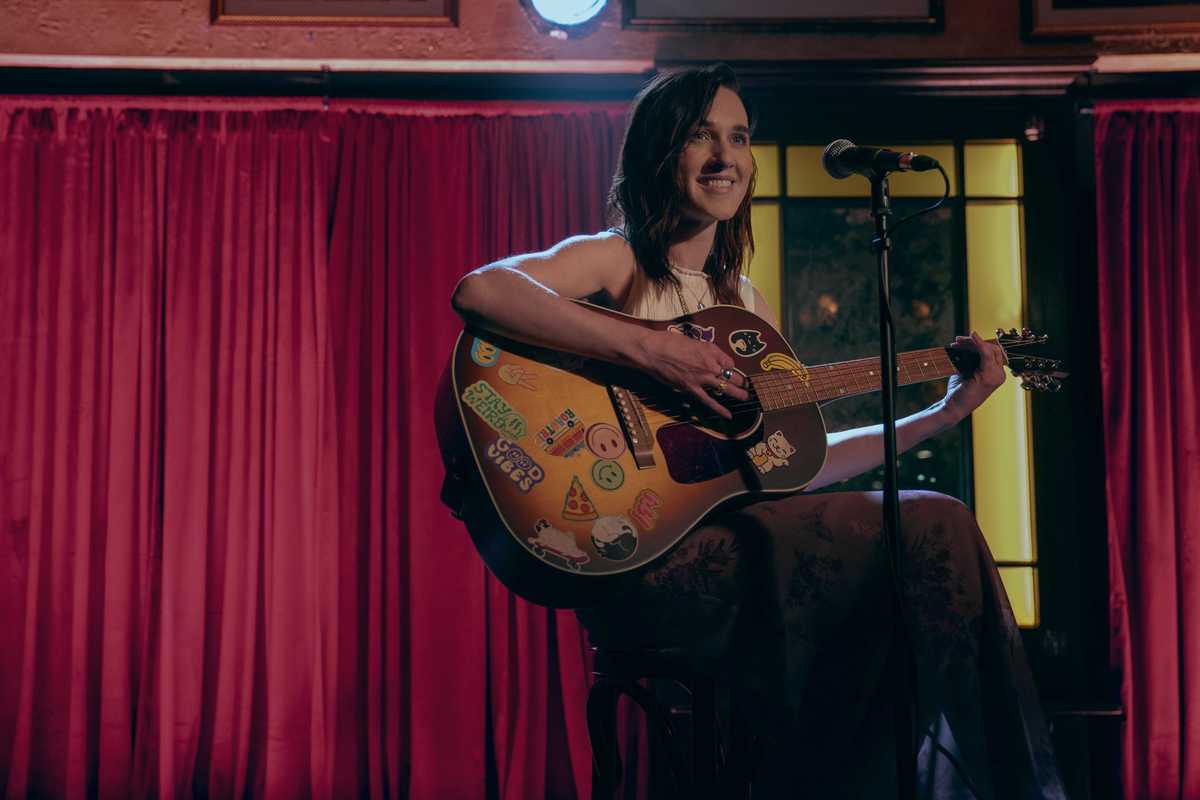
In “Your Friends and Neighbors,” Lena Hall’s character is also a musician.
Courtesy Apple TV
At a certain point you stop asking who people want you to be and start figuring out who you already are.
— Lena Hall
There is a moment in conversation with actress and musician Lena Hall when the question of identity lands with unusual force.
“Well,” she said, pausing to consider it, “who am I really?”
Born Celina Consuela Gabriella Carvajal into a San Francisco family steeped in performance — her father a choreographer, her mother a prima ballerina — Hall was, by her own account, “born to be onstage.”
“Like a show pony,” she joked.
She trained first as a ballet dancer, studying in France on scholarship before abandoning that path for musical theater after seeing her sister perform in “42nd Street.”
Even then, identity was something inherited before it was chosen.
The Tony Award-winning, Grammy-nominated performer has spent much of her career moving between worlds: Broadway and television, rock clubs and film sets, musical theater precision and raw, unvarnished songwriting. Her latest solo album, “Lullabies for the End of the World,” is an intimate, autobiographical work that explores co-dependency, heartbreak and self-reckoning.
But for Hall, whose career includes a Tony-winning turn in “Hedwig and the Angry Inch,” a starring role on Apple TV+’s “Your Friends and Neighbors,” and acclaimed performances in film and television, the search for artistic identity has been unfolding for decades.
The record’s central themes — identity, authenticity, reinvention — are the same ones Hall has been sorting through for much of her adult life.
“It wasn’t until later that I started asking those questions,” she said from New York City, which she splits her time between and West Cornwall, Connecticut. “What do I want to represent? Who do I want to be? I was trying to find the authentic self instead of just going with the flow.”
The search began, in part, with an unlikely catalyst: a tonsillectomy.
When Hall was 26, surgery altered her voice just as she had joined the rock band The Deafening. “They would just play really loud and never change the key,” she said, laughing.
At the same time, Hall found herself confronting larger questions about purpose and artistic direction.
“I was going through that moment of, what do I really want out of this industry?” she said. “If I’m going to keep doing this, I need to have a purpose.”
Until then, Hall said, she had largely been defined by external expectations.
“I was always who I was told to be,” she said.
The surgery became a kind of reset, both vocally and personally. It also coincided with another form of reinvention: the decision to change her professional name.
“My real name is a lot,” she said.
People stumbled over its pronunciation. It was harder to remember, harder to place. “Lena Hall” felt streamlined, memorable. “It also just sounds like a rock star,” she laughed.
Hall, who is one-quarter Filipino with Spanish and Swedish ancestry, later grappled with whether changing her name obscured an important part of who she is. At one point, she said, she was advised that reverting to her birth name might improve her casting prospects as representation standards shifted.
She declined.
“That didn’t feel authentic,” she said.
Instead, Hall came to see the name change as less a departure than a continuation.
After making the change, she discovered that Carvajal itself was a family alteration, adopted generations ago in the Philippines.
“I’m still honoring my family, even in the name change,” she said. “I’m continuing that tradition.”
Her Filipino heritage remains central to how she understands herself, even as some parts of that history remain difficult to trace.
“I’m very curious to keep searching,” Hall said. “That side of my family is where all the artistry came from.”
Hall’s refusal to flatten herself into a single story or cultural identity is mirrored in her journey as a multi-hyphenate artist. She is, depending on the moment, a Broadway belter, a screen actor, a rock frontwoman, a conceptual songwriter.
Her current side project, the all-female Radiohead tribute band Labiahead, gleefully complicates the picture further, reframing familiar songs through a new lens.
“When women perform something written and performed by men, it changes it completely,” she said. “Nothing even needs to be said. It just happens.”
The same could be said of Hall’s own work.
Across mediums, she is an artist interested less in performance as display than performance as revelation.
Onscreen, she said, that often means doing less.
“The camera is literally on your nose,” she said. “You just have to think, and it picks it up.”
Between Celina Carvajal and Lena Hall, between ballet and rock, Broadway and Cornwall, Hall is making peace with multiplicity.
“At a certain point,” she said, “you stop asking who people want you to be and start figuring out who you already are.”
Keep ReadingShow less
Remembering Todd Snider at The Colonial Theatre
Natalia Zukerman
May 06, 2026
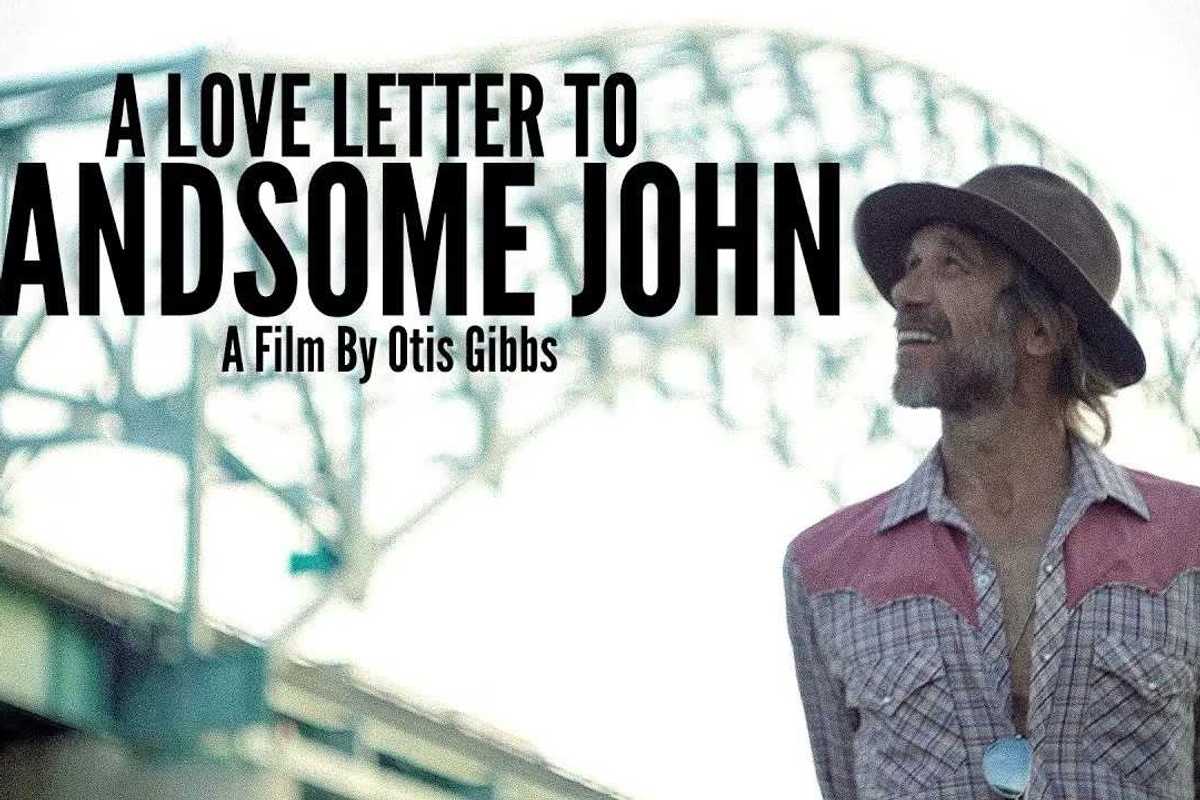
“A Love Letter to Handsome John” screens at The Colonial Theatre on May 8.
Provided
Fans of the late singer-songwriter Todd Snider will have a rare opportunity to gather in celebration of his life and music when “A Love Letter to Handsome John,” a documentary by Otis Gibbs, screens for one night only at The Colonial Theatre in North Canaan on Friday, May 8.
Presented by Wilder House Berkshires and The Colonial Theatre, the 54-minute film began as a tribute to Snider’s friend and mentor, folk legend John Prine. Instead, following Snider’s death last November at age 59, it became something more intimate: a portrait of the alt-country pioneer during the final year of his life.
What began as a simple gesture of gratitude evolved into a poignant meditation on friendship, artistic influence and loss, offering viewers an unusually personal glimpse of Snider at home in his quietest moments.
For Brad Sanzenbacher of Wilder House Berkshires, bringing the film to the Northwest Corner has been deeply personal.
“I’ve been a huge fan of Todd Snider and John Prine for 20 years,” he said. “I lived in the Bay Area before I moved here, and I would see Todd live probably at least four times a year — sometimes back-to-back nights. I was that kind of super Dead Head-type fan that was on tour.”
Sanzenbacher said he had the chance to meet Snider several times and attended the musician’s Catskills retreats.
“He was just one of those people that I really connected with strongly,” he said. “Like a lot of people, when he passed away, I was really shocked and devastated.”
When he learned screenings of the film were beginning to pop up around the country, he wanted to bring that communal experience here.
“I know there are a lot of Todd Snider fans everywhere who want closure on his life and maybe a chance to feel like they’re in the room with him again,” he said. “I thought it would be a really cool experience to bring the film to the community.”
The screening is part of what Sanzenbacher calls the film’s organic, fan-driven momentum.
“I love the grassroots movement of the film,” he said. “They were going to do two screenings and that was going to be it, and now they’re showing it all over the country because fans have reached out to say, ‘How can I bring a screening to my town?’ I feel really lucky we’re able to show it.”
He hopes the evening captures some of the camaraderie that defined the Todd Snider fan experience.
“One of my favorite things about being a Todd Snider fan was when you’d go to two or three shows in a row, you’d turn into a little caravan and make friends with strangers and become this community,” he said. “That’s kind of something I’m hoping happens at the film.”
The screening begins at 7 p.m. Friday, May 8, at The Colonial Theatre, 27 Railroad St., North Canaan. Run time is 54 minutes, with time afterward for audience members to gather and connect.
Keep ReadingShow less
Sharon Playhouse debuts new logoahead of 2026 season
Matthew Kreta
May 06, 2026
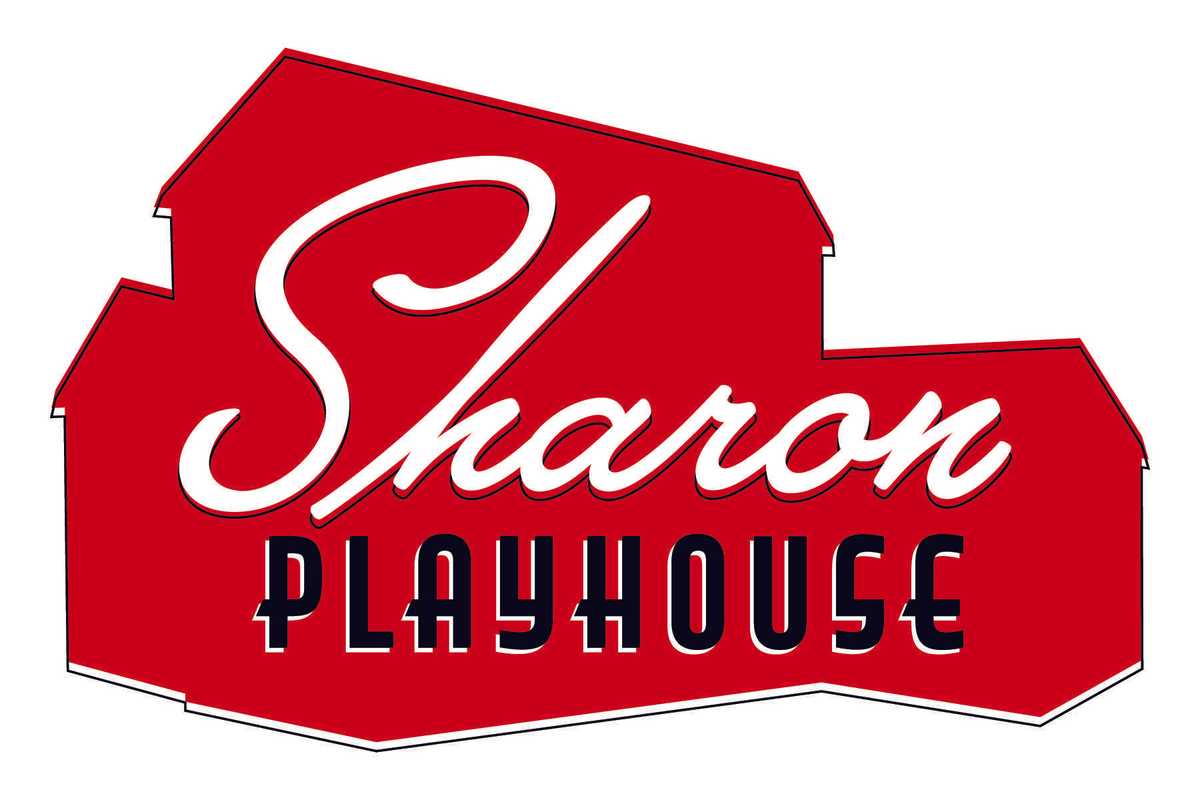
New Sharon Playhouse logo designed by Christina D’Angelo.
Provided
The Sharon Playhouse has unveiled a new brand identity for its 2026 season, reimagining its logo around the silhouette of the historic barn that has long defined the theater.
Sharon Playhouse leadership — Carl Andress, Megan Flanagan and Michael Baldwin — revealed the new logo and website ahead of the 2026 season. The change reflects leadership’s desire to embrace both the Playhouse’s history and future, capturing its nostalgia while reinventing its image.
After attending the closing performance of the Playhouse’s production of The Mousetrap last September, Christina D’Angelo told Playhouse leadership she was “completely changing her design direction” for the new logo after experiencing the work and atmosphere of the Sharon Playhouse firsthand. She incorporated the barn silhouette to capture the theater campus’s history and evoke the warmth and magic of the Playhouse.
“The barn gives a fixed image of how we all feel about the Playhouse,” said Megan Flanagan, managing director. “The new branding presents the story of the great history of Sharon Playhouse — who we were, who we are today, who we are becoming — and the barn is that unifying element.”
The design was one of several options presented and was selected unanimously by Playhouse leadership. D’Angelo also designed this season’s branding, creating a visual throughline for the 2026 season.
The Playhouse remains committed to its taglines and mission statements, “Create. Community. Together.” and “Your destination for the arts.” While those phrases are no longer reflected in the logo itself, Carl Andress, artistic director, said the organization is not moving away from them and that they will continue to appear in publications and on the updated website.
“The refreshed brand aims to shift the narrative in the community, reinforcing the Playhouse’s role not only as a theater but as a vibrant gathering place and artistic home,” Playhouse leadership said in a press release.
For more information, including a video about the updated logo and details on the upcoming 2026 season, visit sharonplayhouse.org
Keep ReadingShow less
Want more of our stories on Google? Click here to make us a Preferred Source.
loading