There is something deceptively simple about a New Yorker cartoon. A few lines, a handful of words — usually fewer than a dozen — and suddenly an entire worldview has been distilled into a single panel.
There is also something delightfully subversive about watching a room full of women sit around a table drawing them. Not necessarily because it seems unusual now — thankfully — but because “Women Laughing,” screening May 9 at The Moviehouse in Millerton, reminds us that for much of The New Yorker’s history, such a gathering would have been nearly impossible to imagine.
The documentary, directed by longtime New Yorker cartoonist Liza Donnelly and filmmaker Kathleen Hughes, traces the uneven history of women cartoonists at the magazine, from their presence in its earliest issues to their near disappearance by the 1950s. But the film does something more interesting still: it lets us watch these artists at work.
“The idea was talking to these women about their process and where their ideas come from,” Donnelly said. “You get to witness these women drawing in the film, and I draw with them.”
“Women Laughing” includes intimate conversations with some of the most celebrated and groundbreaking cartoonists at The New Yorker, including Roz Chast, Emily Flake, Sarah Akinterinwa, Liana Finck, Amy Hwang and Bishakh Som. Donnelly also speaks with Emma Allen, the magazine’s first female cartoon editor. During a dynamic roundtable discussion with 10 cartoonists, viewers also meet artists Emily Sanders Hopkins, Maggie Larson, Arenza Pena-Popo and Victoria Roberts.
“I will confess that it was what I was most worried about,” Hughes said of the technical challenges presented by filming 10 artists at work. “You have 10 people. That’s 10 microphones, six or seven cameras. We didn’t even have a budget for it, but our crew donated all the gear so that we could get it done.”
Hughes was relieved that not only did it work, but it became one of the most memorable parts of the film.
“Frankly, when you put people together and have them talk on screen, it can get tiresome quickly,” Hughes said. “So I’m glad that nobody listened to me when I said I didn’t think we should do this.”
For Donnelly, whose book “Very Funny Ladies” was the impetus for the film, the documentary offered dimensions the printed page could not. For Hughes, whose previous films have examined weightier subjects like economic inequality and gun violence, entering the world of cartoonists brought its own revelations.
“I really did think that the cartoonists were sort of in charge of what was in the magazine,” Hughes said, laughing. “That was probably the biggest revelation.”
What surprised her most was not just the structure of the magazine’s famously competitive submission process — cartoonists submit batches each week and face frequent rejection — but the sheer persistence required to sustain the work.
“It was inspiring to see the dedication everybody had to the craft,” Hughes said. “And how creative everybody is, not just in making the cartoons themselves, but in supporting themselves through it.”
An audience reaction that has surprised both Donnelly and Hughes is the laughter. By the time the filmmakers finished editing, they had seen each cartoon so many times that the humor had become technical material — questions of pacing, framing and sequence. The first public screening changed that.
“All the laughter really kind of blew us away,” Hughes said. “You forget.”
The audience response underscores something else the film makes clear: just how much skill lies behind the apparent simplicity of a single-panel cartoon. Donnelly noted that the form is “a lot harder than you think.” Like the cartoons it celebrates, the documentary values economy and precision. At just 37 minutes, its compact running time reflects that ethos.
“A lot of people have said it’s a great length,” Hughes said. “It’s almost like a cartoon version of a documentary.”
Donnelly appreciates the response she hears most often after screenings.
“You leave them wanting more,” she said.
Like the best New Yorker cartoons, “Women Laughing” says a great deal with remarkable economy, leaving audiences laughing and looking more closely at what appears, at first glance, deceptively simple.
“Women Laughing” will screen at the Moviehouse (48 Main St., Millerton) on May 9 at 7 p.m. followed by a conversation with Liza Donnelly, Kathleen Hughes and cartoonist Amy Hwang. Moderated by local filmmaker Pam Hogan. Tickets at themoviehouse.net
 Dick Hermans in the Oblong Bookstore on Millerton’s Main Street in 1985.Provided

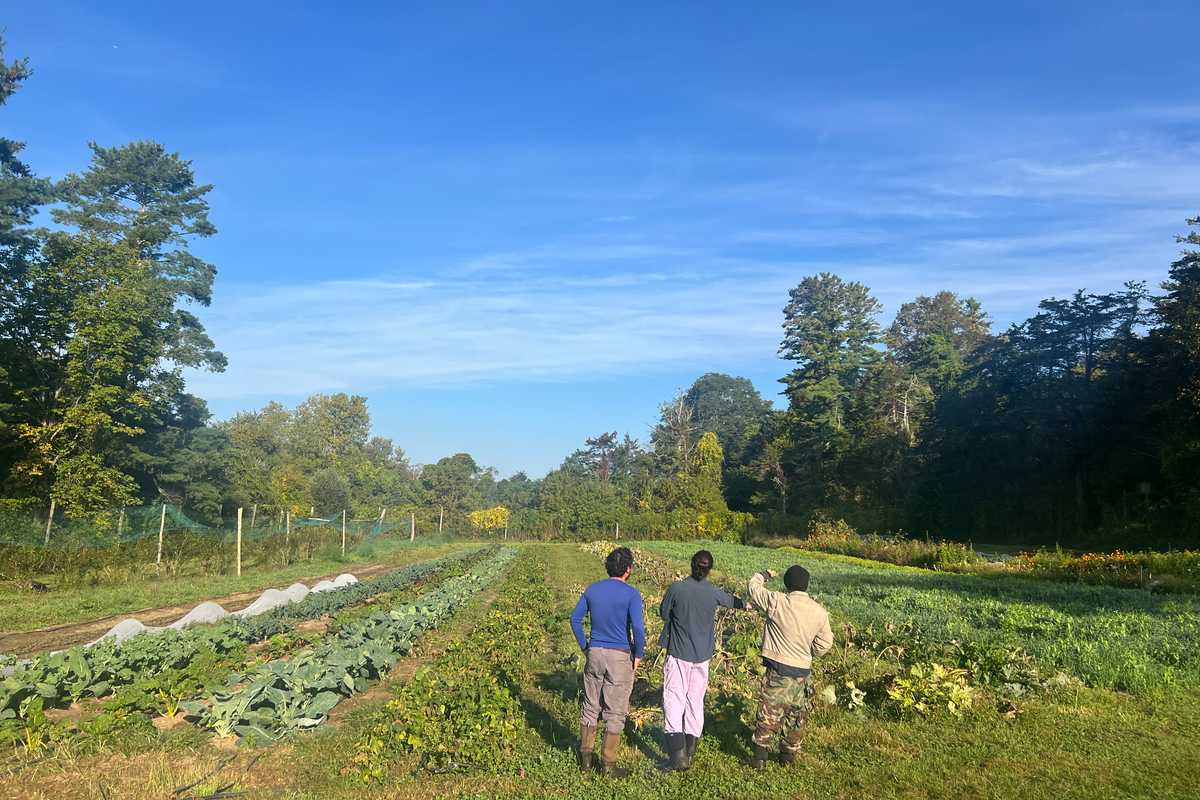
 Fall storage crop harvests amid soil building cover crops at Adamah Farm in Falls Village. Janna Siller