Fiery speeches mark HVRHS graduation

Members of the Class of 2022 at Housatonic Valley Regional High School cheered their classmates during the commencement ceremony on Thursday, June 16.
Photo by Hunter O. Lyle

FALLS VILLAGE — The 90 members of the Class of 2022 heard passionate speeches from their classmates as they celebrated the 83rd commencement at Housatonic Valley Regional High School (HVRHS) on Thursday, June 16.
The ceremony took place under a very large tent on the grass in front of the school. The graduates, faculty and some family members filled the tent and many more spectators brought chairs and watched from outside the tent.
HVRHS Principal Ian Strever noted that the graduates had spent a significant part of their high school years “in a mask, as the COVID-19 pandemic caused disruptions in school procedures.
“Two years of the pandemic could not suppress the indomitable energy of teenagers.”
And presaging what was to follow, Strever praised the graduates for exercising “their First Amendment rights on an unprecedented scale.”
He also noted the Class of 2022 set a new record, with over $500,000 in scholarships and awards.
Salutatorian Avery Tripp’s speech was a true stemwinder.
Flatly contradicting the stereotype of her generation as “lazy and phone-addicted,” she said “We will be the ones to change the world, which is in desperate need of reform.”
She described the probable reversal of the Roe v. Wade Supreme Court decision that legalized abortion as “mind-blowing and devastating.”
“We have made far too much progress to regress in such a drastic manner.”
Tripp said if the abortion decision is overturned, that would open the door for restrictions on or abolition of same-sex marriage, interracial marriage and the availability of contraception.
She was equally voluble on the subject of gun control and school shootings.
“Education does not matter if the process of education gets you killed.”
She urged her classmates to “stay angry until the change you want actually occurs.”
Essayist Hayley Considine remembered her ninth grade embarrassment when, after an uneventful first day of high school, she accidentally broke a bottle when getting on the school bus.
She said she was scared that she would be judged and laughed at then, and later, because of her sexual orientation “as a bisexual woman.”
“I will not let the ignorance and hatred of those who know nothing about me bring me down again.”
Guest speaker Michael Baldwin (Class of 2000), clearly a favorite with the graduates, began by mentioning he had just got married the previous weekend. This got a loud cheer.
Baldwin said when he arrived at HVRHS, “I had no idea who I was.
“I felt unbelievably average.”
He was also coming to terms with his sexual orientation.
He described “an intense amount of shame and self-loathing. I had a secret that could not be voiced.”
“High school is just the beginning,” he continued. “I didn’t know that I’d marry a man and then tell everyone about it at the Housatonic commencement ceremony!”
“Give yourself permission to ride the voyage of self-discovery,” he urged the graduates. “I failed Life Skills, and years later was asked to be the graduation speaker — so anything really is possible!”
Valedictorian Josie Marks said her class grew up “sheltered by the privilege and safety of the Northwest Corner.”
She said it is her generation’s turn “to combat our country’s hypocrisy as it claims to stand for equal protection under the law.”
Among the things she vowed to fight for was abortion rights, saying abortion had never been an issue until white male doctors and the Catholic Church made it so.
She issued a “rallying cry,” saying the “liberties of all minorities are at stake.”
“As a woman and a member of the LGBTQ community, I am petrified.”
She urged her classmates not to be indifferent to such issues.
“Instead of moving on, take action.”

Valedictorian Josie Marks urged her classmates to take action against hypocrisy and injustice. Photo by Hunter O. Lyle

Members of the Class of 2022 walked out for the 83rd commencement ceremony at Housatonic Valley Regional High School on Thursday, June 16. Photo by Hunter O. Lyle



Connecticut will kick off 2026 with nearly two dozen new laws that are slated to wholly or partially take effect on Jan 1.
The laws touch a range of areas in the state, from farming to pharmaceuticals to housing to the justice system.
Connecticut laws are passed by the General Assembly during the legislative session each year — this year’s ran from Jan. 8 to June 4 — or in a special session. They typically take effect on Jan. 1, July 1 or Oct. 1.
Here’s a look at some of the laws that will be implemented on day one of the new year.
Most of H.B. 8002, a sweeping, contentious housing bill, will take effect on Jan. 1.
The bill’s major goal is to make it easier to build more housing in Connecticut. It requires towns to create housing growth plans with goals on how many units they’ll plan and zone for, changes minimum off-street parking requirements and incentivizes towns to take steps to allow more housing, among other measures.
It also expands the number of fair rent commissions — a government body that can hear complaints about rent increases and make decisions on whether to change that rental increase number — and bans “hostile architecture,” or the use of things like armrests in the middle of benches or spikes to make it harder for people experiencing homelessness to lie down.
The bill was a modified version of H.B. 5002, which Gov. Ned Lamont vetoed during the 2025 legislative session, saying he wanted to get local leaders on board with the measure. Behind the scenes, he and advisors fretted over the political implications of signing the measure as they received thousands of calls from opponents and Lamont considered a third-term run next year.
Lawmakers passed H.B. 8002 during a two-day special session from Nov. 13-14, and Lamont signed it into law on Nov. 26.
Condo complexes can no longer enforce provisions in their bylaws that “prohibit or unreasonably restrict” owners of single-family detached units from putting solar panels on their roofs under a new bill that also creates a solar panel approval process for condo unit owners and their associations to follow.
Existing condo associations can opt out of these requirements if at least 75% of their board of directors votes to do so. However, that vote would need to occur by Jan. 1, 2028.
Connecticut already restricts planned community associations from prohibiting solar panels. The new law is essentially an expansion to include condos as well.
Learner’s permit holders must take an eight-hour course prior to getting their driver’s license under existing law, and Connecticut currently allows students to take it both in-person and through distance learning. Beginning Jan. 1, anyone taking the class remotely must keep their camera on, and driving schools can now charge up to $200 for it (the previous limit was $150).
Under that same law, as of Jan. 1 many applicants for a driver’s license or learner’s permit — as well as drivers convicted of violating highway worker safety laws — must complete a program administered by the Department of Motor Vehicles on highway work zone and roadside vehicle safety awareness.
All 16- and 17-year-old driver’s license applicants who get a learner’s permit beginning Jan. 1, 2026 must take the program, as well as adult driver’s license applicants who meet certain requirements (like having not previously held a Connecticut license or not currently holding a valid license issued by another state, territory or country).
On Jan. 1, Connecticut’s minimum wage will increase by $0.59, from $16.35 per hour to $16.94 per hour.
That increase comes from a law signed by Gov. Ned Lamont in 2019 that, as of 2023, pegs the state’s minimum wage to the federal employment cost index.
Connecticut currently has the fourth highest state minimum wage, behind $16.66 in Washington and $16.50 in California and most of New York. Massachusetts and Rhode Island require a minimum wage of $15.
The Connecticut DMV will begin issuing commemorative license plates that recognize “The Borinqueneers,” the U.S. Army’s 65th Infantry Regiment made up largely of Puerto Rican servicemembers who served with distinction in the Korean War.
The plates will cost $60. They will be designed in consultation with the Hispanic-American Veterans of Connecticut Inc., and that group will receive $45 from the sale of each plate for bilingual services and assistance to the state’s veterans and current servicemembers.
HVRHS’s Victoria Brooks navigates traffic on her way to the hoop. She scored a game-high 17 points against Nonnewaug Tuesday, Dec. 16.
FALLS VILLAGE — Berkshire League basketball returned to Housatonic Valley Regional High School Tuesday, Dec. 16.
Nonnewaug High School’s girls varsity team beat Housatonic 52-42 in the first game of the regular season.
The atmosphere was intense in Ed Tyburski Gym with frequent fouls, traps and steals on the court. Fans of both sides heightened the energy for the return of varsity basketball.
HVRHS started with a lead in the first quarter. The score balanced out by halftime and then Nonnewaug caught fire with 20 points in the third quarter. Despite a strong effort by HVRHS in the last quarter, the Chiefs held on to win.
Housatonic’s Victoria Brooks scored a game-high 17 points and Olivia Brooks scored 14. Carmela Egan scored 8 points with 14 rebounds, 5 steals and 4 assists. Maddy Johnson had 10 rebounds, 4 steals, 2 assists and 2 points, and Aubrey Funk scored 1 point.
Nonnewaug was led by Gemma Hedrei with 13 points. Chloe Whipple and Jayda Gladding each scored 11 points. Sarah Nichols scored 9, Bryce Gilbert scored 5, Gia Savarese scored 2 and Jazlyn Delprincipe scored 1.
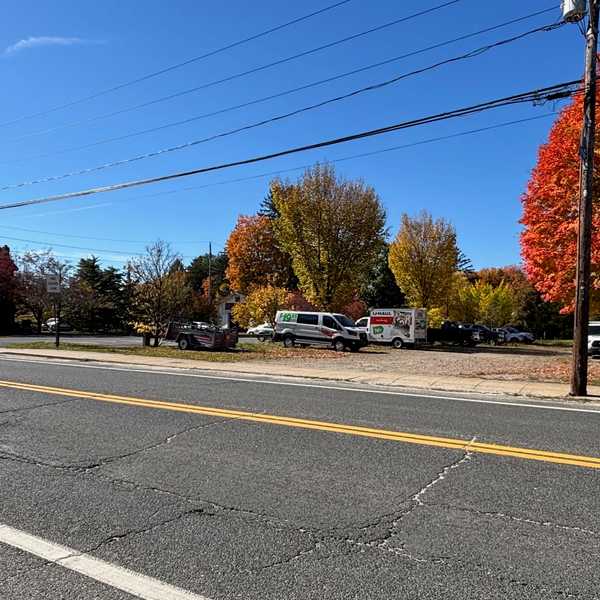
CORNWALL — At the Dec. 9 meeting of the Planning and Zoning Commission, the commission had a pre-application discussion with Karl Saliter, owner of Karl on Wheels, who plans to operate his moving business at 26 Kent Road South, which is an existing retail space.
Saliter said he will use the existing retail section of the building as a mixed retail space and office, and the rear of the building for temporary storage during moving operations.
There will be no external “personal” storage proposed for the property.
The commission decided that Saliter should go ahead with a site plan application under the regulations for “retail stores and trades.”
P&Z also set a public hearing on a proposed text amendment on dimensional requirements for properties in the West Cornwall General Business (GB) zone. It will be held Jan. 13, 2026, at 7 p.m. at the Cornwall Library.