Gas prices

Debra A. Aleksinas
Poverty in the Northwest Corner doesn’t define an entire town. Instead, it exists in quieter pockets — apartments above storefronts, income-restricted housing and older homes where seniors and working residents struggle to keep pace with rising costs. This series examines where financial hardship exists in Region One towns, what is driving it and how communities are responding.
SHARON — In a region often associated with affluence, hunger relief organizations say pockets of poverty are deepening, with as many as four in 10 households struggling to cover basic needs, according to regional estimates.
A weeklong fundraising campaign beginning May 11 will ask diners at local restaurants to help address that gap by funding the purchase of fresh food from local farms for distribution to area pantries.
Supported by more than a dozen restaurants and cafes across the tri-corner region, the Nourish Neighbors campaign raises funds to support that effort — connecting restaurants, farms and hunger relief efforts.
“We expect to have about 15 restaurants participate, from Champêtre in Pine Plains all the way to the Falls Village Inn,” said Chris Armero, an organizer of the campaign. “Not many people know that four out of 10 of our neighbors have trouble paying their bills.”
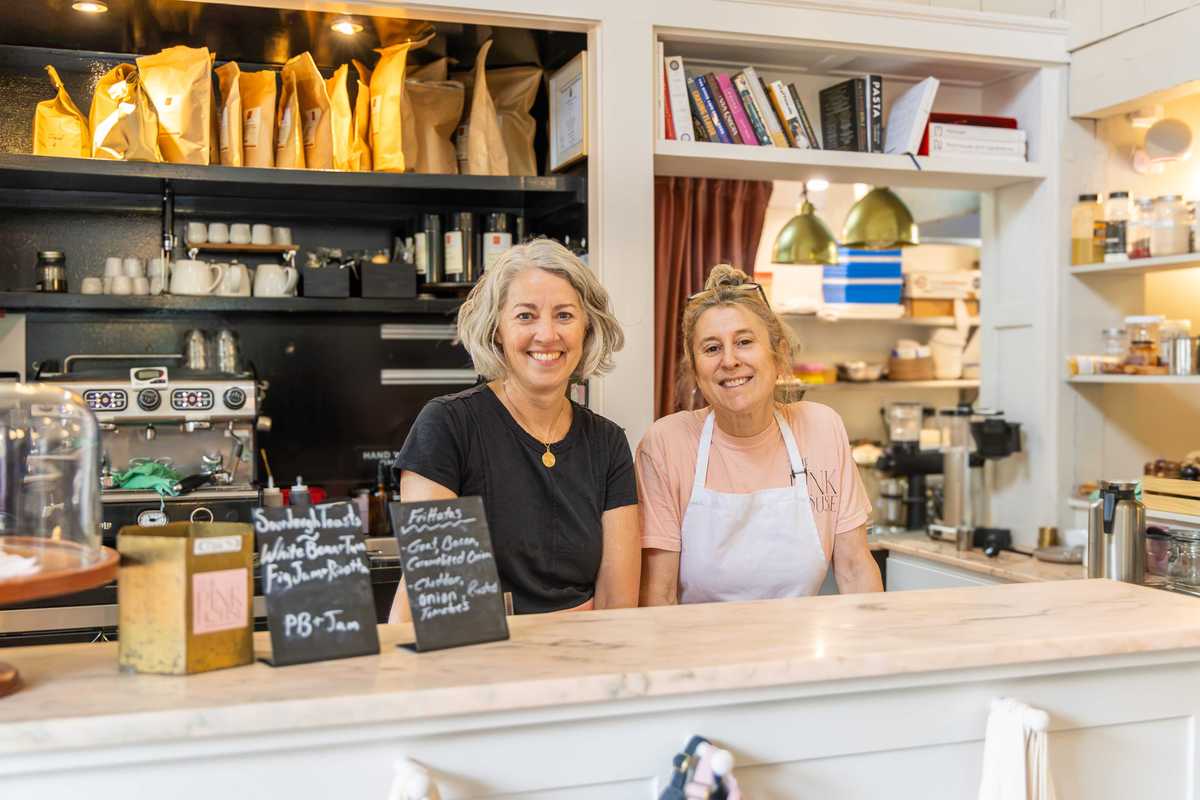
The effort is led by Tri Corner F.E.E.D. (Food Equity, Education and Distribution), the Sharon-based nonprofit behind Nourish Neighbors, founded in 2023 by former Q Farms owners Linda and James Quella. The organization is advancing a model to expand access to fresh, locally grown food while supporting farmers and small businesses — a concept organizers say is increasingly needed in the tri-corner region, where many households are struggling to meet basic needs.
Tri Corner F.E.E.D. operates a local storefront at 56 South Center St. in Millerton, where food is priced on a sliding scale. It offers farm-fresh meats, seasonal vegetables, prepared foods, coffee and baked goods.
“We really want to reduce barriers for people to be able to afford nutritious, local food,” said Blake Myers, director of food programs at the Tri Corner F.E.E.D. Market.
About 75 people shop there weekly, she said, with roughly 50 relying on it as a primary grocery source.
Demand rising at local food pantries
Local food pantries — including The Corner Pantry in Lakeville, North East Community Center (NECC) in Millerton and St. Thomas Episcopal Church in Amenia — have reported sustained increases in demand since the pandemic, even as emergency supports have receded and funding sources have tightened.
That pressure has exposed a broader challenge across the region: not only how to meet immediate need, but how to provide consistent access to nutritious food in a way that is sustainable for both households and the local agricultural economy.
Tri Corner F.E.E.D.’s approach centers on strengthening those connections, said Linda Quella, who previously farmed land in Sharon and sold her produce primarily via farm stands and farmers markets.
She said the experience underscored how difficult it is for farmers to earn a living through local sales alone.
“We were going to farmers markets three times a week,” Quella said. “People don’t realize how much you have to sell to earn a living as a farmer.”
She added, “Everybody that was buying our food was very well off.”
That realization led to conversations with hunger relief organizations, including the NECC in Millerton and its food programs director, Jordan Schmidt.
With food pantries held twice a month, Quella saw an opportunity to host a pop-up market with the organization.
“We could tell it was a need,” Quella said. “It became clear this would be welcome in this community.”
Quella also researched a study from United Way that collected data from households that struggle to cover basic costs. Her efforts helped inform Tri Corner F.E.E.D.’s sliding scale model.
“Through that study, we found that farmers can’t afford to discount products. They need full price for their product,” Quella said. “And that consumers needed nutrient-rich food but didn’t have access to it.”
Quella describes Millerton as a food desert, noting the closure of the town’s only food market there several years ago.
Program pays
farmers upfront
Tri Corner F.E.E.D. also purchases produce and other goods through its Food Sovereignty Fund, which was established to buy directly from farmers and distribute those goods to local food pantries — ensuring access to fresh food while providing farmers with a stable, guaranteed market.
Farmers are paid in advance for their harvests, offering financial stability and encouraging participation in food distribution programs. The fund also connects farms with local food pantries, schools and community centers — to deliver fresh produce to underserved populations.
Participating farms include, in addition to Adamah Farm, Rock Steady Farm, Sky High Farm and the Ten Mile Farm Foundation, among others across Connecticut and New York.
Surplus crops
benefit communities
At Adamah, a nonprofit CSA (Community Supported Agriculture program), connected to the Isabella Freedman Jewish Retreat Center, the model allows members to buy a share of a farm’s harvest upfront in exchange for regular distributions of fresh produce throughout the growing season — helping redirect surplus crops into the community.
“In 2025, we sold a few items a week through Tri Corner, including cherry tomatoes, zucchini and herbs,” said Janna Siller, farm director and advocacy coordinator at Adamah.
Siller said the region produces abundant food, yet many residents rely on distant grocery stores due to cost barriers or limited access.
“Tri Corner is helping bridge that gap,” she said.
Adamah also raises funds to donate produce to local pantries, sometimes delivering close to 1,000 pounds of food in a single day.
Restaurant patrons
pay it forward
That same model extends to the upcoming Nourish Neighbors campaign.
“When you visit a participating restaurant or business, you have the opportunity to pay it forward,” Myers said, adding that proceeds go to Tri Corner’s Food Sovereignty Fund.
Supported local pantries include The Corner Pantry in Lakeville, North East Community Center in Millerton and St. Thomas in Amenia.
“This is especially urgent as demand for their services has risen just as federal and state support has come under pressure,” Armero said.
Even as the program expands, Quella said, the scale of need continues to outpace available resources. Rising living costs strain both households and farms, leaving programs like Tri Corner F.E.E.D. to shoulder a growing share of the region’s food access needs.
Alec Linden
SHARON – Voters at a town meeting Friday, May 8, will decide whether to approve a town budget that includes a flat Sharon Center School spending plan that has drawn weeks of pushback from parents and residents.
Officials are anticipating a larger than average turnout, which has led them to change the venue from town hall to Sharon Center School to accommodate a larger crowd.
The Board of Finance voted Tuesday, April 28, to keep education spending flat and declined to redirect about $41,000 in out-of-town tuition back to the school, a request made by a group of parents at a heated public hearing on April 24.
The issue has exposed a divide between parents pushing to shift that revenue into the education budget and officials who argue that the town’s past accounting issues, financial constraints and state funding rules make the matter more complex than it appears.
Freddy Deknatel and Emily McGoldrick, parents of two children in Sharon Daycare, said they plan to vote against the proposed budget. “The Board of Finance seems to have been quite inflexible,” Deknatel said, reflecting on its decision not to move tuition revenues into the school budget. “Knowing many parents who either have kids in the school or whose kids would be starting in kindergarten this coming fall, we feel that we’ll vote against the budget because it’s the only step left.”
The current proposal follows a last-minute $70,000 reduction in early April that drew strong public response.
The controversial $4,165,513 budget proposal for Sharon Center School – unchanged from the current year – is now heading to a vote. It continues a years-long trend of near-zero increases and reductions, and is roughly $178,000 lower than the school’s 2020-2021 budget of $4,343,314.
The education budget, said BOF member John Hecht, has been kept flat with a 0% increase, due in part to an accounting error that was made several years ago.
“Things that should have been capitalized were expensed,” he said, referring to costs that should have been paid for through long-term capital planning by the town but were instead included in the school’s annual budget.
Hecht said the issue has been compounded by the state’s Minimum Budget Requirement, or MBR, which generally prevents municipalities from spending less on education than they did the previous year.
“We’ve been trying over the years to get that back under control,” Hecht said.
He and other members of the BOF cited the issue as a key reason for maintaining a flat budget.
The main focus of the hour-long discussion, however, focused on whether to move about $41,000 in tuition paid by families outside the district into the school’s budget. The funds currently go into the town’s Undesignated Fund.
The proposal was inspired by a flood of public support for additional school funding during a public hearing Friday, April 24. While many residents urged the board to transfer the tuition revenue to the school, the board ultimately decided to keep it in the municipal budget.
“I say we wait for the vote and see what happens,” said Hecht.
Board members said they are motivated to work with the BOE on future plans for tuition revenues, which are substantially higher this year due to more out-of-town students, as well as other areas of cooperation in preparation for subsequent budget cycles.
BOE Chair Philip O’Reilly, who was present at the meeting, later said he was “taken aback” by the decision after he believed the BOF would work with school officials to find a way to return the funds.
While he is confident that the currently proposed flat budget is sufficient to fully fund the school and its programs, O’Reilly said the tuition issue offered the two boards – which have historically had fraught relations – a step toward compromise.
“The Board of Education and the Board of Finance must find a better way to be able to work together and solve our issues,” he said.
O’Reilly urged parents to trust his experience and dedication to the school. He served as principal of SCS from 2001 to 2005 and has more than four decades in education. He also put his six children through Region One, three of whom graduated from SCS.
“I want us to be the most successful early kindergarten to eighth-grade school in Region One, and I will do everything I can to accomplish that mission,” he said.
SCS Principal Carol Tomkalski similarly urged parents to trust the school’s staff and leadership: “We are always going to do everything we can here to ensure our program is not compromised.”
BOF member Carol Flaton, who phoned into Tuesday’s meeting, posited that the school has always managed to cover costs with leftover unspent funds. “A budget is a budget,” she said, “It’s not an actual.”
Hecht reported that the school had roughly $200,000 remaining from last year’s budget. This year, the BOE calculated that it expects to have approximately $120,000 unspent for 2026-2027, though this number is a projection that is subject to the actual expenditures throughout the year.
Flaton argued that adding the $41,000 in tuition revenue to the BOE budget would simply be adding to what she described as “cushion.”
Region One Superintendent Melony Brady-Shanley, who was present at Tuesday’s meeting, said that unspent funds are not guaranteed, especially since most of the time they’re due staffing changes, which can be highly unpredictable.
Speaking several days after the meeting, she expressed the term “cushion” misrepresents the reality of school budgeting. “That is just patently false,” she said. “We have to budget based on the actual people we have in front of us.”
“We don’t go into each budget season thinking how much cushion we can sneak in,” she added.
She said that she hopes the various town organizations continue to negotiate how to work together for future budget cycles. Members of the BOE and BOF also expressed similar sentiments, and promised to develop a collaborative approach moving forward.
Going into the vote, some parents and residents say they remain uncertain.
A flyer distributed by a group calling itself “Concerned Parents of Sharon” is urging residents to vote against the proposed budget, arguing that a flat spending plan would effectively reduce resources for the school as costs rise.
Karen Rios, president of the SCS Parent-Teacher Organization, said after Tuesday’s meeting that she remains troubled by the budget debate.
“Our goal is to make sure that Sharon not only thrives in the present but also has new generations of children who grow up and say, ‘I’m proud to be from Sharon.’”
VOTE DETAILS
When: Friday, May 8
Time: 6 p.m.
Where: Sharon Center School, 80 Hilltop Road
Aly Morrissey
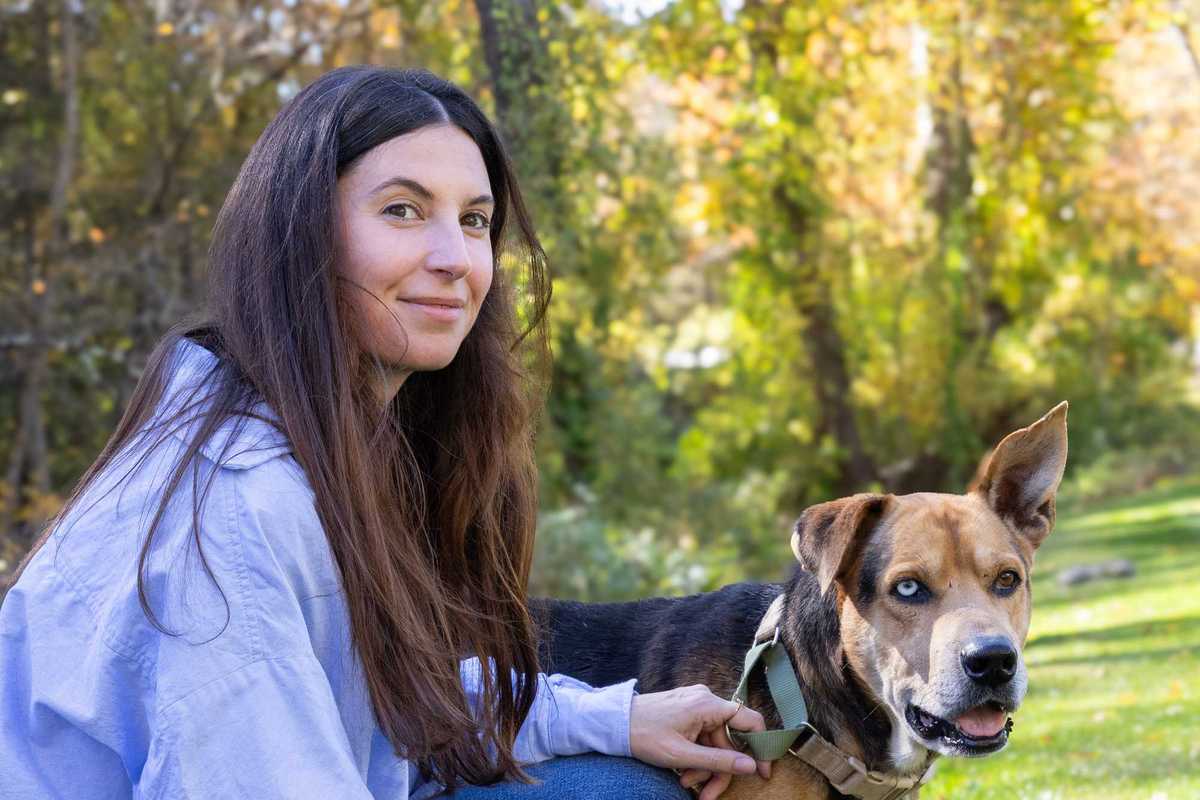
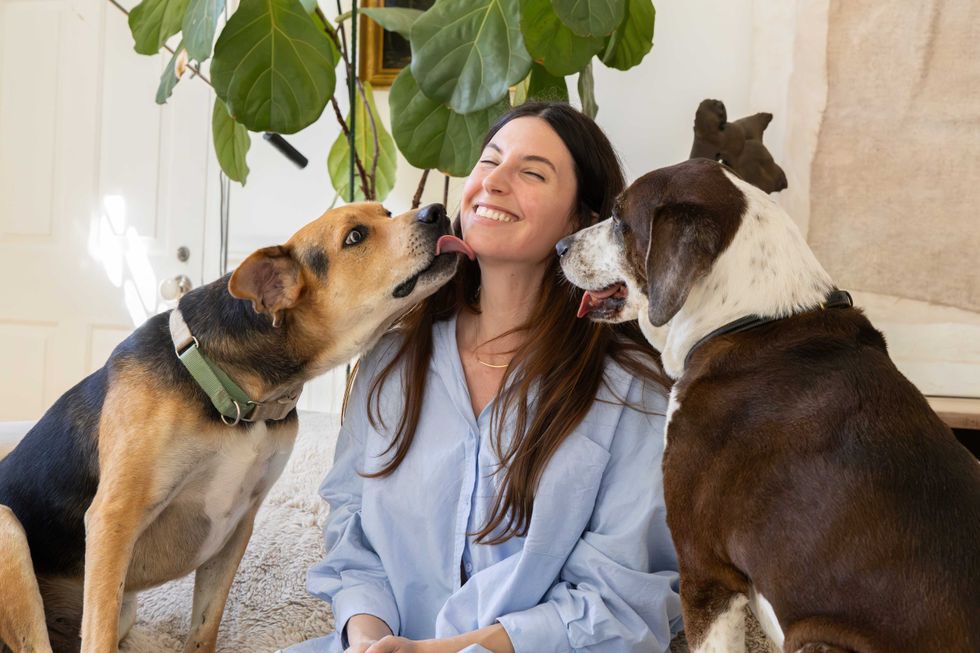
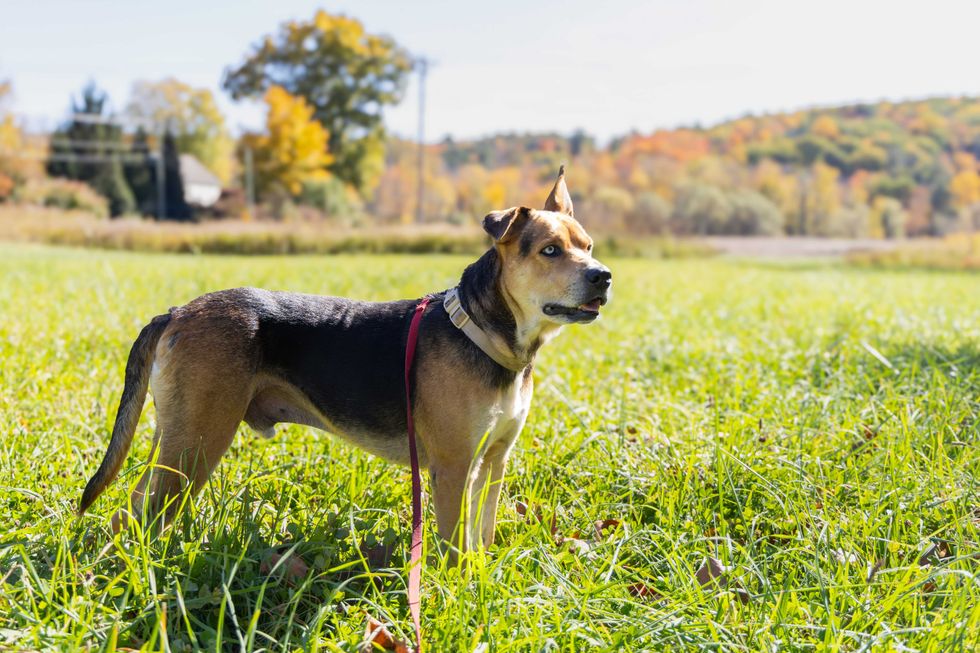
Bill Cowie poses with his dog, Rosie, at his Sharon Mountain Road home amid legal battles stemming from a dispute with the Sharon post office.
SHARON — A dispute between an 81-year-old Sharon resident and the United States Postal Service over an alleged dog bite escalated into two separate arrests in April and the suspension of package delivery to his Sharon Mountain Road home.
William “Bill” Cowie, who has lived in Sharon for 40 years, said the bite did not occur, and he described the disruption of his deliveries as “government overreach.”
Cowie said the conflict began early last month when his dog, Rosie, jumped on a mail carrier delivering packages to his home. According to Cowie, the carrier told him he had been bitten, an allegation Cowie disputes.
“I was there,” Cowie said. “I did see Rosie jump up, yes,” he continued, but said he did not see a bite occur. Cowie said he apologized to the carrier and offered him $20 in case Rosie got any mud on his jeans.
“He took the money and went off,” he said.
In Cowie’s mind, the incident was over. Then, his packages stopped arriving.
During an April 23 visit to address the issue with the Sharon postmaster, Richard Ellis, Cowie learned that a hold had been placed on his deliveries because of the incident with Rosie.
“My dog did nothing wrong,” Cowie said. “You can’t just say someone did something and then punish them for it without proof.”
Cowie and his wife adopted Rosie about two years ago, just one day before she was scheduled to be put to sleep. He describes Rosie – a Black Mouth Cur – as a loving dog whose only threat is licking too much.
Cowie said the loss of package delivery has been particularly difficult because his wife, Mollie, is unable to operate a vehicle. He expressed disappointment after repeated attempts to obtain proof of the alleged bite and restore his delivery service were unsuccessful. He said the situation raises questions about how such decisions are made and what recourse citizens have.
The USPS, however, has an explicit policy regarding dogs that does not require evidence.
“The Postal Service places the safety of its employees as a top priority,” said Amy Gibbs, a strategic communications specialist for the USPS who responded to inquiries directed to Sharon’s post office. “It is postal policy that if a carrier feels threatened by a dog, the owner may be asked to pick up mail at a Post Office until the carrier is assured the pet has been restrained.”
Gibbs said curbside delivery to Cowie’s home – meaning items that fit inside his mailbox – has not been disrupted, though larger packages are being held at the post office.
Cowie said the conversation with the postmaster on April 23 at the Low Road post office grew heated and led to his arrest for disorderly conduct. According to a police report, Trooper Robert Flanigan of Troop B responded to a call about an “irate customer” who was “yelling all sorts of profanities” while inside the post office. Cowie was then banned from the property.
He returned to the post office on April 29 and was eventually arrested, handcuffed and fingerprinted for new trespassing charges. According to a police report, Trooper Jared Tuers of Troop B responded to the scene for an “active disturbance” with an individual who was not allowed on the property. Cowie said he spent about three hours at the police station in North Canaan and his car had been impounded.
Though Cowie has been banned from the Low Road post office following his arrests, USPS officials said he is allowed to designate another person to collect any undeliverable mail and packages – those too large to fit in a mailbox – at the post office.
Cowie said he does not regret his behavior or anything he said during the altercations, adding that he was defending his dog, whom he views as a family member, and pushing back against the “overreach of authority.”
“It was the arbitrary, unilateral power exercised by the local postmaster that irked me the most,” Cowie said. “There’s an erosion of civil liberties, and it has to be reversed.”
Cowie argues that the disruption of his packages mirrors authoritative tactics modeled by the current administration.
If he can afford it, Cowie said, he will take his case all the way to the U.S. Supreme Court for what he deems as “overreaching government power.” Asked what justice looks like, Cowie said, “investigation of any government allegation before actions are taken.”
Cowie is scheduled to appear in court in Torrington on May 7 and 13.

Want more of our stories on Google? Click here to make us a Preferred Source.
Lakeville Journal
GREAT BARRINGTON — Richard J. Campeglio Jr., 60, of Great Barrington, died suddenly on Monday, Dec. 1, 2025. He was born in Great Barrington on Jan. 9, 1965, son of the late Richard Campeglio Sr. and Mary (Curtis) Logerwell.
Richard worked for many years as a laborer for the Sheffield Highway Department and as a caretaker. He loved hunting, golfing, fishing, and spending time with his daughter Cassie.
Richard is survived by his daughter, Cassie Campeglio of Sheffield; his mother Mary Logerwell of Fort Walton Beach, Florida; his sister Lynda Turow and her husband Bob Turow of Clearwater, Florida; his nephew Cory List of Clearwater, and his niece Kelsey List and her son Jameson Green of Gainesville, Florida.
Richard was predeceased by his father Richard Campeglio Sr. and his brother William Breen.
A service will be held at Finnerty & Stevens Funeral Home, 426 Main St., Great Barrington, on May 16 at 11 a.m., followed by a celebration of life at the American Legion Hall in Sheffield from 12 to 2 p.m.
Lakeville Journal
SALISBURY — Gerald Richard Hardy, 87, passed away peacefully on April 14, 2026, at Noble Horizons in Salisbury.
Born in Chicago on Sept. 19, 1938, to English immigrant parents Harry and Antoinette, he had two older brothers, Harry and Elmer. Elmer was shot down over France in WWII when Gerald was 6 years old, and his parents would not receive confirmation of his brother’s death until some 10 years later. Deeply affected by the loss of his brother, Gerald found solace in drawing. He would ride the Chicago el and buses to sketch the everyday life of the city and its people. He eventually attended the renowned Art Institute of Chicago, where he excelled in drawing, painting, etching, and metal sculpture.
In the summer of 1968, Gerald attended the prestigious Oxbow School of Art in Saugatuck, Michigan where he met his wife, Marilyn Davis. The two were married in Oct. of 1968 and exhibited and traveled throughout the U.S. and the world. Settling in Falls Village, ConnecticutGerald was drawn to the dramatic landscape of the falls and the surrounding area.
They had two children, David and Jordan, who often traveled with them for exhibitions in New England and Florida. Gerald and Marilyn continued to exhibit well into their 80s, traveling up and down the eastern seaboard and creating original paintings and prints of local sites under their business name “Favorite Places.”
Gerald made the land and home in Connecticut a wonderland, with a 40’ diameter carousel with 18 antique wooden horses, a flower farm with over 100 varieties of daylilies and hosta, and giant boulders he excavated by hand with a manual jack.
Gerald’s work was shown in over 300 one-man shows in many states. His paintings are in such collections as the Mint Museum in Birmingham, Alabama, the Ford Motor Company, and the Interchurch Center in New York City. He was featured in Arts Magazine, Art in America, and was art editor of Christian Art Magazine.
Gerald is survived by his loving wife of 58 years, Marilyn; his two children, David Hardy and his wife Abbey Williams; Jordan Hardy and his wife Lia Tjandra; and his 3 grandchildren, Monty Hardy by his son David, and Kai and Brennan Hardy by his son Jordan, along with nephews Guy, Brian, and Dean Hardy.
Family and friends are invited to share memories and offer condolences on his birthday, Sunday, Sept. 19, 2026, at The Lakeville Grove.
Lakeville Journal
CORNWALL — Beloved and greatly respected Cornwall resident, Huntington (“Hunt”) Williams, surrounded by family, died April 10, the result of an injury sustained from a fall. He was 95 years old and had lived in Cornwall, a town he loved deeply, for the last 45 years.
Born in 1930 in Hartford, Hunt was raised in rural Glastonbury, a town where his family had lived for several generations and where his great grandfather started a shaving soap business, the J.B. Williams Company. His father, Percy Williams, worked for the Aetna Life Insurance Company in Hartford, and his mother, Gertrude, was a homemaker. Hunt had one older sister, Sarah, who predeceased him.
Hunt attended Glastonbury public schools, and it was in high school that he developed an interest in and lifelong passion for farming. He graduated from the University of Massachusetts in 1953 with a degree in animal husbandry. The Korean War was going on during his college years but Hunt was granted an educational deferment. After a summer working in Wyoming, he went on to California where he was drafted and sent to Korea. Fortunately, the cease fire went into effect in July, 1953, and his military service ended in Oct. 1955.
His deep interest in agriculture and the environment was a constant through the jobs he held and communities he lived in, starting with work for a feed company in New York State, followed by seven years with the Cornell Cooperative Extension providing education in dairy farming in New York’s Herkimer and Essex counties, then on to Tenneco, a large conglomerate with an agricultural chemical branch, and a move to the Connecticut Council on Environmental Quality where, among other projects, he worked on regulations regarding the development rights for farms and farmland.
During this period, he married Nancy Lewis of West Hartford. They had three sons, Peter, David and Philip.
In 1976 Hunt and his family moved to Lakeville, Connecticut, where he began a job as an adult ed teacher in the vocational agricultural department at Housatonic Valley Regional High School, a position he held for ten years. It was during this time, that Hunt and Nancy divorced, and Hunt moved to a house on Cream Hill Road in Cornwall. He met and eventually married Rebecca (Becky) Gold West. They built a house on a portion of Cream Hill Farm – a peaceful tract of land with beautiful views – where they lived with their combined families, Becky’s two sons and Hunt’s three sons. Hunt’s last fulltime job was working for his brother-in-law Ralph Gold who had a John Deere business in Bantam.
After Becky’s death in 1994, Hunt joined the fire department as an EMT, a commitment he regarded as an opportunity to give back to Cornwall. He will long be remembered for his support of John Welles who, when he decided he was too sick to continue living, took his own life in June 2004. Hunt’s years of service in Cornwall include being on the Zoning Board of Appeals for 20 years and chairman for half that time. He was the Civil Preparedness Director of Cornwall for ten years. He served as a Cornwall Conservation Trust director, drove for FISH, and for five years was a “friendly visitor” to a retired teacher of Hotchkiss. He served on numerous committees, including the Agriculture Advisory Commission.
During these last 30 years Hunt also shared his life and house with another Cornwall neighbor, Honora (“Nora”) Horan, and first their Airedale Lulu and more recently their Welsh terrier Maggie. He thoroughly enjoyed his retirement: he joyfully cut and split countless cords of wood to heat the house; in late February he would tap 25 maple trees along Cream Hill Road, collect the sap bucket by bucket and carefully boil the sap until he had perfect maple syrup. He listened to opera while making apple pie or, later, baked apples. He traveled extensively: to New Zealand, Hawaii and the Adirondacks with his dear friend Denny Frost; and multiple trips to Europe with Nora, including one following the places in France where his father had fought in World War I. He reveled in having nearby family and watched with wonder and delight as granddaughters grew from newborns to young women. And through it all he continued to make improvements to his house, a never ending “work in progress.”
Hunt is survived by his three sons, Peter and his daughter Francesca (Colorado), David (Cornwall, Connecticut), and Philip and his wife Keirsten and their two daughters Amelia and Natalie (Colebrook, Connecticut); also by his two stepsons Phillip West, his wife Kathy and daughters Thea and Andra (Cornwall, Connecticut), and Charles, his wife Michele and sons Woody and Clark (Bozeman, Montana); by his niece Anne Krauss and her husband Stephen (Jefferson, Maine); by his loving and beloved significant other/partner Nora Horan and their terrier Maggie; and by the countless friends and neighbors who treasured their friendship with Hunt.
Donations in Hunt’s memory may be made to his favorite charity, Heifer International (Heifer.org), or The Cornwall Fire Department (cornwallfire.org), the Cornwall Conservation Trust (cornwallconservationtrust.org) or the Connecticut Farmland Trust (ctfarmland.org).
A memorial service will be held Sunday, May 31. Details to be announced.

Want more of our stories on Google? Click here to make us a Preferred Source.
Want more of our stories on Google? Click here to make us a Preferred Source.