The harvest season is just beginning…

The harvest season is just beginning…
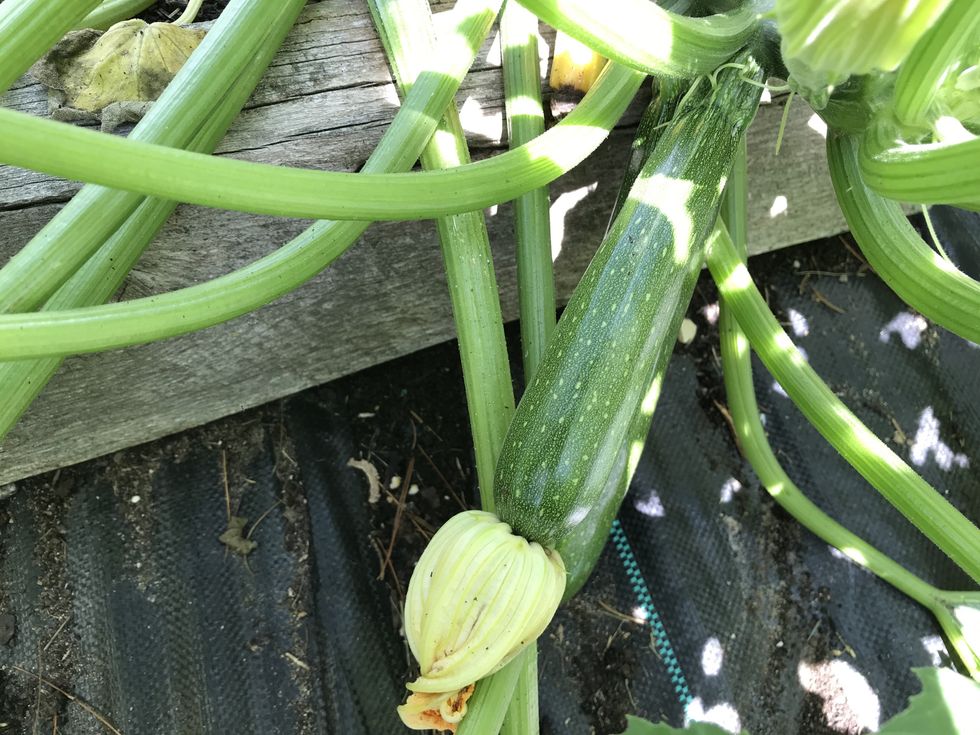
Photo by Cynthia Hochswender

There isn’t really much lettuce left in my garden at this point in the summer but, boy, do I have a lot of zucchini.

Regular readers of this healthy eating column (and sorry it’s been so long since the last column) will recall that I’m always searching for new sources of potassium. Happily, zucchini has a lot of potassium, about 222 mg for each 100 grams that you eat (I just weighed a fresh 6-inch zucchini on my food scale and it was 247 grams, so figure 100 grams is about a cup or less).

Honestly, there isn’t a ton of other nutrition in zucchinis but they’re fresh and tasty and have a decent amount of fiber in them, which is good for your heart and helps your digestion. 

Potassium, my favorite electrolyte/mineral, is important for regulating the amount of water in your body, and it keeps your muscles functioning properly (including the big muscle: your heart).

In all: I’m glad to have a lot of zucchini in the garden. And no, I’m not planning at this moment to make zucchini bread.

So what else can one do with all this fruit (because yes, botanically it’s a fruit, even though from a culinary point of view it’s a vegetable).

Zucchini is in many ways a good vehicle for seasonings and toppings. But while, for example, lobster and snails and artichokes are a good excuse to eat a lot of melted butter, zucchini is a good excuse to try a lot of different herbs. 

Try cutting a zucchini into quarters lengthwise (so you have four long quarters that begin at the little cap at the top and stretch all the way down to the little cap at the bottom). Brush olive oil on the four quarters and then lay them on a cookie sheet lined with parchment paper or foil. Sprinkle with a little salt and pepper, then roast them for 10 or 15 minutes, until they’re just tender. Take them out and poke them; if they feel delicious, take them off, otherwise give them another five minutes. 

Once they’ve cooled, move them to a plate (be careful, they’re going to be floppy and they might split in half if you don’t support them carefully enough) and squeeze lemon juice over the top and then sprinkle on some finely cut up herbs (I often cut them right over the plate with a pair of clean, sharp scissors). Flat Italian parsley works great; so do basil, tarragon, mint or scallions. Serve with grilled meat and rice pilaf.

Too hot to cook? You can eat zucchini raw. It’s delicious with dip, for example; I often cut a zucchini into batons that are about 2 inches long and serve them with hummus, but they’d be good with almost any dip.

A few years ago, I was gifted a beautiful little lethally sharp machine called a mandoline. I finally took it out of its box this summer and have found it to be the perfect tool to use with zucchini and with their visual twins, the cucumbers. 

As a side note, for thin slicing the best cucumbers are the ones with a thin skin and small seeds, such as the English and Persian varieties, and the Kirby cukes. 

The mandoline can either give you paper-thin slices of your favorite cucurbite, or they can give you matchstick-thin little rectangles, also known as a julienne. You can just dress them with a vinaigrette or you can do what my friend Cybele does with her cucumbers but which works with zukes too: Dress them with sour cream and/or plain Greek yogurt, a dose of fresh dill weed, some thin-sliced shallots, tasty salt and a grind or two of fresh pepper and some lemon juice. 

If you soak the slices in the lemon juice first and then drain the juice, your salad won’t get as watery. 

Speaking of vegetables that you might not know you can eat raw: I’m also now getting some beets in my garden. Again, the mandoline helps you to make paper-thin beet slices — so thin, in fact, that you don’t need to peel off the skin first. This is really best done with beets from your own garden, which you know for certain haven’t been sprayed with any chemicals.

For this salad, I use the matchstick/julienne setting on the mandoline. I then dress the beets with a classic vinaigrette (French mustard, oil, a trace of a nice vinegar such as rice or balsamic, a little water to give it the right texture). You can add some orange zest, some finely minced tarragon or some chopped scallions. 

If you don’t have a mandoline, you can still make a beet salad but you might be better off roasting your unpeeled beets in a 350 degree oven until they are just tender (it’s impossible to know how quickly a beet will cook; I have no idea why this is). Don’t overcook them or they’ll start to shrivel. Peel off the skin, cut into quarters and dress them as above.
Latest News

Robin Wall Kimmerer urges gratitude, reciprocity in talk at Cary Institute

Robin Wall Kimmerer inspired the audience with her grassroots initiative “Plant, Baby, Plant,” encouraging restoration, native planting and care for ecosystems.

Aly Morrissey

Robin Wall Kimmerer, the bestselling author of “Braiding Sweetgrass” and a member of the Citizen Potawatomi Nation, urged a sold-out audience at the Cary Institute of Ecosystem Studies on Friday, March 13, to rethink humanity’s relationship with the natural world through gratitude, reciprocity and responsibility.

Introduced by Cary Institute President Joshua Ginsberg, Kimmerer opened the evening by greeting the audience in Potawatomi, the native language of her ancestors, and grounding the talk in a practice of gratitude.

Keep ReadingShow less

Melissa Gamwell’s handmade touch

Melissa Gamwell’s handmade touch
Melissa Gamwell, hand lettering with precision and care.
Kevin Greenberg
"There is no better feeling than working through something with your own brain and your own hands." —Melissa Gamwell

In an age of automation, Melissa Gamwell is keeping the human hand alive.

The Cornwall, Connecticut-based calligrapher is practicing an art form that’s been under attack by machines for nearly 400 years, and people are noticing. For proof, look no further than the line leading to her candle-lit table at the Stissing House Craft Feast each winter. In her first year there, she scribed around 1,200 gift tags, cards, and hand drawn ornaments.

Keep ReadingShow less
Regional 7 students bring ‘The Addams Family’ to the stage

The cast of “The Addams Family” from Northwest Regional School District No. 7 with Principal Kelly Carroll from Ann Antolini Elementary School in New Hartford.

Monique Jaramillo

Nearly 50 students from across the region are helping bring the delightfully macabre world of “The Addams Family” to life in Northwestern Regional School District No. 7’s upcoming production. The student cast and crew, representing the towns of Barkhamsted, Colebrook, New Hartford and Norfolk, will stage the musical March 27 and 28 at 7 p.m., with a 2 p.m. matinee on March 29 in the school’s auditorium in Winsted.

Based on the iconic characters created by Charles Addams, the musical follows Wednesday Addams, who shocks her famously eccentric family by falling in love with a perfectly “normal” young man. When his parents come to dinner at the Addams’ mansion, two very different families collide, leading to an evening of secrets, surprises and unexpected revelations about love and belonging.

Keep ReadingShow less
google preferred source

Want more of our stories on Google? Click here to make us a Preferred Source.

‘Quilts of Many Colors’ opens at Hunt Library

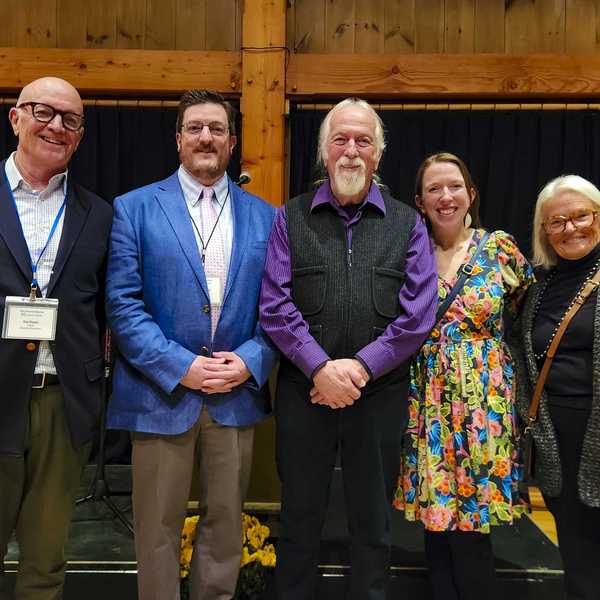
Garth Kobel, Art Wall Chair, Mary Randolph, Frank Halden, Ruth Giumarro, Project Chair, Maria Bulson, Barbara Lobdell, Sherry Newman, Elizabeth Frey-Thomas, Donna Heinz around “The Green Man.”

Robin Roraback

In honor of National Quilt Day, a tradition established in 1991, Hunt Library’s second annual quilt show, “Quilts of Many Colors,” will open Saturday, March 21, with a reception from 5 to 7 p.m. The quilts, made by members of the Hunt Library Quilters, will be displayed through April 17. All quilts will be for sale, and a portion of each sale goes to the library.

At the center of the exhibit is a quilt the Hunt Library Quilters collaborated on called the “Quilt of Many Colors,” inspired by Dolly Parton’s song”Coat of Many Colors.” Each member of the Hunt Library Quilters made two to four 10-inch squares for the twin-size quilt, with Gail Allyn embroidering “The Green Man” for the center square. The Green Man, a symbol of rebirth, is also a symbol of the library, seen carved in stone at the library’s entrance. One hundred percent of the sale of this quilt benefits the library.

Keep ReadingShow less

New in at Kenise Barnes Fine Art

New in at Kenise Barnes Fine Art

New works on display at Kenise Barnes Fine Art in Kent

D.H. Callahan

Since 2018, Kenise Barnes Fine Art in Kent has been displaying an impressive rotation of works across a range of artists and mediums. On Saturday, March 14, art enthusiasts arrived to see a new exhibition at the gallery featuring a wide variety of new pieces.

Large-scale paintings by David Collins and Melanie Parke alongside small 3-by-3 inch oil-on-panel works by Sally Maca.

Keep ReadingShow less
Trailblazing divorce attorney Harriet Newman Cohen to speak at Norfolk Library

Harriet Newman Cohen

Provided

Harriet Newman Cohen weathered many storms in her five-decade-long journey to become one of the nation’s most celebrated divorce attorneys. Voted one of the top 100 attorneys in New York for many years, Cohen served as president of the New York Women’s Bar Association and has been a champion of divorce reform. She and her co-author, journalist David Feinberg, will give a book talk about her memoir, “Passion and Power: A Life in Three Worlds,” at the Norfolk Library on Sunday, March 22 at 2 p.m.

What began as a personal record of her life, intended for her family, grew into a memoir that journalist Carl Bernstein describes in his endorsement as “wise and riveting.” Born in 1932 in Providence, Rhode Island, to parents who immigrated in 1920 from Ukraine and Poland, Cohen traces the arc of her life and the challenges she faced entering a legal profession that was overwhelmingly male at the time, leading to her success as a maverick divorce attorney fighting for women’s rights and equity in the law. She received her Juris Doctor, cum laude, from Brooklyn Law School in 1974, one year after Roe v. Wade was decided. She is a founding partner of Cohen Stine Kapoor LLP in New York City, a family and matrimonial law firm she formed in 2021, at age 88, with her daughter Martha Cohen Stine and Ankit Kapoor.

Keep ReadingShow less
google preferred source

Want more of our stories on Google? Click here to make us a Preferred Source.

google preferred source

Want more of our stories on Google? Click here to make us a Preferred Source.