Finding the light: Jimmy Wright’s sunflowers at Argazzi Gallery

Judith Singelis at Argazzi Gallery
Natalia Zukerman

Judith Singelis at Argazzi Gallery
On Saturday, June 22, The Argazzi Gallery opened “Looking for the Light,” an intimate exhibition celebrating the work of Jimmy Wright, an artist whose relationship with sunflowers has spanned decades.
Wright moved to New York City in 1974. Growing up gay in rural Kentucky, he wasn’t able to express himself openly, but upon immersing himself in New York’s gay scene in the 70’s, he finally found he was able to live his life freely. He began to depict his social scene, making large-scale drawings of nights out at gay clubs in unapologetic detail. Three of those drawings are now on view at the Whitney Museum, high praise and validation that Wright is giddy about in the sweetest and humblest of ways.
Wright met his partner Ken Nuzzo in those early days in New York. Sadly, Nuzzo was diagnosed with HIV in 1988 and passed away three years later. Bereft, Wright found he was unable to paint for a while, but then something miraculous occurred.
“I had no idea it was going to become an obsession,” Wright reflected on the genesis of his sunflower series. “I was a primary caretaker for someone critically ill for three years. That takes you very much out of your head and out of a studio practice.” His first encounter with a sunflower was serendipitous. “I bought a giant sunflower at the farmer’s market, and that became my first subject. Then it eventually became the only subject.”
Wright’s technique is as meticulous as it is passionate. “I work on the same series of paintings for three years,” he noted. His approach is deeply immersive, driven by a desire to explore the emotional resonance of his subjects. “I’m more interested in the painting itself, from a formal point of view,” he said. “It’s all about the ability of paint to hold emotion and communicate emotion.”
Judith Singelis, whose gallery is named after her grandparents, Antonio and Giselda Argazzi, brings a deeply personal touch to her curatorial practice. She has a deep connection to loss herself and surrounded by the images of Wright’s sunflowers, she spoke of her late husband with a quiet reverence. “I married the only man I could have married. I’ve never met anyone else like him in my life.” This sense of personal history and emotional depth permeate the gallery, creating a fitting backdrop for Wright’s evocative works.
Wright paints and draws the sunflower in all states of glory and decay. The writhing figures are infused with narrative, allowing for a process of transformation. “The work is about not only the beauty, but the fragility of life,” said Singelis. Of the title she chose for the exhibit, “Looking for the Light,” Singelis explained, “I wanted something uplifting…and sunflowers are always looking for the light. So, for both Jimmy, who just had his 80th birthday, and with everything that’s going on in our crazy world, on all counts, I thought this is so appropriate.”
In addition to having three of his drawings added to the Whitney collection, Wright recently received an honorary doctorate from the University of Southern Illinois. He is also looking forward to having a sunflower drawing featured in the 191st National Academy of Design annual exhibition this fall, the longest-running exhibition of contemporary art and architecture in the United States. As for his relationship with the sunflower, it’s changed. “It’s certainly more celebratory,” said Wright. “I think that’s the main change. The colors have gotten brighter, the expression has become more fluid. And now I’m much more looking for new ways of presenting them within the framework of formalism, composition, color and scale.” Still regularly in his studio, Wright has been working from thousands of street photos of his Bowery neighborhood in that he’s taken over the years to create a new series of figures. But, he said, “The sunflowers, I still do and will do. It’s sort of like, even if I don’t want to work, I know I can go make a flower and immerse myself in that process of making something visual.”
Mac Gordon
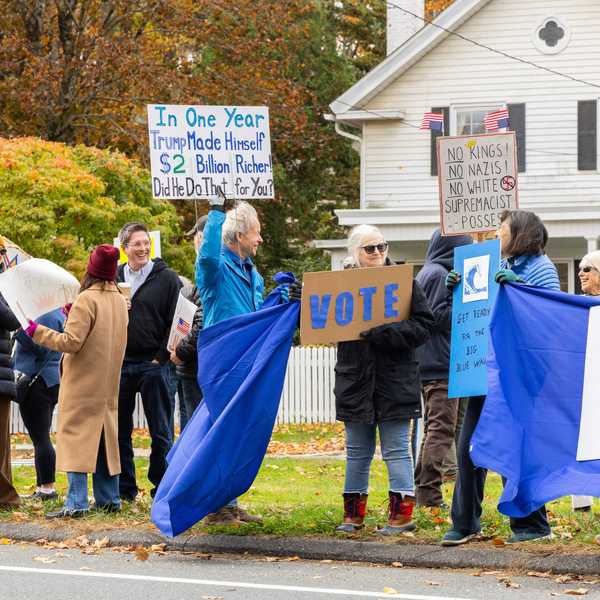
Campaigning for a second term, Donald Trump emphasized domestic issues and told everyone that the Biden administration had been too preoccupied with foreign affairs and not enough with solving problems at home. This seemed to appeal to much of his audience; soon after being re-elected he began promoting himself as a “peacemaker”, starting with Gaza and Ukraine where similar efforts during his first term had gotten him some attention but no positive results. His apparent chumminess with President Putin may have helped bring him to the negotiating table but the Russian hasn’t moved an inch towards compromise. Despite helping to negotiate a cease fire in Gaza, the Netanyahu government continues its war against its Muslim neighbors as if no ceasefire had been agreed to.
Trump felt that his efforts at peacemaking should put him in line forthe prestigious Nobel Peace Prize, the highest award for engendering a specific instance of significant peace. He campaigned widely as if he were a candidate in a political race, trying to persuade world leaders and influential individuals to promote his candidacy. When the choices were announced by the Nobel Committee Trump was a sore loser, complaining to the Norwegian Prime Minister (who had nothing to do with the selection) thus making a fool of himself.
Several commentators and Prime Minister Netanyahu have said to Trump that despite his claim of having “obliterated” Iran’s nuclear facilities last year, Iran will be able and willing to launch a nuclear attack against Israel (and the US) in a matter of months. Therefore we needed to attack when we did.
Knowledgeable observers have estimated that U.S. military costs for the war so far have been between one and two billion dollars per day.
Why are we fighting a war against Iran? What do we hope to accomplish and when? Are we requiring a regime change? Do we need to have a land force on the ground? The questions go on and on but there don’t seem to be any real answers. When questioned, the President, the Secretary of State and the Secretary of Defense give inconsistent and often contradictory answers; taken together they suggest that Israel and Netanyahu told Trump that now before Iran became nuclear-ready they needed to attack and Trump assented.
But Trump’s ego had been swellingsince his re-election. Having been doing pretty much whatever he wanted without much resistance at home and having been involved in at least seven foreign wars including most recently Venezuela, he probably felt nearly unstoppable.
Despite the damage done to Iran by both Israel and the U.S., their new leader is the equally hostile son of the one we just killed. Regime change seems very unlikely unless we pursue a protracted, much broader ground war. How would the American electorate feel about that?
Three weeks after the start of the war we have little idea when or how it will end. Until now Trump has been successful in his military adventures and even has more possible attacks on other countries in mind (Cuba, Mexico, Columbia etc.). However, Iran has shown no intention of accepting Trump’s demand for “total surrender”.
It’s worth asking why would Iran want to launch a nuclear attack against Israel?
In the Middle East, like in the UnitedStates, the prevailing wind blows from west to east. Nuclear bombs detonated over Israel would do almost unimaginable damage and would continue the killing with its residue of nuclear fallout. But the prevailing winds would carry the bulk of the fallout to the east where it would spread its radioactive pollution over much of the Middle East, especially poisoning Iran. In addition, they know that the Israelis also have nuclear weapons and might be willing to use them. The Iranian leaders may be evil, religious fanatics; but they are not stupid.
Trump’s ignorance of and contempt for climate science makes it hardfor him to size up the situation.
How can we end Trump and Netanyahu‘s failed wars before it triggers a worldwide economic depression and possibly a third world war?Our best bet would be to keep Iran as sane and calm as possible.
We can stop supporting Netanyahu which will perhaps stop much of his attack on his neighbors. And stop our own war-making which probably means removing President Trump from office before he creates more war and destroys our democracy.
Architect and landscape designer Mac Gordon lives in Lakeville.
Bill Schmick
In keeping with the administration’s return to its own brand of 16th-century mercantilism, could the next colony they seek be Cuba? It appears to be a strong bet, but for what purpose?
Given the actions and words of our government officials, the next country, or in this case, island nation, it seeks to conquer lies 90 miles from Key West. Cuba sits at the intersection between the Gulf of Mexico and the Atlantic Ocean. Historically, the U.S. considered it a natural barrier controlling vital sea lanes and a dominant landmass that protected or threatened the southern U.S. coast.
It may be that its long-term strategic military and economic value remains viable, but the country’s economy is in a mess. The Economist, in a recent article, indicated that the Cuban economy was on the verge of collapse. Aside from rum, cigars, and a little tourism, Cuba suffers from decades of economic mismanagement, a lack of structural reforms, and mass migration.
Inflation is at 15%, the peso is tumbling, tropical diseases are surging, and in cities like Havana, the municipal waste system has ground to a halt. Blackouts are increasingly common. Hospitals are canceling surgeries, and public transportation is scarce. It wasn’t always that way.
Originally a Spanish colony, Cuba in the 1800s fell under the Monroe Doctrine after Spain formally renounced its claim to Cuba in the Treaty of Paris in 1898, and was largely occupied by the U.S. By then, massive amounts of American capital had already been invested in the country. Beyond a thriving sugar trade, American interests controlled significant percentages of the island’s railroads, public utilities, mining, and tobacco. The country essentially became a U.S. protectorate in 1903.
The Communist takeover of Cuba and the nationalization of American property in 1959 soured U.S./Cuban relations to the present day. Although there have been several false starts and attempts at reconciliation through the decades, the U.S. doctrine of isolation and embargo has continued to the present day. That policy has brought the Cuban economy to its knees today.
Trump’s decision to choke off Venezuela’s oil to Cuba, which can only meet 40% of its own energy demands, was a body blow. The oil crisis hammered the regime’s already doomed economic model. In a rare admission of crisis, President Miguel Diaz-Canel scrambled to implement an urgent economic overhaul. The Castro brothers must have spun in their graves as Diaz-Canel called for loosening the state grip, courting foreign investors, and shrinking government control.
As the mood in this communist nation soured, the state’s iron grip on the economy had already begun to loosen. In 2021, the government allowed the creation of hundreds of small businesses in the private sector with fewer than 100 employees. As such, there are now 11,000 small and medium-sized independent businesses on the island. Just recently, another series of reforms allowed private ownership of a wide range of industries, from food production to construction and beyond.
In the case of Cuba, I believe Trump would rather have a deal that would make the island economically dependent on the U.S. Unlike the war in Iran or the late-night raid in Venezuela, I am not looking for an abrupt change nor the sudden overthrow of all state control. Times have changed. Most so-called capitalist economies have evolved into a new model of state capitalism, whether we are talking about China or the U.S. I believe the approach will be different. It would be more of a bailout or bankruptcy reorganization than a regime change.
President Trump has used the term “friendly takeover” more than once in talking about Cuba. His Secretary of State, Marco Rubio, a longtime Cuba hawk, along with a Florida-based Cuban business community, has been reaching out to the private sector. I have noticed that rather than threaten regime change in the name of democracy or an end to communism, the administration is focusing on commercial, economic, and financial engagement.
From the president’s point of view, the need for humanitarian assistance is high, and what better way to deliver it than through the private sector? Exactly how a friendly takeover would be accomplished is a question for the market. The island was certainly part of the discussions Trump had with Latin American leaders at a March 7 summit at the Doral Golf Club.
For a successful takeover, Cuba’s private sector will need the skills and capital of American business, particularly the banking sector. It appears the present government would be amenable to such an approach. It also helps that they know if a carrot doesn’t work, Donald Trump is more than ready to use a Big Stick.
Bill Schmick is a founding partner of Onota Partners, Inc., in the Berkshires.Bill’s forecasts and opinions are purely his own and do not necessarily represent the views of Onota Partners, Inc. (OPI).

Want more of our stories on Google? Click here to make us a Preferred Source.
Norma Bosworth
125 years ago — March 1901
SALISBURY — John Parsons had the misfortune to break his leg last week Friday. While unloading car wheels, his foot slipped and a wheel weighing 550 pounds fell on his leg, breaking it between the knee and ankle.
One hundred newspapers for ten cents at the Journal office. Good for putting on shelves or under carpets.
100 years ago — March 1926
During the past week the winter issue of the Southern New England Telephone Company’s new directory was distributed throughout the state. In delivering its directory this month the telephone company issued its new book in the same month that the first telephone directory in Connecticut was published in conjunction with the introduction at New Haven of the first commercial telephone switchboard in the world on January 28th, 1876, forty-eight years ago.
50 years ago — March 1976
Freight service on the Harlem Division north of Millerton will definitely end April 1, a spokesman for the New York State Department of Transportation said this week. April 1 is the date on which the properties of eight bankrupt railroads in the Northeast region will be conveyed to the federally-created Consolidated Railroad Corporation (ConRail) ConRail will operate the Harlem Division from New York to Wassaic.
A wicked twister went through the town of North East on Sunday, tearing up 100-foot trees, bursting sheds, bombarding houses and knocking cars clear off the road. Miraculously, no one was hurt. Remnants of the same storm struck Sharon, breaking off large trees and limbs along North Gay Street. Here again, no one was injured, and the falling objects avoided houses. There were brief power interruptions in the area.
25 years ago — March 2001
CANAAN — A plan to put crossing gates and lights at two Main Street railroad crossings, originally expected for installation last summer, is now at least two years from completion. That is, if it happens at all. Randy Eick, supervising engineer for the state Department of Transportation, said this week the project remains a high priority. But it has been plagued by the need for an affordable approach to a serious drainage problem at both sites.
FALLS VILLAGE — After teaching fifth grade for 16 years at Lee H. Kellogg School, Joan Wingard is now the school’s librarian.
These items were taken from The Lakeville Journal archives at Salisbury’s Scoville Memorial Library, keeping the original wording intact as possible.
Christian Murray
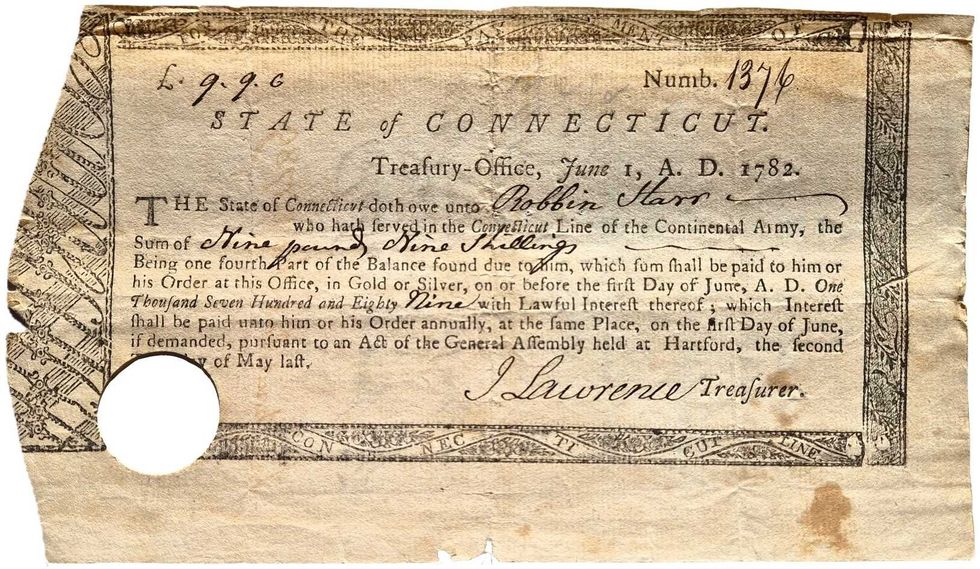
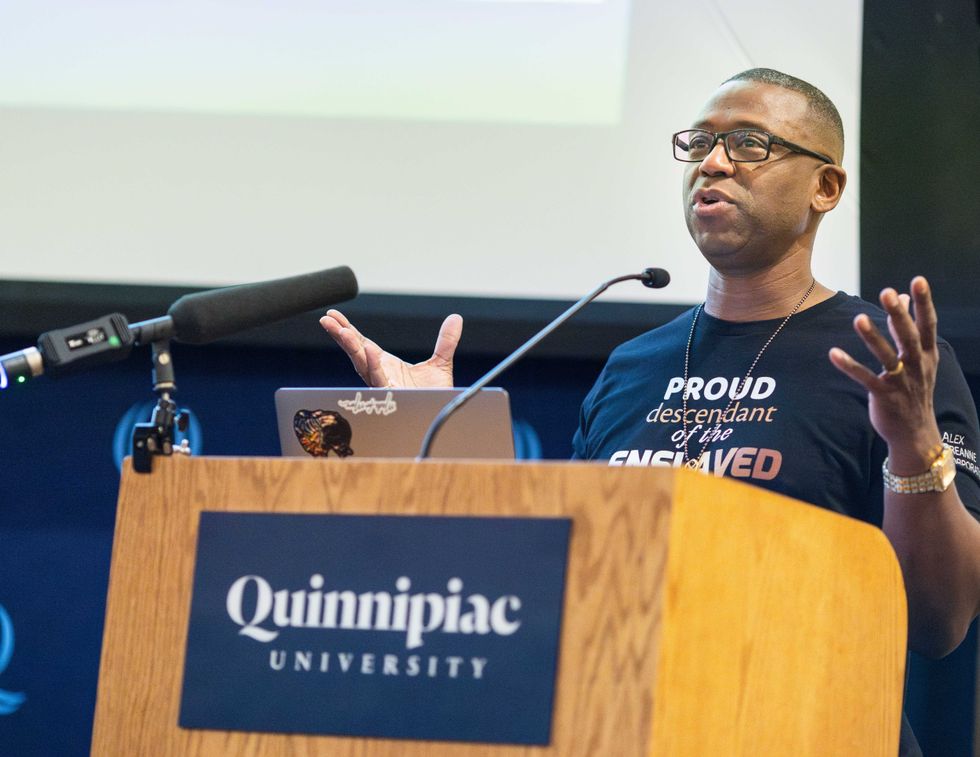
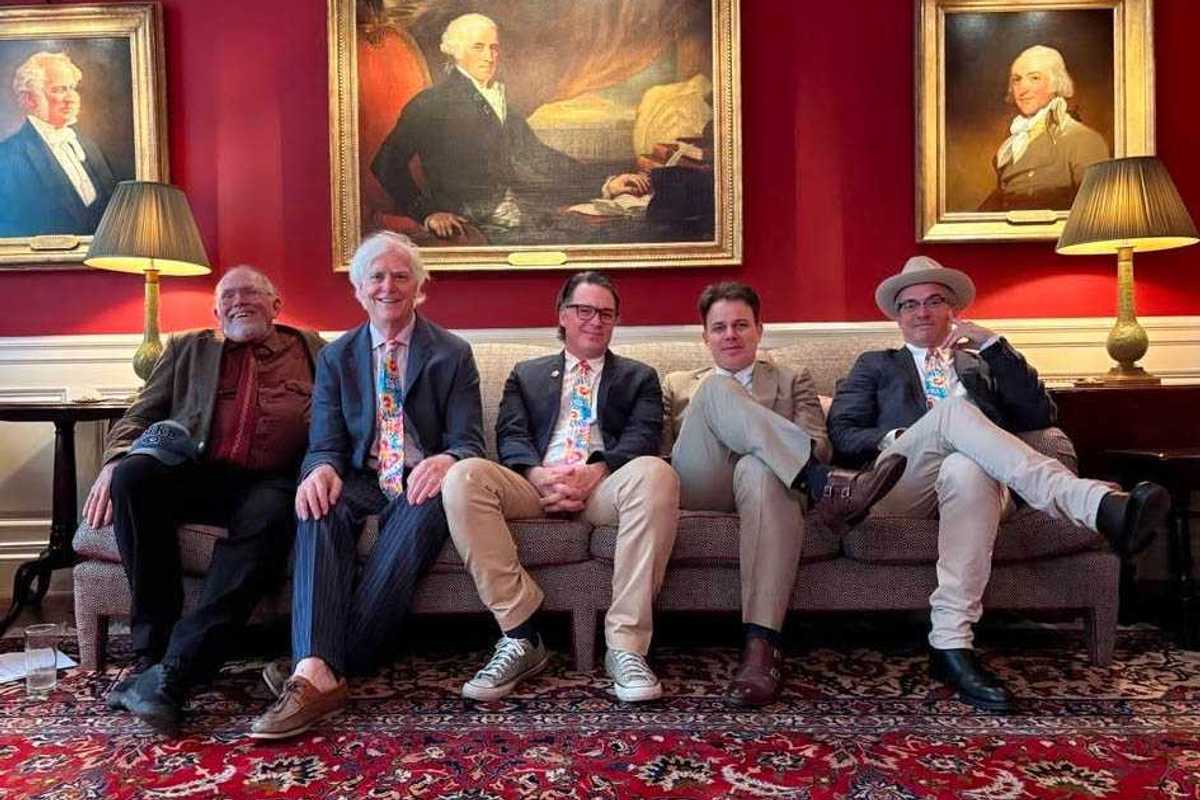
FALLS VILLAGE — Russell Shorto, author of “Revolution Song: The Story of America’s Founding in Six Remarkable Lives,” will appear at Housatonic Valley Regional High School on Thursday, March 27, for a live discussion.
The event, which begins at 7:30 p.m., will feature Shorto in conversation with local historians Peter Vermilyea and Rhonan Mokriski, focusing on the nation’s founding and the individuals who shaped it.
Revolution Song is this year’s selection for Salisbury READS, an annual collaborative program that encourages the community to read a chosen book together and participate in discussions and related events.
Shorto is director of the New Amsterdam Project at The New York Historical and a senior scholar at the New Netherland Institute. He is the author of eight books of narrative history, including the national bestseller “The Island at the Center of the World.”
Vermilyea, an award-winning history educator and author, teaches at Housatonic Valley Regional High School and for the University of Connecticut. His next book, “Litchfield County in the Revolutionary War,” is scheduled for publication in spring 2026.
Mokriski, a co-founder of the Troutbeck Symposium, has been teaching at his alma mater, Salisbury School, since 1996. For his dedication and innovative approach to teaching, he was named the 2024 Gilder Lehrman Connecticut History Teacher of the Year.
The program is presented by the Salisbury Forum in partnership with the Salisbury Association, the Troutbeck Symposium and the Scoville Memorial Library, in connection with Salisbury Commemoration 250 and CT 250.
Ruth Epstein
Dr. James Shepherd displays illustrations of various tick species during a talk at the Policy Potluck at Sharon Audubon on March 19..
From 1999 to 2004, there were 31 cases of Lyme Disease reported in Ontario, but by 2022, there were 1,478.
SHARON – With the arrival of spring comes thoughts of flowers and gardens — and, unfortunately, ticks.
The disease-carrying arachnids were the focus of the latest Policy Potluck session hosted by Sharon Audubon on March 19.
The speaker was Dr. James Shepherd, an infectious disease physician at Yale School of Medicine and Yale New Haven Hospital, specializing in tuberculosis and other mycobacterial infections. He teaches climate change, biodiversity loss, and other global processes shaping infectious disease. Shepherd is also the owner of Smokedown Farm, which was once the largest hop grower in Connecticut, but is now transitioning to native and novel fruits.
Connecticut, said Shepherd, is one of the most tick-infested states. Ticks feed on the blood of mammals, birds, reptiles and amphibians and often transmit disease.
He named a variety of ticks, including the blacklegged, Lone Star, Asian longhorned, Gulf Coast and American dog ticks, noting they are transmitting a whole new set of diseases, besides the commonly known Lyme disease. “We’re seeing a wider biodiversity of pathogens,” he said.
Projecting maps on a screen, Shepherd displayed the types of ticks found in various sections of the United States, noting that incidences of Lyme disease are moving northward into Canada. In 2000, cases were largely concentrated in New England. From 1999 to 2004, there were 31 cases reported in Ontario, but by 2022, there were 1,478. The main reason is due to migratory birds, such as robins, along with mice and chipmunks.
Scientists believe the increase in Lyme disease is also linked to decreased biodiversity, driven in part by suburban expansion.
Researchers have linked the spread of tick-borne disease to declining biodiversity and habitat disruption across the Northeast. Shepherd spoke of the dilution effect, notably studied in Lyme disease, that concludes that high biodiversity reduces the transmission of pathogens to humans.
He presented a slide depicting the idea put forth by the Cary Institute of Ecosystem Studies in Millbrook, NY, that when many species exist in a community, vectors (like ticks) are more likely to bite hosts that are not good reservoirs for the disease, preventing the pathogen from spreading efficiently.
He said biodiversity is taking another hit from the rise of invasive species, which provide ideal habitats for ticks and their hosts. Japanese barberry is a prime example.
Climate change is also a major factor, as is habitat fragmentation, the process in which large, continuous natural habitats are divided into smaller patches, usually by such activities as road construction or urban development. This separation restricts wildlife movement, reduces population sizes, and disrupts ecosystems, acting as a major threat to biodiversity.
“We got problems,” Shepherd declared.
So what can people do? Shepherd asked. He then listed activities that often don’t work, such as excessive landscaping, deer fencing and spraying, which restricts biodiversity. He suggested having more respect for the environment by installing native plants, reducing habitat fragmentation, monitoring biodiversity and using personal protection.
Shepherd has worked in Nigeria, Botswana, India and Bangladesh, implementing national HIV and TB treatment programs and supporting COVID-19 treatment in refugee camps for both the U.S. government and the World Health Organization.

Want more of our stories on Google? Click here to make us a Preferred Source.

Want more of our stories on Google? Click here to make us a Preferred Source.