Latest News
Austin Howard Barney
Jan 07, 2026
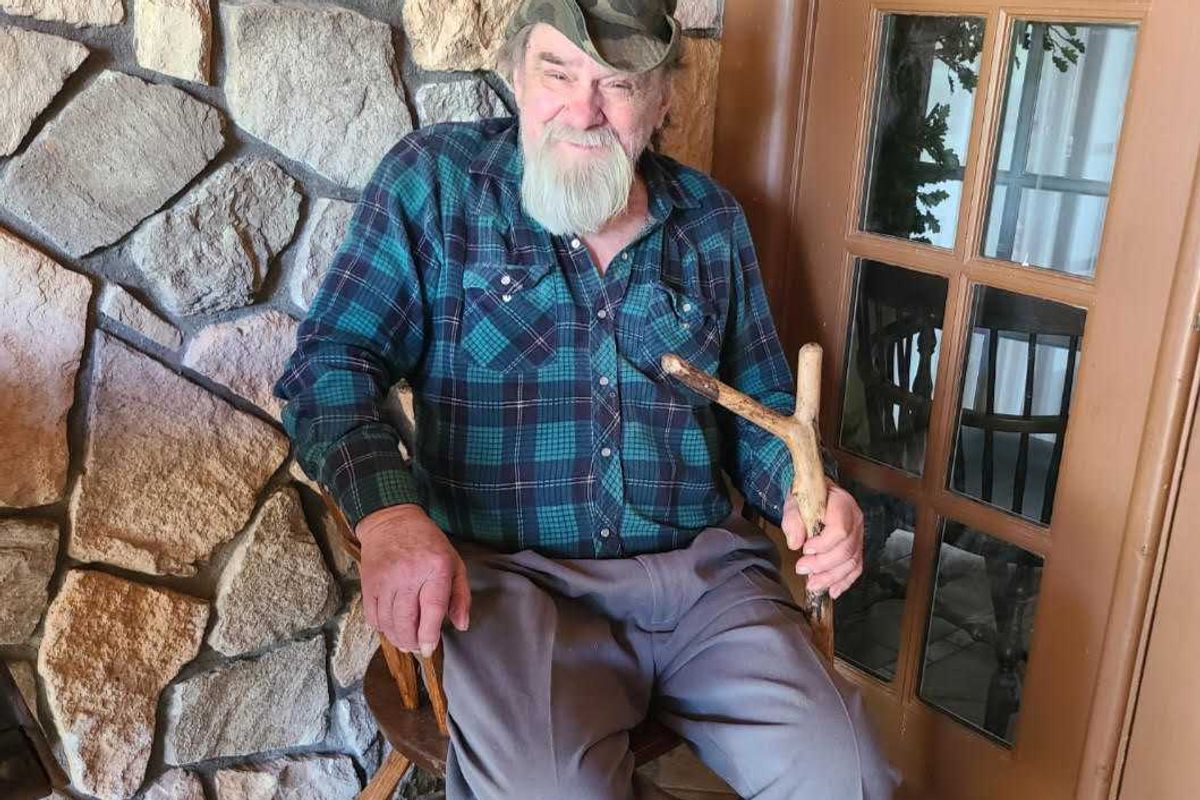
SHARON — Austin Howard Barney — known simply as “Barney” to many, of Sharon, age 87, died on Dec. 23, after his heroic battle with the black breath, hanahaki disease, cooties, simian flu and feline leukemia finally came to an end.
Austin was born on July 26, 1938, son of Sylvester and Iva Barney.
He leaves behind an overwhelming amount of junk—sorry, treasures. If you’ve ever dreamed of owning a console TV roughly the size of a Buick, a soot-encrusted coffee pot that hasn’t been properly cleaned since the Reagan administration or creatively bent hangers that he had hanging in his living room windows to dry clothes on, give us a call. Please wait for the appropriate, respectful amount of time. Tomorrow should be fine.
Austin was frugal to the extreme; some may have called him “cheap,” but he preferred to think of himself as a pioneer in recycling—decades before it was cool. His kitchen was home to a vast collection of cool whip and country crock containers. The biggest challenge was finding actual cool whip or butter in his refrigerator with all the containers of leftovers that looked the same. “Open at your own risk” was our motto.
He leaves behind a wonderfully dysfunctional family—a group he tolerated, loved and occasionally avoided.
Austin was world-renowned for his lack of patience, grossly excessive extreme sarcasm, not holding back his opinion and knack for telling you exactly how wrong you were. One of his favorite quotes was, “I was only wrong once in my life. I thought I made a mistake.”
He always preferred his own cooking to anyone else’s—and to be fair, it was actually pretty good.
Austin served proudly with the 6th Marines in the United States Marine Corps from Feb. 10, 1958, through Feb. 9, 1962. Semper Fi!
He was also a volunteer fireman for several years, until he realized that sprinting in the opposite direction from fire was more aligned with his personal survival goals.
A natural mountain man, he ate things from the swamp that most people avoid and cooked on a wood stove for many years. He was an avid bird watcher and found joy in feeding all the animals that frequented his property.
He was predeceased by his brothers, Sylvester Barney, Louis Barney and his sister Shirley MacDougall.
He is survived by his daughters Darlene Hardzog, Margaret Gdovin (Mike); his son, Austin Barney Jr. (Kate); his grandchildren, Savannah Hardzog, Jordan Gdovin, Violet Barney, Amethyst Barney and Austin Barney III; and his sister Anita Baird along with various other relatives. You know who you are. He will be greatly missed.
There will be no viewing, as his children refused to comply with his request to be taxidermied and propped in the corner with a beer or a glass of scotch in his hand so guests could admire him in his natural state.
Services are pending and details will be shared at a later date.
In lieu of flowers, donations may be made to the American Red Cross in his memory.
Austin Barney has approved this message. Approval notwithstanding, it would have read the same.
Keep ReadingShow less
Francis J. Schell
Jan 07, 2026
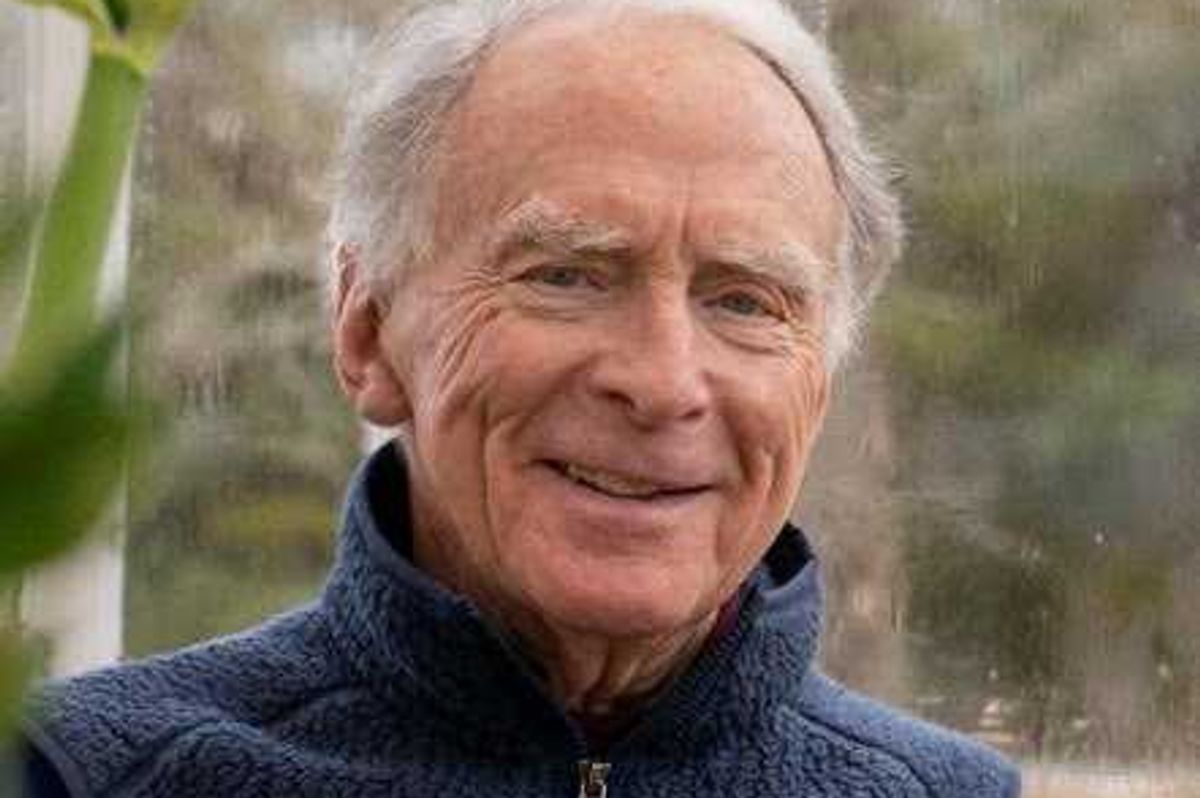
FALLS VILLAGE — Francis J. “Bosco” Schell of Falls Village passed away peacefully on Dec. 20, at East Mountain House in Lakeville surrounded by members of his family.
Born in Kosice, Slovakia, in 1934 to a family of landowners in their ancestral home, he came to the United States in 1947 following the wreckage of the Second World War.
He gained full scholarships to the Montclair Academy in New Jersey and to Williams College in Massachusetts before serving in the US Army in Germany.
Soon after his return to New York City he began work at the Reader’s Digest where he would stay for his entire professional career, starting in Paris at the International Edition, and returning to the US to create Families, and then on to leading the non-US editions of the magazine, the International and global Condensed Books.
He married Natalia Gortchacow in 1962, who predeceased him in 1992, and Page Dickey in 2000. He was devoted to his family and children, and to the huge cohort of friends he kept, who shared his relentless joie de vivre, his love of gardens, music, parties, dancing and drama.
Bosco was deeply involved in charity work, becoming by family tradition a member of the Catholic Sovereign Order of Malta, where he reached the rank of Knight Grand Cross of Honor and Devotion. He worked tirelessly to channel funds and medical equipment to his beloved Hungarians writhing under the Soviet yoke and then in aid of their successful quest for economic and political freedom. He headed the Hungarian Association of the Knights of Malta in Exile which led to the re-creation of the Hungarian Delegation in Hungary.
In his later years, he chaired the board of the David M. Hunt Library in Falls Village where he could be found raising funds by selling cuttings from his own greenhouse along with his legendary home-made jam.
Bosco’s two lifelong passions were gardening and music. Always an enthusiastic dabbler, retirement enabled him to attend the Brooklyn Botanical Gardens where he earned his degree in horticulture in 1997 before settling down with Page in her published garden at Duck Hill in North Salem, NY. They eventually moved to Falls Village in 2015 where they established Church House and its garden. He took great pride in its opening to the public and last gave a virtual tour of his greenhouse in 2021 to benefit charity.
He is remembered by his loving wife Page, his two children Peter Schell and Marie-Elizabeth Offierski and their spouses Blandine and Stefan, his four step-children Keith Dickey, Kim Dickey Ambrose, Scott Dickey and Jean Dickey Quaintance and their spouses Ally, Kirk, Ilia and Don, by his eight grandchildren Irène, Valentine, Anastasia, Paul, Frederic, Conrad, Gregor, and Olga and his six step-grand-children Claire, Helen, Freddy, Charlie, Alex and Keala.
A funeral mass was held at 11:00 a.m. on Jan. 5, 2026, at St. Martin of Tours Church of St. Mary in Lakeville. Burial followed at Sleep Hollow Cemetery in Tarrytown, New York.
Keep ReadingShow less
Gerald Blakey
Jan 07, 2026

CORNWALL — A good man has passed. Gerald “Jerry” Blakey, 89, of Cornwall, passed on Dec. 20, 2025.
He was predeceased by his parents Ernestine L. Blakey and Burt Blakey of West Cornwall, his brother Tom Blakey of Falls Village, and his daughter Karen B. Fisher of Cornwall.
He leaves his wife of 70 years, Patricia “Pat” Blakey of Cornwall, his son David M. Blakey of Cornwall Bridge, his daughter Lori B. Welles and her husband David Welles of West Cornwall, his granddaughter Melissa B. Root of Terryville, great granddaughter Devyn Root of Terryville, and his niece Pam B. Hart and her husband Doug of Belencia, California, andbrother James Blakey of Florida.
Jerry graduated from HVRHS in 1954. He started dating Patricia “Pat” Blakey in high school, and they were married on Sept. 3, 1955.
Their first challenge as newlyweds was hearing their new furniture had washed away in the flood of 55!
After high school, Jerry began working at Housatonic Valley Rug Shop in Cornwall Bridge.
In 1979 he bought HVRS with his partner Ed Kenniston. He retired in 2006.
Early on in his adult life he began getting involved in all things Cornwall. A member of the UCC in Cornwall, he served on numerous boards and committees there. Always ready to fix or fabricate, clean or repair whatever was needed. He served on the town’s P&Z committee, building committees and more, he was elected tax collector. He was proud to serve in the Cornwall Fire Dept. Where there was a need, he found solutions.
Pat and Jerry volunteered at the Soup Kitchen in Torrington and slept in the shelter for Operation Overflow, also in Torrington. Together they started the medical equipment loan program out of the UCC. Volunteering 100s of hours and traveling 100s of miles delivering and picking up medical equipment for those in need.
Jerry and Pat opened their garage after the tornado of ‘89 and started the Blakey Family Restaurant to feed the town’s people and volunteers as the clean up continued. Jerry organized blood drives, built houses in Mexico through the La Casa Project, hosted tornado anniversary parties and so much more.
Jerry amassed numerous awards, citations and recognitions for all he did. Each was carefully put away, not to be displayed, because it never was about those. As one friend said, Jerry didn’t know he did extraordinary things, it’s just what you’re supposed to do. He was talented, humble and generous. He loved the community and the people and always was there to help. He was a family man, caring for them up to the end.
Among the many awards he was particularly proud of his Public Service award from the State of Connecticut in 2001, The Connecticut Conference, UCC Living Waters Award in 2015 and an honoree with Pat on The HVRHS Alumni Wall of Honors 2023.
Anyone who ever met Jerry would know that he was a man of many words and always a man of his word, he will be missed.
The family would like to thank his Smilow Cancer Hospital team in Torrington, Connecticut.
Services will be held on Jan. 10, 2026, at 1 p.m. at the UCC, Bolton Hill Road, in Cornwall.
In lieu of flowers, donations can be made to Cornwall Volunteer Fire Dept. and EMS, American Cancer Society, or the UCC Cornwall capital improvement fund.
The Kenny Funeral Home has care of arrangements.
Keep ReadingShow less
Joan Marie Wilbur
Jan 07, 2026
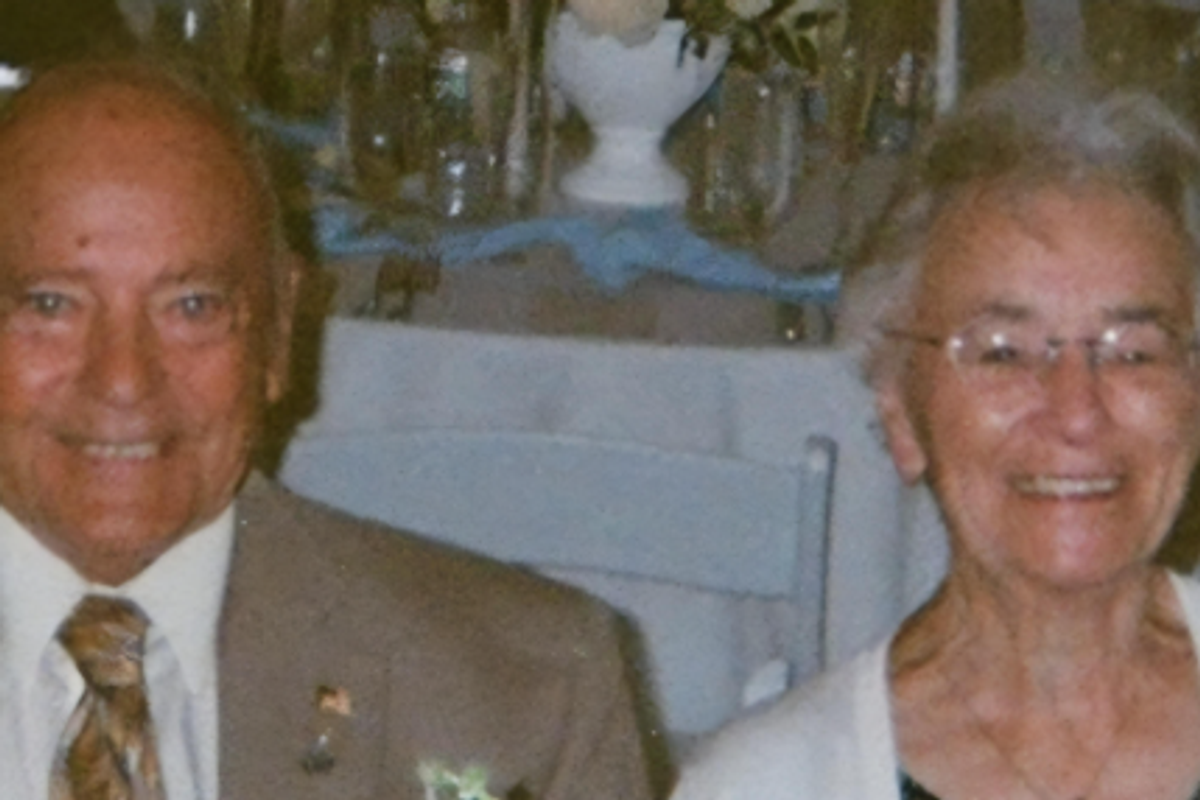
SHARON — Joan Marie Wilbur, 83, a seventy-two year resident of Sharon, died peacefully on Monday evening, Dec. 22, 2025, at Sharon Hospital in Sharon. Mrs. Wilbur had a forty-year career as a licensed practical nurse in Sharon, she began at Sharon Hospital and subsequently worked for Dr. Brewer, Dr. Gott, Sharon Pediatrics, Dr. Rashkoff and ultimately finished her career caring for patients at Sharon Health Care Center.
Born Jan. 2, 1942, in Colchester, Vermont, she was the daughter of the late Jerome and Catherine (Casey) Bushey. On Sept. 14, 1963, in Lakeville, Connecticutshe married the love of her life, Edward Howard Wilbur, and their loving marriage spanned for over six decades. Mr. Wilbur survives at home in Sharon. Mrs. Wilbur enjoyed playing golf, bowling, dancing, horses and caring for their beloved pets. She especially enjoyed spending time with her children and grandchildren, great grandchildren and friends. She will be dearly missed by all.
In addition to her husband, Ed, Joan is survived by two children, Mark Wilbur of Deer Park, Texas and Michele Pastre and her husband Scott of Sharon; three grandchildren, Benjamin Wilbur and his wife Janie of Deer Park, Texas, Colby Pastre and his wife Caroline of Washington, D.C. and Brittney Pastre and her husband Greg of Barrington, New Hampshire; three great grandchildren, Ila Rae Wilbur of Deer Park, Texas and Isabella and Ivy Godfrey of Barrington, New Hampshire; her brother, Jerry Bushey of North Canaan, and her sister, Mary Kruse and her husband Bob of Florida, and two nephews, Chris Goddard of Florida and Paul Goddard of Massachusetts.
There will be no public funeral service. Interment in the family niche at Hillside Cemetery in Sharon, will take place privately in the spring of 2026. Arrangements have been entrusted to the Scott D. Conklin Funeral Home, 37 Park Avenue, Millerton, NY 12546. Memorial contributions may be made to St. Jude Children’s Research Hospital, 501 St. Jude Place, Memphis, TN 38105. To send an online condolence to the family, flowers to the family or to plant a tree in Joan’s memory, please visit www.conklinfuneralhome.com
Keep ReadingShow less
loading