

A friend telling me she is reading James Baldwin’s “Giovanni’s Room” gets me thinking about an iconic photo of Baldwin and Lorraine Hansberry, sitting on a couch with cigs and drinks before them, when people did those sorts of things.
Hansberry had written “A Raisin in the Sun,” done on Broadway with Sidney Poitier, who died recently in Beverly Hills at age 94. (Surely he would have preferred to expire in Barbados, as would I ...).
With the success of “Raisin”, which later became a musical, entitled by the shortened name, Hansberry was besieged by the press to give her thoughts about Blacks in America. She very succinctly said that she did not want to opine about her race. She wasn’t writing generally about them, but quite specifically writing about one family on Chicago’s Great South Side on one block in one specific apartment. Nothing general about it.
A memory surfaces: Poitier and Harry Belafonte on the Johnny Carson show. The occasion: Both Black men, both from the islands, were turning 50. Carson asked Belafonte what it felt like. He went on. And on. Carson looked as If Harry would never stop. Finally, he did. Carson, not easy to ruffle, turned to Poitier, who stood up, went right down to the camera, did a perfect pirouette and returned to his seat, having uttered not a syllable.
I have heard that Poitier and his wife came to Salisbury, looking to buy a house. They stayed with people on Salmon Kill Road. They did not buy a house. O, what we missed!
Hansberry and Baldwin. Both gay. A Black friend, who has been living with HIV for decades — I am not talking out of school, he is quite open about this — and who, on his third try just won a Tony, said to me years ago that if the Black community could ever get over its homophobia and realize the power and wealth that Black gays have, then finally some things could get accomplished.
I don’t have time or space to recount the anti-gay, anti-women attitudes that rappers and others have expressed. I can only say I believe my friend is right.
A classmate’s father was the Executive Director of the Anti-Defamation League of B’nai Brith. At his funeral service, my friend gave the eulogy at Temple Beth Immanuel in Manhattan, the most stirring eulogy I have ever heard. I was in the back and I noticed the great Bayard Rustin, stalwart of the Civil Rights Movement, and a gay man. A man who was largely ostracized by the Movement. I remember his silver-tipped cane.
Baldwin felt he had to leave the country and went to France; Hansberry died in her thirties.
He kept writing and one of his many haunting books is “The Evidence of Things Not Seen,” an exploration of the multiple child murders in the Atlanta area, supposed to have been done by one Wayne Williams. A 23-year-old Black man. Baldwin is not at all sure.
The title is taken from “Hebrews,” perhaps St. Paul: “Faith is the thing hoped for, the evidence of things not seen.”
But something else seemed perfectly possible to Baldwin, too: Given the panic over Williams’s alleged homosexuality, either fate, murdered or accused, might just as easily have been Baldwin’s. “We all came here,” he writes, “as candidates for the slaughter of the innocents.”
Williams remains in prison, having been convicted more than 30 years ago. The children’s relatives are, like Baldwin, not convinced.
The mayor of Atlanta, Keisha Lance Bottoms, has opened up a re-investigation.
We need Baldwin to look at it again. Again and still. And Hansberry as well.
Lonnie Carter is a writer who lives in Falls Village. Email him at lonniety@comcast.net. or go to his website at www.lonniecarter.com.

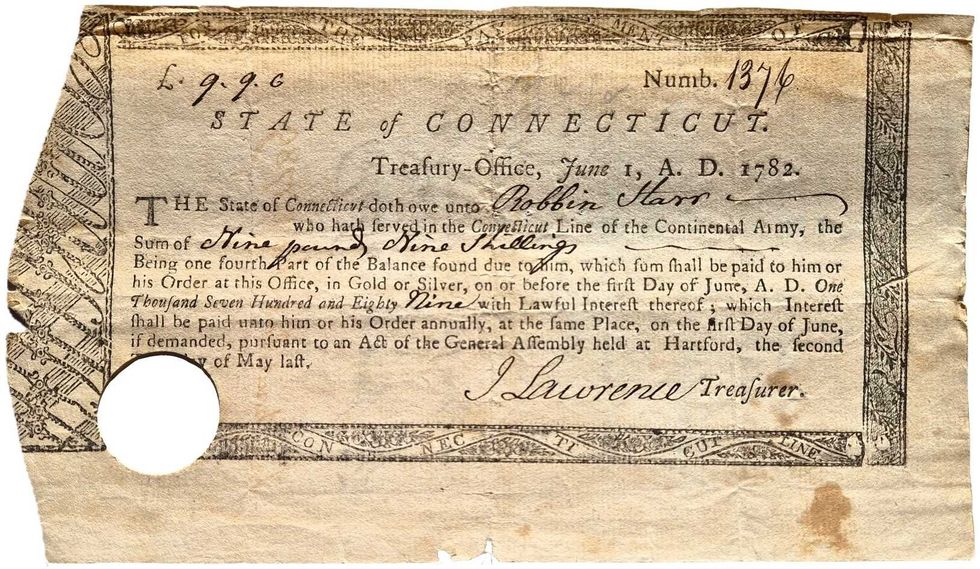 Pay Bill for Robin Starr’s service in the Continental Army.Courtesy the Alex Breanne Corporation
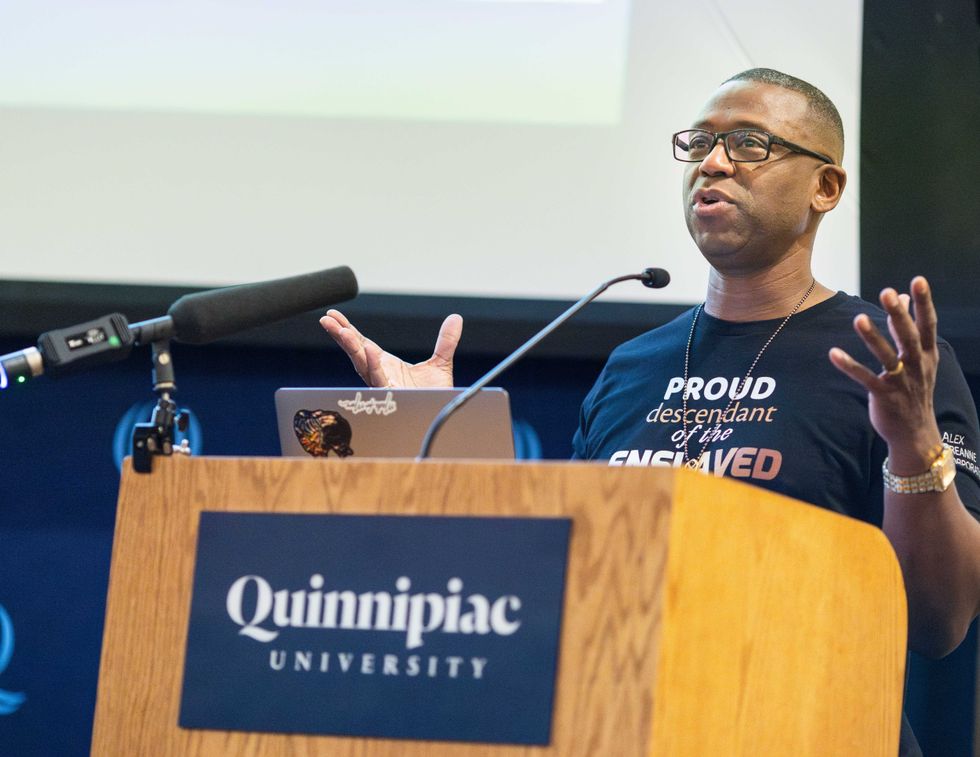 John Mills speaking at Quinnipiac University.Courtesy the Alex Breanne Corporation
 Stephanie Saetta,with her rescue dog George and Blue (left), a shepherd mix awaiting his forever home.Madi Long
 Blue, a 7 year-old Shepard mix, is waiting for his forever home. Madi Long








Lorraine Hansberry: memories