Parents push back on proposed Sharon Center School budget cuts

Sharon resident Veronica Betts posts flyers around Sharon to raise support for Sharon Center School.
Madi Long


Sharon resident Veronica Betts posts flyers around Sharon to raise support for Sharon Center School.
SHARON – In a last-ditch effort to avoid a proposed $70,000 cut to the Sharon Center School’s 2026-27 budget, local parents are mobilizing – packing meetings, posting flyers and warning that reductions could undermine the school’s future. Sharon resident Veronica Betts plastered the town with posters earlier this week, urging residents to attend town meetings to voice support for the Board of Education, which determines the SCS budget.
“We shouldn’t be talking about defunding the school,” said Betts, who has a young daughter en- rolled in Sharon Daycare, part of SCS. “These are kids, this is so short-sighted and ridiculous.” The cuts, if adopted, could affect the staff salary line, supplies and even the cafeteria, which would require premade lunches to be delivered from HVRHS.
With a daughter at Sharon Daycare, Betts said her hope is to stay in the public school, but if support isn’t given to SCS, she and her family are considering a move to Indian Mountain School, the Lakeville-based pre-kindergarten through ninth grade private school where tuition ranges from $31,250 to $88,385.
Meghan Kenny, whose children are fourth-generation students at SCS, said she worries about the future of the school. An avid supporter of SCS, Kenny said she has seen some improvements between the BOE and the parent-teacher organization, but noted, “these proposed cuts represent a step in the wrong direction.”
She said the proposed 0% budget increase has driven her to start looking for property in nearby Salisbury to send her children to a different school. Kenny and Betts also spoke out at a packed Town Hall on Friday night, April 24, where local parents voiced nearly unified support for more funding in the elementary school budget.
The meeting was intended as the hearing for both the school and municipal budgets, but its nearly two-hour runtime was almost entirely dedicated to reviewing the BOE’s 2026-27 spending plan, which was subject to a last minute cut of $70,000 by the BOF to keep the bottom line flat from last year. If approved, it will be the fifth straight year of zero increase to the BOE’s budget.
Due to a state law known as the minimum budget requirement or MBR, towns in Connecticut are not allowed to spend less on education than any previous year. The BOF has repeatedly stated the rationale for keeping the bottom line flat is to keep the MBR stable. BOF member John Hecht defended the cuts during Friday’s hearing stating that the per pupil amount, totaling some $48,000, is the highest in the state and third highest in the country.
Still, residents were not swayed.
“Who cares,” said William Betts of the per pupil costs, affirming that his motivation as a taxpayer is to invest in education. He advocated to put funding back into arts and school supplies lines which had been cut, saying the arts are often the first to go when budgets are trimmed. “I think we have to rethink that,” he said.
BOE Chair Phillip O’Reilly and BOE member Peter Birnbaum said that the reality of the school’s student body and environment is not reflected by the per pupil costs, which don’t account for tuition students, of which there are projected to be 14 next year, or the 60 daycare students that use the school’s facilities. “We need to understand that Sharon Center School is more than K-8 – we have a daycare,” O’Reilly said.
SCS Principal Carol Tomkalski, who pushed back on the cuts, said students’ needs are “broad” and “complex,” which also accounts for the high per pupil cost, noting that approximately 18-20% of students have disabilities. Further, “we support our students as whole children,” she said, noting that the cost “is not inefficiency, it is investment.”
Still, both Tomalski and O’Reilly stated that they are confident that students will receive the education and services they need with the proposed budget. Parents remained wary, though, and many spoke out in favor of reinvesting funds into the budget and bringing it back above the MBR.
Community activist Jill Drew has been openly outspoken in past years about raising the budget beyond the flatline, and reaffirmed that opinion Friday evening. “We have a very special school and the costs are high,” she said, saying that with rising operational costs across the region, a flat budget for next year doesn’t make sense. She requested the BOF to allow the BOE to return to its budget before the required $70,000 cut.
The vast majority of the public testimony followed a similar sentiment. “I haven’t heard a rationale for why [the budget increase] is zero,” said Nancy Birnbaum. “It seems like everyone who’s spoken wants an increase,” she said.
Several days after the hearing, BOF Chair Thomas Bartram said that while he understands the concerns of parents and residents and appreciated the public engagement, many who spoke on Friday night seemed to lack context on the BOF’s decision to flatline the MBR.
“Several years ago, we put capital expenditures for the school building in the Board of Education budget, which was in essence a mistake on our part,” he said.
Since then, the BOE has been operating on an “inflated” budget due to that capital that was included, and the MBR which doesn’t allow the removal of funds from the previous year’s education budget. He said that the tone of Friday’s hearing departed from previous years, where residents this year have been more scrutinizing of education spending and SCS’s per pupil costs. The BOF’s goal was to account for what it thought was taxpayer concerns while supporting an operable budget for the school.
“It is the belief of the majority of the Board of Finance that the budget they presented is what they can run on,” he said.
The Board of Finance is expected to review whether there is any feasible way to shift available funding into the Board of Education operating budget, including tuition revenue currently included in the Board of Selectmen budget or savings from the regional school assessment, which is lower than last year’s.
Bartram said that while he awaits the outcome, both options are essentially “not spendable” money under normal circumstances as they come in the form of credit or grants that don’t impact bottom lines.
He said that the conversation of where tuition funding goes is a worthy one moving forward, though, as the school accepts more non-resident students. In previous years, he said, the number was much lower than this year’s proposed $41,000, or even zero.

Aly Morrissey & Christian Murray
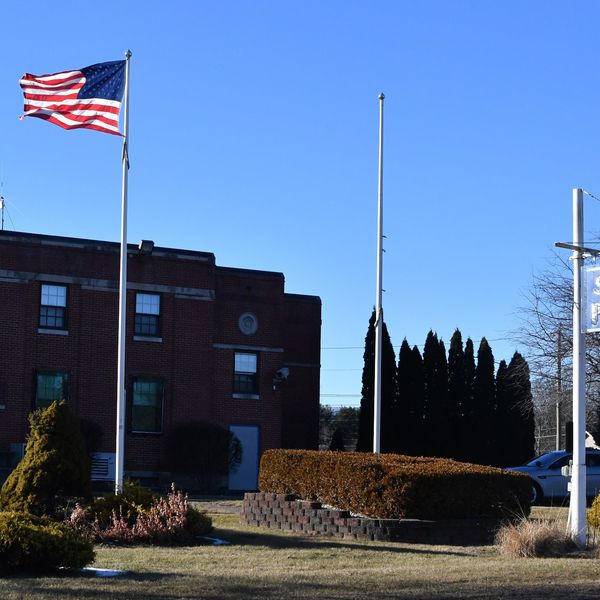
A Life Star helicopter lands on the front lawn of Housatonic Valley Regional High School on Saturday, May 16, to transport a motorcycle crash victim to a hospital.
LIME ROCK — A motorcycle crash involving a car temporarily shut down a section of Route 112 near the intersection with Route 7 on Saturday afternoon, drawing a large emergency response and prompting a Life Star helicopter landing at Housatonic Valley Regional High School.
Emergency responders at the scene confirmed the incident involved a motorcycle and passenger vehicle. Route 7 was closed from Dugway Road to the intersection of Routes 7 and 112 while crews responded.
Life Star arrived at the high school at approximately 2 p.m., where a crowd gathered to watch the helicopter land as the Lakeville-based Blue Studio dance recital was about to begin. The crash victim was transferred from an ambulance to the helicopter shortly after it landed before being transported to Hartford Hospital, according to a member of the Lakeville Hose Company who assisted with the landing.
Fire departments, police and EMS personnel remained on scene during the response.
Connecticut State Police said the crash occurred around 1 p.m. and involved a car and motorcycle, but did not release additional details. A state police spokesperson said the roads reopened quickly and described the injury as minor.
However, Chris Ohmen, a volunteer firefighter with the Lakeville Hose Company who was at the scene, said the “injuries warranted a Life Star transport” and that he was directed to “clear the area and set up a landing zone.”
The incident marks the second serious crash in two days in the area. A van crashed into a utility pole on Route 112 less than 24 hours earlier, causing road closures and traffic delays. The driver of that crash was transported to a hospital with serious injuries.

Christian Murray
Traffic was diverted near Wells Hill Road after a crash closed part of Route 112 Friday afternoon.
A van crashed into a utility pole on Route 112 near Wells Hill Road Friday afternoon, leaving the driver hospitalized in serious condition and forcing the highway to close for several hours.
The crash was reported at approximately 3:20 p.m., according to Connecticut State Police Troop B.
Police said a Ford Transit van struck a utility pole and the driver was transported to a hospital with serious injuries. The identity of the driver and the extent of the injuries had not been released Friday evening.
A second vehicle, a Volkswagen Jetta, veered off the road in an attempt to avoid the crash, according to state police. The driver of the Jetta was not injured.
Route 112 remained closed between Race Track Road and the Route 7/112 intersection into the early evening, according to Troop B, while emergency crews responded and Eversource Energy workers repaired the damaged utility pole.
Millbrook resident Will Dore said he believes he arrived near the scene shortly after the crash occurred. Before official detour signs were posted, an emergency responder was directing traffic at the Hotchkiss Four Corners -- the intersection of routes 112 and 41.
Dore said he was driving from Millbrook to Housatonic Valley Regional High School and was rerouted through Lakeville because of the closure.
“I was taking my daughter to a dress rehearsal for her dance recital and we were delayed because of the road closures,” Dore said. “I hope those involved are OK."
Mary Close Oppenheimer
Renee Wilcox
If you’ve ever wandered through Paley’s Farm Market, you probably know Renee Wilcox. For thirty years, she has been greeting you with unmistakable warmth—always ready with a smile. Renee grew up in Millerton, but it was in Salisbury that her family found something they’d never had before: a true sense of home. In 2003, she and her husband Bill were living in Millerton, but Bill—a volunteer with the Lakeville Hose Company—was already part of Salisbury life. When the Salisbury Housing Trust finished eight new homes on East Main Street (Dunham Drive), Renee and Bill were the first to sign on.
The story of those houses is really a story about the best parts of our community. Richard Dunham and his wife, Inge, along with the Housing Trust board, poured years of energy and hope into the project. Renee can’t help but light up when she talks about the people who helped her family settle in. Digby Brown came by to install appliances and bathroom cabinets; Barbara Niles spent hours painting; Carl Williams assembled bunk beds for the kids. Rick Cantele, at Salisbury Bank, helped them with their finances so they could qualify for a mortgage, while neighbors arrived at their door with fruit baskets and welcoming words.
For the Wilcox family, owning a home in Salisbury changed everything. The house gave them more than just a roof; it was a dream come true. Renee says, “My son—now thirty-three—was slipping through the cracks at school. He is now an avid reader. The schools have made all the difference.” When Bill suffered a serious workplace injury in 2023, the community they’d come to love rallied around them. Local businesses, friends, and neighbors showed up, offering help in big and small ways. “We are so grateful to live in this community,” Renee says, “I can’t even put into words how much it meant to us.”
But not every family is so lucky. Renee hears all the time from people from all walks of life who are upset that their kids can’t afford to live here. The numbers tell a tough story—sky-high home prices, almost no rentals, and over 100 families on a waitlist for an affordable apartment. The result? We have lost a whole generation of young people in our community.
Renee’s story is a reminder that community isn’t just about geography—it’s about making space for each other. If we want to keep that spirit alive, we need to fight for more affordable homes, more welcoming front doors, and more stories like hers.
Mary Close Oppenheimer is a member of the Salisbury Affordable Housing Commission.

Want more of our stories on Google? Click here to make us a Preferred Source.
Aly Morrissey
Heavy stone garden ornaments, a specialty of Judy Milne Antiques from Kingston, at Trade Secrets 2025.
Tucked away on Porter Street in downtown Lakeville, Project SAGE is an unassuming building from a street view. But cross the threshold a week before Trade Secrets — one of the region’s biggest gardening events, long associated with Martha Stewart and glamorous plants of all varieties — and you’ll find a bustling world of employees and volunteers getting ready for the organization’s most important event of the year.
“It’s not usually like this,’ laughed Project SAGE director Kristen van Ginhoven. “But with Trade Secrets just around the corner, it’s definitely like this.”
Van Ginhoven points to towers of boxes containing event programs, various ribbons, elegant decor and stacks of magazines, all in preparation for the event.
Project SAGE will celebrate its 26th year hosting Trade Secrets, but it’s so much more than a garden event.
“It’s a fundraiser for domestic violence prevention and intervention,” van Ginhoven said. “Anybody who attends knows they’re supporting a really meaningful and important cause.”
The fundraiser accounts for at least 30 percent of the organization’s overall budget, she said, and attracts around 3,000 people from across the region each year, creating an unmatched opportunity for Project SAGE to share its mission and generate support.
The event, though expensive to produce, generates enough income to significantly support Project SAGE’s direct services and prevention services.
Officials said a wave of new underwriters have emerged this year.
“We’re very grateful, because we live in a time when funding is uncertain,” van Ginhoven said.
Hundreds of copies of the annual Trade Secrets guide sat at Project SAGE headquarters, ready for distribution at the event. The book doubles as a domestic violence resource, complete with warning signs, myth-busting information and scripts for difficult conversations.
Volunteers will be present throughout the event to connect with community members. Each volunteer must be certified as a domestic violence counselor in order to work with Project SAGE.
“It means they can help us drive clients, move clients, take them to appointments or the grocery store,” van Ginhoven said.
Project SAGE officials said education about domestic violence should start early. The organization has developed a comprehensive curriculum spanning early childhood through grade 12 and visits schools throughout the region. The class of 2026 will be the first graduating class at Housatonic Valley Regional High School to have received all four years of training from Project SAGE.

The organization’s partnerships extend throughout the region and include on-site training in schools and nonprofit organizations, including the Sharon Playhouse. Community support also goes directly to Project SAGE, including a recently donated array of colorful gift bags bearing positing affirmations and filled with toiletries and basic necessities from students at the Frederick Gunn School in Washington, Connecticut.
The people who visit Project SAGE have often left uncomfortable or dangerous situations and leave without any belongings.
“Some of them have nothing,” van Ginhoven said. “They just show up because they had the courage to leave.”
Project SAGE staff say many referrals come through local hospitals, police and sister agencies.
The organization serves people in Connecticut, Massachusetts and New York.
With the stress of event planning mounting, van Ginhoven spent a “previous life” preparing for this exact moment. She spent 30 working at the intersection of arts and activism, having co-founded WAM Theatre, a Lenox-based organization focused on stories and issues affecting those who self-identify as women and girls. During her tenure, WAM donated $100,000 to 25 local and global organizations working toward gender equity in areas such as girls’ education, teen pregnancy prevention, gender-based violence, sexual trafficking awareness and midwife training.
“I love the adrenaline of putting on a show,” van Ginhoven said with a laugh. With the help of volunteers and organizers, she said she isn’t bothered by the stress.
“The show will go on,” she said.
Jennifer Almquist
Caroline Kinsolving and Gary Capozzielo at home in Salisbury with their dogs, Petruchio and Beatrice
"He played his violin, I worked on my lines, we walked the dog, and suddenly we were circling each other perfectly."
Caroline Kinsolving
Actor Caroline Kinsolving and violinist Gary Capozziello enjoy their quiet life with their two dogs in Salisbury, yet are often pulled apart to perform on distant stages in far-flung cities. Currently, the planets have aligned, and both are working in Hartford, across Bushnell Park from one another. Bridgewater native Kinsolving is starring in “Circus Fire,” the current production of TheaterWorks Hartford, while Capozziello is a violinist and assistant concertmaster of the Hartford Symphony Orchestra. While Kinsolving hates being away from home, she feels the distance nourishes their relationship.
“We are guardians of each other’s confidence and self-esteem,” she said.
“We met during the pandemic, a bleak time,” Kinsolving said. “On our first date, we met at The Hickory Stick Bookshop and walked outside six feet apart. We fell in love.”
They lived in a tiny studio near Averill Farm in Washington, Connecticut.
“He played his violin, I worked on my lines, we walked the dog, and suddenly we were circling each other perfectly,” Capozziello said with a laugh. “When I told her I was a violinist, she mentioned ‘Appalachian Spring’ by Aaron Copland. I sent her a recording of me playing it, and it became our song.”
“For our wedding, we wanted all our friends and family out in the field listening to that music,” Kinsolving said. Capozziello’s friends from Orchestra New England performed the piece at their wedding.
“Circus Fire,” written by Connecticut’s own Jacques Lamarre and directed by Jared Mezzocchi, is a multimedia world-premiere tribute to the Hartford Circus Fire. On July 6, 1944, the big top of the Ringling Bros. and Barnum & Bailey Circus caught fire, killing 167 and injuring 700 in Connecticut’s worst fire disaster.
Capozziello, who grew up in Fairfield, began: “I came from very limited means, though my parents gave me the kind of support that mattered most. I had a hard time in school. My music teachers, noticing my knack for music, kept me in school.” As he became a teenager, he realized how demanding classical violin truly is. “I had the honor of playing in a master class for Isaac Stern when I was 18,” he said. “That was the wake-up call. He was relentless with my intonation, telling me I must ‘feel the fire in my belly.’”
At SUNY Purchase, he “met a wonderful violin teacher who taught me to play, study and practice five hours a day.” After studying at the New England Conservatory, Capozziello earned his doctorate from The Hartt School in 2018. He now teaches at The Hotchkiss School and performs with the Hartford Symphony.
He explained that his role as assistant concertmaster is the direct line between conductor and musicians, and that the orchestra is “a family dynamic, a democratic unit, truly a living, breathing organism.”

On May 2, Capozziello was soloist with Orchestra New England, performing the world premiere of Neely Bruce’s “Concerto for Violin,” along with “The River” by Jan Swafford and Aaron Copland’s “Appalachian Spring” at Battell Chapel at Yale.
“I care about bringing classical music into communities and spaces where people may not expect it,” said Capozziello.“Music is most powerful to me when it feels alive, humanand accessible, not distant or formal.”
For 20 years, Kinsolving has acted in film, television and theater in London, New York and Los Angeles. “I was first onstage at Washington Montessori School playing Peter Pan,” she said. “I improvised a line, got a laugh and liked the feeling.”
She enjoys performing Shakespeare. “I love Titania’s monologue because it speaks to our current climate crisis. Lady Macbeth surprised me. I fell in love with her while I was doing it. I could play those scenes forever; so much range and depth to explore,” she said.
Kinsolving added, “I love Shakespeare’s comedies for the fun and rhythm. I have loved Rosalind, Viola, Olivia, Helena and Kate, yet the top of my bucket list is Beatrice. Each character reflects a shade of my soul. Shakespeare had the brilliance to illuminate them. If I ever get a tattoo, it will be a list of their names.”
Kinsolving, whose parents, poet Susan Kinsolving and author William Kinsolving, live in Lakeville, studied at Milton Academy, universities in China, and Vassar College. Her theater training includes Stella Adler Studio of Acting, Royal Academy of Dramatic Art in London, Yale Drama Intensive and she is currently studying online through Juilliard.. She founded Theatre for Good, which donates its proceeds to charity.
Both artists are looking forward to June, when they will have more time to spend with their dogs.
D.H. Callahan
Esther Williams in “Million Dollar Mermaid” (1952).
For decades, Esther Williams was one of Hollywood’s brightest stars, but the swimming sensation of the silver screen has largely faded from public memory — a disappearance that intrigued Millerton filmmaker Brian Gersten and inspired him to revisit her legacy.
As a millennial, Gersten grew up largely unaware of Williams’ influential career. His teen years in Chicago were spent with friends who obsessed over movies, spending hours at their local independent video store,and watching anything that caught their eye. Somehow, though, they never ventured into the glossy world of synchronized-swimming musicals of the 1940s and ‘50s.
Gersten’s life changed when he first saw the documentary “Hoop Dreams,” which follows two young Chicago basketball players as they’re groomed and recruited by scouts with hopes of college stardom – and possibly the NBA. These boys grew up just 40 minutes from Gersten’s home, yet their world felt far away. The film’s power pushed him to take his love of movies to the next level.
After earning a bachelor’s degree in journalism from the University of Colorado, Gersten realized documentaries were his passion. He enrolled at the Salt Institute for Documentary Studies in Portland, Maine before heading to Wake Forest University in North Carolina, where he earned an MFA in documentary film.
Since then, Gersten has made a series of short, often heartwarming documentaries on subjects ranging from pigeon enthusiasts and hollerin’ competitions to the history of bowling in America and even Balloon Boy, the nickname for Falcon Heene, the child at the center of a bizarre media frenzy.
When he’s not making his own films, Gersten often edits and helps structure other projects, including the cycling documentary “Enter the Slipstream” and “Radical Wolfe,” a profile of writer Tom Wolfe.
It was while editing one of these projects that Gersten first encountered Williams.
“Who was this figure? What was going on in these films?” he wondered.
What he learned fascinated him. Williams starred in over 30 movies despite having no formal acting training. A champion swimmer, she made the 1940 U.S. Olympic team, but when the games were canceled because of World War II, Metro-Goldwyn-Mayer saw an opportunity.
Studio scouts recruited Williams, and she took to film like a fish to water. Her confidence, athleticism and, crucially for Hollywood, photogenic looks lit up the silver screen. In 1944, “Bathing Beauty” rocketed her to stardom.
For nearly two decades, Williams starred in one or two films a year, including “Million Dollar Mermaid” and “Skirts Ahoy!”. But as Hollywood turned toward grittier fare, synchronized-swimming spectacles fell out of fashion.
Williams stepped away from the camera, and her fame slowly receded — until Gersten stumbled across a clip and dove in.
Gersten’s short documentary, “Hollywood’s Mermaid” (2026) will screen alongside “Bathing Beauty” (1944) at 7 p.m. Saturday, May 16, at The Moviehouse in Millerton. It will also screen later this month at the Berkshire International Film Festival. Tickets are available at themoviehouse.net.

Want more of our stories on Google? Click here to make us a Preferred Source.

Want more of our stories on Google? Click here to make us a Preferred Source.