Latest News

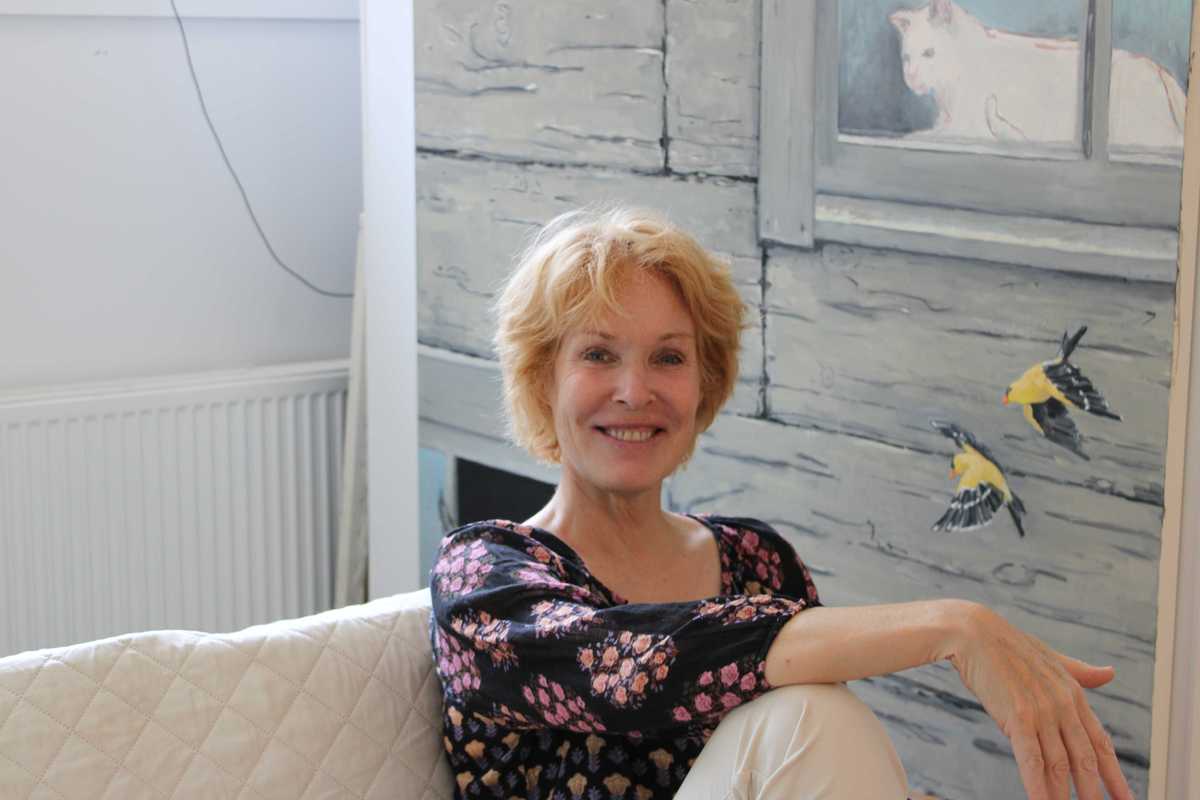
KK Kozik in her studio
Natalia Zukerman
It is a particularly fitting philosophy for an artist whose paintings often begin with the world around her but rarely end there. There might be something recognizable — a stone wall, an apple tree, a crow — but then there is something less certain. Something that appears to be one thing becomes another upon inspection. Memory gets involved. So does imagination. So does time.
Since moving from New York City to Sharon, Connecticut in 2006, the landscape around her has become increasingly important to that process.
“I just saw things differently,” Kozik said.
The change was not immediate. She remembers an earlier version of herself driving through Vermont without paying much attention to what was happening beyond the windshield.
“I didn’t have the means to see what was happening around me,” she said. “I just sort of la, la, la, la, la, driving to Vermont.”
But, she said, she started to pay attention differently.
“I became more sensitized as time went on,” she said.
Asked whether that change came with age, she said, “Age and so-called wisdom.”
There’s a sense of loss in her landscapes, but a particular kind of loss that also has a twinge of redemption. Specifically, what happens to a landscape when people leave it?
“When the people go away, the wildlife comes back,” Kozik said.
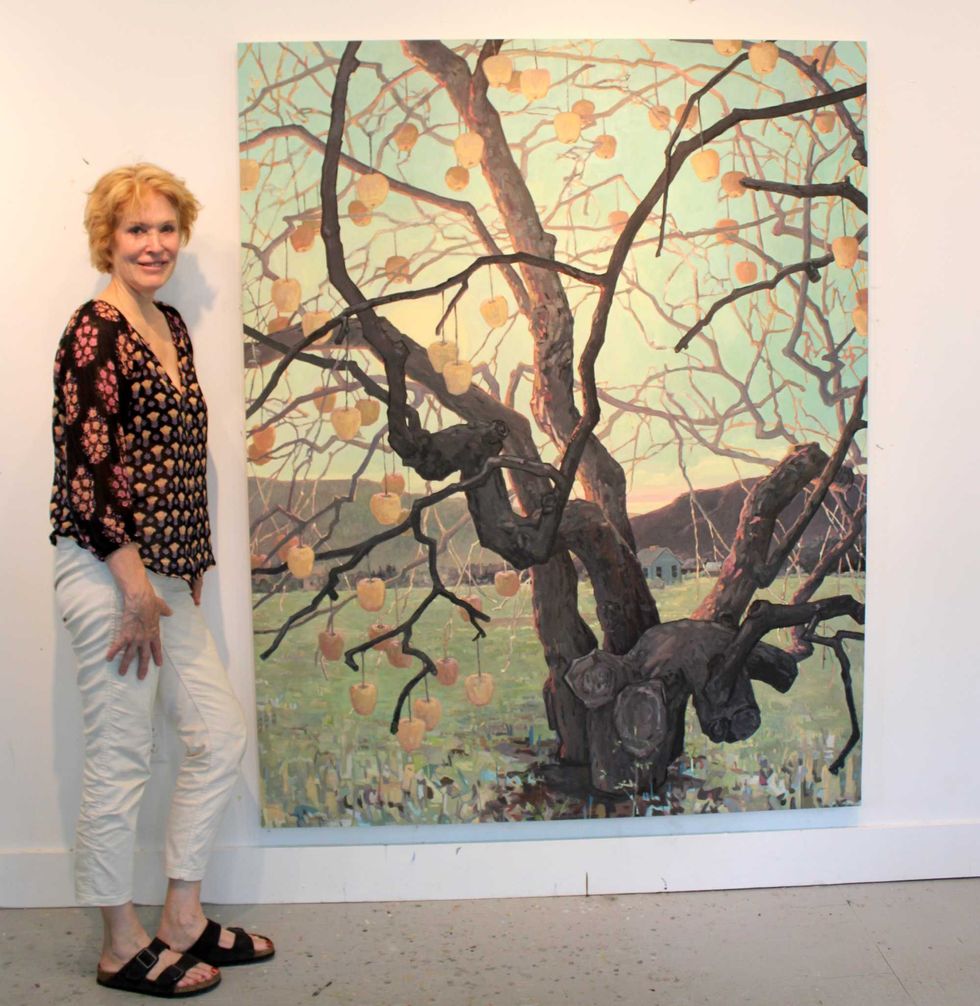 KK Kozik in her studio with her painting “Golden Delicious.”Natalia Zukerman
Kozik’s work has never settled into a single recognizable formula. She has painted landscapes, figures and still lifes, moved toward abstraction and returned to representation. Her subjects change, but the underlying impulse remains: to take what is in front of her and discover what else there might be.
Kozik describes herself as someone who is always trying to figure things out. Her paintings often have the feeling of a thought in progress rather than a conclusion. They have been called “single-line novellas,” a description that makes sense: They can contain the suggestion of an entire story without telling you exactly what happened.
The animals are part of that storytelling.
They arrived partly because of what was disappearing.
“They were like the new redemption in a way,” she said.
There is something almost funny about the way Kozik talks about this — not because the loss itself is funny, but because she refuses to turn it into a grand pronouncement. She observes something, considers it, and lets it complicate the work.
That same sensibility comes through when she talks about her own development as an artist. Her paintings make room for interpretation. They don’t always tell the viewer what an animal symbolizes, or why a landscape has been altered, or where a particular image came from. Instead, they leave enough evidence to make you curious and enough room for your own stories.
The effect is not accidental. Kozik has spent years thinking about how images work, both as paintings and as containers for ideas.
Her work is currently included in “The Naturalist,” a group exhibition on view through Sept. 13 at Kenise Barnes Fine Art in Kent, alongside Richard Klein, Sally Maca, Rick Shaefer and Tricia Wright. The exhibition brings together artists whose work engages with the natural world, including its forms, histories and mysteries.
Kozik is an especially apt fit for the exhibition. She is described by the gallery as a landscape painter, figurative painter and interiors/still-life painter whose work frequently moves toward painterly abstraction. Her practice, the gallery notes, is “fluid and continuous” — always searching for new pictorial problems to solve.
That search has also extended beyond her own studio.
For several years, Kozik ran ICEHOUSE Project Space, an 18th-century icehouse on Sharon’s town green that she transformed into an unusual venue for contemporary art. It opened in 2018 with Dan Devine’s “Inside-Out NASCAR” and went on to host site-specific projects by artists including Mark Dion, Eric Aho, Janet Biggs, Richard Klein, Kristin Jones, Lisa Hoke and Ryan Frank. The projects addressed everything from the decline of winged insects and native and invasive plants to Sharon’s iron industry, its gardens and its history as an ice-producing community.
The space is now closed, but its premise still feels connected to Kozik’s painting practice. Each project responded in some way to the physical location, turning what might otherwise have been a little historic outbuilding into a setting for contemporary art.
Kozik’s own work does something similar with the landscape. She takes a place and lets it become more than a place.
Kozik’s paintings tell us that something happened before we arrived, and that something will happen after we leave.
And then there is the question of what to do with the space in between.
Maybe Kozik’s paintings are less about that space and more about an idea, as she put it, of “which questions to think about.”

Want more of our stories on Google? Click here to make us a Preferred Source.
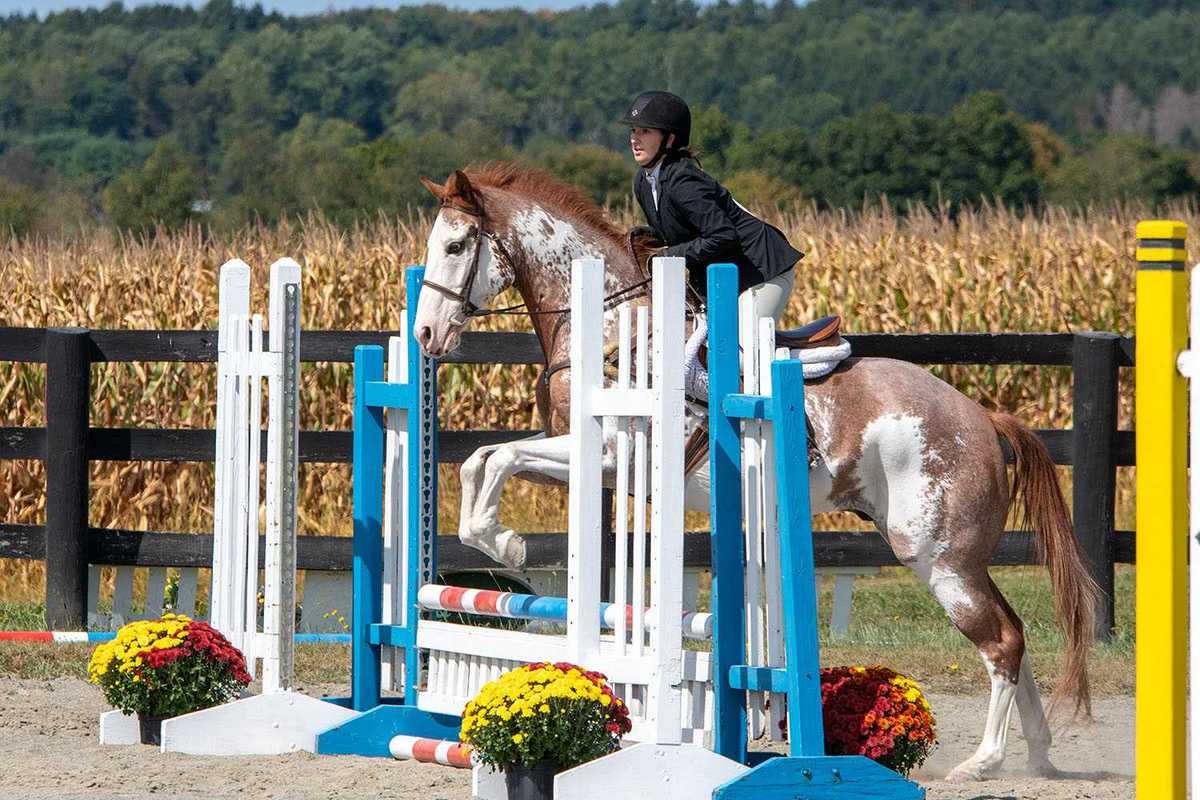
Jazzmine Bone and A Stitch in Tyme power through the Gambler’s Choice run during the 2024 Lakeville Open.
Caitlin Von Graf
The event, which has been held continuously for 69 years, is open to the public with free admission.
Individual competitions will run from 8 a.m. to 5 p.m., and visitors can stop by briefly or settle in for the day.
A food truck, bake sale and portable restrooms will be available on-site.
The show is the primary fundraiser for The Lakeville Pony Club, with proceeds supporting young riders who need financial assistance to participate in lessons. Members and their families work throughout the year to create the event for both competitors and spectators.
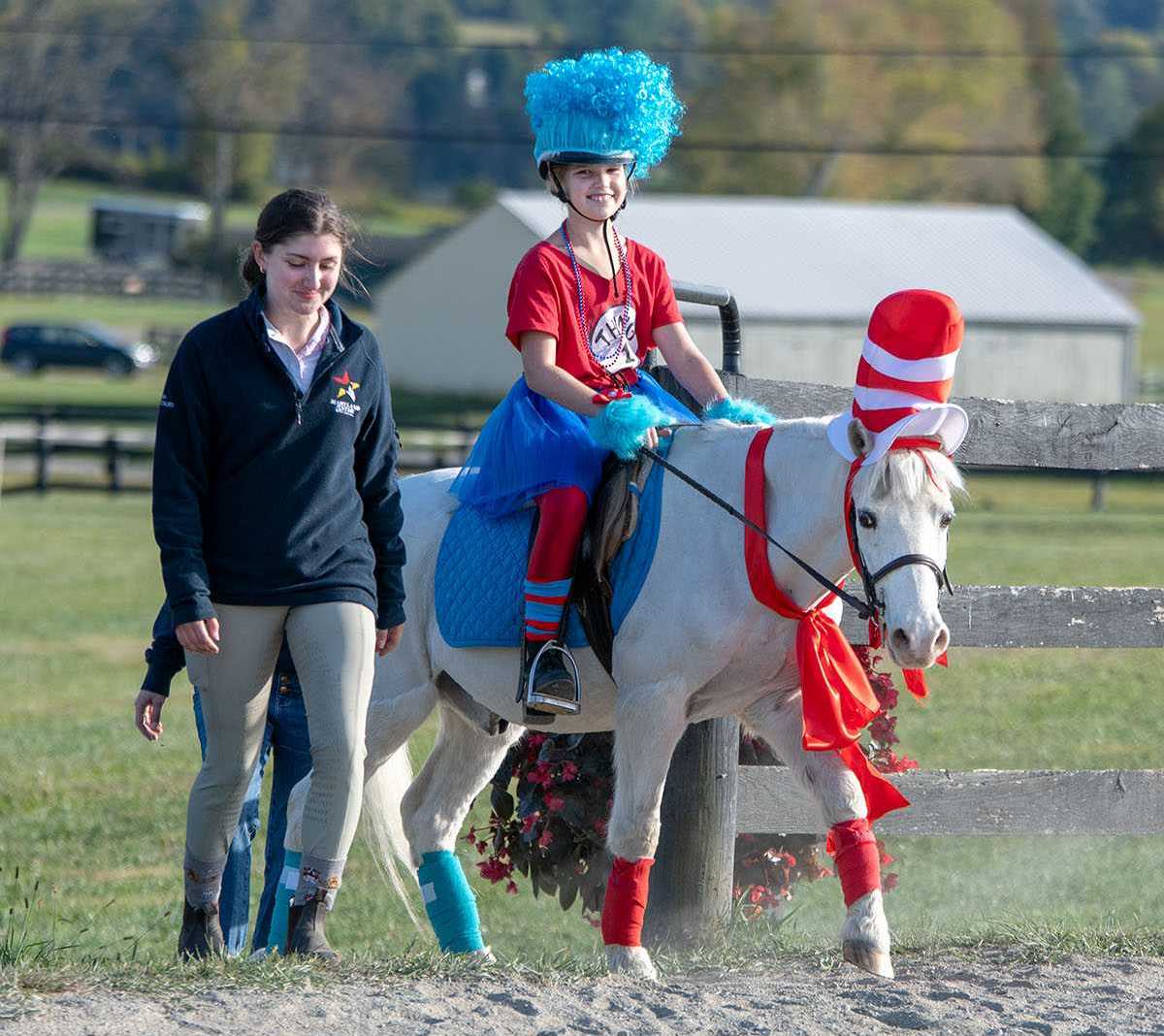 Members of the Lakeville Pony Club and Echo the pony arrive for the costume class during the Lakeville Open in 2024.Caitlin Von Graf
For those new to horse shows, the day offers a chance to learn more about the sport and understand what happens in the ring. In equitation competitions, judges evaluate the rider’s skill, from beginners learning walk and trot to more advanced riders navigating cantering and jumping courses.
Hunter competitions focus on the horse’s style and smoothness over fences, while jumper classes emphasize accuracy and speed as horses and riders race against the clock without knocking down rails.
The day also includes a crowd favorite: the costume class, where horses and riders dress up in creative ensembles for a chance at the top prize.
Programs will be available onsite to help spectators identify competitors and horses. A full list of competitions, entry information and details for those interested can be found at rigameadow.com
Whether an experienced equestrian or simply curious about the sport, the Lakeville Open Horse Show offers a chance to enjoy a Hudson Valley tradition that continues to bring the community together.

Want more of our stories on Google? Click here to make us a Preferred Source.