OK, I groused to my cocker spaniel, Seamus, all the way to the Sherman Playhouse last Friday night. What were we doing going to see “The Rocky Horror Show?” I had avoided it for 30 years in New York City. Why now? Seamus offered no opinion. Inside the charming onetime meetinghouse, with its hard wooden pews, even the “lovely little Pouilly Fuisse” offered me from her own bottle by the theater’s charming board member Katherine Almquist, had little calming effect.
But then, just before curtain, a recording of Shirley and Lee’s “Let the Good Times Roll” (wrong decade, of course) ripped from the sound system, and, helplessly, I started singing along, tapping my foot, became part of the audience. I had caught the virus!
And “Rocky Horror” is a virus with no apparent cure. It’s a ridiculous, incoherent story with unmemorable music and simplistic lyrics, campy comic book characters with no depth and a quite-British sendup of sex and sexual identity back when that titillated. Nothing matters but nonstop silliness made all the more enjoyable by an audience that talks back to characters on stage, sings along, stands up and dances. This is a show the audience demands to be part of.
“Rocky Horror” debuted in London, the city of British humor epitomized in the oh-so-English holiday panto, in 1973 and ran for seven years. Its transfer to Broadway in 1975 was a disaster: hostile critical reception, audiences with no ear for its brand of humor on the Great White Way, only 48 performances. The 1975 Hollywood movie was another matter. Lackluster success in regular showings led some marketing genius to try midnight showings. Bingo for what is now the longest-running release in film history. (You can still see it every Friday and Saturday midnight in Manhattan.)
There is little reason to recount the musical’s storyline. Suffice it to say that Janet and Brad, recently engaged, are driving in pouring rain when they have a flat tire. Together they walk to find a phone — “Didn’t we just pass a castle?” Janet asks — and enter the world of Dr. Frank ‘N’ Furter, a mad transvestite scientist from the planet Transylvania, who keeps creating would-be lovers and then discarding them in disappointment. He is surrounded by bevy of female servants who sing and dance sensually. (I must tell you, dear reader, that there are even two hilarious sex acts simulated in silhouette behind gauzy red curtains!)
In Fred Rueck, Sherman has found a star. At least 6-feet tall before the red high heels, he is commanding in fishnet hose, garter belt and corset as he emerges, kohl-eyed and lipsticked from the caged elevator that delivers him to the back of the stage. (A triumph for this small theater.) He can act and sing with delicious malice, and his high kick is a wonder. The cat-and-mouse play between him and his newest creation, Rocky — a short, lean but toned, surfer-blonde Jim Dietter — is as funny as any Tom and Jerry cartoon.
Cathy Phypers and Michael Wright are a fine Janet and Brad. He is wistfully resigned in the second act in a corset with pasties on his breasts and courageous in front of his daughter, Jerusha Wright, a high school junior with the poise and voice of a pro, who plays Columbia, one of the doctor’s servants.
Francis A. Daley’s direction brings the whole wonderful confection together in Leif Smith’s clever set lighted by Peter Petrino. Musical director Morgan Kelsey’s live, five-instrument band is terrific. This is a funny and satisfying evening in the theater.
“The Rocky Horror Show” runs at The Sherman Playhouse in Sherman, CT, weekends through Oct. 31. Call 860-354-3622 or go to www.shermanplayers.org for dates and tickets.
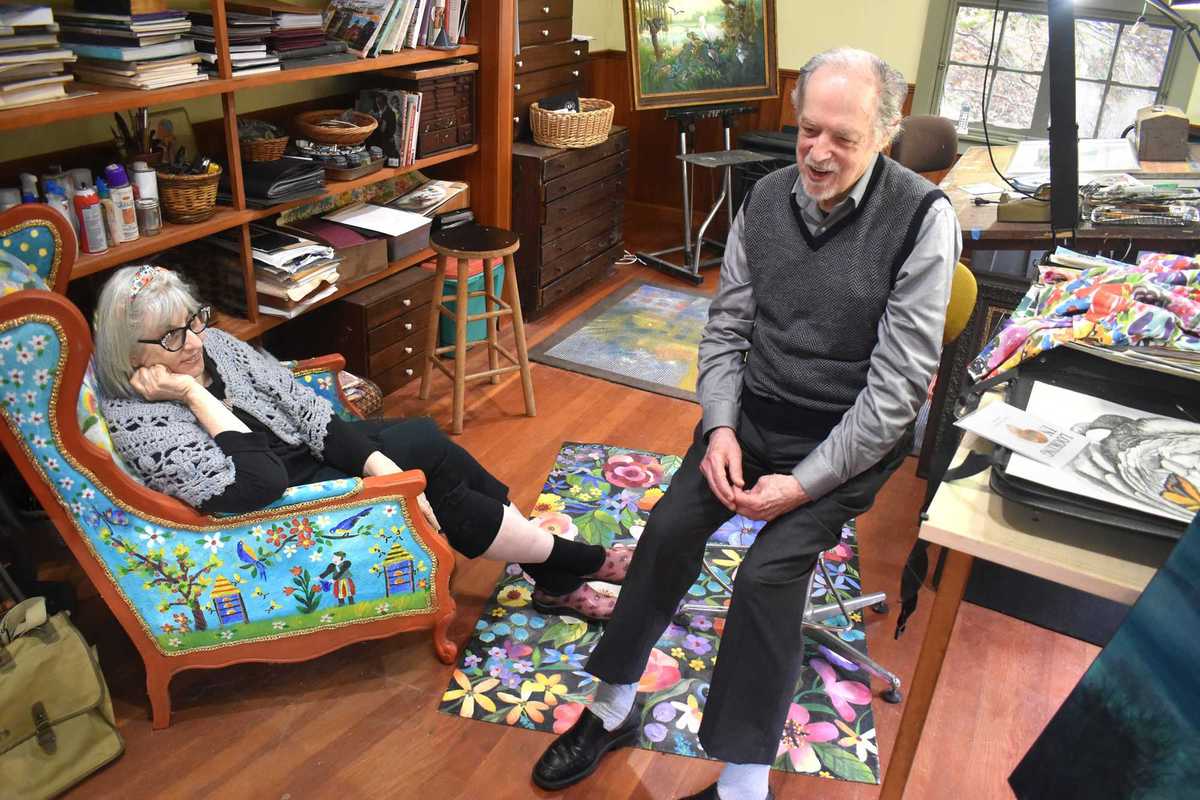
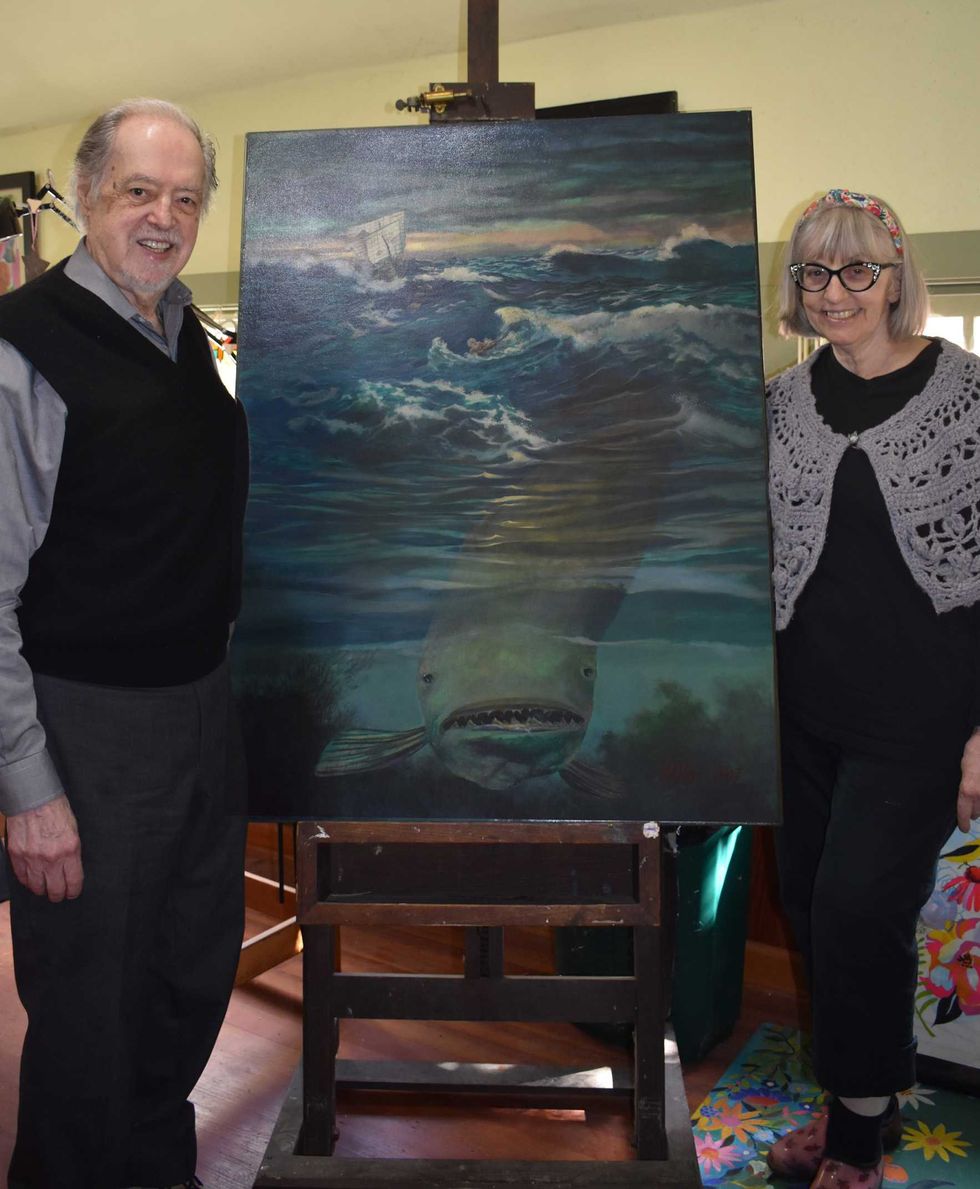 Justine and Victor Valla in their studio with a painting of Victor’s,”Jonah and the Whale.” Robin Roraback


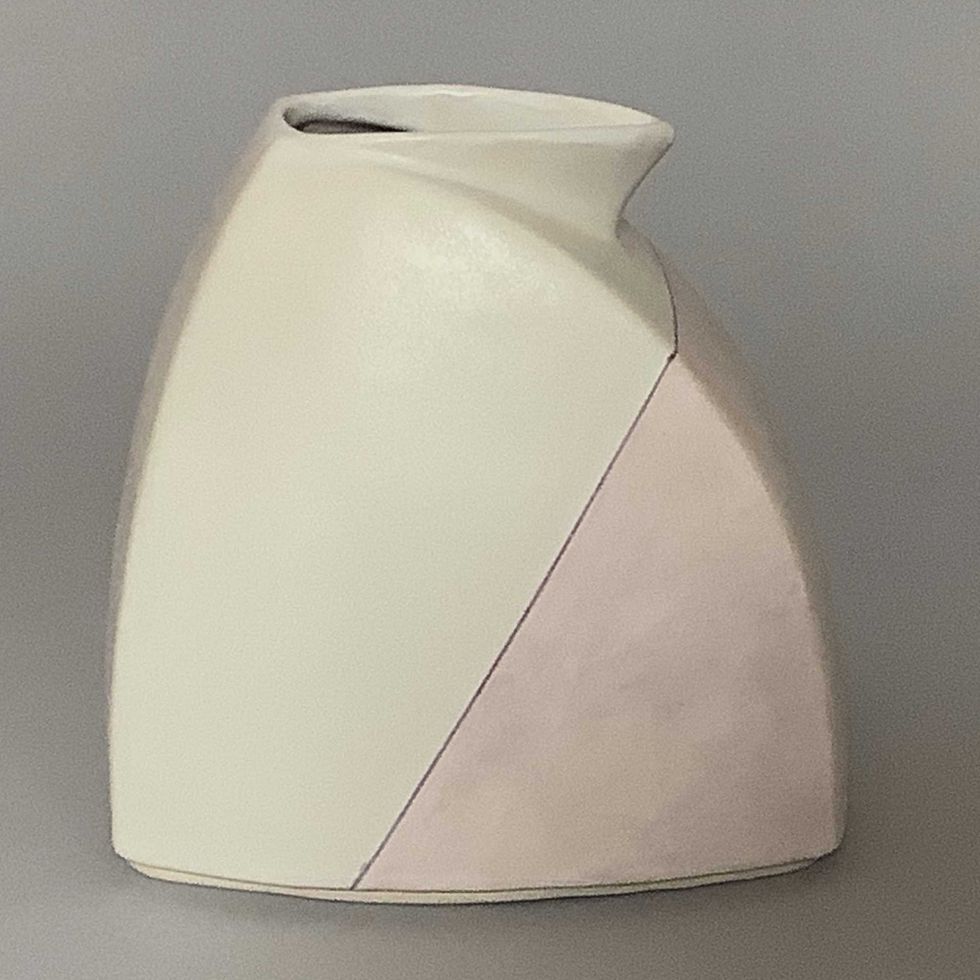 A ceramic vase by Kathleen Heidemann.Provided
 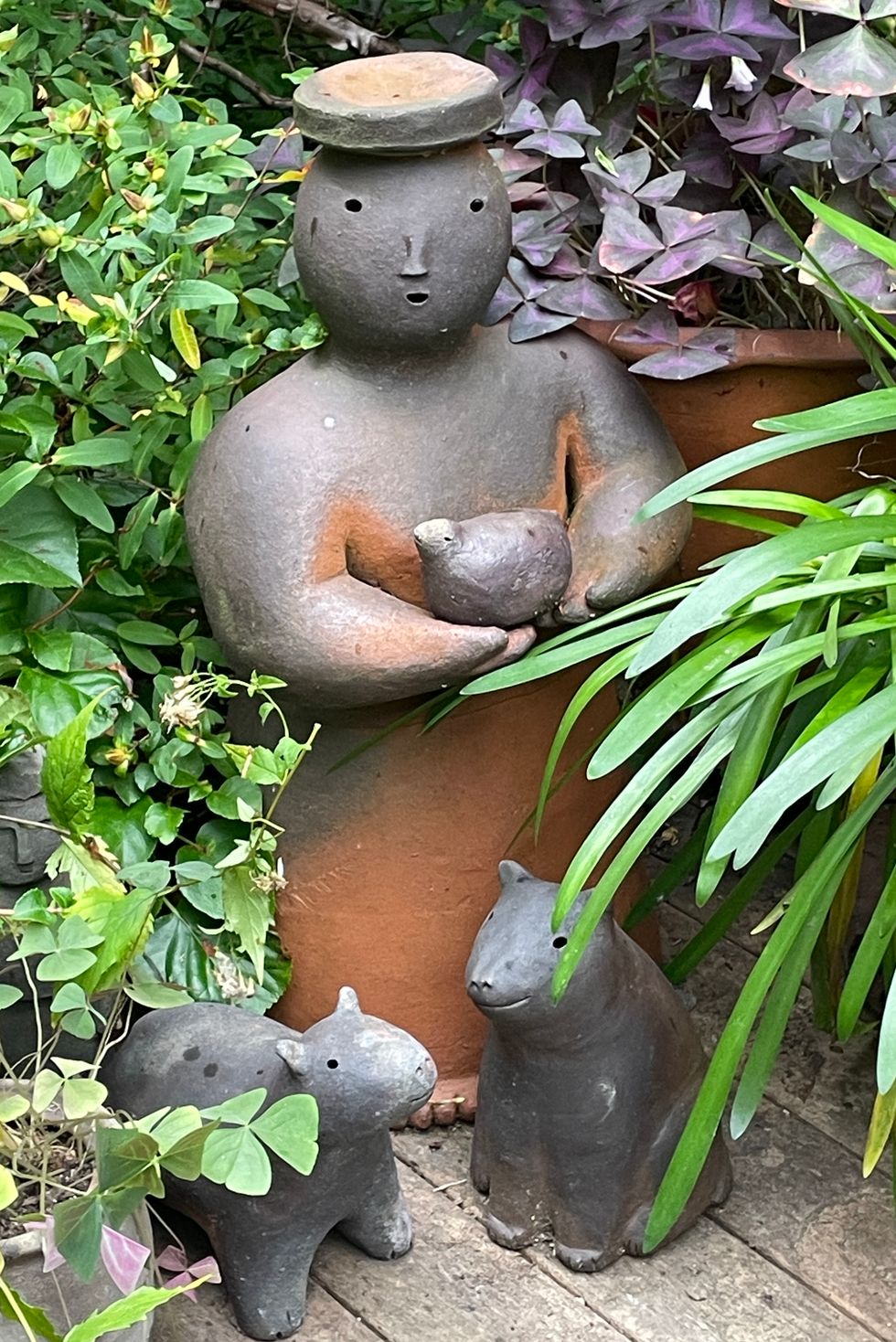 Joy Brown’s delightful ceramic sculptures.Provided