Latest News

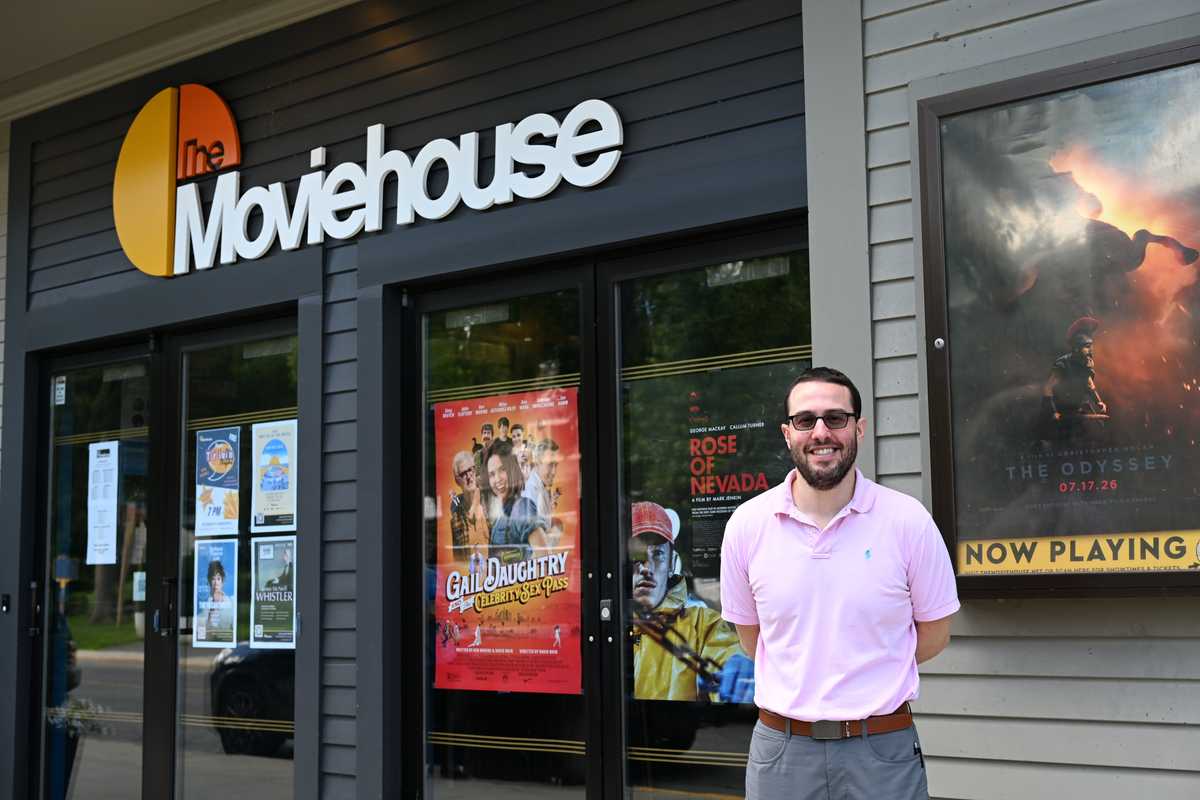
Jeremy Boviard, General Manager at the Moviehouse in Millerton.
Annette Stover
That passion has made him the perfect steward of The Moviehouse in Millerton, where, as general manager, he has helped transform the nonprofit theater into a vibrant community gathering place.
“I like bringing people together to share something,” he said. “People come here to enjoy themselves, to learn about the world and themselves, and we’re here to facilitate and enhance that experience as much as possible.”
His path to The Moviehouse, however, wasn’t one he could have imagined.
Raised in Newton, Massachusetts, Boviard grew up immersed in musical theater and developed an early love of cinema. Some of his first memories involve movies. As a toddler, he insisted on watching “E.T.” before deciding the opening scenes were too scary. Today, it’s one of his all-time favorites. He also wore out a VHS recording of the television broadcast of “The Wizard of Oz,” commercials and all.
Cinema was a family affair. His mother, a preschool teacher, would even mail him Siskel and Ebert’s “thumbs up” and “thumbs down” movie reviews while he was away at summer camp, to keep him in the loop.
“I’ve always loved talking about movies,” he said.
After studying communications and media at Northeastern University, Boviard explored a variety of careers. Then, in 2016, his life took an unexpected turn.
He came to northwest Connecticut seeking treatment for alcoholism at Mountainside Treatment Center in Canaan, expecting to stay for only a month or two.
Instead, he found a new beginning.
Nearly a decade later, Boviard remains sober and speaks openly about the experience that changed his life.
“It’s a big part of my identity,” he said. “It’s more than not drinking or doing drugs; it’s about having integrity and being open to others.”
After completing treatment, he stayed in the area and joined the Mountainside staff, eventually becoming a client services lead during the height of the COVID-19 pandemic. The work was demanding, requiring compassion, flexibility and resilience.
“It helped me become — not the best version of myself, because I’m not perfect — but I feel stable and happy with my life in ways that 10 years ago I did not,” he said. “It’s the beginning of a lifelong journey.”
That same outlook shapes the way he approaches his work today.
When friends learned The Moviehouse was looking for a general manager after reopening in 2021, they immediately thought of Boviard. Running an independent movie theater had long been one of his dream jobs.
“It felt like a perfect fit,” he said, “and I am incredibly grateful for the opportunity that [Moviehouse Chair and Vice Chair] Chelsea Altman and David Maltby have given me.”
His days rarely look the same. He helps choose films, organizes special events, oversees fundraising and educational programs, manages staff schedules and payroll, orders supplies — and, if necessary, teaches new team members to change the soda fountain syrup, as he did in the middle of this interview: “There are plenty of moments where you’re doing a little bit of everything.”
He credits Assistant General Manager Tom Cloutier, Public Relations and Marketing Director Helen Seslowsky, and the rest of the team for creating a culture built on trust and teamwork.
“When I’m not here physically, I trust that the people who are here are handling everything well,” he said. “That’s a really good place to be.”
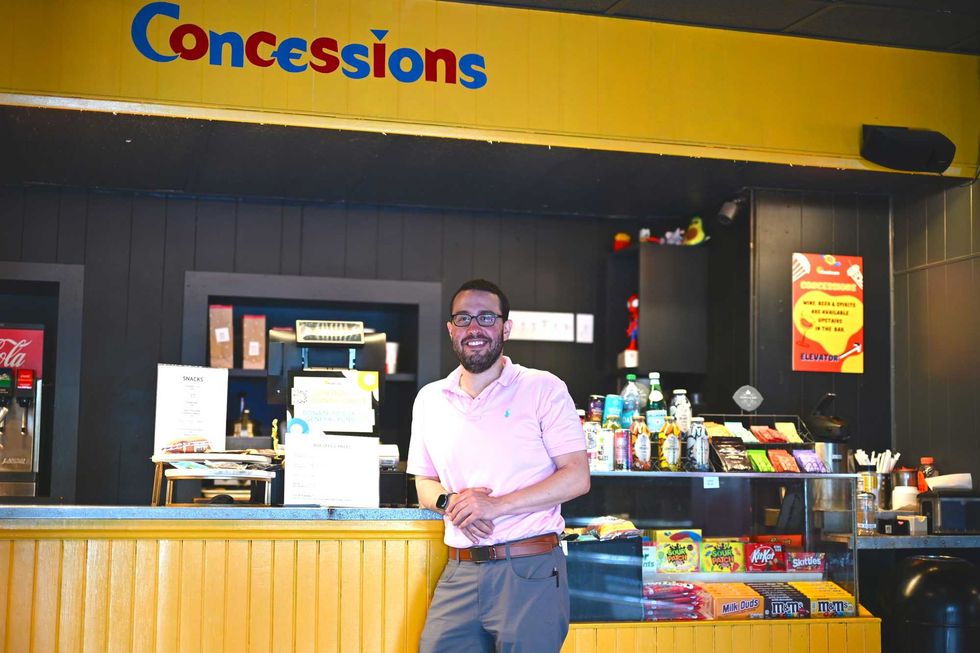 Jeremy Boviard and the team have expanded concessions at The Moviehouse.Annette Stover
Under Boviard’s leadership, The Moviehouse has expanded well beyond first-run films. Trivia nights, filmmaker discussions, live performances, after-school filmmaking programs and community partnerships have become part of its identity.
His goal is to offer something streaming services can’t.
“There’s something special about sharing a story in a room full of other people,” he said.
In an age when so much entertainment is experienced alone, Boviard believes the real magic of the movies is not confined to the screen. It’s found in the shared experience of watching together, lights dimming and a community discovering, for a couple of hours, that great stories are better when they’re shared.
That commitment extends beyond the theater. As co-chair of the Millerton Business Alliance, Boviard helps organize community events, including free holiday movie screenings and Festival of Lights activities.
He says he still finds himself struck by the quiet beauty of the region he unexpectedly came to call home.
Asked what advice he would give his younger self, Boviard doesn’t talk about career success or favorite films.
Instead, he offered a lesson earned through experience.
“Life’s full of surprises, and things often won’t play out how you expect,” he said. “If you put your best foot forward, stay even-keeled and remain as realistically optimistic as possible, life will lead to some unexpectedly wonderful places.”

Want more of our stories on Google? Click here to make us a Preferred Source.
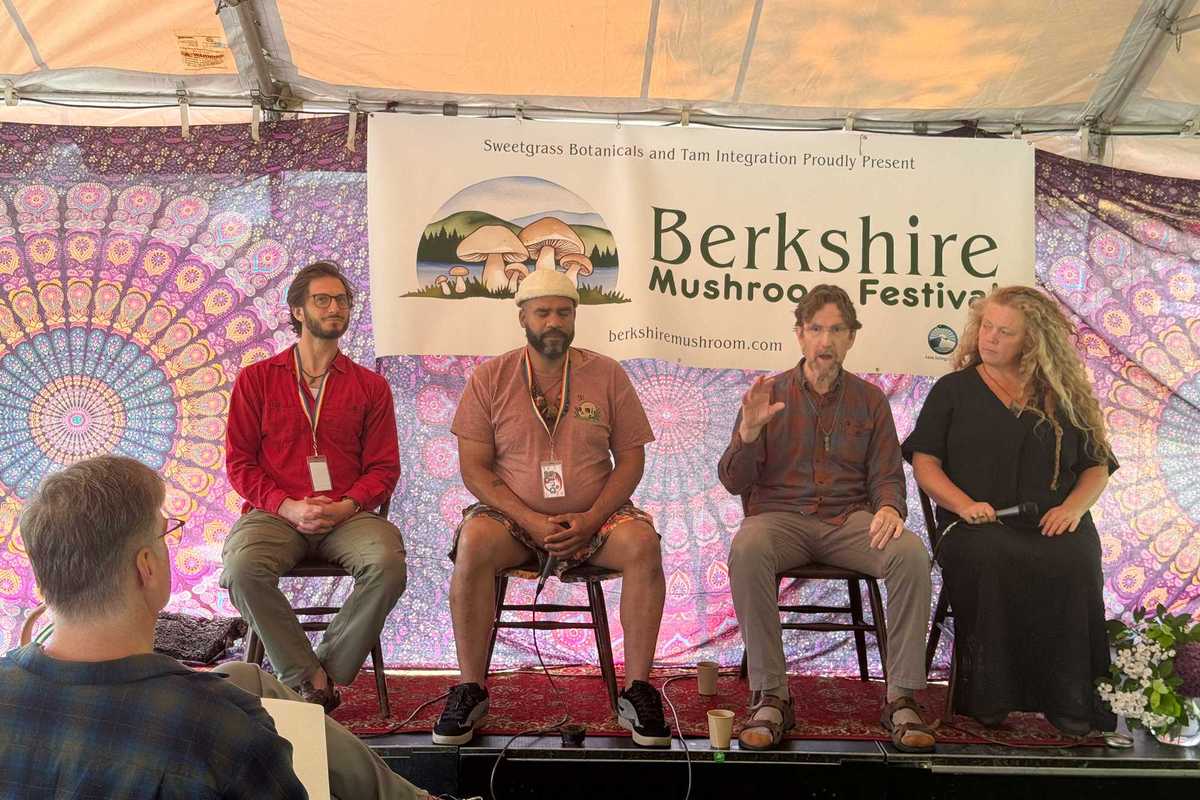
Presenters at the 2025 Berkshire Mushroom Festival.
Daniel Shankin
On Aug. 22 and 23, Tam Integration, an online psychedelic community organization, and Lee, Massachusetts-based dispensary Sweetgrass Botanicals will bring together foragers, cultivators, scientists, artists, cooks and curious humans at Dewey Hall in Sheffield, Massachusetts, for a weekend devoted to the remarkable world of mushrooms.
Stamets’ books, including “Mycelium Running: How Mushrooms Can Help Save the World,” have helped inspire a broader fascination with the fungal kingdom, from the role of mycelium in forest ecosystems to the potential of mushrooms in medicine and environmental restoration. Similarly, Michael Pollan’s “How to Change Your Mind” introduced millions of readers to the history and revival of psychedelic research, including scientific investigations into psilocybin, the psychoactive compound found in certain mushrooms. Pollan’s reporting has helped illuminate a field that had moved from the counterculture into laboratories and serious conversations about consciousness and mental health.
This spirit fits the Berkshire festival, whose theme this year is “the mycelial web of nature, creativity, science and magic.” Over the course of the weekend, visitors can explore mushrooms from nearly every conceivable angle: guided walks and species identification, cultivation, cooking, crafts, spore-print art and conversations about medicinal and psychedelic fungi.
Among the presenters is Berkshire native John Wheeler, founder of the Berkshire Mycological Society, who has been foraging for more than 30 years and has identified roughly 1,100 mushroom species. He’ll lead a Sunday foraging workshop and join a panel on foraging and identification with Luke Sarrantonio, founder of Mycophilic. Sarrantonio, who grew up in Rosendale, has built a career around fungal education, cultivation and community projects, including the Catskills’ annual “For the Love of Fungi” mushroom and arts festival.
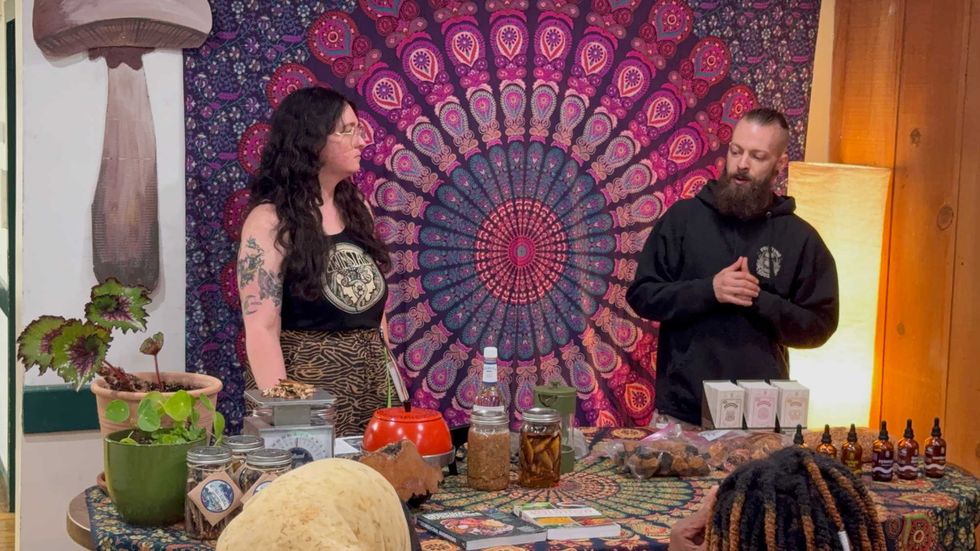 Daniel Shankin
The festival also goes deep into the increasingly visible world of psychedelic fungi. Daniel Shankin, founder of Tam Integration, is a psychedelic integration coach whose work focuses on helping people incorporate transformative psychedelic experiences into their lives.
“It’s so exciting to be able to bring in such wide-ranging talent,” said Shankin of the speakers and presenters at this year’s festival. “There are people that I’ve been friends with in this community for years that I haven’t gotten to work with in person because they live in Guatemala or the Netherlands or another part of the world, so this is so exciting.”
As the founder of an organization that works with the psychedelic portion of the fungi world, Shankin is also excited to bring the growing consciousness around this modality to more people and train more people to be guides. “Not everybody necessarily needs to do psychedelics,” said Shankin, “but I feel like everybody needs to be able to hold space for somebody who’s on psychedelics.”
Cassandra Purdy, founder of Sweetgrass Botanicals, has spent more than 30 years immersed in the world of plant medicine, shamanism and entheogens. Together with other presenters, they’ll explore psychedelic preparation and integration, spirituality, safety, ethics and the art of creating supportive spaces for psychedelic experiences.
And the weekend’s conversation about fungi extends well beyond psychedelics. Imani Turnbull-Brown, co-founder of the Entheogen Melanin Collective, brings a focus on ancestral healing, Black wellness and making the psychedelic conversation more accessible and inclusive. Other sessions explore soil and regeneration, functional and medicinal mushrooms, cultivation, mushroom-inspired art and the practical business of growing fungi.
“I think people are increasingly suspicious of Western medicine,” said Shankin. “They’re looking for ways to combat the effects of aging and pollution, the effects of toxins in their foods, and they’re interested in taking their health and well-being into their own hands. Learning about functional mushrooms and the healthy lifestyle that goes along with them can go a long way.”
The Berkshire Mushroom Festival offers a particularly enjoyable way to investigate these extraordinary organisms — and to consider whether fungi might even hold some answers to the human-made environmental challenges unfolding around us. As Stamets has put it, “I love a challenge and saving the Planet seems like a good one.” Come see what the fungi have to say for themselves.
The Berkshire Mushroom Festival takes place Aug. 22 and 23 at Dewey Hall, 91 Main St., Sheffield, Massachusetts. For more information and tickets, visit berkshiremushroom
.com
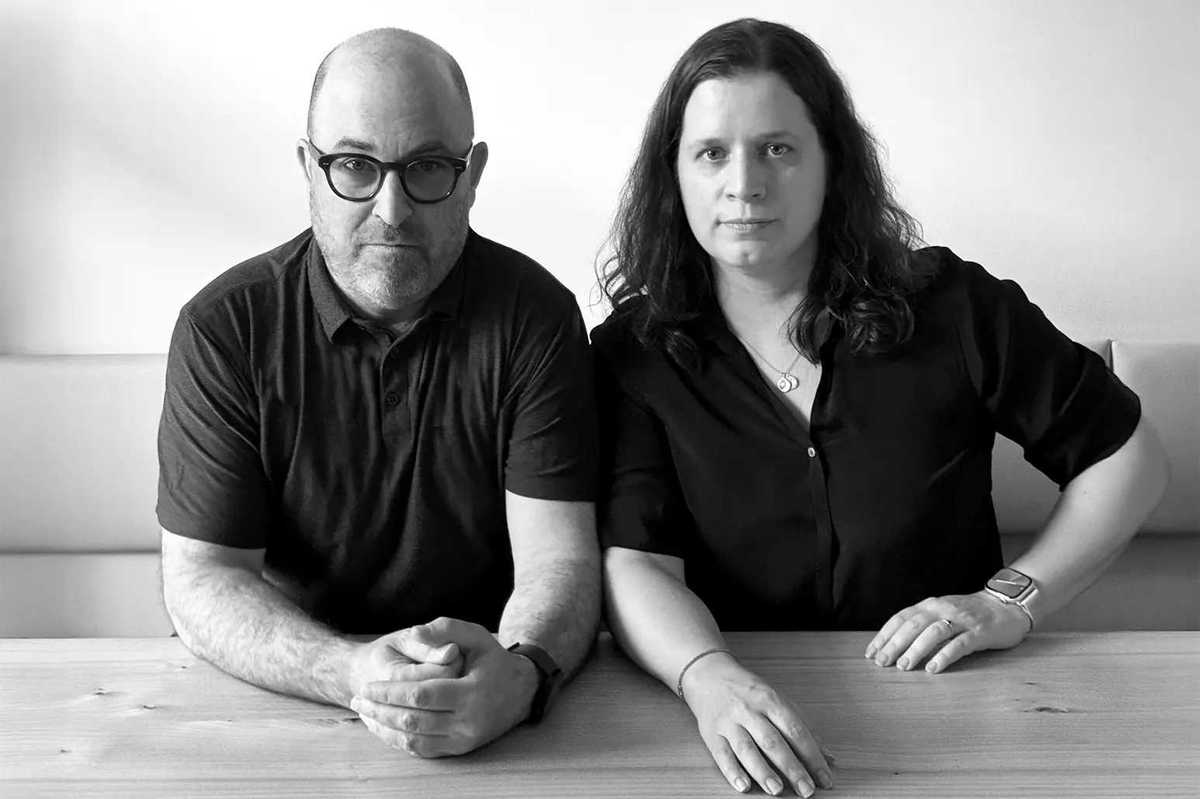
(From L to R) Jakob Kerr-Lucero (Jake), Charlotte Wise (Candy), Richie Crane (Joey), Brianna Vivace (Coco), and Vivian Burnham (Stage Manager) in rehearsal for Sharon Playhouse’s “Zombie Prom.”
Michael Kevin Baldwin
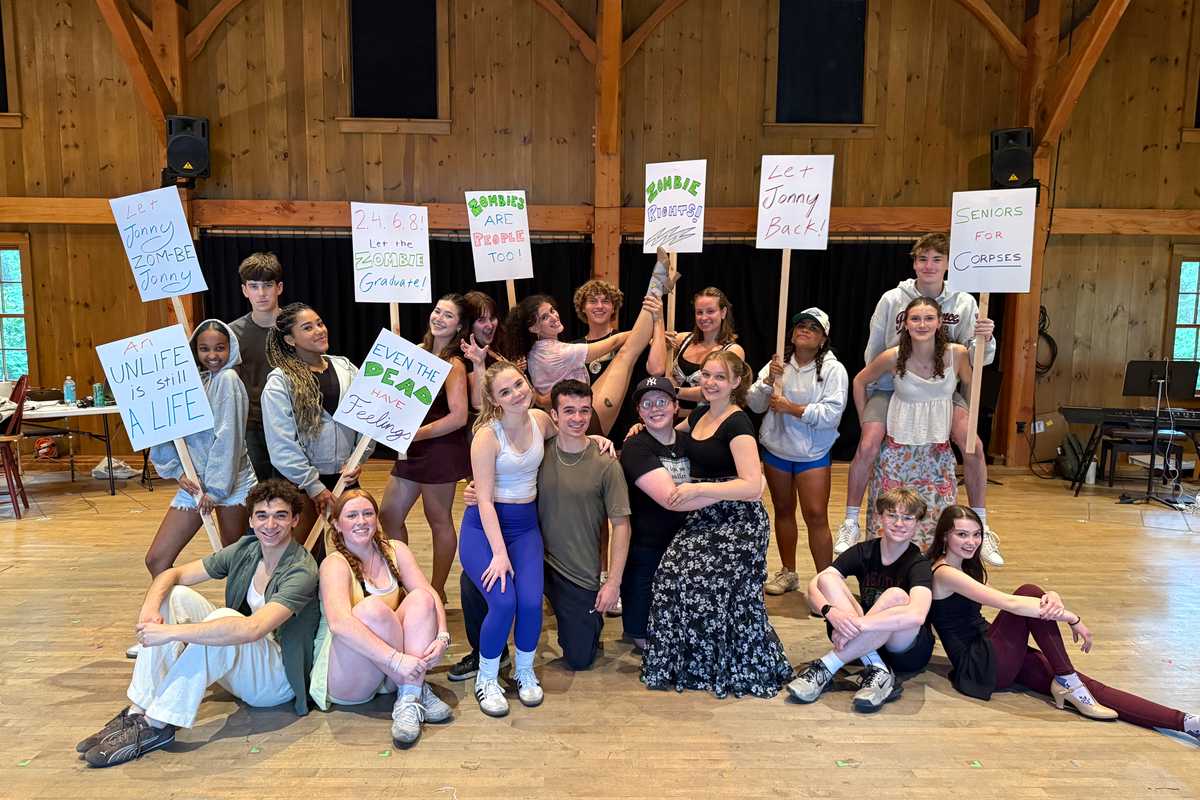
Set in a candy-colored 1950s high school, “Zombie Prom” has everything a vintage teen musical could want: a sweet girl, a rebellious bad boy, a terrifyingly strict principal, rock ’n’ roll, big dance numbers and enough adolescent angst to power a small town. It also has a dead boyfriend who refuses to let the grave interfere with his love life.
The show is the second annual production of the Sharon Playhouse’s Launchpad Company, a pre-professional program for theater artists ages 15 to 20. This year’s young cast comes from communities on both sides of the Connecticut-New York border, including Alex Wilbur of Lakeville as Eddie Flagrante, Carlo Desy of Fairfield as Jonny, Abby Callaway of Woodbury as Toffee and Callie Audia of Dover Plains as Miss Delilah Strict.
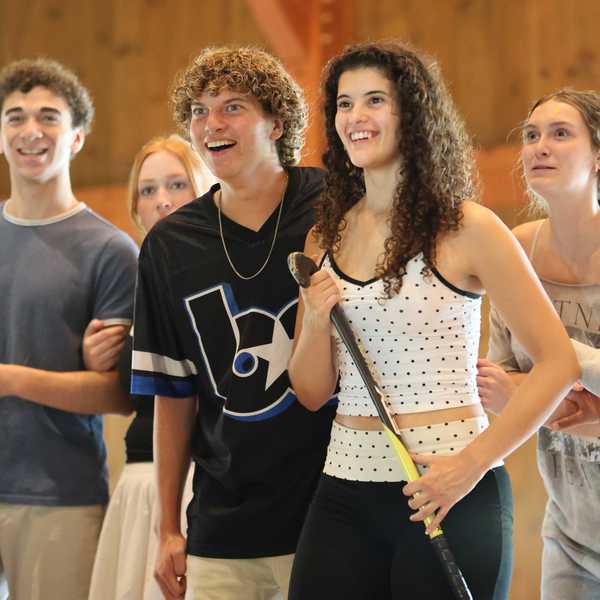 Rehearsals for “Zombie Prom” at the Sharon Playhouse.Lynette Shy
The musical, with music by Dana P. Rowe, lyrics by John Dempsey and a book by Dempsey and Hugh M. Murphy, premiered Off-Broadway in 1996. Sharon’s production has a particularly fun connection to that original run: Director DJ Salisbury was a member of the original Off-Broadway company. He also returns to the Sharon Playhouse, where he directed “42nd Street” in 2011. Michelle Lemon choreographs, and Eric Thomas Johnson is music director.
Expect catchy songs, big personalities, teenage melodrama, zombie shenanigans and enough high camp to make death look like a pretty good time. But underneath all the hairspray and grave dirt, “Zombie Prom” is also a coming-of-age story about love, friendship, refusing to become somebody you’re not and never letting something as minor as death get between you and true love.
“Zombie Prom” runs Aug. 21 and 22 at 7 p.m. and Aug. 23 at 3 p.m. at the Sharon Playhouse, 49 Amenia Road, Sharon. Tickets at sharonplayhouse.org
Want more of our stories on Google? Click here to make us a Preferred Source.