Thank you!
Your support is sustaining the future of local news in our communities.

Veterinarians are no less caring, but they've had to curtail 24-hour emergency service

Four-and-a-half years ago, Sand Road Animal Hospital in Falls Village bought the Millerton Veterinary Practice in nearby New York state,  expanding their business both by customer base and geographically.

At the same time they announced they would no longer be available around-the-clock for emergencies.

A letter sent to all their customers advised them to seek the services of an emergency pet clinic if a need arose in the hours when Sand Road was closed.

There was an outcry at the time among area pet owners; and though most Sand Road clients have either adjusted or moved on by now, periodically there is another round of questioning: Why isn’t there 24-hour emergency service for pets here?

The questions arise, often, in response to events. Recently, a Sand Road client’s dog died en route to an emergency clinic in Avon. And a few months ago, a car accident took the life of a pickup truck driver; his dog was in the vehicle at the time, and was injured. The EMT volunteers on the scene wanted to get emergency care for the dog — and had to drive an hour to find a clinic that was open.

Many people still think wistfully of veterinarians (particularly in a rural area) as versions of the famous English doctor, James Herriott, beloved author of “All Creatures Great and Small.�

And in fact, David Sandefer, chief vet and owner of Sand Road Animal Hospital, shares many of Herriott’s qualities; foremost, his genial manner and parental concern for his patients. By the age of 14 he was working on a dairy farm, and worked at the Rome Veterinary Hospital all the way through high school, undergraduate college and vet school. (He graduated from Cornell University in 1983.) For many years he was taking care of everything that walked in the door, large or small and “If he was not sleeping he was working seven days a week,� his wife, Cindy, said. Cindy Sandefer is also the hospital administrator for SRAH.

But veterinary medicine has evolved substantially from the days when the barn also served as the operating room. And many of those changes are also responsible for the current standard of local practices providing everyday care and ER hospitals handling after-hours emergencies.

Interviews with local veterinarians, ER clinics and even administrators at two of the leading veterinary schools in the country paint a picture of a profession that has substantially changed from 30 years ago.

Traditions versus trends

“Traditionally, 20 or 30 years ago, everyone did their own emergencies,� said Katherine Skiff-Kane, whose practice, Housatonic Veterinary Care, is in Cornwall Bridge.

“People’s expectations were different,� she said. “You were one person and they understood [the limitations]. Practices in neighboring towns would have taken turns being on call at night or on the weekends, so that the brunt of the after-hours work didn’t fall on one person or practice.�

And 30 years ago, the vast majority of vets were men. Harvey Hayden, who has a practice in Sharon, and Kent Kay, who for years ran the Millerton Veterinary Practice, echoed the same sentiment: Times have changed, technology has changed, people have changed.

And, they noted, the attitude of doctors toward their practices has changed.

“For me, [the attitude] is I do things until they’re done,â€� Hayden said. 

Kay agreed: “My attitude is, they’re my clients, I’ll take care of them.�

Paul Schwartz has been a practicing vet for 27 years. He owns and runs the Center for Veterinary Care in Millbrook, and says that being a veterinarian has been “incorporated into my life.� But he doesn’t feel that everyone in the business takes the same approach, and had some stringent words for many of his competitors.

“It’s a societal change,� he said.

Small animal vs. large

The older, male vets in this region say they were trained as general practitioners. For some of them, the majority of their work was large animal: mostly cattle and sheep and some horses. And the tradition of 24-hour care is still alive and well in the large animal practices in the area.

The much-discussed woes of the dairy business have also impacted veterinary care. Rural areas that used to support small family farms and larger dairy operations needed vets who were willing to travel to the farm. While “Doc� was there inoculating the herd he could also take a look at Bowser’s paw.

In the last 10 to 15 years, as the need for large animal veterinarians has declined due to dairy operations closing, the need for small-animal practice has grown.

General practitioners vs. specialists

In keeping with the changes in what kinds of animals Americans keep (and seek care for), veterinary education has changed and expanded.

Kathy Salisbury is the assistant dean for academic affairs at the Purdue University School of Veterinary Medicine in Indiana. She said, “There is an increase in species studies and specialties. Students still get general teaching, but the breakdown is approximately one third of the class will be on a mixed track, one half will specialize in small animal and the rest will be divided between equine and ‘food’ animals.â€� 

These days, equine practice is its own specialty in veterinarian schools —and in the real world as well. Where general practice vets used to take care of a cow or a cat, the equine vet is only trained to take care of horses.

And as the study and care of animals by doctors has changed, so has the way that people treat their domestic animals. The pet has come in from the cold.

“The dog has gone from being tied outside in the doghouse to sleeping in the bedroom,� said Sandefer.

And Skiff-Kane said she believes there has been a huge transition. “People who don’t have children or whose children are grown ... for them, the pet becomes a surrogate [child].�

With that shift has come a change in perception, attitude and expectation for the care of the pet. An animal, be it dog or cat, that sleeps on or sometimes even in the bed of its owner is a highly valued member of the family.

Emergency Rooms for pets

But at the same time that petowners have come to expect human-level care for their pets, more and more veterinary practices have stopped answering their phones after they’ve closed the office door for the night.

Sandefer is at pains to point out that at Sand Road, “We handle a lot of emergencies through-out the day and into the evening. We see a lot of emergencies on Saturdays and Sundays. We see clients from other practices when their offices are closed.�

Sand Road is open Monday through Friday from 8 a.m. to 8 p.m., Saturday from 8a.m. to 4 p.m., and Sundays from 8 a.m. to noon.

But she doesn’t dispute that when the door is closed and the lights are turned out, their clients must go elsewhere.

“Ninety-eight percent of our client base is getting superior service,� she said. “The other 2 percent of our clients have a place to go — even if it’s inconvenient, expensive and they have to travel.�

Sand Road even lists emergency vet options prominently on its Web site. If a client has an after-hours emergency, the Sand Road answering machine or service will direct the clients to a veterinary hospital that specializes in emergencies.

This is a national trend.

ER advantages

The veterinary ER has a full range of diagnostic and surgical apparatus available — including technology that is often too expensive for a small veterinary practitioner to afford.

“Technology has improved by leaps and bounds,� Harvey Hayden noted. “This means that to equip a hospital becomes very expensive. It’s got to be pretty well equipped to handle the variety of crises; and emergency care has become a specialty in itself.�

There are two ways of looking at cost as it relates to emergencies.

Sand Road Animal Hospital is very well equipped. “We have phenomenal toys in our building,� Sandefer said. “We have great facilities.�

But emergency service requires more than just machinery. Two nearby animal ERs — in Pittsfield and Avon — employ one vet and two techs per shift. There might also be a receptionist on staff. The lights are on and the machines are warmed up.

And all these things cost money.

If Herriott had a daughter …

Perhaps the most significant impact on all veterinary practices is the increase in women taking up veterinary careers. Nearly 80 percent of the students in vet school are now women. As recently as the 1980s, it was still about a 50-50 ratio of men to women.

And most vets would agree: this new generation of vets has made it a priority to set aside time for family and home. The days when a vet would get up during dinner and leave his spouse alone to put the children to bed have ended.

Going right to the heart of the matter, Sandefer said, “We were able to attract and retain good vets because we no longer did emergency through the night.�

Douglas Hart of Pine Plains Veterinary graduated from vet school in 1967. While his practice no longer does 24-hour response (they stopped in 2008), he sees the dilemma from both side.

“These young vets are very well trained and dedicated,� he said. “But they have a different life philosophy than we did years ago.�

What’s the answer?

Many people who reside in the Tri-state area live here precisely because of the rural character and remove from interstate highways and suburban shopping malls — those same strip malls that might house a 24-hour emergency veterinary clinic.

Yet their expectations are for the service of many years ago with the technology of today. Is this possible?

Substantially more women in the profession, advances in veterinary medicine and technology, a shift within the profession toward specialties, the decline of large-animal practices and an increase in small-animal, and the migration of the family pet from the barn to the bedroom all contribute to a new paradigm. 

But this doesn’t mean that it is impossible to get a veterinarian to answer your SOS in the middle of the night.

In the Tri-state area there are still at least three vets who take care of their clients at all hours. But don’t plan to call them at midnight unless you’re a regular client.

Hours and emergency options vary at area animal hospitals. Don’t assume that if a practice is open that they will take an emergency call; policies will differ from practice to practice. It’s best to call before there’s an emergency, and keep the number of the closest one in a handy place. Here are some of the choices.

Sand Road Animal Hospital

Dr. Dave Sandefer, Dr. Jennifer Kline, Dr. Katie Vagliano,  Dr. Amy Damers

136 Sand Road

Falls Village, Conn.

860-824-5223

Multi-vet practice; small-animal

Dr. Harvey Hayden

Cornwall Bridge Road

Sharon, Conn.

860-364-0058

Solo practice; large- and small-animal vet

Dr. Katherine Skiff-Kane

Housatonic Veterinary Care

23 Kent Road

Cornwall Bridge, Conn.

860-672-4948

Solo practice; large  and small animal; specialty in New World camelids (e.g., llamas and alpacas)

Millerton Veterinary Practice

(affiliated with Sand Road)

Dr. Carolyn Parker Cannon, Dr. Katie Vagliano

199 Route 44 East

Millerton, N.Y.

518-789-3440

Multi-vet practice; small-animal

Dr. Kent Kay

Millerton, N.Y.

518-789-3378

Solo practice; equine only

Dr. J. M. Strauss

Webutuck School Road

Amenia, N.Y.

845-373-9587

Solo practice; small-animal

Pine Plains Veterinary

Dr. Douglas Hart, Dr. Dorraine Waldow, Dr. Caroline Helm-Van Kleeck

2825 Church St.

Pine Plains, N.Y.

518-398-9494

Multi-vet practice; large- and small-animal

Dr. Barbara Clayton

County Route 83

Pine Plains, N.Y.

518-398-9878

Solo practice; small-animal

Center for Veterinary Care

Dr. Paul Schwartz, Dr. Emily Elliot, Dr. Kim Roellke, Dr. Alberta Crum

680 State Road 343

Millbrook, N.Y.

845-677-8800

Multi-vet practice; Large- and small-animal

Copake Veterinary Hospital

Dr. Bill Rasweiler, Dr. George Beneke, Dr. Jonathan Duryea, Dr. Shelly Mackowski, Dr. Suzannah Strauss

Copake, N.Y.

518-329-6162

Multi-vet practice; large- and small-animal

Dr. Jayme Mottler

Hoof & Paw Veterinary Services

House- and farm-calls in New York, Connecticut and Massachusetts

914-489-1371

Latest News

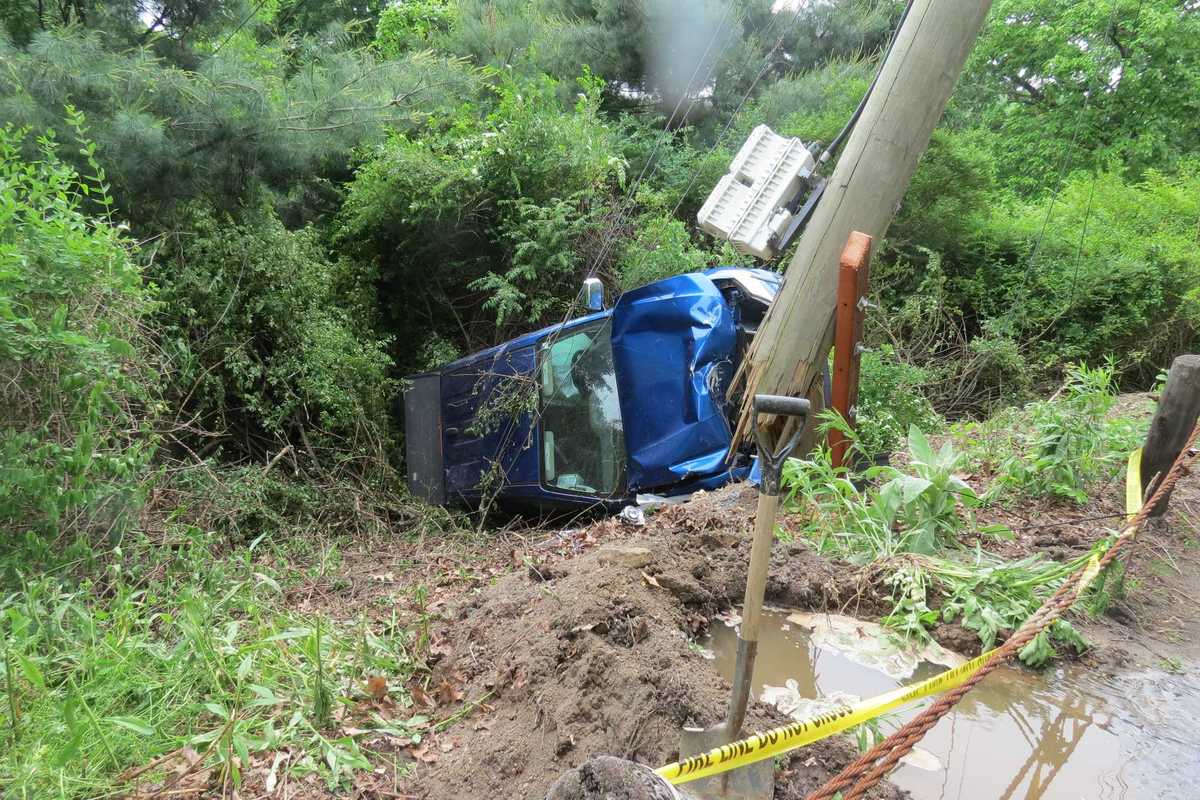
Early morning Kent crash sends car into ditch, disrupts traffic on Rt. 341

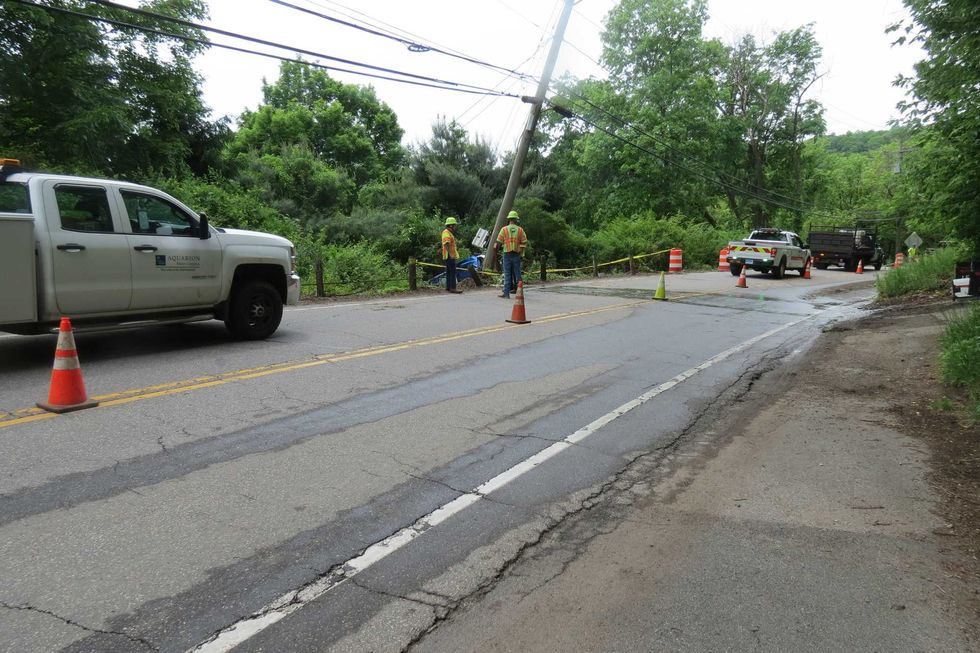
A blue SUV remains in a ditch after an early-morning crash along Segar Mountain Road in Kent May 27.

Ruth Epstein

KENT – A driver escaped with minor injuries after an SUV crashed into a utility pole and water line before rolling into a ditch along Segar Mountain Road early Wednesday morning, May 27, disrupting traffic for much of the day and affecting water service to a nearby residence.

The single-vehicle crash occurred around 4:30 a.m. near 36 Segar Mountain Road, just under half a mile east of the intersection with South Kent Road. State police said the blue SUV struck the pole, went over a guardrail and came to stop in a roadside ditch.

Keep ReadingShow less

Pauline King Garfield

Pauline King Garfield

EAST CANAAN — Pauline K. (King) Garfield, 94 of 77 South Canaan Rd. formerly of East Canaan, died Sunday May 24, 2026, at Geer Village.She was the wife of the late Duane Garfield who passed August 14, 2017. Pauline was born April 3, 1932 in North Canaan, CT in the former Geer Hospital. She was the daughter of the late Charles and Rose (Van Vlack) King.

Pauline spent her career at Becton Dickinson in Canaan, after being a stay-at-home mother for many years.She was employed at Becton Dickinson for 23 years. She enjoyed bus trips with her late husband Duane to the Casinos, spending time with her family watching the grandchildren grow up. Recently she made a comment to care givers that was “wait until I see that husband of mine for leaving me here, I am going to read him the riot act.” Over the years she enjoyed many crafts, but her favorite was crocheting gifts for everyone.

Keep ReadingShow less
A blessing for pets — and a lifeline for their health
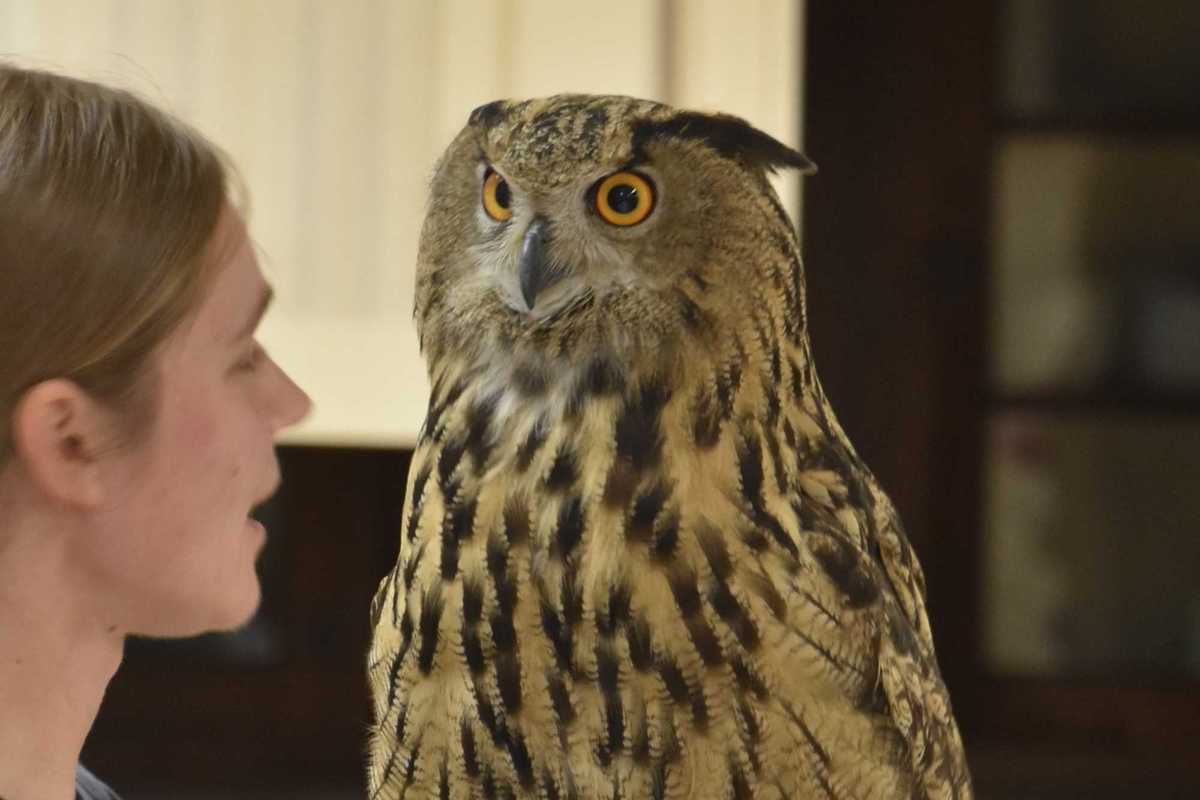
Lazarus, a Eurasian eagle owl, poses with Dr. Laura, his longtime handler. The rescue raptor — known as the event’s “wow factor” for his striking presence and six-foot wingspan — will appear as the Raptor Ambassador at Rhinebeck’s Blessing of the Animals.
provided

For many pet owners, animals are family. On Saturday, May 30, that bond will be celebrated in a uniquely practical and heartfelt way when the Blessing of the Animals returns to Third Lutheran Evangelical Church in Rhinebeck alongside a free rabies vaccination clinic hosted by Hudson Valley Animal Rescue & Sanctuary.

The event, scheduled from noon to 4 p.m., is free for Dutchess County residents and open to dogs, cats and domestic ferrets three months and older. While the clinic itself provides an important public health service, organizers say the day has become about much more than vaccinations.

Keep ReadingShow less
google preferred source

Want more of our stories on Google? Click here to make us a Preferred Source.

Local filmmaker Yonah Sadeh takes his lens to China

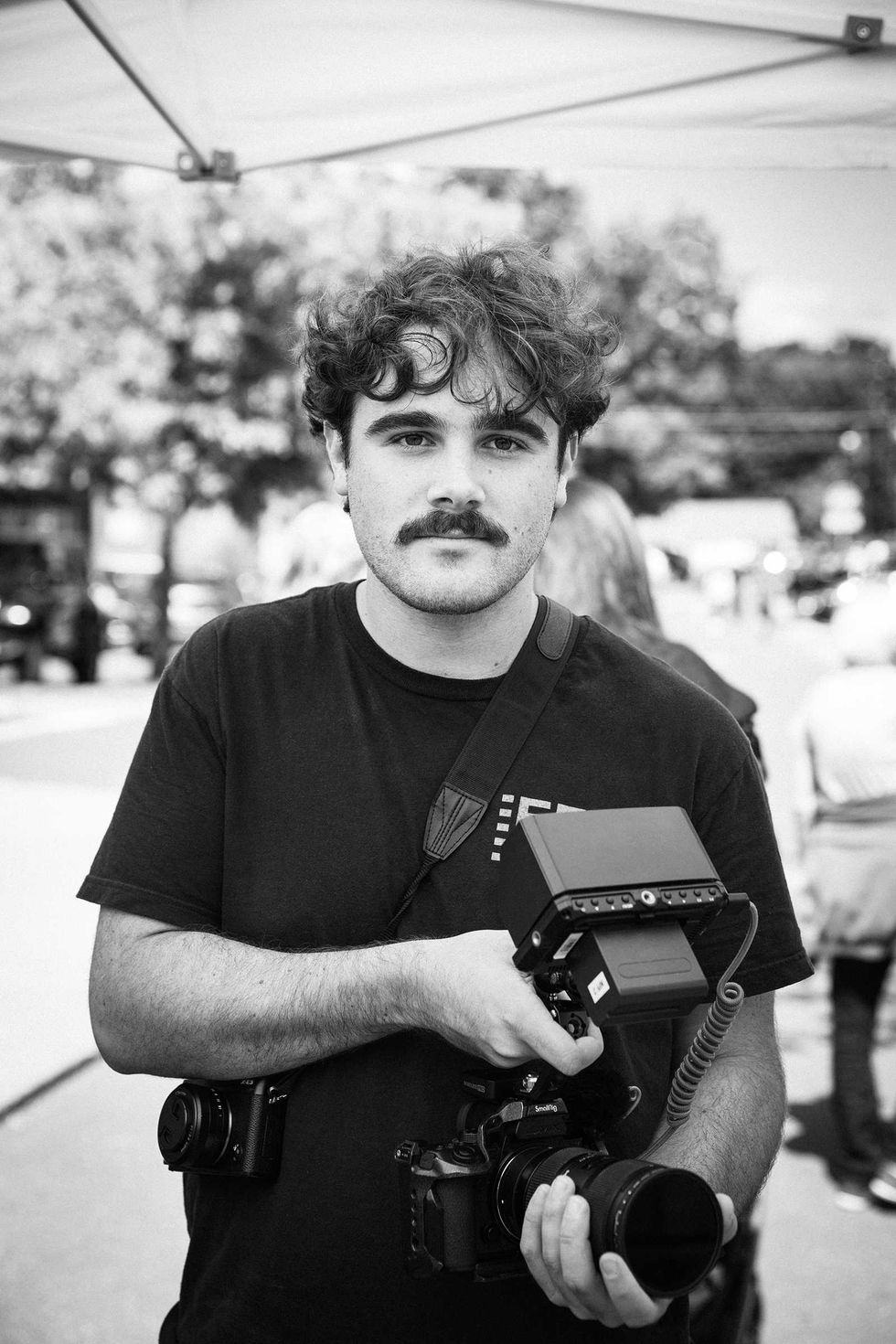
Filmmaker Yonah Sadeh on a shoot last year in New York City.

Matt Kashtan
When I was around 12, a family friend showed me how to use my family’s computer...from that point on, it was pretty much all movies. — Yonah Sadeh

Filmmaker Yonah Sadeh of Falls Village left May 8 for China, where he will shoot a short documentary.

“I got into a documentary film intensive program where we have two weeks to shoot, edit and screen a 10-minute documentary about a topic of our choosing,” he said.“I’ll be in Changsha, Hunan, making a film about a fifth-generation shadow puppet master.”

Keep ReadingShow less
Silvano Monasterios wows packed Cornwall Town Hall audience

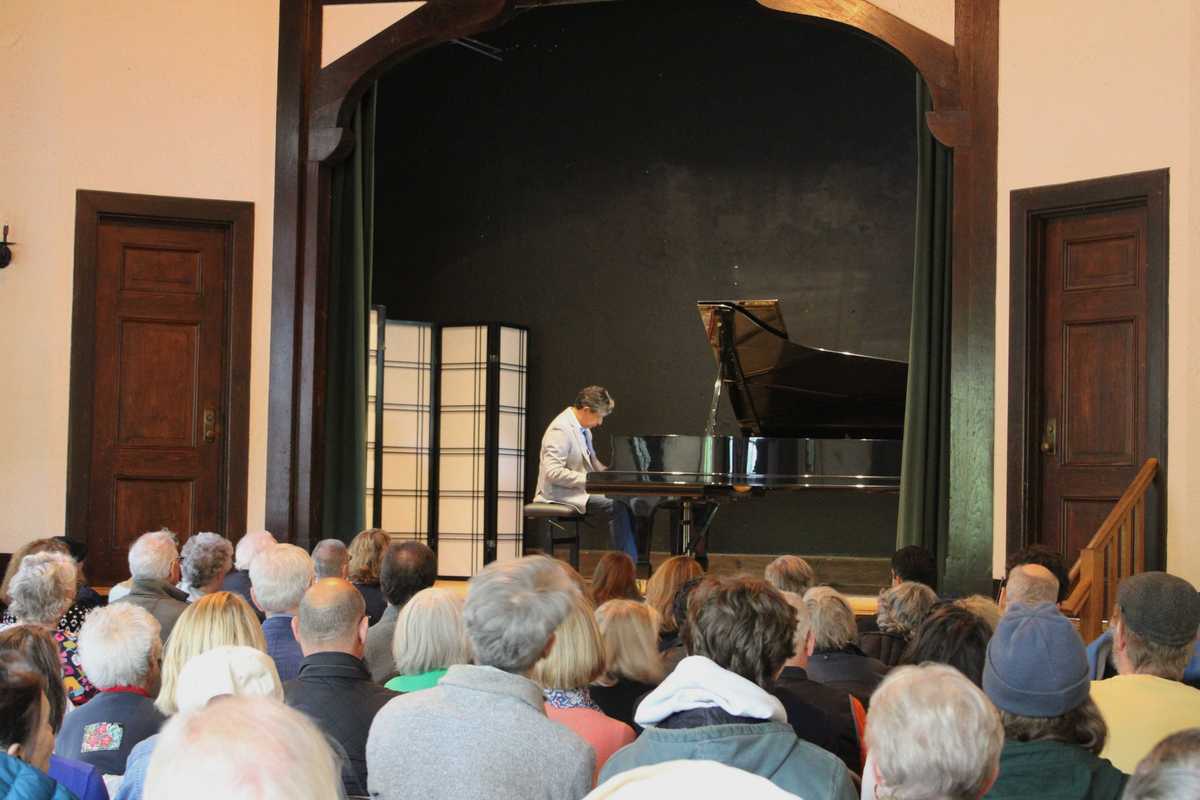
Silvano Monasterios thrilled a sold out audience in Cornwall.

Natalia Zukerman

Grammy-nominated pianist, composer and producer Silvano Monasterios performed works from his upcoming “Solo in Paris,” his seventh album, on Sunday, May 23 at Cornwall Town Hall to a packed audience. Presented by Music Mountain in partnership with the Cornwall Town Hall and Cornwall Library, the concert showcased Monasterios’ signature fusion of sophisticated jazz harmonies and vibrant Latin rhythms. Throughout the performance, he moved seamlessly between intricate compositions and spontaneous improvisation. The concert built excitement for Music Mountain’s upcoming summer jazz series, which will bring an array of acclaimed performers to the historic venue. For more information, visit musicmountain.org

Author Courtney Maum to discuss new novel at Norfolk Library

Norfolk Library celebrates the release of Courtney Maum’s latest novel, “Alan Opts Out,” with a book launch party Tuesday, June 2, at 5:30 p.m. The author will speak about her book in conversation with WAMC radio producer Sarah LaDuke.

A graduate of Brown University with a degree in comparative literature, Maum is an acclaimed author of five books, including the romantic comedy “Touch,” a New York Times Editors’ Choice and NPR Best Book of the Year; “Costalegre;” and “I’m Having So Much Fun Without You.” Her memoir, “The Year of the Horses,” was chosen by the TODAY show as top pick for Mental Health Awareness Month. Vanity Fair listed her author’s guidebook “Before and After the Book Deal,” as a best resource for writers, and she has an eponymous Substack newsletter.

Keep ReadingShow less
google preferred source

Want more of our stories on Google? Click here to make us a Preferred Source.
google preferred source

Want more of our stories on Google? Click here to make us a Preferred Source.