SALISBURY — The human dog sled race, a centerpiece of the Winter Carnival held over the weekend, was such a success that the Salisbury Winter Sports Association (SWSA) plans to host another race during Jumpfest weekend, Feb. 10 to 12.
The race will be held Friday, Feb. 10, following that evening’s target jumping under the lights. Register by emailing Ken Barker at kennethsbarker@gmail.com. Teams that sign up by Feb. 9 do not have to pay the $10-per-person general admission fee for that night’s Jumpfest events at Satre Hill. They will only have to pay their $10 per-team entry fee.
New rules are being put together now, based on lessons learned during the Jan. 28-29 Winter Carnival weekend.
First, everyone has to wear shoes (one person pulling a sled in Sunday’s race went barefoot and ended the day with injured feet).
Second, no children will be allowed to participate.
“It’s a semi-dangerous activity, for children at least,” said SWSA member Willie Hallihan.
Anyone who wants a taste of the danger can log onto www.youtube.com and search for 2012 SWSA human bobsled. One of the “pullers” of a craft fell and was run over by her team’s vehicle.
But, Hallihan said, what the video on youtube does not show is the racer getting up out of the snow, chasing down her team and rejoining the race.
The racecourse will change as well. In Sunday’s race, the teams did two laps around the perimeter of the landing area at the bottom of the jumps, a total of .3 miles.
One racer needed oxygen after finishing the course. When the race is held again on Feb. 10, each team will do one lap. The four fastest teams will then do a second lap.
The rules about vehicles have not changed: Teams can compete with any craft that does not have wheels. It can have runners or skis or be smooth-bottomed, Hallihan said. One team on Sunday used a toboggan.
“Their craft seemed to be very high-tech,” Hallihan said. “They had crosspieces for each puller, and a rope that tied it all to the toboggan. But as soon as they took off, the rope broke. The person being pulled was left lying there, prone, on the toboggan, looking stunned. Then he started paddling with his hands like a surfer, trying to catch up to his team.”
Each team has five pullers towing a rider who weighs at least 200 pounds. The winning team, called The Flying Hoppy Dogs, had three riders with a combined weight of ... well, no one actually did a weigh in. It was a matter of faith and trust.
The riders on the wining team were Harriet Nirschel and the children of two of the runners (Andrew Boundy and Tucker Shearer). The pullers were Arlen Kleinsasser, Tod Shearer, Bill Arloffki, Mike Boundy and Cris Nirschel. Their time was 1:27.
The second-place team (1:47) was called The Viking Ship.
“They all showed up in Viking regalia, with the horns,” Hallihan said. “Their sled was the front half of a canoe, mounted on skis. They were very, um, motivated.”
The pullers were Pete Brazee, Justin McNeil, Jesse Morey, Arlen Morey and Ben Baine, and the rider was John Sugrue.
The third place team followed only one second later, with a time of 1:48. The Sunday in the Country team was pulled by Jim Wilbur, Bob Cookingham, Jim Butts, Bruce Gob and Bill Anstett. The rider was George Lind.
The first prize was a case of beer from the Lagunitas Brewing Company, official sponsors of USA Ski Jumping.
To see the official new rules, go online to www.jumpfest.org. For more on last week’s Winter Carnival and the upcoming SWSA Jumpfest, turn to sports, Page A11.
Click here to see another photo from this story.
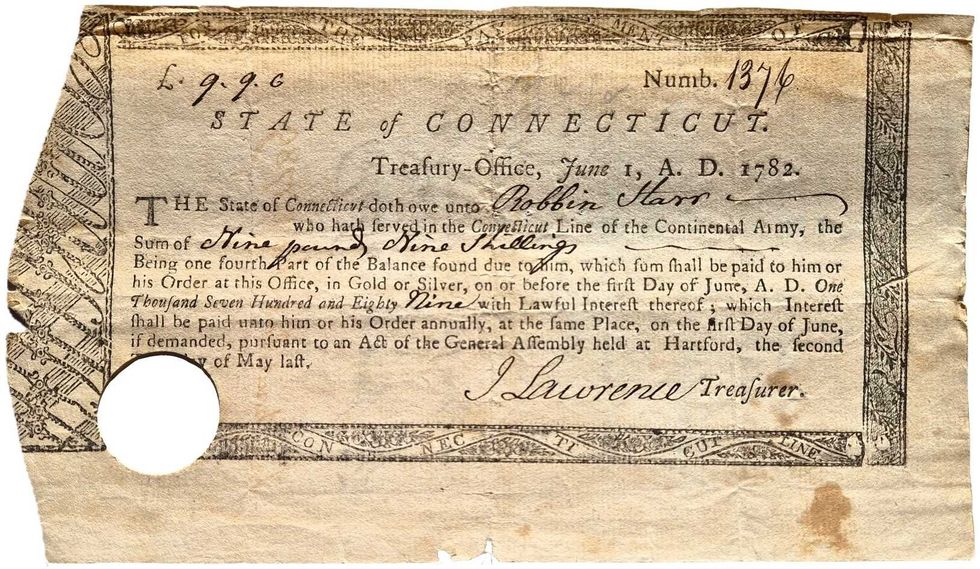 Pay Bill for Robin Starr’s service in the Continental Army.Courtesy the Alex Breanne Corporation
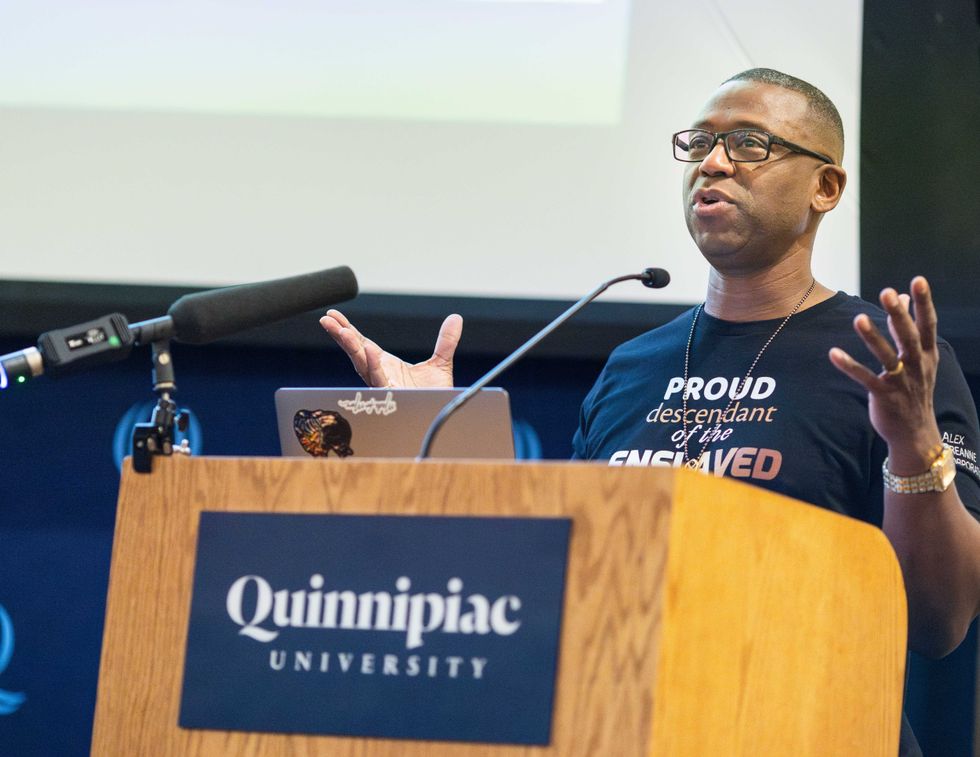 John Mills speaking at Quinnipiac University.Courtesy the Alex Breanne Corporation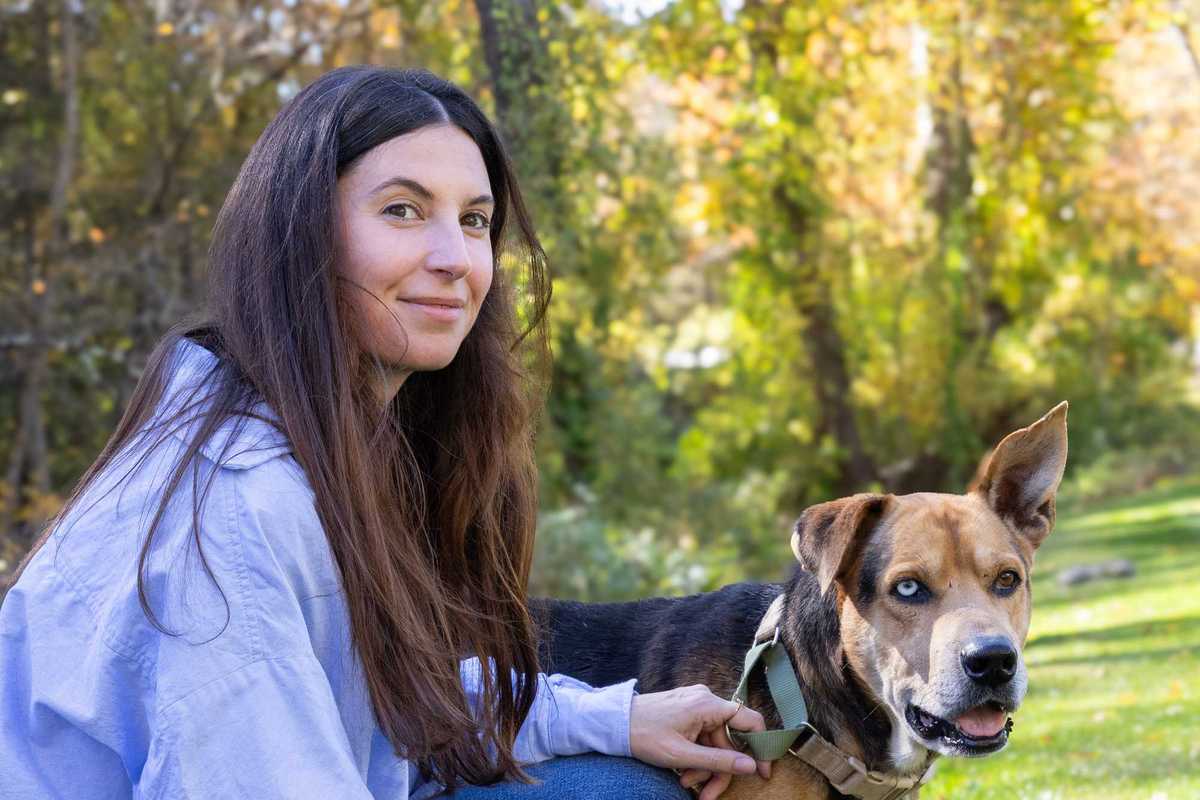
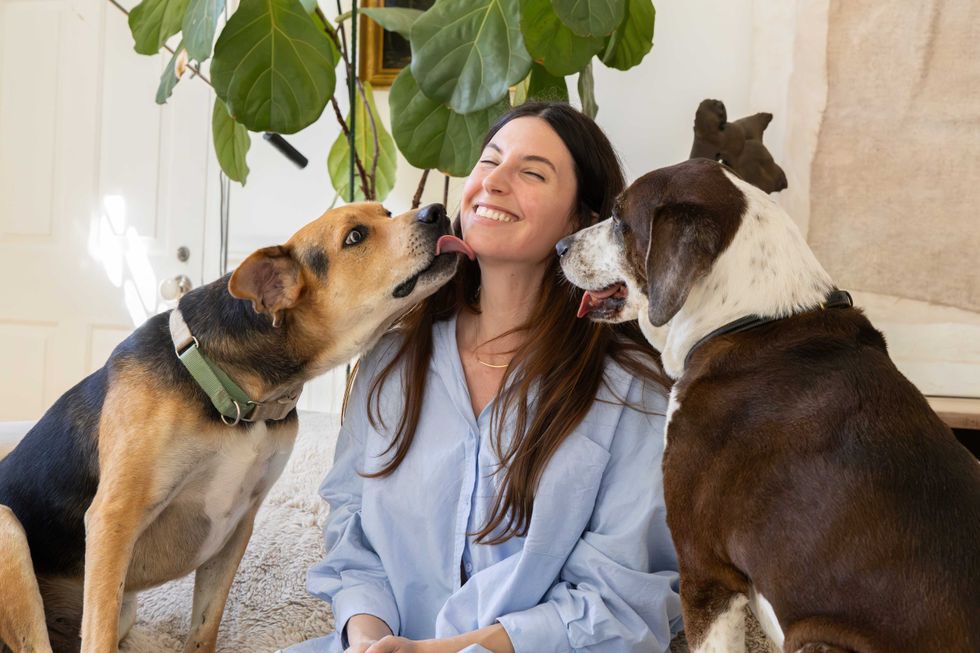 Stephanie Saetta,with her rescue dog George and Blue (left), a shepherd mix awaiting his forever home.Madi Long
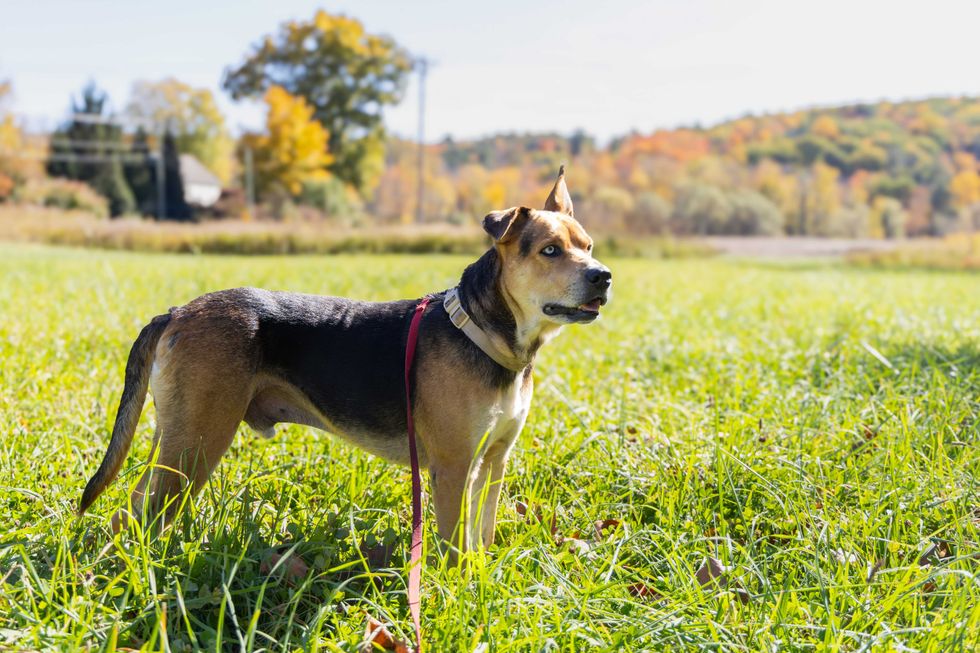 Blue, a 7 year-old Shepard mix, is waiting for his forever home. Madi Long