This year, the ARChive of Contemporary Music, or ARC, is moving its collection to a permanent home in Ridgefield, Connecticut.
ARC is somewhat hard to imagine. Comprised mainly of huge collections from musicians, archivists, and DJs, it has compiled more than three million sound recordings, consisting of over 90 million songs.
But with the rate that it collects, there’s a good chance that number has now hit its ninth digit. The collection is arguably even more impressive than its board, which has included such illustrious members as Q-Tip, Keith Richards, Nile Rodgers, Fred Schneider, Martin Scorsese, Paul Simon, Carl Bernstein, and David Bowie, many of whom house their personal collections at ARC.
Given its size, it is likely to take ARC about two years to be open its new location to the public. It hopes to have its collection in the building within a year, and then spend the following year putting it all into place.
Since 1985, founder and director B. George has been storing away musical media on Chambers Street in New York City. George moved to the area in the 1970s, and quickly became friends with many of the day’s top musicians, who would gather in the one downtown eatery open after-hours, Dave’s Lunch. It’s where he met David Bowie and Lou Reed.
George was immersed in the culture, DJing parties, and rubbing elbows with musicians. He worked with Laurie Anderson, and released her ‘O Superman” single on his micro-label One Ten Records.
The artistic scene was thriving, due in no small part to its affordability. New York City had been written off by mainstream America as a dirty, crime-ridden trap.
A famous Daily News headline still tickles George to this day. It reads “Ford to City; Drop Dead.” Even the president of the United States thought New York was irredeemable. But in its weakest hour, the city created one of the greatest assets it’s ever provided: a place for poor artists to create without the looming threat of eviction or starvation.
In 1980, George edited a book titled “Volume: International Discography of the New Wave.” The book was so successful that people started sending him recordings for the next edition. Quickly, George had more than he knew what to do with, so by 1985, he started looking for a home for this rapidly growing collection. He found it on Chambers Street in lower Manhattan for just $68 a month.
The reality of financial constraints seems to be a constant concern for George. To him, the “revitalization” of the city meant fewer opportunities for artists to create without the need for a safety net. That era is now decades in the rear view mirror, and the whole creative world has felt the effects.
Today, George feels that “cool” has become too heavily commoditized to allow artistic scenes to thrive. Once corporate America identifies the next hive of underground cultural activity, it pounces.
George saw this happen in SoHo, where the rent he couldn’t afford in the ‘80s of $100 has now risen to as high as $10,000 a month. This pattern seems to keep repeating. In recent years, a vibrant creative scene in Williamsburg, Brooklyn mirrored the same trajectory, at an accelerated pace. An area littered with loft parties and underground venues in the early 2000s has already been replaced by luxury fashion storefronts in a matter of years.
That’s what’s driven George to move the ARChive out of the city. As his collection continues to grow, there’s simply no way to meet the financial demands for space in Manhattan. So five years ago, he started moving media to Dutchess County, as part of a short term agreement at an estate in Staatsburg. Now he’s found a more permanent solution in Ridgefield, Connecticut
For the ARChive, physical media is the priority. While it has a partnership with archive.org, digitizing millions of songs, and making them available to the public, ARC is not a traditional media library. Its collection has not been open to the public to browse at leisure. Instead, it mostly makes its resources available to researchers and rights holders.
This new home, however, presents new opportunities, and George is excited to share portions of the Archive with a broader audience. This will include a Japanese-style listening area – built in partnership with Klipsch and Sonos – DJ and listening spaces with extra copies of its robust music-book collection (they have over 35,000), and more public-facing spaces to experience otherwise inaccessible recordings. Its Adopt-a-Record program will allow the public to sponsor pieces of media much like sponsoring an endangered animal. For an additional donation, donors can even get their picture taken with their record at the ARC headquarters… once it’s open.
For George and the ARChive of Contemporary Music, the collecting never stops. With collecting trips all over the world, and donations coming in from every imaginable genre, they can only hope that their next expansion won’t be necessary any time soon. For now, it’s time to settle in, and listen to some tunes.
Learn more and support ARC at https://arcmusic.org/

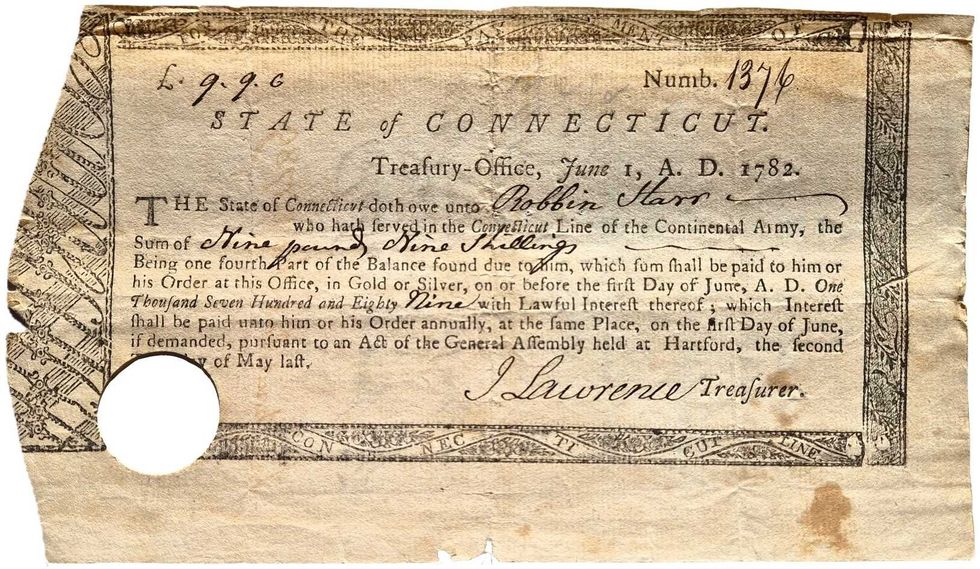 Pay Bill for Robin Starr’s service in the Continental Army.Courtesy the Alex Breanne Corporation
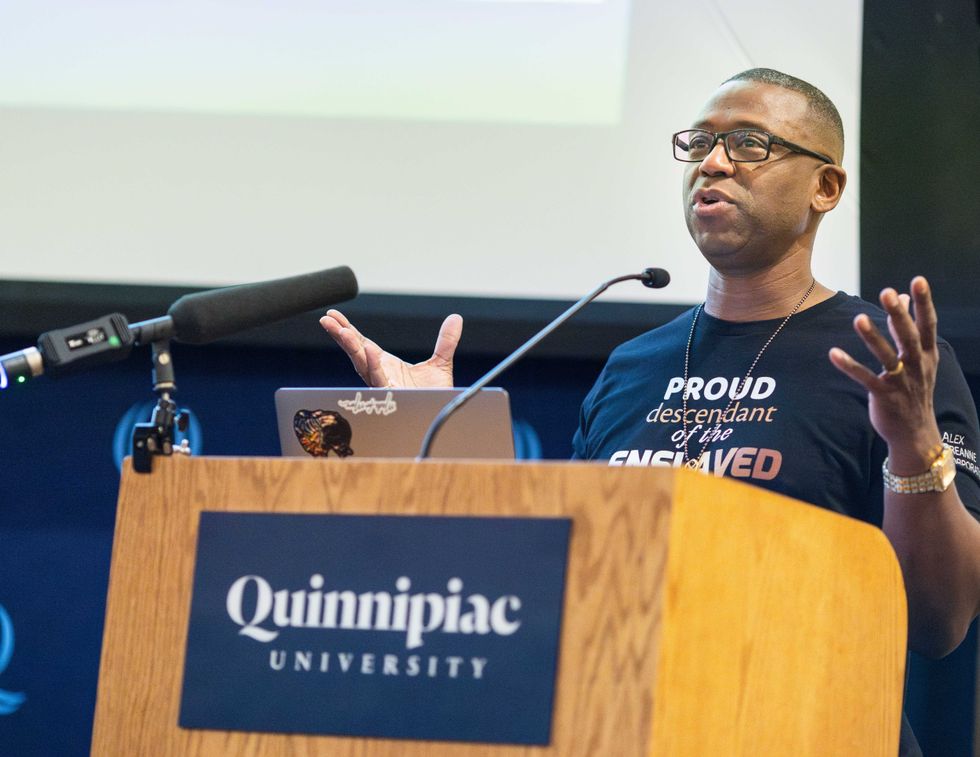 John Mills speaking at Quinnipiac University.Courtesy the Alex Breanne Corporation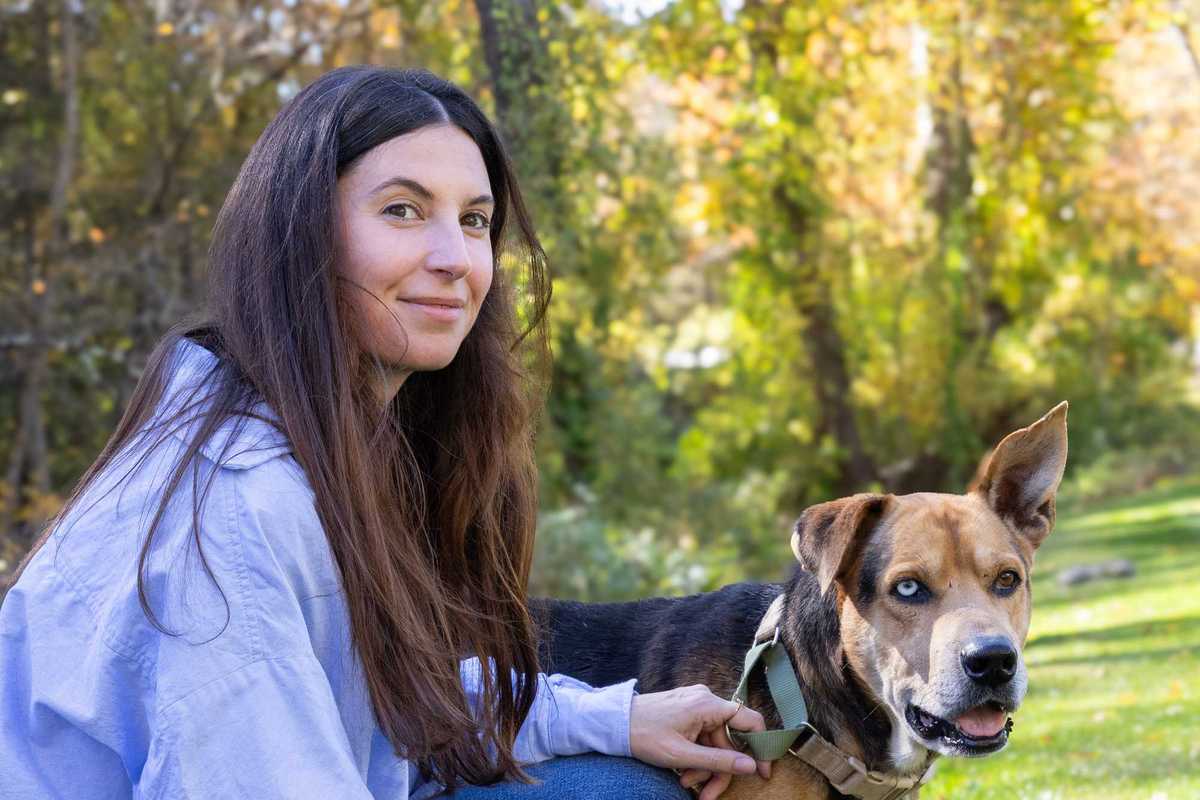
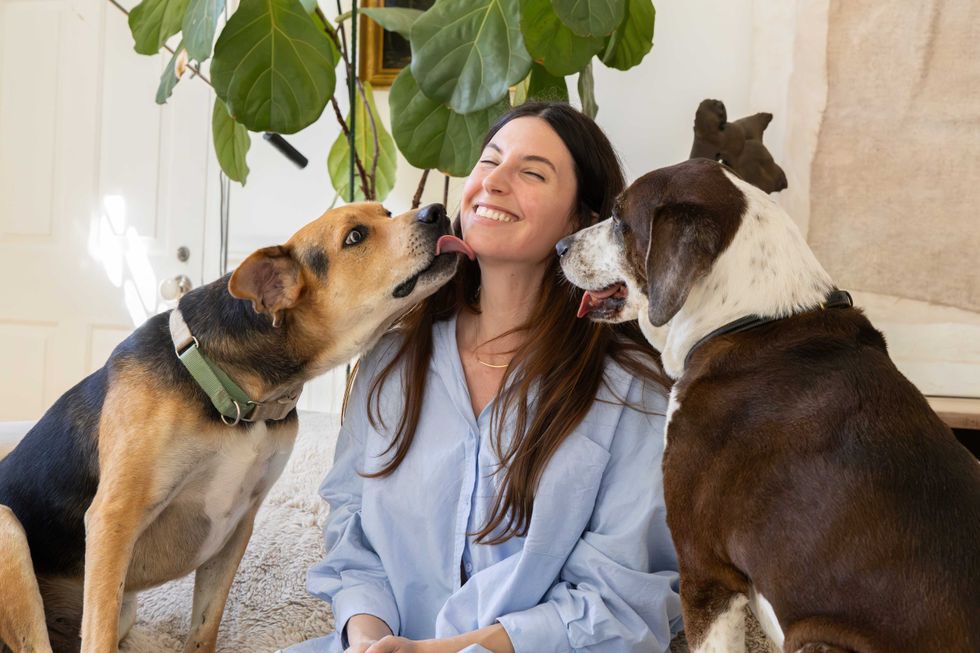 Stephanie Saetta,with her rescue dog George and Blue (left), a shepherd mix awaiting his forever home.Madi Long
 Blue, a 7 year-old Shepard mix, is waiting for his forever home. Madi Long