


Thank you!
Your support is sustaining the future of local news in our communities.

After Surviving War, A Depression, Music Mountain Thrives

Nicholas Gordon is a story teller. Yes, he is the president of Music Mountain’s Board, and he is the festival’s musical director, too — more on that shortly — but above all, this man knows how to spin a tale, such as one about his father, Jacques Gordon: violinist, child prodigy, teacher, soloist, concert master of the Chicago Symphony Orchestra by age 21 and founder and first violinist of the Gordon String Quartet. Once, on a dare in 1930, the elder Gordon, dressed as a street musician, took his Stradivarius violin, the Tom Taylor of 1732, out for a little concert in front of Chicago’s Orchestra Hall. The undertaking netted him a small audience on the windy street, some pocket change, perhaps in his open violin case, and a story in the Chicago Evening Post. The instrument changed hands and, decades later, concert violinist Joshua Bell bought it for $3 million. Not knowing of the violin’s earlier adventure with Jacques Gordon, Bell was persuaded by a Washington Post writer to head one day for the D.C. subway system and play Bach’s glorious “Chaconne,” among other classic works, during a morning rush hour. The effort resulted in extensive newsprint devoted to this violinist’s skill, virility and showmanship, and even more about the nature of art and its value to 1,097 pressed commuters. (Only one of the travellers stopped to listen to Bell, and that was because she figured out who the player was. She dropped a $20 in his open violin case.) Like all of the younger Gordon’s stories, this one is told with élan, as though for the first time, and always from the view of a life in art. Certainly there are hundreds more, such as how the weekly summer performances at Music Mountain made it onto radio. As a youngster, Gordon recalls a huge helium balloon hanging over the mountain, dropping a microphone into Gordon Hall that picked up the concerts for transmission to radio station WNYC in New York. The balloon is long gone, of course, but the concerts are still broadcast, now by 125 stations around the nation and to listeners in more than 35 countries. Nick Gordon has more serious stories, too, about the history of Music Mountain, how it started, its goals, its crises — artistic and financial — its near collapse and how it was once rescued by a determined woman who told a band of Midwestern businessmen what’s what. Jacques Gordon founded Music Mountain in 1930 as a home for his quartet, a place to teach chamber music and to summer with his family. Sears delivered the fixings (all the wiring, fixtures, planks, pipes, screws, tiles, doors, floors, walls, bolts and shingles) for four Honor-Bilt homes and for Gordon Hall, a music room built, as Jacques Gordon prescribed, basically like the interior of a violin. Workers needed nothing more than the foundations and the instructions to piece it all together. Today these Sears buildings still accommodate performers and students at the airy, green mountaintop. But as Nicholas Gordon says, “I’m amazed Music Mountain is still here after 85 years.” The first blow was the Depression, Gordon said in interviews at home in Sharon. It hit Music Mountain’s backers hard. “They vanished. We lost the property.” Construction and land had been financed with a mortgage. But in 1932, “The guarantors reneged and Sears foreclosed on the mortgage, renting the property back to Music Mountain.” The only way out was to raise a lot of money to pay off the mortgage. Understandably, fundraising was rough. And slow. This was “a most unsatisfactory situation,” declared Emma May Foot, president of the Gordon Musical Association, Inc., one she set out to remedy. “She did not look imposing, but she had a will of iron,” Gordon said. “She was devoted to Music Mountain and to my parents and to music and culture. And she was one tough girl.” Foot planned to go to the Sears people in Chicago, “people with no particular humanity,” Gordon said in the interview. “Nothing mattered to them but survival.” She went to them with the money raised to date, an undisclosed amount, and a very simple message, Gordon says. “Music Mountain is not a hall and houses, but an idea, a place for the study and perfection of classical music for string quartets.” This was December, 1936. Europe was in economic and political shambles. Foot went to Chicago and told the Sears men that the future of Western civilization ultimately rested on development in the United States. That meant preserving the arts. Here. Evidently, they bought it. By January 28, 1937, she later told a Music Mountain audience, “We owned Music Mountain.” So the music continued and in 1940, in Gordon’s words, “the world’s greatest xylophone player” came to the United States. His name was Yoichi Hiroka. He was Japanese. And he worked at NBC. On Sept. 24, 1941, he performed at Music Mountain playing his own transcription of Mozart’s “Eine Kleine Nachtmusik” for string quartet and xylophone. “I remember the concert. He was a brilliant musician,” Gordon said. He was also a spy. He slipped out of the country right before Dec. 7, 1941, the date the Japanese attacked Pearl Harbor. Now the war improved the economy, Gordon recalls, but it pinched gas supplies and interrupted train service. Lots of people who had always traveled to reach Music Mountain simply could not anymore. So in 1941, Music Mountain was re-created in Hartford, giving concerts at the Bushnell and various spots around New England, but teaching continued at “the mountain,” as Estelle, Gordon’s wife, calls it. The situation was temporary, of course. “We kept the audience warm,” Gordon recalled, until 1945. When the war ended, the quartet moved back to Gordon Hall. “It all seemed golden. The boys came back from the war. We had overcome the Depression, and then in 1946 my father had a stroke. He died in 1948, leaving us totally rudderless.” The Gordon Quartet, renamed, now, the Berkshire Quartet, with a new fourth member and a bad attitude, returned to Music Mountain. But they did not want to teach, part of Music Mountain’s mission; and they did not want to play more than 10 concerts a summer. Also, “The playing was not up to snuff,” Gordon recalls (incidentally, the quartet’s cellist had been Nicholas’s teacher. The effort failed. The younger Gordon, it turned out, displayed no particular talent for string playing). Further, the cellist snuffled so fiercely on big down-bows that for recordings he was obliged to hold a pencil between his teeth to muffle the sound. Funding waned and so did radio air time. “It was either change or close the doors, and I had promised my father I would not let that happen.” With Gordon as president of Music Mountain, the board fired the Berkshire Quartet, which threatened, but failed, to sue, and Music Mountain’s 52nd season opened with the young and accomplished Manhattan String Quartet. This group set a new tone. They were young, approachable and interested in teaching and in performing 20th-century chamber works, such as Samuel Barber’s String Quartet, Op. 11 (its lean second movement was eventually fattened up to become the famed “Adagio for Strings”). They gave this work a spectacular performance. But ambitions and discord among members broke up the quartet, setting Music Mountain on a new course, one the venerable festival follows to this day: A different, established quartet was booked every week, sometimes with guest artists, such as the Shanghai String Quartet, which returns year after year, the Orion, the Juilliard. And this year, the festival opens June 7 with one of the most venerated and inspiring quartets performing today, the Emerson String Quartet. They play, often without music, and standing, except for the cellist, who is seated on a platform to maintain eye contact with his fellows. Among the familiar names returning this year is the St. Petersburg Quartet. And Peter Askim will return for a second year at Music Mountain with The Next Festival of Emerging Artists, an orchestral workshop for young adults. In this way, Gordon says, Music Mountain fulfills its mission of educating players and audiences and covering, expertly, the wide repertory of chamber music, not possible by taking on a single group for the entire summer. As for Gordon, this is his last year as musical director, but he will continue as president of Music Mountain’s Board of Managers, charged with raising the festival’s annual budget of less than $500,000. “I still love it all,” Gordon said at the end of one interview. “I still regard walking into Gordon Hall for a concert an enormous privilege.”

Latest News

Sharon Audubon Birdfest

Sharon Audubon Center naturalist and volunteer coordinator Bethany Sheffer shows off Mandala, a red-tailed hawk who lost an eye after being hit by a car more than a decade ago.

Alec Linden

SHARON – Drizzle and chill couldn’t quell bird enthusiasts Saturday, May 9, for the Sharon Audubon Center’s Birdfest, an all-out avian fete in celebration of World Migratory Bird Day.

The internationally recognized effort is meant to bring awareness to the safety and wellbeing of the billions of migratory birds that return to their summer breeding grounds each spring.

Keep ReadingShow less
Sharon voters reject controversial school budget, 114-99

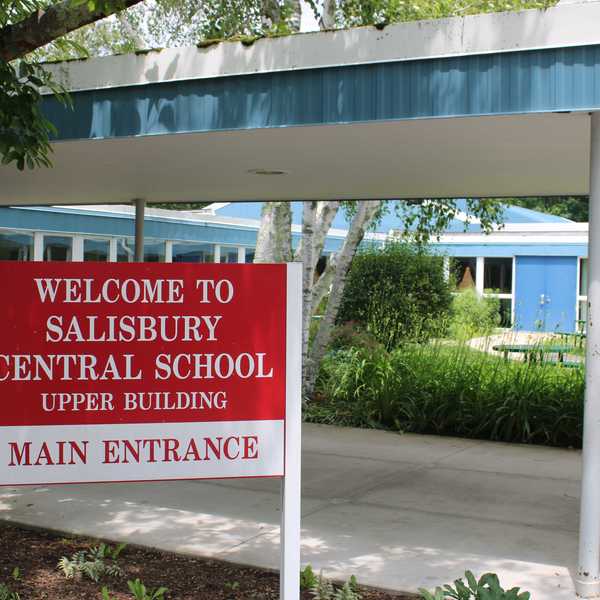
The May 8 town meeting and budget vote were moved from Sharon Town Hall to Sharon Center School to accommodate what officials said was the largest turnout for a Sharon budget meeting in recent years.

Alec Linden

SHARON – More than 200 residents packed the Sharon Center School gymnasium Friday, May 8, where voters narrowly rejected the Sharon Board of Education's proposed 2026-2027 spending plan by a vote of 114-99, sending the budget back to the Board of Finance after weeks of heated debate over school funding.

The rejected proposal – the ninth version of the budget since deliberations began months ago – carried a bottom line of $4,165,513 for the elementary school, unchanged from last year. The flat budget came after the BOF ordered the BOE in early April to remove nearly $70,000 from its spending plan.

Keep ReadingShow less

Liane McGhee

Liane McGhee
Liane McGhee
Liane McGhee

Liane McGhee, a woman defined by her strength of will, generosity, and unwavering devotion to her family, passed away leaving a legacy of love and cherished memories.

Born Liane Victoria Conklin on May 27, 1957, in Sharon, CT, she grew up on Fish Street in Millerton, a place that remained close to her heart throughout her life. A proud graduate of the Webutuck High School Class of 1975, Liane soon began the most significant chapter of her life when she married Bill McGhee on August 7, 1976. Together, they built a life centered on family and shared values.

Keep ReadingShow less
google preferred source

Want more of our stories on Google? Click here to make us a Preferred Source.

‘Women Laughing’ celebrates New Yorker cartoonists

Ten New Yorker cartoonists gather around a table in a scene from “Women Laughing.”

Eric Korenman

There is something deceptively simple about a New Yorker cartoon. A few lines, a handful of words — usually fewer than a dozen — and suddenly an entire worldview has been distilled into a single panel.

There is also something delightfully subversive about watching a room full of women sit around a table drawing them. Not necessarily because it seems unusual now — thankfully — but because “Women Laughing,” screening May 9 at The Moviehouse in Millerton, reminds us that for much of The New Yorker’s history, such a gathering would have been nearly impossible to imagine.

Keep ReadingShow less

By any other name: becoming Lena Hall

By any other name: becoming Lena Hall

In “Your Friends and Neighbors,” Lena Hall’s character is also a musician.

Courtesy Apple TV
At a certain point you stop asking who people want you to be and start figuring out who you already are.
Lena Hall

There is a moment in conversation with actress and musician Lena Hall when the question of identity lands with unusual force.

“Well,” she said, pausing to consider it, “who am I really?”

Keep ReadingShow less
Remembering Todd Snider at The Colonial Theatre

“A Love Letter to Handsome John” screens at The Colonial Theatre on May 8.

Provided

Fans of the late singer-songwriter Todd Snider will have a rare opportunity to gather in celebration of his life and music when “A Love Letter to Handsome John,” a documentary by Otis Gibbs, screens for one night only at The Colonial Theatre in North Canaan on Friday, May 8.

Presented by Wilder House Berkshires and The Colonial Theatre, the 54-minute film began as a tribute to Snider’s friend and mentor, folk legend John Prine. Instead, following Snider’s death last November at age 59, it became something more intimate: a portrait of the alt-country pioneer during the final year of his life.

Keep ReadingShow less
google preferred source

Want more of our stories on Google? Click here to make us a Preferred Source.

google preferred source

Want more of our stories on Google? Click here to make us a Preferred Source.