Latest News

An extensive clean-up effort was required after a June 29 tractor-trailer crash sent beer all over Route 44. The driver, reportedly unharmed, was issued a ticket for driving too fast under the conditions.
Photo Courtesy of Troop B
The detour was necessary, police said, so they could clear the large volume of debris and safely remove the “severely damaged truck and trailer,” which was towed to Arnold’s Garage in Canaan.
The driver, Filmon Mahari Zerae, 36, was issued a ticket for driving too fast for the conditions.
This crash remains under investigation, and police are asking witnesses to contact Trooper DaSilva #915 at (860) 626-1820.
 An extensive clean-up effort was required after a June 29 tractor-trailer crash sent beer all over Route 44. The driver, reportedly unharmed, was issued a ticket for driving too fast under the conditions. Photo Courtesy of Troop B
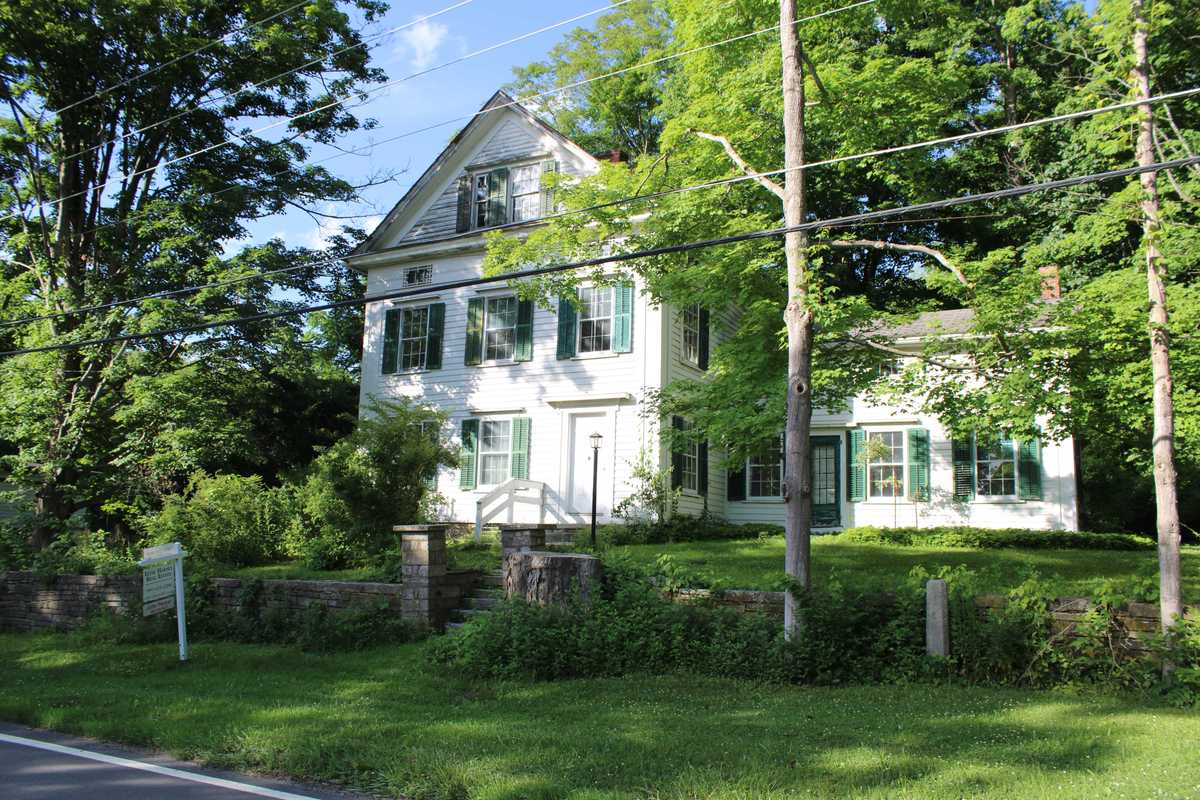
A 22.5-acre property at 60 Millerton Road in Sharon is at the center of a trust dispute over the sale of the land to Jasper Johns-related arts nonprofit Low Road Sharon Inc.
Alec Linden
Before any sale can proceed, however, the Litchfield Hills Probate Court must resolve a dispute among members of the family trust that owns the Millerton Road property. A hearing is scheduled for June 30, when Judge Jordan Richards is expected to decide whether to approve the sale and rule on objections filed by one of the trustees.
According to probate court documents, Peter Bartram has objected to a petition filed by his sisters, Carey Meltzer and Amy Bartram, seeking court approval to sell the property held by the Hillside Farm Trust. In a June 11 filing, Bartram said the proposed transaction is the second attempt to sell the property to the same buyer after an earlier effort was blocked by the court since he did not agree to the sale.
"In September 2025, the Trustees accepted an offer of $615,000 from the same buyer, Low Road Sharon Inc.," Bartram wrote in his objection to his sisters’ second attempted sale. "All beneficiaries except the Movant [Peter] signed the Beneficiary Approval. The Court denied the proposed modification on November 26, 2025.
The new petition seeks approval for essentially the same sale, with the purchase price of $650,000, an increase of $35,000 since the last attempted sale.
Neither the parties to the probate case nor Conley Rollins, who has represented Low Road Sharon in previous town applications and is the COO and CFO of the Brooklyn Museum, provided comment. Rollins also did not respond to questions about whether the proposed purchase would be connected to the artists' retreat.
The property at 60 Millerton Road includes an unoccupied 1840 white clapboard farmhouse near the Silver Lake Shores neighborhood. Together with two much smaller adjoining parcels included in the proposed sale, it has been held by the Hillside Farm Trust since 2013.
The trust was established in 2012 by Maynard and Barbara Bartram, who were both raised in the colonial home, which sits prominently at the corner of Millerton Road and Silver Lake Shore Road.
Following Maynard Bartram's death in 2021 and the death of their daughter, Sarah Noyes, in 2022, Carey Meltzer, Peter Bartram and Amy Bartram have served as the remaining trustees. Peter Bartram, however, was removed as a trustee by court order in 2024 after he removed several trees from the property to protect a barn without his siblings’ approval.
As part of the June 30 proceedings, Judge Richards is also expected to consider Bartram's request to be reinstated as a trustee.
In an April 30 court filing, Meltzer and Amy Bartram argued the property has become a financial burden for the trust and they have a right to put it on the market.
"The farm is a significant and depreciating asset that incurs ongoing carrying costs including property taxes, insurance, maintenance and utilities," they argued.
The three parcels included in the proposed sale are assessed at more than $813,000, with the main 22.5-acre parcel accounting for nearly all of that value. As of June 25, the property was listed for sale through Elyse Harney Real Estate for $795,000.
Property adjacent to planned artists' retreat
The proposed purchase has drawn interest because the Millerton Road property directly borders land already designated for Low Road Sharon's planned artists' retreat.
The retreat, approved by Sharon Planning and Zoning in 2017, encompasses approximately 171 acres spread across six parcels that stretch from Low Road to the shoreline of Mudge Pond. The approval allows up to 24 artists in residence at one time and does not permit public access to the campus. The property would be able to contain up to six housing units. Each housing unit is permitted to accommodate up to three people.
Any proposal to expand or materially alter the footprint approved in 2017 would require additional review by the Planning and Zoning Commission and a public hearing, outgoing Land Use Administrator Jamie Casey said.
Low Road Sharon has not indicated whether the Millerton Road property would become part of the retreat or serve another purpose.
Johns, who has lived in Sharon for more than three decades, is widely regarded as one of America's most influential living artists. According to the 2017 statement of proposed use submitted to the town, the residency program is intended to become "one of the leading artists' residency programs in the United States," comparable to MacDowell in New Hampshire and Yaddo in Saratoga Springs, New York.
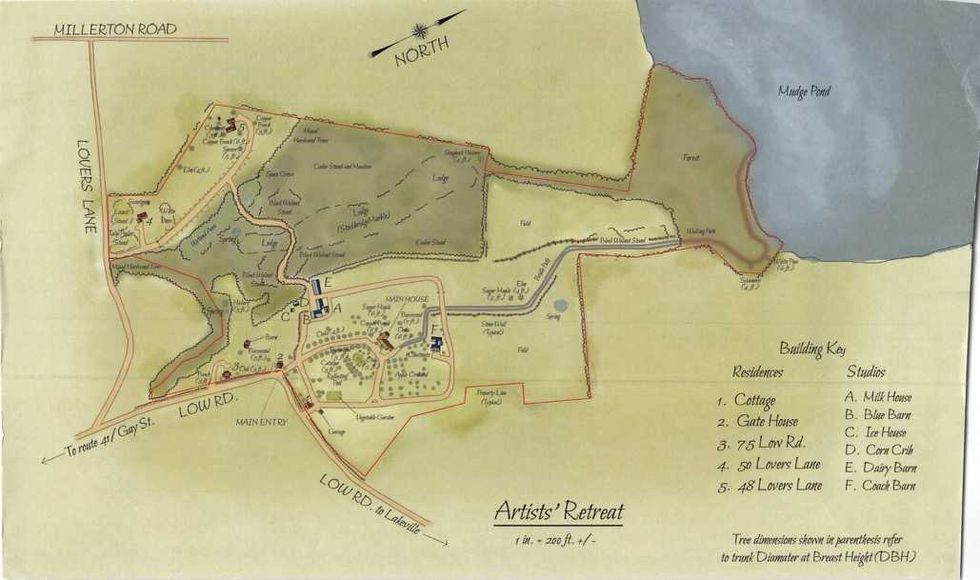 An illustration of the proposed artists' retreat on Jasper Johns' 171 acres in Sharon after his death, included in the original 2017 site plan for the project. Provided
The proposal envisioned a staff of roughly 20 to 25 people, some of whom would work at an administrative functions and event space based at a downtown Sharon office.
Construction is already underway on that downtown property, including a new building which is going up where the former Bargain Barn thrift store was located at 1 Low Road. The two-building complex, approved after months of public hearings last year, will primarily serve as the nonprofit's administrative center and include a venue designed to host occasional public cultural events that would be free to the public.
Low Road Sharon was incorporated in 2022 to establish a short-term residency program for artists across multiple disciplines. According to its 2024 tax filing, the organization reported approximately $32 million in assets. A separate philanthropic organization founded by Johns in 2004, the Low Road Foundation, reported approximately $255.5 million in assets in 2024.
The commercial district project boasts an impressive development team. Lead architecture outfit Johnston Marklee & Associates is a Los Angeles-based firm with an accomplished international portfolio of projects like the Museum of Contemporary Art Chicago, Kunstmuseum Basel, the Institute of Contemporary Arts at the University of Pennsylvania and many others.
New Haven’s Reed-Hilderbrand is the landscape architect for the Low Road development, and has designed for a wide variety of clients, including Yale University, Duke University and the Hudson Valley’s famed outdoor museum, the Storm King Art Center.
The owner’s representative Envoie Projects also manages high-profile arts facilities such as Harlem’s Apollo Theater, The Delacorte Theater in Central Park, and again, the Storm King Art Center.
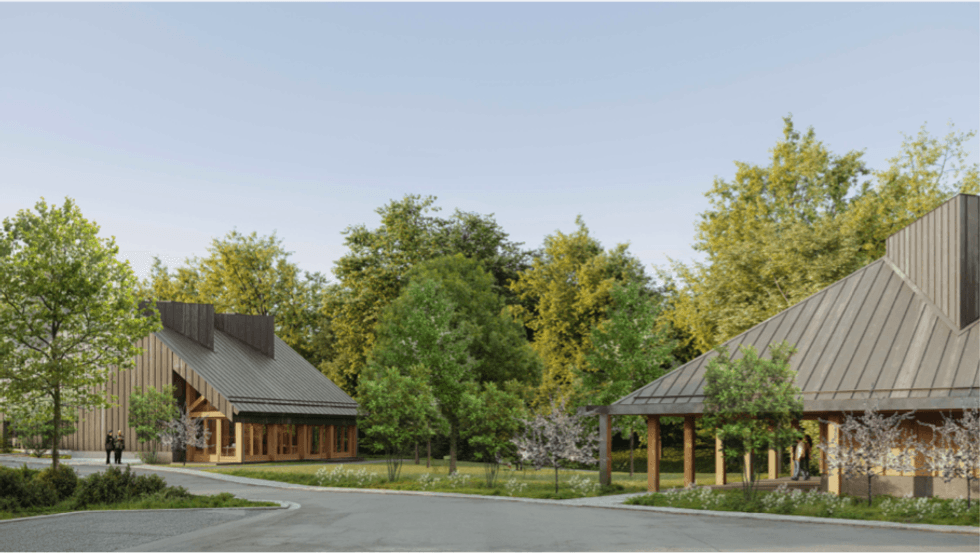 A rendering of the proposed administrative building and events facility on Low Road in Sharon's commercial district, developed by project lead architect Johnston Marklee & Associates. Provided
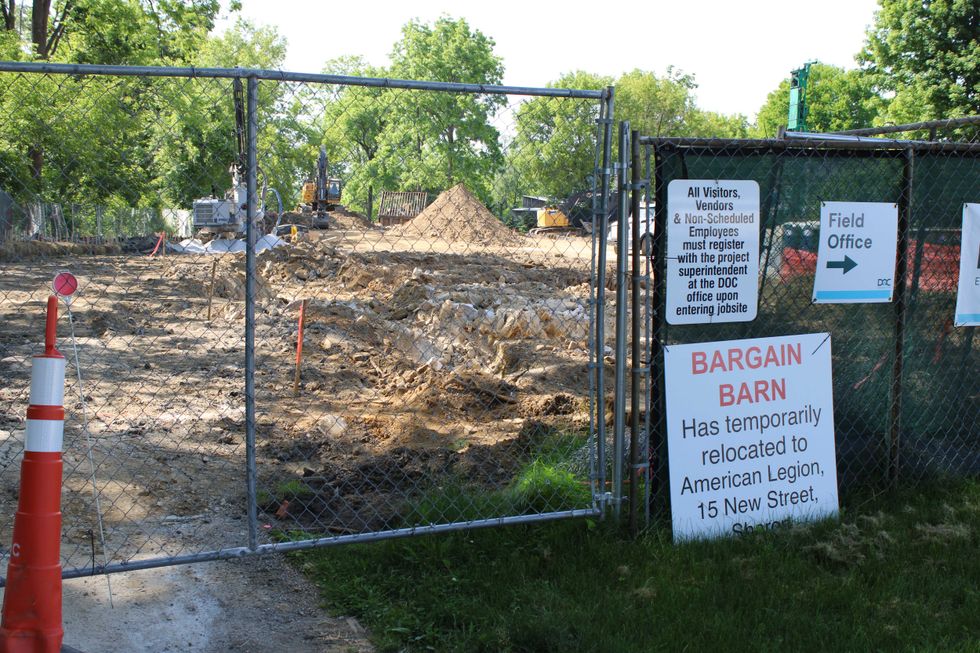 Construction at 1 Low Road began earlier this year for an administrative center and occasional performance center and events space for Jasper Johns-related arts nonprofit Low Road Sharon Inc.Alec Linden


Want more of our stories on Google? Click here to make us a Preferred Source.
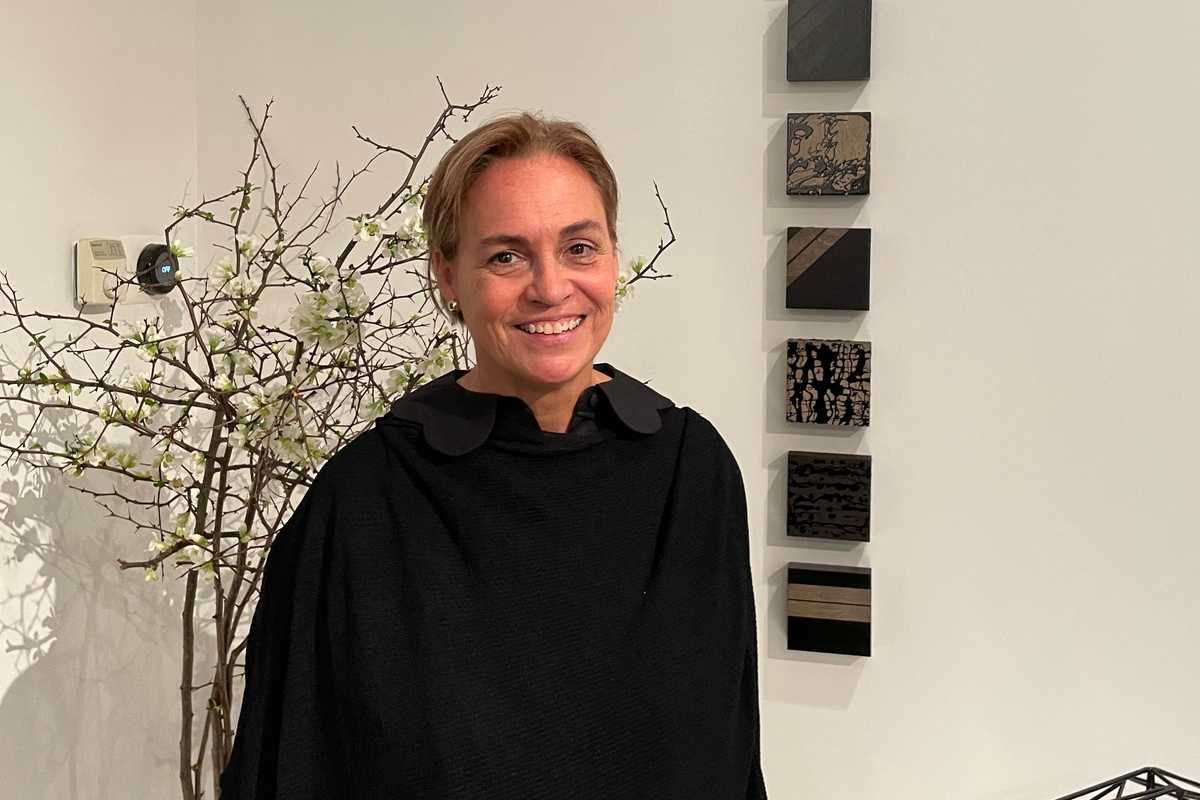
The Renaissance spirit of Pilar Proffitt
The Renaissance spirit of Pilar Proffitt
Proffitt and her husband and business partner, Robert Bristow, are well-known leaders in the art and architecture communities, and their home, studio and workshop in Lakeville; store and office at 16 Main St. in Salisbury; and gallery space in Norfolk are vibrant hubs for arts and design in the region.
Proffitt has been coming to the area since she was a teenager. Originally from Puerto Rico, her family moved to the New York City area in the 1970’s. Her artist and architect father encouraged her interests in art and design and her deep desire to create. At school, she excelled in math and art and soon realized that this was all she wanted to do. “Think logically and then break the mold with creativity,” she said.
Armed with a degree in visual art from Trinity College, she pursued advanced studies at Berkeley and Pratt before receiving a master’s degree in architecture from Virginia Tech in Blacksburg, Virginia, where she met Bristow. Both landed apprenticeships in Boston and were drawn to the arts community in Norfolk centered around the Yale Summer Arts Program. The area quickly became their personal and family anchor.
They started Poesis, a furniture design and manufacturing studio, with a small loan from her mother. They landed a major house project and soon met a hotelier at a party who hired them on the spot to design a hotel in Washington, D.C.
Proffitt said, “I was hooked because it combined everything I wanted to do creatively: design experiences in the broadest sense with all the supporting pieces of the puzzle — furniture, objects, art. My father felt that architecture was the Renaissance profession: It holds the seeds of art, design, engineering and all the other ingredients. For me, it all starts with art.”
 A rendering of King Winery, one of Pilar Proffitt’s current interior design projects.Provided
Proffitt is devoted to the area. She and Bristow raised their family in Lakeville. Their daughter Grace, a sculptor, attended Hotchkiss and is pursuing her MFA at University of Pennsylvania. Their daughter Ellis, also a graduate of Hotchkiss and Trinity, is a mathematician and aspiring actress in Los Angeles; and their son Sam attended Salisbury School and is a junior at Trinity, majoring in art history with a minor in architecture. They all are carrying forward the family’s passion for arts, architecture and design.
Proffitt’s interior design work and unique furniture pieces welcome visitors at Hotchkiss’ Art Center, the Scoville Memorial Library, her own wHole hOuse shop in Salisbury and, soon, across the street in the new Jam Food Shop, which is expected to open this fall.
The region’s many museums and galleries include some of Proffitt’s favorites, from Mass MoCA and the Clark to Salisbury’s Geary, Mad Rose in Millerton, Jack Shainman in Kinderhook and Art Omi in Ghent. Proffitt loves the connections and new opportunities brought to the community by the increase in full-time residents, as well as impromptu get-togethers with friends — recently watching a Knicks playoff game at the tavern bar at the White Hart. Moments like that keep her grounded here.
In addition to the White Hart, Proffitt is a fan of area restaurants, including Fern for a quick pasta at the bar; Isabela in Amenia, where Michelin-starred chef Jose Ramirez Ruiz is from Puerto Rico; and Clare de Boer’s Stissing House in Pine Plains.
A perfect day for Proffitt is spent working in her studio overlooking Lake Wononscopomuc, without distractions, rain or shine. It is a quiet and peaceful place that supports her many architecture and design projects. When asked what she would say to a younger version of herself just starting a career, she responded, “Don’t be so shy. As one of my professors told me, ‘Sometimes you just have to crash the party.’ Draw, write, run, play tennis. And travel!”

Want more of our stories on Google? Click here to make us a Preferred Source.