I have just finished an article that explained why traditional batting practice is disappearing among the major league teams. It seems that it doesn’t have the statistically significant results that are now required of all practices, not just batting practice, at the major league level.
It takes too long, it is too tiring, and it does not mimic the pitches the player will be facing that day. In other words, it is inefficient. I agree. And that is why I love it.
Increasingly, major league players seem to prefer work in the indoor batting cage, one that is air conditioned, programmable and private. It shouldn’t be too hard to program a pitching machine to throw exactly those pitches the opposing pitcher will most likely throw and to set up situations that will incorporate how that pitcher has responded in the past.
Pattern analysis is now a fine computer art, and it would be an easy job to crunch the data of every outing that pitcher has made since he was lobbing throws to his DaDa in the back yard. Computers don’t scream, “Too Much Information,” or at least not very often.
All of this makes sense if one considers major league baseball to be a business employing thousands of people, the most important of whom, the players, may make more money in a few weeks than you or I might in an entire lifetime.
Good business but bad baseball.
Baseball, the game not the business, depends on human interaction. Standing around the batting cage exchanging jokes, put-downs and insights may be inefficient, but it is what is remembered long after the score of a game is lost to memory.
The feel of a hot summer’s day, a throw that was just perfect, a catch off another team’s best hitter, these are the things that real baseball is all about, not to mention the arm around a player’s shoulder when he has committed a costly error or a, “You’ll get ‘im next time,” after a fellow has struck out.
Yes, baseball is people, especially young players and coaches who were once young. Play while you can, and if you can’t play, cheer. There is plenty of time for business in our lives, but playtime is precious.
Millerton resident Theodore Kneeland is a retired teacher and coach.

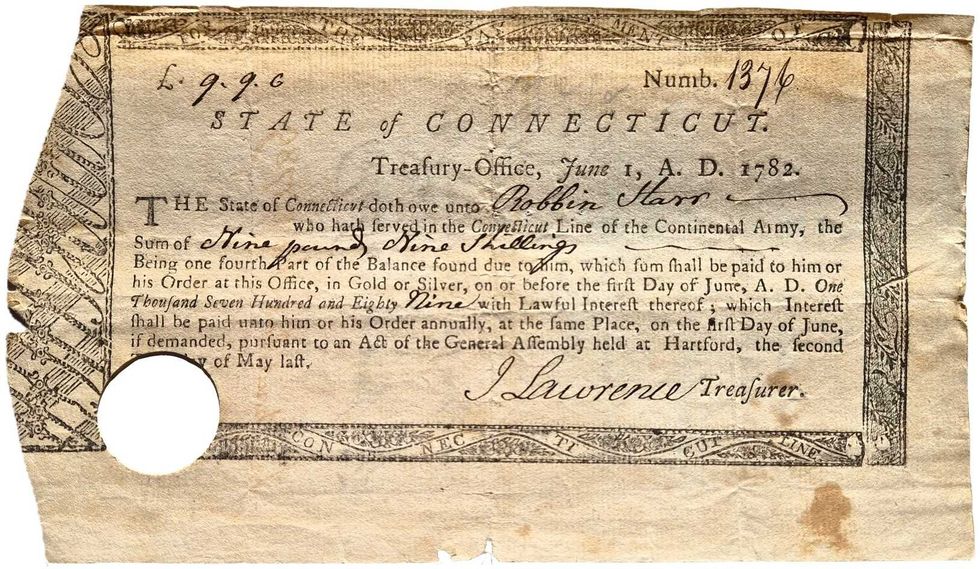 Pay Bill for Robin Starr’s service in the Continental Army.Courtesy the Alex Breanne Corporation
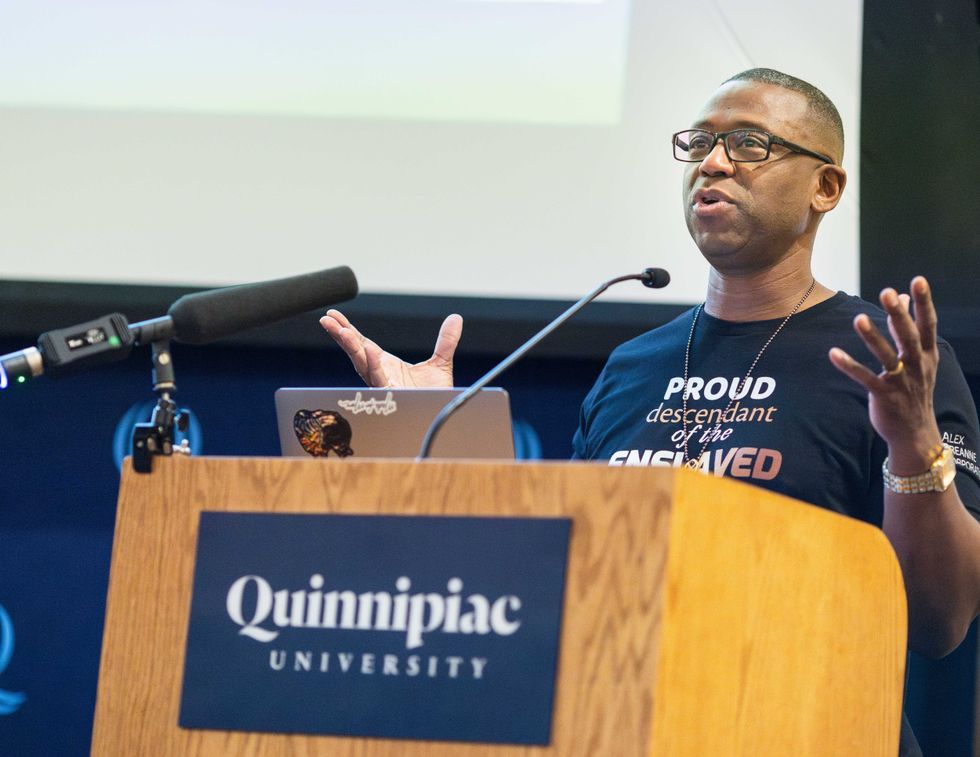 John Mills speaking at Quinnipiac University.Courtesy the Alex Breanne Corporation

 Stephanie Saetta,with her rescue dog George and Blue (left), a shepherd mix awaiting his forever home.Madi Long
 Blue, a 7 year-old Shepard mix, is waiting for his forever home. Madi Long