Village elections coincide with the first day of spring this year. It is somehow fitting that villagers will have the chance to vote for a pair of new (or returning) board members just as the seasons change. What better time could there be to cast a ballot ripe with opportunity?The central election in the Harlem Valley this year is for two trustee positions on the Village Board in Millerton, which governs how that municipality is run, what laws are enacted and the day-to-day decisions that affect residents and business owners alike.The board is an essential part of village life. It hashes out details from how the sidewalks are kept to how the roads are maintained; it’s in charge of metering one’s water supply and provides residents recreation during summer months. In exchange for such services property owners pay village taxes, based on a municipal budget that the Village Board drafts each year. The trustees on the board, along with the mayor, make critical decisions every day that affect how the village operates, so that its residents can maintain a certain quality of life they have come to expect. It is for that board that four candidates are running for two open seats come Election Day, Tuesday, March 20.What makes it difficult, but at the same time so absolutely fantastic, is that there are four very well-qualified candidates to choose from. There are two incumbents, both of whom have done superlative jobs as trustees and would undoubtedly continue to do so if re-elected. The incumbents are Democrats Yosh Schulman and Debbie Middlebrook. They actually have many similarities. They are both hard workers, practical, determined, driven to go after every grant dollar possible, and are both very sincere in what they do. This paper has no hesitation in recommending both of them for additional terms in office.Then there are the Republican candidates: Dave McGhee and John “Jack” Thomas. Again, good, strong and deserving candidates.McGhee demonstrated his abilities during a dozen years as a North East town councilman. He was down to earth, sensible, clearly dedicated to representing “the people,” while maintaining his own style (which sometimes, unfortunately, got him into a tangle with his fellow councilmen). Though he could get into a temper, McGhee often brought good ideas to the table, practicality among the best of them.John “Jack” Thomas is the second candidate on the Republican line. He, too, has a reputation for being sensible, smart and quick on his feet. He’s also reasonable to deal with (and his quick humor makes doing so a pleasure).When on the board previously he made his contribution, and if voted in again, would undoubtedly do the same. He clearly enjoys the camaraderie of being a board member and digging in to village issues, making him prime material for being a board member. He also just wants to do what’s right for other residents.That, honestly, is the thread that runs through all of the four candidates — they all have good intentions. They want to represent their fellow citizens and work hard to improve what they already love, the village of Millerton.There is no right or wrong vote here. Any way you cast your ballot you’re going to be in good hands. What a lucky community to know that it has smart, caring, dedicated and willing volunteers (yes, they do get a small salary) to join others of the same ilk to help shape the character of their hometown, always for the better.But don’t take your good fortune as an excuse not to vote. Each candidate still has his or her own ideas, and his or her own goals (for more, read this week’s front page). Make sure on Election Day you get out and vote — make your voice heard — and throw your support behind the candidate who will best represent you and what you want for your village, now and in the future.
Latest News
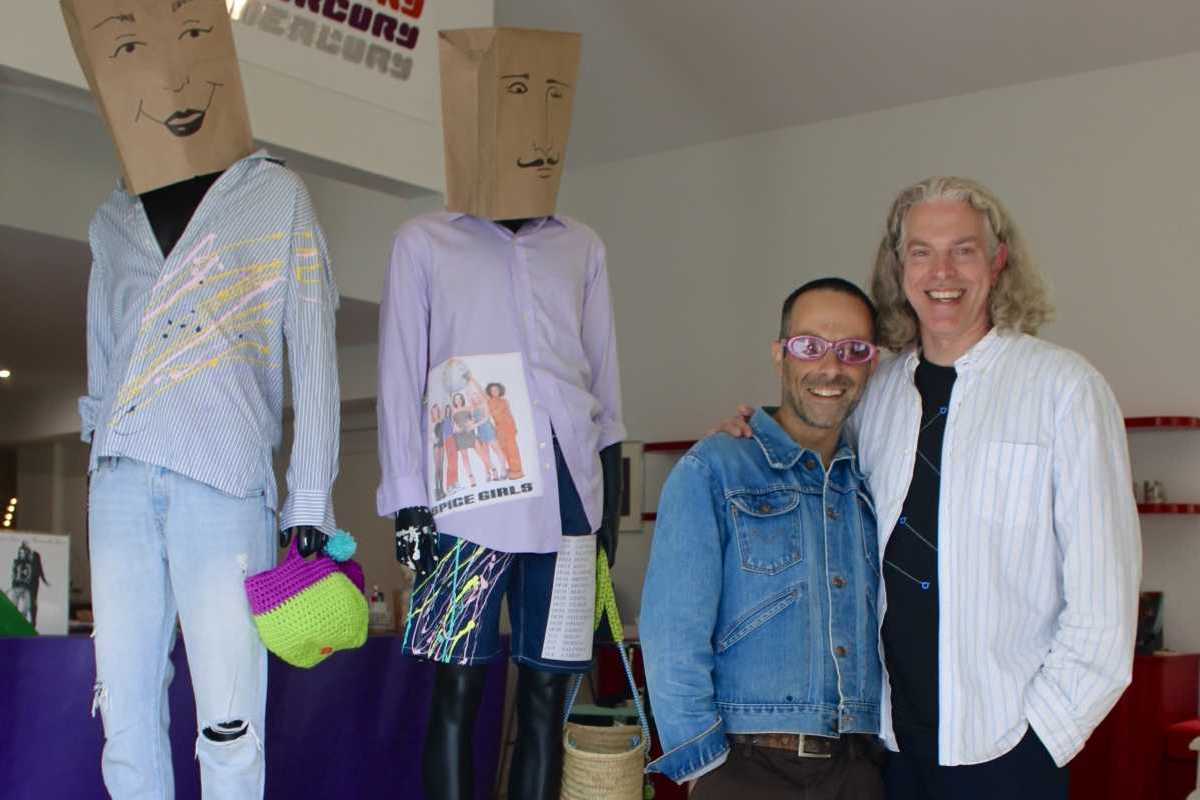
Greg Fricke and James Boehmer, co-owners of Peggy Mercury in Kent, recently launched their first fashion line, “Imaginary Concerts.”
Provided
Fricke and Boehmer are not there to stock their shelves with the same products customers find at standard makeup retailers. They’re there to help customers find what works for them. That usually means asking customers about themselves and learning about their beauty habits, skin, style and the way they like to present themselves. Fricke and Boehmer believe it’s their job to help customers bring out the qualities that suit them and determine what works best for their look.
So much of the Peggy Mercury world is about emboldening people to become more creative, and possibly bolder, versions of themselves. Some of this comes through the store’s creative collaborations with artists, designers and stylists.
It’s part of an ethos that encourages them and their friends to use the shop as a kind of laboratory, trying out new creative experiments without knowing how they might turn out. Whether in fashion, painting, fiber arts or photography, the projects almost always turn out marvelously.
A line of sterling silver charms they sell started as a small project by their friend Nolan Percival. In the beginning, the pieces were for close friends and loved ones. But Boehmer and Fricke encouraged Percival to get a little more serious about the project and create a whole line for the store. Today, it’s one of their top-selling collections.
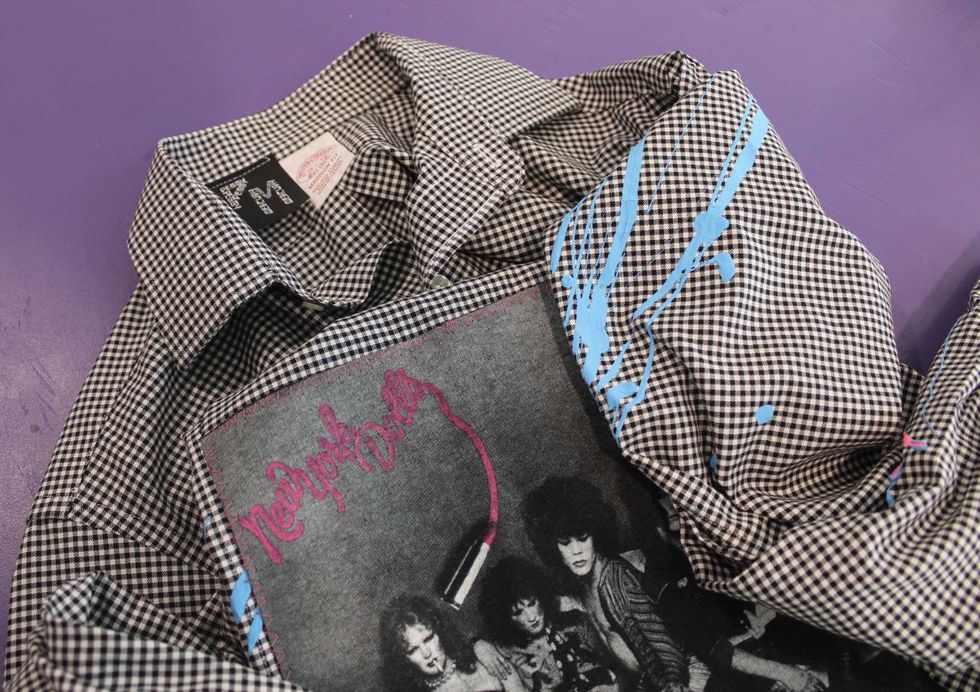 Classic styles, bold colors, and creative concerts make up the “Imaginary Concerts” line at Peggy Mercury.Provided
“Imaginary Concerts” has the duo taking their own advice.
The project started as a way for Boehmer to connect with his mother, who had been diagnosed with Alzheimer’s disease. Taking old concert shirts from his own collection, Boehmer and his mother began cutting out the graphics with the idea that they would make a quilt together. Unfortunately, she died before they could complete the project in 2025. The pieces, which were ready for production, were put on the back burner as Boehmer and Fricke dealt with their loss and the whirlwind of projects that never seemed to cease at Peggy Mercury.
But the harsh winter of 2026 presented an opportunity to take some time and focus on themselves. Part of that meant revisiting and redefining the concert T-shirt project. This time, instead of looking to the warmth and comfort of a quilt, they turned to another passion — fashion.
Taking a page from their own book, they wanted to create something that felt comfortable to them. They took two disparate loves — one rooted in simple preppy style, with clean lines and classic silhouettes, and the other in the nitty gritty worlds of punk rock and pop — and blended them together to create something entirely new. Pulling from the staples of vintage Brooks Brothers and Charvet collections, they applied the graphic elements with bold stitching reminiscent of punk jackets of the ‘70s and ‘80s, but with a much more sophisticated air.
But the remixing isn’t just the pairing of prep and punk. The pieces are not canon. They take liberties with the realities of concert tours, combining one band’s dates with another band’s logos, mixing them all up until the reality is lost and imagination is the only truth.
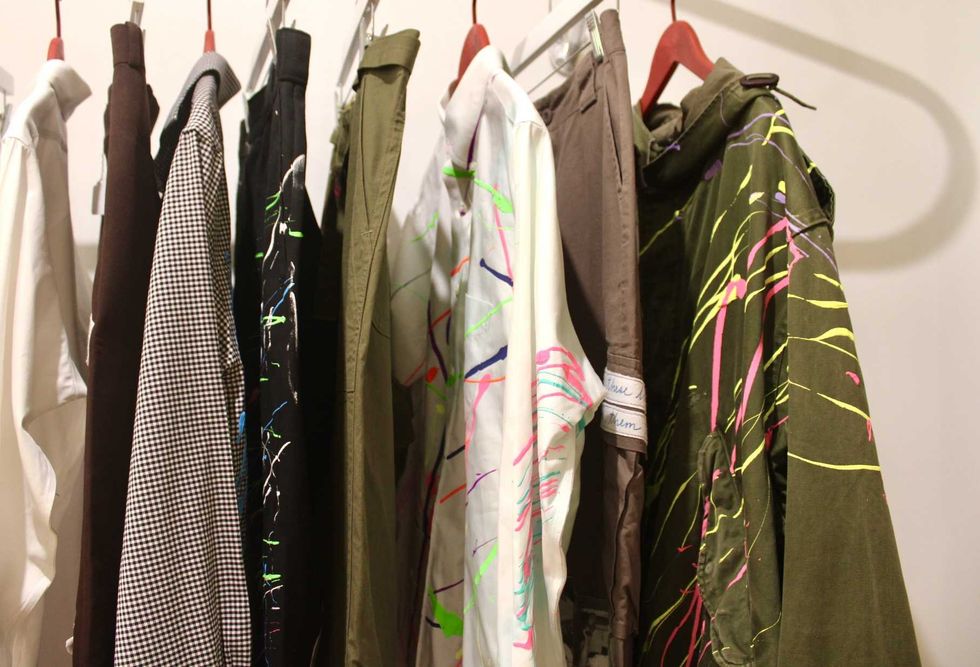 Shirts from Peggy Mercury’s first fashion line, “Imaginary Concerts,” hang on display.Provided
Adding to the mix is an element of perpetual creativity. Art can be messy, both figuratively and literally, and many of Fricke and Boehmer’s artist friends carry evidence of their work on them at all times. As a nod to these tireless creatives, the duo added haphazard splashes of bright color, giving the line an even more distinctive feel.
For them, “Imaginary Concerts” passes the “Peggy Test.” The mythical Peggy Mercury is a fictional figurehead for the company, a character who thrives on creativity and change. The name, much like the clothing line, is a mixture of interests: Mercury is a planet, a deity and an elusive, transformative element, while Peggy is the wonderfully stylish and boundary-pushing Peggy Guggenheim.
Everything Fricke and Boehmer put in their store has to pass this test: Would Peggy Mercury approve? For their first collection, the answer is a resounding yes.
Peggy Mercury is at 9 Maple St., Unit 2, Kent.


Want more of our stories on Google? Click here to make us a Preferred Source.