Voters turn out in force amid North Canaan cliffhanger

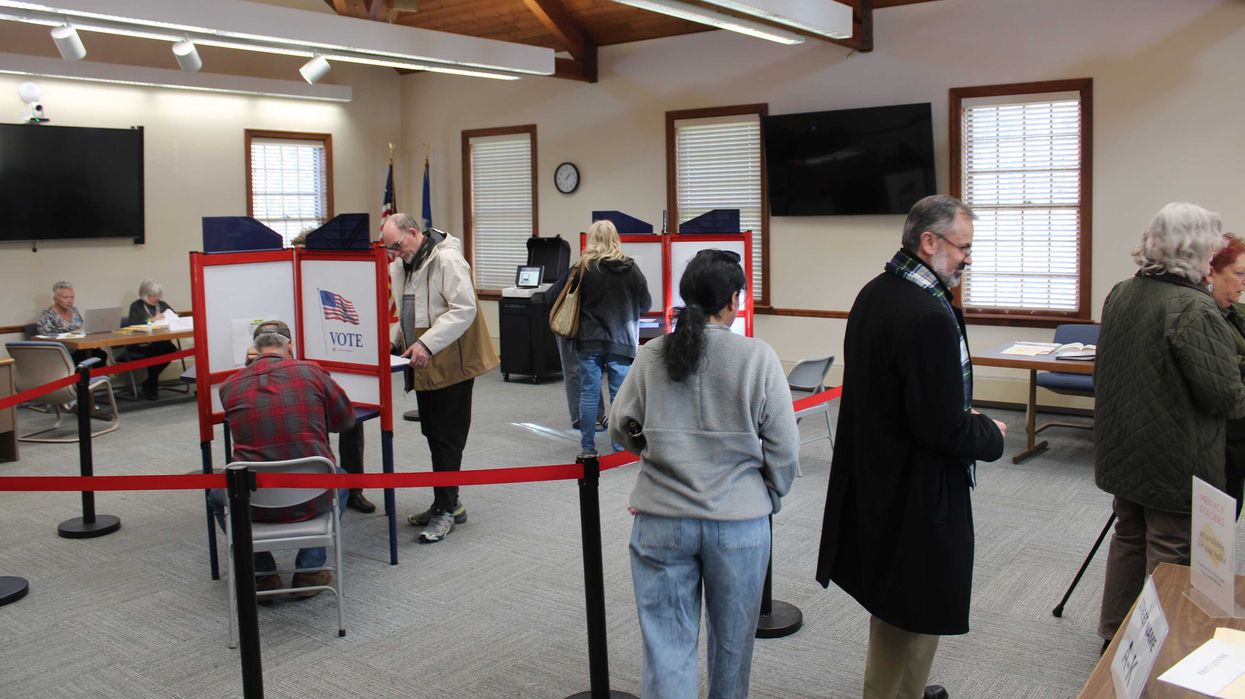
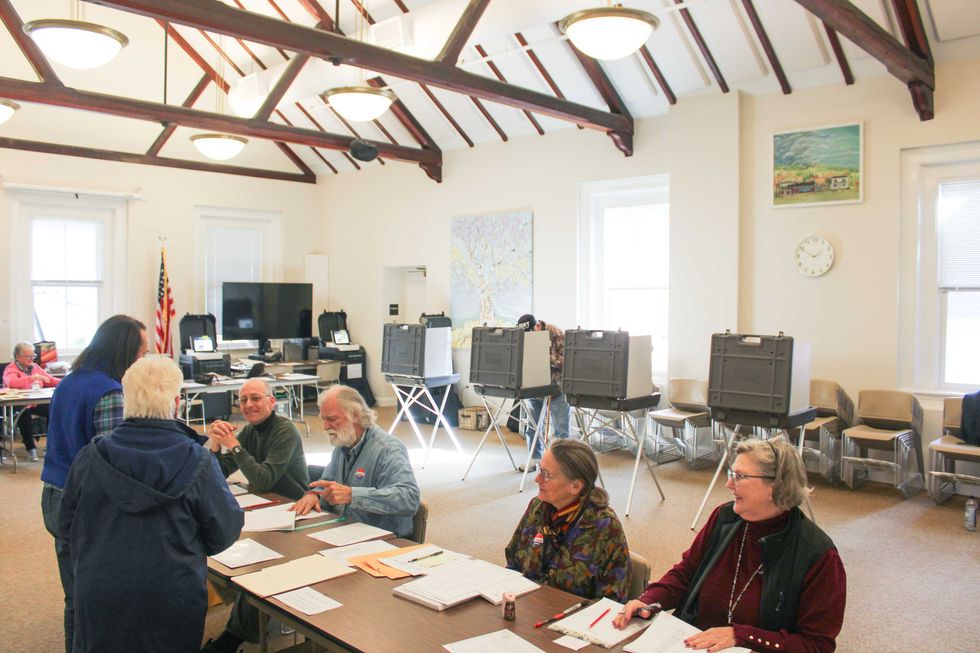
Kent Town Hall saw a steady stream of voters on Election Day Nov. 4, 2025.
Photo by Alec Linden

Kent Town Hall saw a steady stream of voters on Election Day Nov. 4, 2025.
Northwest Connecticut delivered some of the state’s strongest voter participation — and one of its closest contests — in last week’s municipal elections.
North Canaan’s first selectman race was decided by just two votes, prompting an automatic recount that confirmed Jesse Bunce’s win. The town also led the region in turnout, with 53.5% of voters casting ballots, ranking 10th statewide among 169 municipalities.
Turnout across the rest of the Northwest Corner remained well above average. Kent followed with 47.7% (27th statewide), while Falls Village reached 44.2% (56th). Sharon, Cornwall and Salisbury hovered around the state average of 40%, posting 42.7%, 42% and 41.3%, respectively.
Even with few contested races, participation remained strong as voters returned many familiar faces to office. (Full results below.)
In Kent, Democrat Eric Epstein was elected first selectman for the first time in an uncontested race. He takes over from Marty Lindenmayer, who did not run.
The town also passed a local cannabis measure, 400 to 308, banning recreational cannabis dispensaries.
Salisbury voters again backed longtime Democratic First Selectman Curtis Rand, who ran unopposed.
In Falls Village, cross-endorsed incumbent Dave Barger (D/R) won another term as first selectman, maintaining a board that includes Chris Kinsella (D) and Judy Jacobs (R).
Cornwall residents re-elected Democrat Gordon Ridgway, who has led the town for more than three decades. Ridgway ran unopposed and remains one of Connecticut’s longest-serving first selectmen.
Sharon voters returned First Selectman Casey Flanagan (D) and selectmen Lynn Kearcher (D) and John Brett (U).
Poll workers throughout the region described Election Day as steady and orderly, aided by new state tabulators that flagged errors on ballots but required absentee votes to be processed separately. In Salisbury, a brief detour on Route 44 caused by a downed tree did not affect turnout.
In Kent, petitioning selectman candidate Ed Matson said he was encouraged by voter participation: “I was surprised by how busy it was, especially with the number of people who voted early.”
In Sharon, resident Suzanne Oliver summed up her reason for voting simply: “Participation.” Another voter added, “Everything that has a vote, you should vote for — it’s the only power we have.”
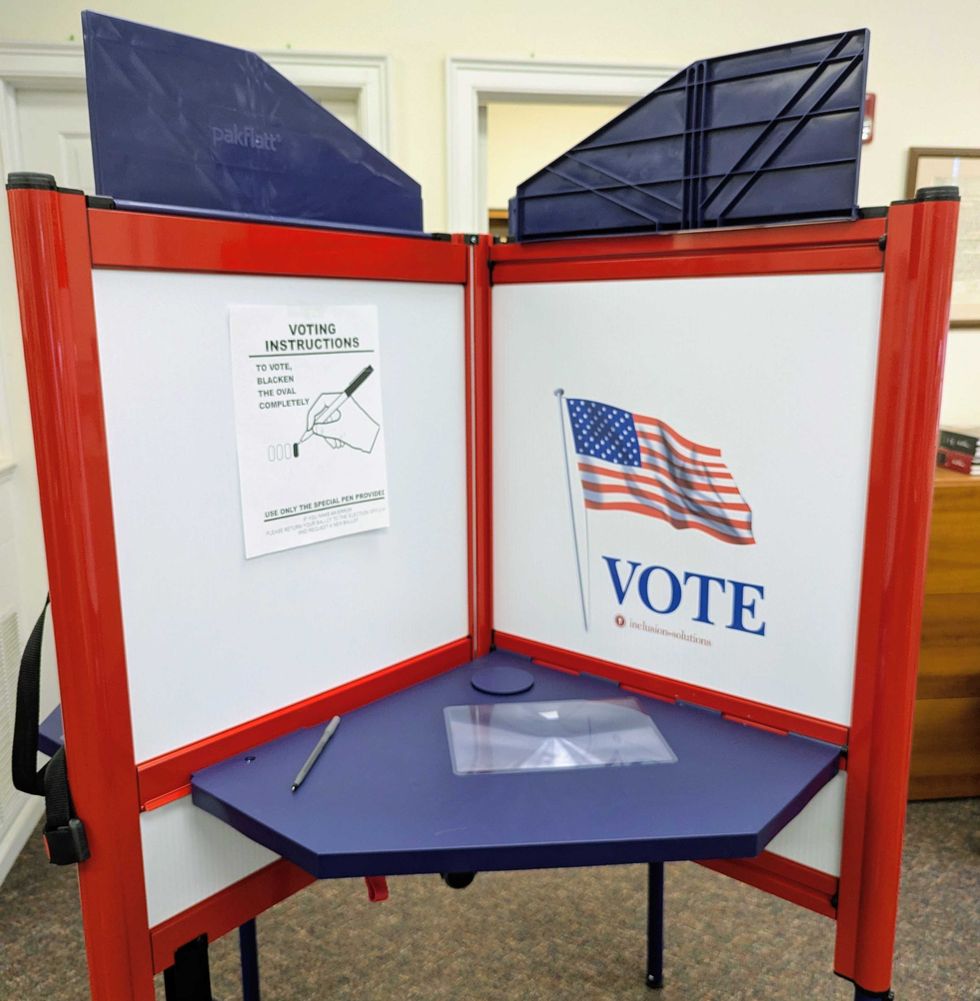
First Selectman:
Gordon Ridgway (D) 402
Selectman:
Rocco Botto (D) 332
John Brown (R) 123
Town Clerk:
Kathryn Lee (D/R) 469
Town Treasurer:
Richard Bramley (D) 434
Board of Finance:
Gary Steinkohl (D) 392
Carl Hermann (R) 201
Board of Finance (2 year):
Kate Sandmeyer Ward (D) 439
Board of Finance (Alternate):
Richard Wolkowitz (D) 389
Cody Gillotti (R) 134
Board of Education:
Martha Buehl (D) 392
Anna Kallman (D) 366
Katherine Scoville (R) 200
Kathleen Bodwell (R) 134
Board of Assessment Appeals:
Richard Wolkowitz (D) 344
David Cavalier (R) 124
Planning and Zoning Commission:
Phillip West (D) 346
Stephen Saccardi (R) 313
Zoning Board of Appeals:
Lynn Scoville (R) 316
Christi Bodwell (R) 234
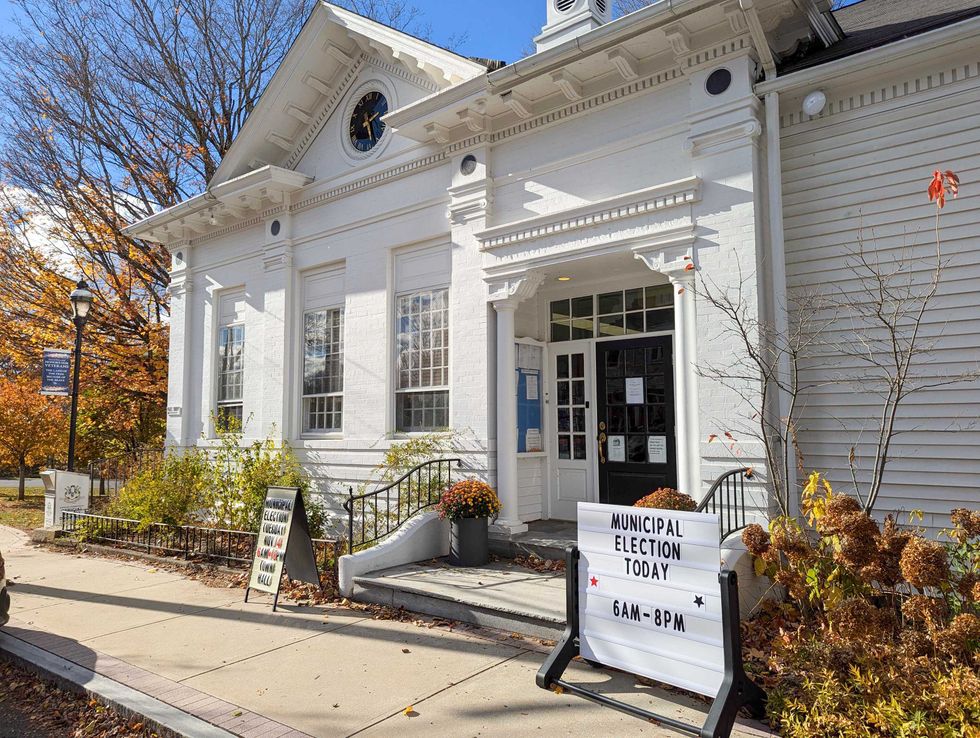
First Selectman:
Dave Barger (D/R) 300
Selectman:
Chris Kinsella (D) 202
Judy Jacobs (R) 112
Board of Finance:
Ginger Betti (D) 215
Andrea Downs (R) 146
Richard Berzine (D) 154
Karl Munson (R) 111
Board of Finance (2 year):
Martin Deeg (D) 210
Marisa Ohler (R) 102
Board of Finance (Alternate):
Vanessa Pereira (D) 177
Henry Todd (R) 129
Board of Finance (Alternate - 2 year vacancy):
Hazel McGuire (R) 239
Board of Education:
Adam Sher (D/R) 281
Patricia Allyn Mechare (D) 222
Scott Miller (R) 88
Board of Assessment Appeals:
Hazel McGuire (D/R) 297
Tami Reid (D/R) 274
Zoning Board of Appeals:
Louis Timolat (R) 232
Stephen Dean (R) 232
Zoning Board of Appeals (Alternate):
Vance Cannon (D) 237
Lee Baldwin (R) 77
Constables:
Timothy Downs (R) 199
Thom Wilson (D) 181
Dennis Jacobs (R) 168
Donna Heinz (D) 159
Louis Timolat (R) 152
Elizabeth Pierce (D) 140
Matthew Hansen (R) 128
Regional Board of Education:
Patricia Allyn Mechare (D/R) 371

First Selectman:
Eric Epstein (D) 844
Selectman:
Lynn Mellis Worthington (D) 657
Lynn Harrington (R) 208
Edward Matson (U) 116
Town Clerk:
Darlene Brady (U) 622
Tax Collector:
Deborah Devaux (D) 843
Board of Finance:
Glenn Sanchez (D) 769
Nancy O'Dea Wyrick (R) 442
Board of Education:
Heather Brand (D) 686
Anthony DiPentima (R) 291
Board of Education (2 year):
Cinda Clark (D) 794
Board of Assessment Appeals:
Gary Ford (D) 679
David Yewer (R) 252
Planning and Zoning Commission:
Darrell Cherniske (D) 740
Karen Casey (R) 466
Donna Hayes (R) 461
Zoning Board of Appeals:
Stephen Pener (D) 722
Justin Potter (D) 707
John Johnson (D) 637
Nick Downes (R) 331
Mark Cowan (R) 221
Zoning Board of Appeals (Alternate):
Adam Manes (D) 756
Sewer Commission:
Elissa Potts (D) 764
Catherine Mazza (D) 718
Carmel Karina O'Meara (R) 266
Cannabis Regulation:
Yes 243
No 201
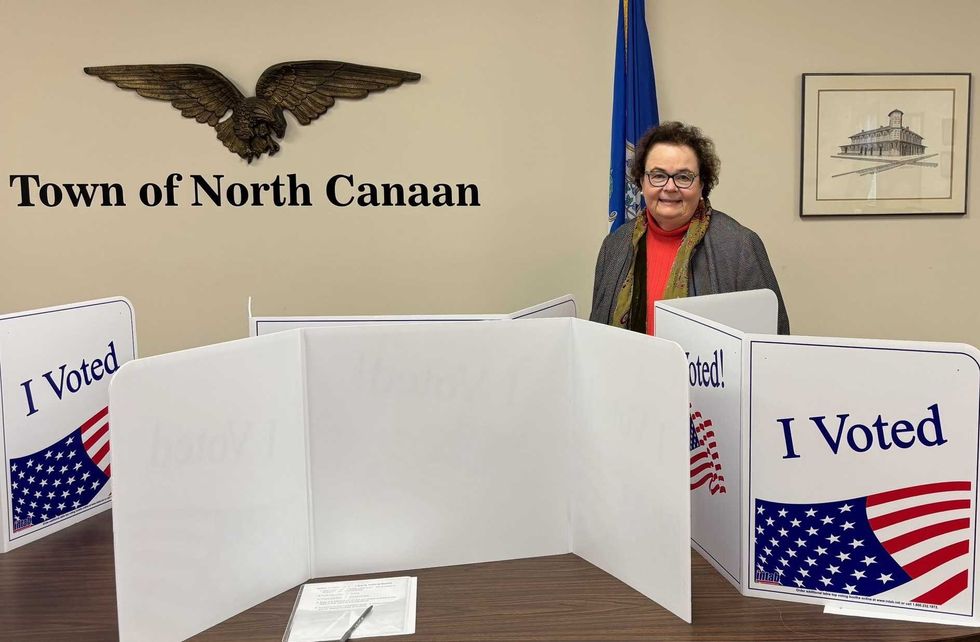
First Selectman: (Recount required)
Jesse Bunce (D) 572
Brian Ohler (R) 570 - Selectman
Selectman:
Melissa Pinardi (R) 559
Joe Sebben (U) 374
Town Clerk:
Krysti Segalla (R) 750
Town Treasurer:
Melanie Neely (D) 632
Emily Minacci (R) 487
Tax Collector:
Rebecca Mochak (R) 707
Board of Finance:
John Jacquier (R) 633
Emily Bottum (D) 518
Christian Allyn (U) 352
Brian Allyn (WI) 159
Board of Education:
Christopher Jacques (D) 541
Gina Terwilliger (D) 628
Amy Dodge (R) 698
Caitlin Tomko (R) 541
Amy Helminiak (D) 536
Board of Assessment Appeals:
David Jacquier (R) 754
Planning and Zoning Commission:
Cooper Brown (D) 679
Dalton Jacquier (R) 710
Walter Schneider (R) 595
Planning and Zoning Commission (Alternate):
Brian Allyn Jr. (R) 738
Tucker Whiting (R) 660
Zoning Board of Appeals:
Brian Allyn (D) 702
Matthew Freund (D) 709
Scott Zinke (R) 676
Zoning Board of Appeals (Alternate):
Joe Cieslowski (D) 690
Regional Board of Education:
Craig Whiting (R) 765
Shall Treasurer be appointed?
Yes 355
No 743
Shall Town Clerk be appointed?
Yes 350
No 743
Shall Tax Collector be appointed?
Yes 349
No 741
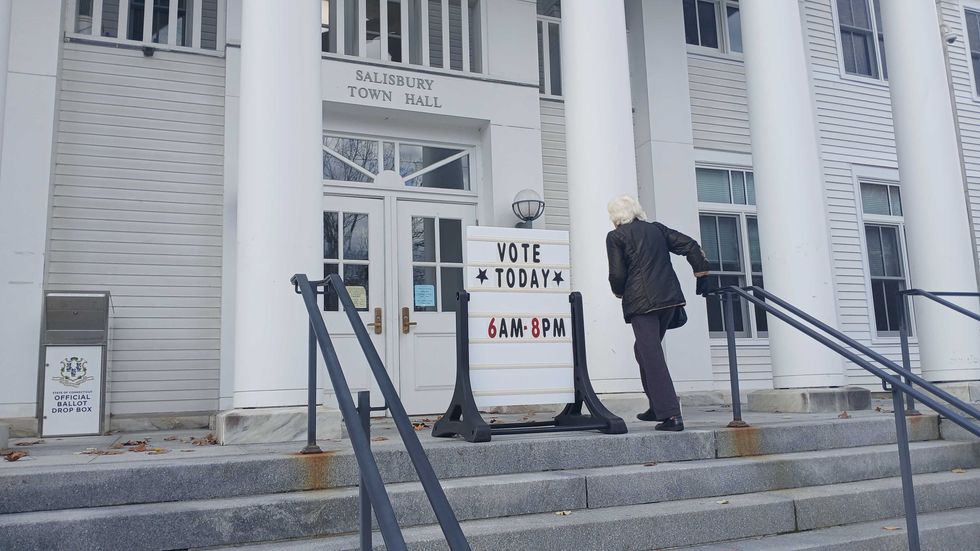
First Selectman:
Curtis Rand (D) 1,071
Selectman:
Barrett Prinz (D) 935
Kitty Kiefer (U) 516
Don Mayland (R) 457
Board of Finance:
Emily Vail (D) 1,064
Board of Education:
Lauren Brown (D) 999
Elizabeth Dittmer (D) 979
Natalia Smirnova (WI) 36
Board of Assessment Appeals:
William Tedder (D) 962
Peter Becket (R) 244
Planning and Zoning Commission:
Cathy Shyer (D) 994
Allen Cockerline (D) 930
Danella Schiffer (D) 926
Planning and Zoning Commission (Alternate):
Beth Wells (D) 984
Jen Ventimilia (D) 925
Zoning Board of Appeals:
Roxanne Belter Lee (D) 1,020
M.E. Freeman (D) 925
Zoning Board of Appeals (Alternate):
Cori Daggett (D) 1,001
Regional Board of Education:
Flora Lazar (D) 1,021
First Selectman:
Casey Flanagan (D) 647
Selectman:
Lynn Kearcher (D) 606
John Brett (U) 344
Town Clerk:
Biance DelTufo (D) 643
Town Treasurer:
Tina Pitcher (D/R) 686
Tax Collector:
Donna Christensen (D/R) 692
Board of Finance:
John Hecht (D) 593
Mary Robertson (D) 312
Board of Finance (4 year vacancy):
Mary Anne Toppan (R) 388
Board of Finance (2 year vacancy):
Michele Pastre (R) 402
Board of Education:
Terry Vance (D) 496
Pam Jarvis (D) 484
Cathy Winburn (R) 191
Chip Kruger (R) 168
Board of Education (2 year vacancy):
Peter Birnbaum (D) 612
Board of Assessment Appeals:
Debbie Hanlon (D) 628
Planning and Zoning Commission:
Stanley MacMillan Jr. (D/R) 668
Susan Lynn (D) 590
Planning and Zoning Commission (Alternate):
Andrus Nichols (D) 622
Zoning Board of Appeals:
James Wexler (D) 593
Scott Pastre (R) 296
Zoning Board of Appeals (2 year vacancy):
Theodore Coulombe (D) 613
Zoning Board of Appeals (Alternate):
Pauline Moore (D) 620
Regional Board of Education:
Sara Cousins (D) 618
D: Democrat
R: Republican
D/R: Cross endorsed
U: Unaffiliated/Petitioning
WI: Write In
Results compiled from town halls and the Secretary of the State's website.

There are artists who make objects, and then there are artists who alter the way we move through the world. Tim Prentice belonged to the latter. The kinetic sculptor, architect and longtime Cornwall resident died in November 2025 at age 95, leaving a legacy of what he called “toys for the wind,” work that did not simply occupy space but activated it, inviting viewers to slow down, look longer and feel more deeply the invisible forces that shape daily life.
Prentice received a master’s degree from the Yale School of Art and Architecture in 1960, where he studied with German-born American artist and educator Josef Albers, taking his course once as an undergraduate and again in graduate school.In “The Air Made Visible,” a 2024 short film by the Vision & Art Project produced by the American Macular Degeneration Fund, a nonprofit organization that documents artists working with vision loss, Prentice spoke of his admiration for Albers’ discipline and his ability to strip away everything but color. He recalled thinking, “If I could do that same thing with motion, I’d have a chance of finding a new form.”
What Prentice found through decades of exploration and play was a kind of formlessness in which what remains is not absence, but motion. To stand before one of his sculptures is to witness a quiet choreography where metal breathes, shadows shift and time softens.
After Yale, Prentice co-founded the architectural firm Prentice & Chan in 1965. The firm designed affordable housing projects in New York City, work largely led by partner Lo-Yi Chan. Prentice also designed custom single-family homes and continued to develop sculptural ideas alongside his architectural practice. After leaving the firm in 1975 and eventually relocating full time to Cornwall, he undertook a range of local architectural projects while increasingly devoting himself to sculpture.
Prentice began producing larger-scale sculptural commissions in the 1970s, during a period of national expansion in public art funding tied to new building projects. His first major commission came in 1976 from AT&T, helping launch a career that would bring his kinetic installations to corporate, institutional and public spaces across the United States and abroad. While his work follows in the lineage of Alexander Calder and George Rickey, critic Grace Glueck observed that its “gently assertive character is very much his own.”
In Cornwall, Prentice established a studio devoted to designing and fabricating kinetic sculpture, where he continued working for decades. He had many assistants over the years including local artists David Bean, Ellen Moon and Richard Griggs. David Colbert worked with Prentice for many years, assisting with fabrication, installation and project development and in 2012, Prentice established Prentice Colbert Inc., helping ensure that fabrication and development of large-scale commissions could continue beyond his lifetime.
Colbert said Prentice could be imperious, but came to understand that he valued thoughtful critique over agreement. “That evolved into a free and easy give-and-take, along with some fierce arguments,” he said. “Our relationship was always developing, right through to the end.”
In the mid-1990s, Prentice was diagnosed with macular degeneration, a condition that gradually narrowed his field of vision. Rather than turning away from the visual world, he leaned further into it, focusing on movement, light and peripheral perception — on what could be felt as much as seen. The Vision & Art Project film documents this period of his life and the ways he adapted his creative process.
Even in his final years, Prentice continued experimenting. In the summer of 2025, he created a series of drawings titled “Memory Trees,” produced from recollection as his eyesight declined. The series sold out at the Rose Algrant show that August, offering a poignant example of an artist adapting and creating throughout their lifetime.
“He was interested in whimsy,” said Nora Prentice of her dad. “But he also worked seven days a week,” she said. “He’d come in for dinner and then go right back out.” His studio was known for its atmosphere of curiosity and play, with music often drifting through the workspace as sculptures moved overhead in careful, measured rhythms. His work reminds viewers how profoundly small movements shape perception, and how change itself may be the only constant.
In his poem “Among School Children,” William Butler Yeats asks, “How can we know the dancer from the dance?” Prentice offered his own answer. “I’m not making the dance,” he said. “The wind is making the dance.”
As Nora reflected, “I think that’s how he would want to be remembered: for making the wind visible.”
Laurie Fendrich and Peter Plagens at home in front of one of Plagens’s paintings.
He taught me jazz, I taught him Mozart.
Laurie Fendrich
For more than four decades, artists Laurie Fendrich and Peter Plagens have built a life together sustained by a shared devotion to painting, writing, teaching, looking, and endless talking about art, about culture, about the world. Their story began in a critique room.
“I came to the Art Institute of Chicago as a visiting instructor doing critiques when Laurie was an MFA candidate,” Plagens recalled.
“He was doing critiques with everyone,” Fendrich said of Plagens. “We met at one of those sessions and, well, what can I say. We fell in love instantly.”
Fendrich speaks candidly about the pressures that shaped her early life choices. “We both married the first time at 21, which a good number of women of my generation did without much thought.” Her first husband was a good guy, she says, but “we weren’t suited for each other at all, even though he suited my parents perfectly.” Her decision to get a divorce was seismic. “My mother didn’t speak to me for a year.” Time softened the rupture. “One day she told me, ‘I see now why you left.’”
Fendrich had a rigorous liberal arts education at Mount Holyoke. “I studied painting and drawing, but I also got interested in political philosophy. Plato, Aristotle, Machiavelli — Rousseau was my big guy — Tocqueville, everybody. And I still read them.” Plagens’s path was less formal. “I went to USC at 17,” he said, “and declared English as my major. It was a frat school, and I was in one for the first two years. Then I started doing the cartoons for the Daily Trojan, took a couple art classes, and thought, ‘Wait a minute, I like this.’”
Culturally, they diverged just as sharply. “I came from a fairly puritanical family that didn’t even go to the movies,” Fendrich said. Plagens, by contrast, grew up immersed in pop culture. “My father was an omnivorous reader,” he said, “and a jazz fan, and he shared these passions with me.” In 1966, Plagens walked into Artforum’s LA office and said, “I want to write reviews.” He was paid five dollars per piece. “Gasoline was 23 cents a gallon, so it went a long way.”
Over time, the couple slowly fused their educations. “He taught me jazz, I taught him Mozart,” Fendrich said with a laugh. “I’ve had a movie education from him; he read Jane Austen because of me.”

During their early years in LA, Plagens taught at USC, and Fendrich at Art Center College of Design. In 1985, they decided “our kind of abstraction would do better in New York,” as Fendrich put it. “So, we up and moved to Tribeca with $10,000 and a toddler.”
Both artists grounded their artistic careers in teaching and writing. “Teaching, which I loved, gave me the financial stability to be an artist,” Fendrich said, reflecting on her 27 years as a professor at Hofstra. “It meant that being an artist didn’t require I make money from every show. I didn’t start writing until 1999, but though I write for publication frequently, I make hardly any money at it.”
Artistically, they guard each other’s independence. “We have unspoken rules,” Plagens said. “You don’t comment on someone’s work while they’re in the middle of creating it.” Critique comes by invitation only. “He’s not mean, just direct,” said Fendrich. Over time, their aesthetics have subtly converged. “My work has gotten cleaner from looking at his,” she said. “He’s gotten more colorful because of me.”
The two have had several two-person exhibitions. At a recent duo show at the Texas Gallery in Houston “Laurie’s paintings flew off the wall,” Plagens recalled. “Me, well, not so much.”
Plagens’s parallel career in journalism shaped their lives in tangible ways. He worked as art critic at Newsweek from 1989 until 2003 and currently contributes reviews of museum exhibitions to The Wall Street Journal. “Being at Newsweek was one of the luckiest breaks I ever had,” he said. “They paid me to see things I would gladly pay to see.”
Their creative processes mirror their personalities. “I start with a specific idea,” Fendrich said, “and then modify things as I paint.” Plagens laughed. “I start with complete mush, just blurting it out and spending the rest of the time fixing it.”
In 2019, they made what Fendrich calls “a decision of contraction.” They left the TriBeCa loft they had lived in for three decades, sold their Catskills home with its large studio, and moved full-time to a former auto repair shop in Lakeville, now a house where each has a studio, and the ground floor retains the open feel of a loft.
What sustains them in life, art and love, decades in, are endless conversations — and arguments — about art, history, exhibitions, books and movies. That exchange, ongoing and rigorous, may just be the masterpiece of their shared life.

Want more of our stories on Google? Click here to make us a Preferred Source.
Hyalite Builders is leading the structural rehabilitation of The Stissing Center in Pine Plains.
For homeowners overwhelmed by juggling designers, architects and contractors, a new Salisbury-based collaboration is offering a one-team approach from concept to construction. Casa Marcelo Interior Design Studio, based in Salisbury, has joined forces with Charles Matz Architect, led by Charles Matz, AIA RIBA, and Hyalite Builders, led by Matt Soleau. The alliance introduces an integrated design-build model that aims to streamline the sometimes-fragmented process of home renovation and new construction.
“The whole thing is based on integrated services,” said Marcelo, founder of Casa Marcelo. “Normally when clients come to us, they are coming to us for design. But there’s also some architecture and construction that needs to happen eventually. So, I thought, why don’t we just partner with people that we know we can work well with together?”
Traditionally, homeowners hire designers, architects and contractors separately, a process that can lead to miscommunication, budget overruns and design revisions once construction begins. The new partnership seeks to address those challenges by creating a unified team that collaborates from the earliest planning stages through project completion.
“We can explore possibilities,” Marcelo said. “Let’s say the client is not sure which direction they want to go. They can nip that in the bud early on — instead of having three separate meetings with three separate people, you’re having one collaborative meeting.”
The partnership also reflects an expanded view of design, moving beyond surface aesthetics to include structural, environmental and performance considerations. Marcelo said her earlier work in New York City shaped that perspective.
“I had a 10-year career in New York City designing townhouses and penthouses, thinking about everything holistically,” she said. “When I got here and started my own business, I felt like I was being pigeonholed into only the decorative part of design. With the weight of an architect on our team now, it has really helped us close those deals with full home renovations, ground up builds and additions.”
The team emphasizes what it describes as high-performance design, incorporating modern building science, energy efficiency and improved air quality alongside aesthetic goals.
“If you’re still living inside 40-year-old technology and building techniques, we haven’t really handed off the best product we could,” said Soleau. “The goal is to not only to reach that level of aesthetic design but to improve the envelope, improve the living environment within a home and bring homes up to elevated standards of high-performance building.”
This integrated approach has proven particularly useful for renovation projects, where modern materials and systems can be thoughtfully incorporated into older structures. The firms also prioritize durability and long-term functionality, often incorporating antiques, vintage elements and high-quality materials designed to support clients’ lifestyles.
“I’m very big on investing in pieces that are going to be quality and last you the test of time,” Marcelo said. “Not just designing for a five- to 10-year run, but really designing for the long haul.”
The collaboration is already underway on several projects, including a major renovation in Sharon that involves rebuilding a 1990s modular home to maximize views while upgrading structural and performance systems. The firms are also exploring advanced visualization technology that would allow clients to experience projects through virtual reality before construction begins.
“For me, as somebody who wants to take the project all the way from beginning to end and make the process as effortless as possible for my client, it’s easier to do that with collaboration and a team than to do it alone,” Soleau said. “Most clients, especially second-home owners, want a team that can lead the project from concept through completion; aligning design, budget, and construction.”
On Feb. 19, the three firms will officially launch the initiative at an invitation-only event at The Stissing Center in Pine Plains, where Hyalite Builders is leading the structural rehabilitation of the historic building. A limited number of “hard hat tour” reservations will be available by request, providing rare, behind-the-scenes access while work is actively underway. Those interested in attending may contact event organizer Lauren Fritscher of Berkshire Muse at hello@berkshiremuse.com.
Autumn Knight will perform as part of PS21’s “The Dark.”
This February, PS21: Center for Contemporary Performance in Chatham, New York, will transform the depths of midwinter into a radiant week of cutting-edge art, music, dance, theater and performance with its inaugural winter festival, The Dark. Running Feb. 16–22, the ambitious festival features more than 60 international artists and over 80 performances, making it one of the most expansive cultural events in the region.
Curated to explore winter as a season of extremes — community and solitude, fire and ice, darkness and light — The Dark will take place not only at PS21’s sprawling campus in Chatham, but in theaters, restaurants, libraries, saunas and outdoor spaces across Columbia County. Attendees can warm up between performances with complimentary sauna sessions, glide across a seasonal ice-skating rink or gather around nightly bonfires, making the festival as much a social winter experience as an artistic one.
The Dark’s lineup includes several world and U.S. premieres. Highlights include Thomas Feng performing “Night Prayers,” a program of compositions by late Ethiopian composer and Orthodox nun Emahoy Tsegué-Maryam Guèbrou; Phil Kline’s outdoor participatory score “Force of Nature (February);” an audiovisual collaboration between composer David Lang and Academy Award-nominated filmmaker Bill Morrison; an interdisciplinary performance by Lee Ranaldo of Sonic Youth and multimedia artist Leah Singer; and “We Survived the Night: A Coyote Story in Four Parts” by Julian Brave NoiseCat.
For more information about The Dark or to purchase tickets, visit ps21chatham.org/the-dark
Exterior of the Linde Center for Music and Learning.
The Tanglewood Learning Institute (TLI), based at Tanglewood, the legendary summer home of the Boston Symphony Orchestra, is celebrating an expanded season of adventurous music and arts education programming, featuring star performers across genres, BSO musicians, and local collaborators.
Launched in the summer of 2019 in conjunction with the opening of the Linde Center for Music and Learning on the Tanglewood campus, TLI now fulfills its founding mission to welcome audiences year-round. The season includes a new jazz series, solo and chamber recitals, a film series, family programs, open rehearsals and master classes led by world-renowned musicians.
“We have been thrilled and humbled to see the Tanglewood Learning Institute embraced as a year-round destination for a breadth of exceptional programming, including classical, jazz and family-friendly events,” said BSO President and CEO Chad Smith. “Our 2025–26 fall, winter and spring season reflects our deepening commitment to engaging the vibrant, year-round Berkshires community and to fully exploring the potential of TLI as a space where BSO programs make thought-provoking connections between music, art and society.”
TLI is once again presenting its Chamber Concerts series on Sunday afternoons, with small ensembles of BSO musicians performing familiar favorites and classic mainstays, as well as new music by contemporary composers. There are upcoming chamber concerts scheduled for Feb. 22, March 8 and March 15.

New this season is the TLI Jazz series, which continues March 20 with the Sullivan Fortner Trio, led by Grammy Award-winning artist and educator Sullivan Fortner, whose eponymous ensemble won the 2024 DownBeat Critics Poll for Rising Jazz Group. “Soul-sax sensation” Nick Hemp brings his free-blowing blend of “barroom excitement and modern jazz finesse” for a rousing night of soul jazz April 10. Rounding out the jazz series, and back by popular demand, is Grammy Award-winning trumpeter and singer Jumaane Smith, who brings his repertoire of jazz and American Songbook standards to the Linde Center on May 9.
Another season highlight comes April 12 with an animated live concert screening of the 3D stop-motion adventure film “Magic Piano.” Produced by the Academy Award-winning BreakThru Films production company in Poland, the film will be accompanied by a screening of “The Chopin Shorts,” a collection of animated films set to Chopin’s etudes, performed by pianist Derek Wang.
All performances take place in Studio E, the Linde Center’s 4,000-square-foot multiuse room that serves as TLI’s main performance and event space. It features retractable seating, acoustic and technical systems, flexible configurations, and is accessible and comfortable for all patrons.
The entire Linde Center for Music and Learning is worth a visit in itself. The complex, which also includes the informal Cindy’s Cafe (seasonal) for a quick bite, is conceived not as a single building but as a cluster of pavilion-like spaces connected by an outdoor covered walkway and arranged around a century-old red oak tree. The center promotes a welcoming and serene sense of place and continuity with the rolling Tanglewood lawn and surrounding woodlands.
Smith said, “This ongoing work is also a passion project for our musicians, who form deep ties to the area and are eager to remain active in the Berkshires beyond the summer months. We look forward to welcoming new and returning audiences to experience all that TLI offers — all year long.”
The Tanglewood Learning Institute is located at 3 W. Hawthorne Road, Lenox, Mass. For more information and to purchase tickets,
visit bso.org/tli.

Want more of our stories on Google? Click here to make us a Preferred Source.

Want more of our stories on Google? Click here to make us a Preferred Source.