Jarrett Porter on the enduring power of Schubert’s ‘Winterreise’

Jarrett Porter on the enduring power of Schubert’s ‘Winterreise’

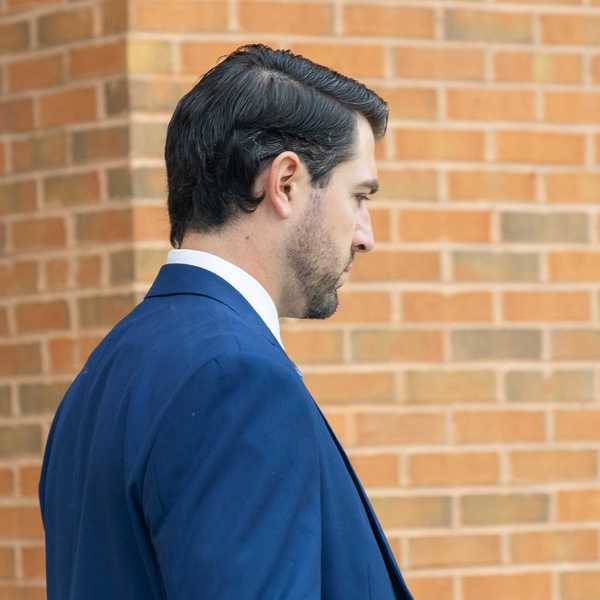
Baritone Jarrett Porter to perform Schubert’s “Winterreise”

Tim Gersten

On March 7, Berkshire Opera Festival will bring “Winterreise” to Studio E at Tanglewood’s Linde Center for Music and Learning, with baritone Jarrett Porter and BOF Artistic Director and pianist Brian Garman performing Franz Schubert’s haunting 24-song setting of poems by Wilhelm Müller.

A rejected lover. A frozen landscape. A mind unraveling in real time. Nearly 200 years after its premiere, “Winterreise” remains unnervingly current in its psychological portrait of isolation, heartbreak and existential drift.

Porter, praised by Opera News for his “imposing baritone” and “manifest honesty,” has built his career on major European opera stages, including Oper Frankfurt. But recital work, he says, is closest to his heart.

“I love to recital. If I were to pick my career, I would be doing some opera and mostly recital,” he said. “I think there can be difficulty with grabbing an audience in a recital, but this is one of the greatest pieces to do so because it is so psychological, so powerful, so universally moving.”

Unlike opera, there are no sets in a recital, no costumes or lighting cues to lean on. “The singer with no sets or costumes is left to create a kind of one-man show,” Porter said. His solution is internal. “The way that I process learning something like this and having the responsibility to hold an audience without set or costumes or lights or props is to stage it in my mind. Each song has an identity.”

Schubert’s writing, Porter insists, needs no adornment. “Schubert does an amazing job at setting the scene, and for me, you don’t need anything else. I feel like anything added to it would be almost subtracting. I’d rather just see the singer and the pianist the way that Schubert intended it to be.”

At the center of “Winterreise” is the wanderer, an unnamed figure moving through snow and memory after a failed love affair. For Porter, the character is both specific and universal. “There’s so much ambiguity in the piece,” he said. “We don’t know all of the answers in the first song. We don’t really know who this person is. There are tidbits of information dropped throughout each song. And I think the tendency is to put a narrative on that and to try to connect the dots rather than embracing what it is. The ambiguity is actually where the beauty is.”

That ambiguity extends to the cycle’s ending and the encounter with the eerie hurdy-gurdy player in “Der Leiermann.” Does the protagonist die? “I think one could make that argument,” Porter said. But he resists a neat conclusion. “Death is right in front of him. Death is actually the most peaceful answer to his problem and it’s not given to him. There’s something more, a deeper level.”

Rather than a literal death scene, Porter sees a reckoning. “For me, he’s not granted the easy way out. He has to sort of come to terms with being nothing and having no real skill as a songster or a poet or a wanderer.” The winter landscape, he suggests, mirrors the psyche: “The winter is sort of the mirror of his heart.”

In shaping the emotional arc across all 24 songs, Porter leans into uncertainty rather than resolution. “What I relate to in this piece is that in life, you don’t know what’s going to happen. And you don’t know the next day. Even in tragedy—especially in tragedy—there’s so much question.”

Porter performed Gounod’s “Faust” at BOF in 2024 with Garman conducting but this will be the first time the two will be collaborating with Garman at his instrument. “I love making music with Brian,” said Porter. “I’m a huge fan of his musicianship. I think we’re sort of bitten by the same bug that Schubert is, and so I was super honored that he asked me to do this with him.”

For tickets, visit berkshireoperafestival.org
Latest News

Living art takes center stage in the Berkshires

Contemporary chamber musicians, HUB, performing at The Clark.

D.H. Callahan

Northwestern Massachusetts may sometimes feel remote, but last weekend it felt like the center of the contemporary art world.

Within 15 miles of each other, MASS MoCA in North Adams and the Clark Art Institute in Williamstown showcased not only their renowned historic collections, but an impressive range of living artists pushing boundaries in technology, identity and sound.

Keep ReadingShow less
Persistently amplifying women’s voices

Francesca Donner, founder and editor of The Persistent. Subscribe at thepersistent.com.

Aly Morrissey

Francesca Donner pours a cup of tea in the cozy library of Troutbeck’s Manor House in Amenia, likely a habit she picked up during her formative years in the United Kingdom. Flanked by old books and a roaring fire, Donner feels at home in the quiet room, where she spends much of her time working as founder, editor and CEO of The Persistent, a journalism platform created to amplify women’s voices.

Although her parents are American and she spent her earliest years in New York City and Litchfield County — even attending Washington Montessori School as a preschooler — Donner moved to England at around five years old and completed most of her education there. Her accent still bears the imprint of what she describes as a traditional English schooling.

Keep ReadingShow less

Leopold Week honors land and legacy

Leopold Week honors land and legacy

Aldo Leopold in 1942, seated at his desk examining a gray partridge specimen.

Robert C. Oetking

In his 1949 seminal work, “A Sand County Almanac,” Aldo Leopold, regarded by many conservationists as the father of wildlife ecology and modern conservation, wrote, “There are some who can live without wild things and some who cannot.” Leopold was a forester, philosopher, conservationist, educator, writer and outdoor enthusiast.

Originally published by Oxford University Press, “A Sand County Almanac” has sold 2 million copies and been translated into 15 languages. On Sunday, March 8, from 3 to 5 p.m. in the Great Hall of the Norfolk Library, the public is invited to a community reading of selections from the book followed by a moderated discussion with Steve Dunsky, director of “Green Fire,” an Emmy Award-winning documentary film exploring the origins of Leopold’s “land ethic.” Similar reading events take place each year across the country during “Leopold Week” in early March. Planning for this Litchfield County reading began when the Norfolk Library received a grant from the Aldo Leopold Foundation, which provided copies of “A Sand County Almanac” to distribute during the event.

Keep ReadingShow less
google preferred source

Want more of our stories on Google? Click here to make us a Preferred Source.

Millbrook dance party draws nearly 80 to Village Hall

Impressive dance moves were displayed by Village Trustee Shannon Mawson who added a visual flair of fabric in motion at Club Friendly, a community dance at Village Hall on Friday, Feb. 27.

Leila Hawken

Nearly 80 residents filled Village Hall on Friday, Feb. 27, for a two-hour community dance party organizers hope will become a recurring event.

The gathering, dubbed “Club Friendly,” transformed Village Hall into a lively dance space with colorful décor, upbeat lighting and a steady mix of tracks spun by local DJ Christopher James. Serving as emcee, James kept the energy high and encouraged dancers of all ages to take to the floor.

Keep ReadingShow less

Letters to the Editor - March 5, 2026

Letters to the Editor - March 5, 2026

Housing, land use, community

On Thursday, Feb. 26, I attended a collegial conversation, a tour and a luncheon offered by the Salisbury Housing Trust at its Open House held at Town Hall. The Trust has been working to find possibilities for affordable homeownership options in Salisbury.

Keep ReadingShow less

Iran War

Iran War
google preferred source

Want more of our stories on Google? Click here to make us a Preferred Source.

google preferred source

Want more of our stories on Google? Click here to make us a Preferred Source.