Decades of duty conclude for two Town Clerks

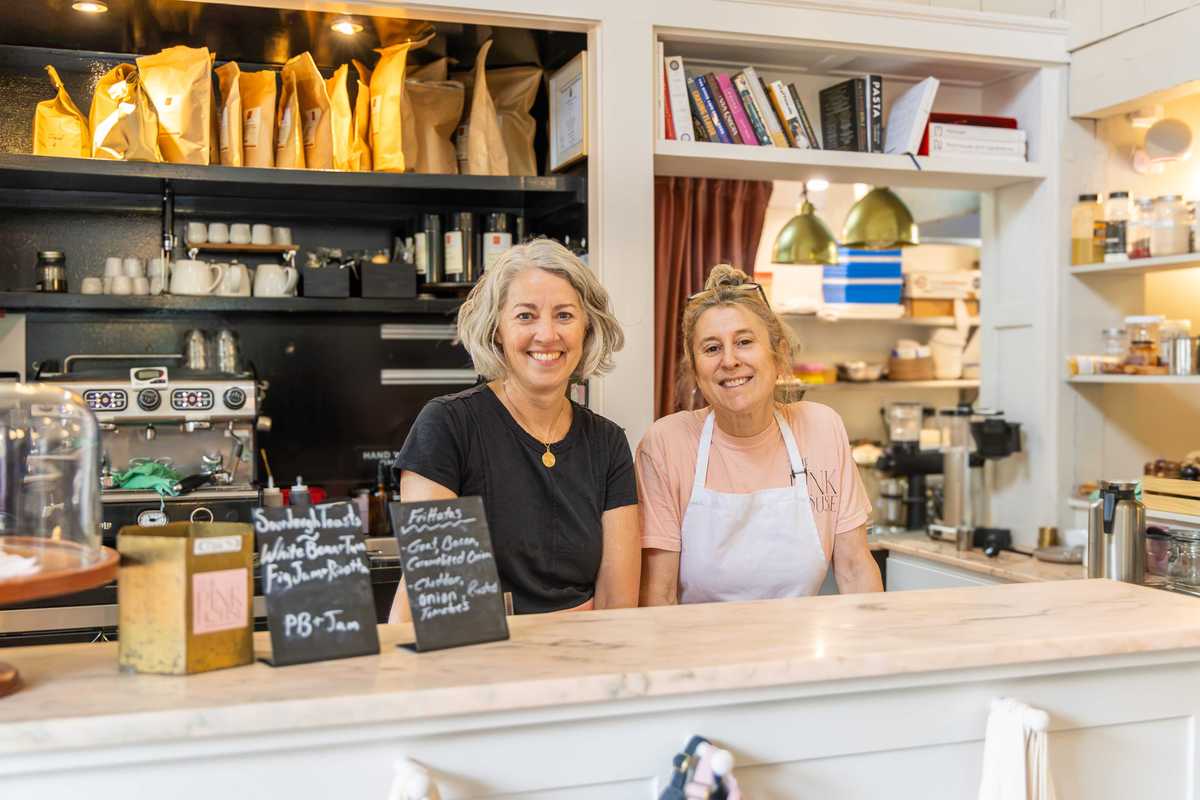
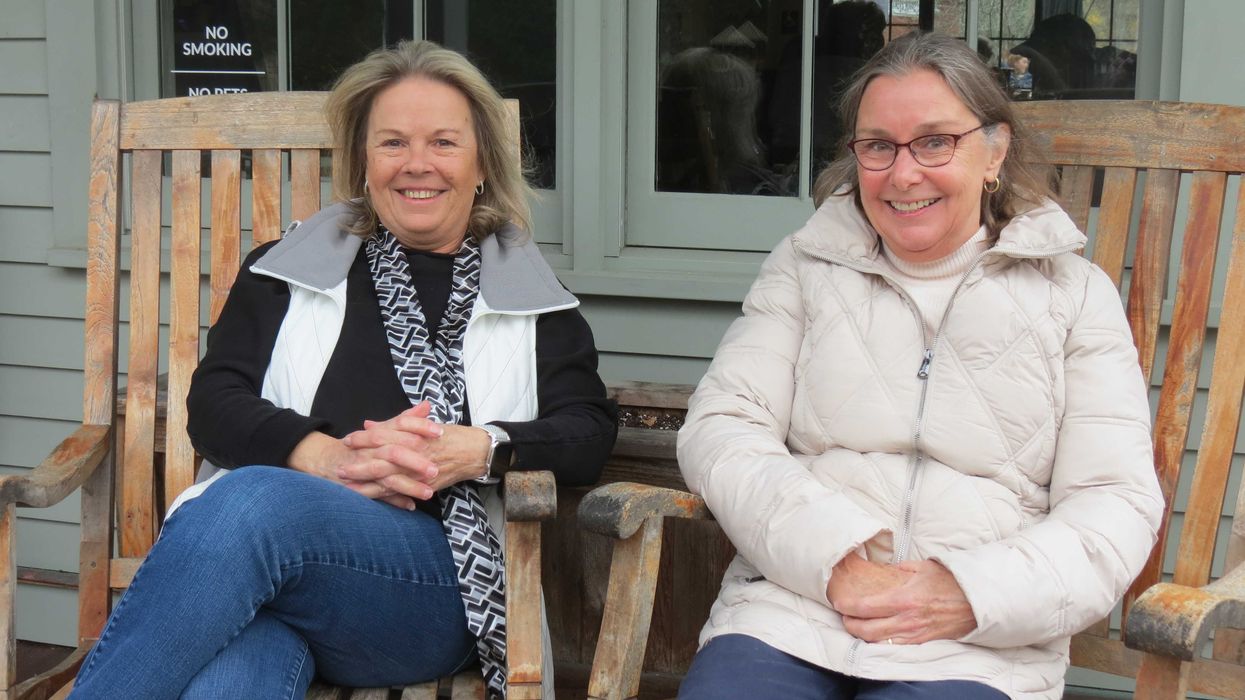
Linda Amerigi, Sharon town clerk, and Vera Dinneen, Cornwall town clerk, will be retiring this year after decades of service.
Ruth Epstein

Linda Amerigi, Sharon town clerk, and Vera Dinneen, Cornwall town clerk, will be retiring this year after decades of service.
Over their combined tenure of 56 years, Sharon Town Clerk Linda Amerighi and Cornwall Town Clerk Vera Dinneen have seen a lot. As they prepared their upcoming retirements, they looked back over their years as chroniclers of town business with a tinge of sadness, much laughter and a sense of pride.
As neighboring clerks, their towns border one another in a strange configuration. The covered bridge is the dividing line. “If someone gets married in that area, we have to ask them which side of the river did the wedding take place, so we give them the proper license,” said Dinneen. “And the same has to be determined if there is a drowning. Which side of the river was the person pulled out from?”
They want it known the job entails much more than filing deeds and issuing certain licenses.
Amerighi was working as a secretary in the lab at Sharon Hospital in 1987 when she was tapped by the Democrats to run for the office. She said she was “blindsided” when someone else was chosen, so the Republicans nominated her two years later, with an assurance the Democrats were on board. Dinneen was working at Mohawk Mountain Ski Area and raising her children when she was elected to the position. She had been working as the assistant clerk.
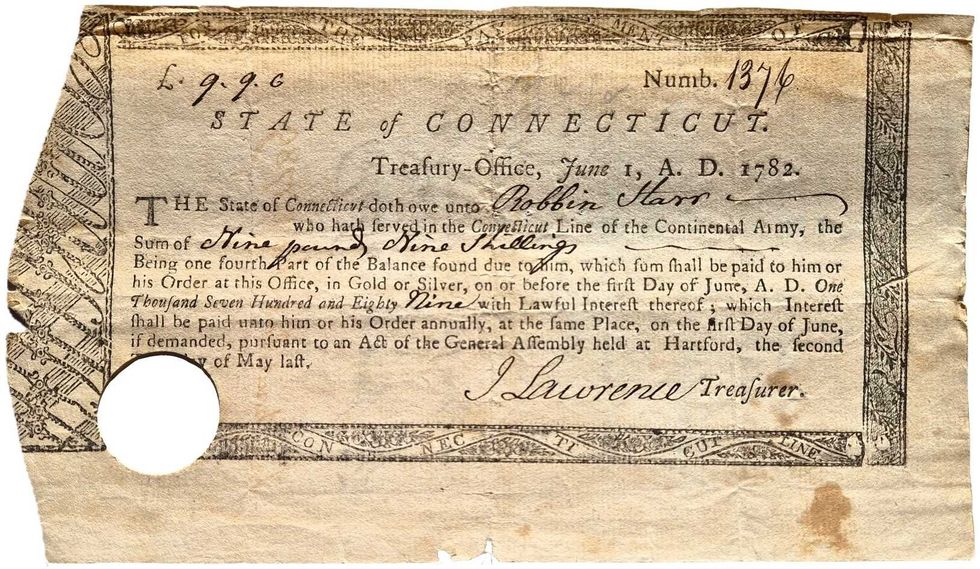
Respect for their competency and knowledge is reflected in the fact that neither has ever been challenged for their positions. They are proud to carry on the legacy of those who came before them: Dinneen is only Cornwall’s 21st town clerk since 1740, while Amerighi is the 38th in Sharon since 1739. Dinneen has worked with only one first selectman (Gordon Ridgway), while Amerighi has worked with five.
While both must follow the state laws of their office, Amerighi’s duties are busier when it comes to vital records, since Sharon is a hospital town. They both agreed that working on municipal elections is the least favorite task. “They are hell,” declared Amerighi, noting the extreme detail involved in making sure everything is correct. The state and federal ones are much easier since the bulk of the work isn’t under their purview.
They both noted that election laws are constantly changing, making it difficult to keep up with the latest rules. They also don’t care for dealing with petitions, having to make clear they cannot express any views and must remain impartial to any item that may come up for a vote.
Town clerks are also responsible for issuing marriage licenses and death certificates, land records, hunting and/or fishing licenses and their favorite, dog licenses. They both give out dog biscuits to their canine visitors. Amerighi smiled as she told about one dog who insists his owner bring him into her office weekly for a treat.
The two were in accord that they bend over backwards to be of service to all.
As with any job when dealing with the public, there are stories to be told. Both receive phone calls asking about the weather from people planning to travel to their towns. One question popular among town clerk circles is posed by those seeking dog licenses. They’ll want the clerks to examine the dog to determine whether their pet is neutered or not. “We can’t answer that,” said Amerighi with a grin. “I tell them I’m not a veterinarian.”
Amerighi gets asked if she thinks motorists need snow tires when they plan on driving on one of the town’s dirt roads. Those coming for the weekend will call to ask her about the weather. Dinneen remembered one couple who came to obtain a marriage license. “He was wrapped in chains and she was pulling him. I wonder if that one lasted.”
Dinneen quipped, “The town clerk’s office is information central.” But, they lament, times have changed over the years with the use of electronics taking over for in-person contact and phone calls, which they miss.
Both emphasized the incredibly strong role the local and state town clerks’ associations have played for them and how much they’ll miss being a part of that camaraderie. “We’re like a family,” said Dinneen. “We share everything,” said Amerighi.
As they end their times in office in December, they look back with gratitude for the opportunity to have served. “It was the best experience of my life,” said Amerighi.
She plans to spend more time woodworking, painting and sewing. Dinneen will be traveling, spinning wool, knitting, gardening and being with her grandchildren. A party to honor Dinneen and retiring Tax Collector Jean Bouteiller will be held on Sunday, Dec. 7, from 1 to 3 p.m. at Cornwall Town Hall.

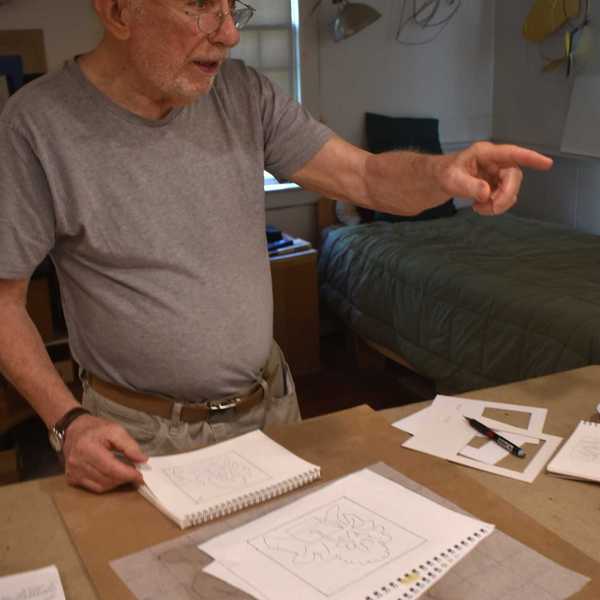
Laurie Fendrich and Peter Plagens at home in front of one of Plagens’s paintings.
He taught me jazz, I taught him Mozart.
Laurie Fendrich
For more than four decades, artists Laurie Fendrich and Peter Plagens have built a life together sustained by a shared devotion to painting, writing, teaching, looking, and endless talking about art, about culture, about the world. Their story began in a critique room.
“I came to the Art Institute of Chicago as a visiting instructor doing critiques when Laurie was an MFA candidate,” Plagens recalled.
“He was doing critiques with everyone,” Fendrich said of Plagens. “We met at one of those sessions and, well, what can I say. We fell in love instantly.”
Fendrich speaks candidly about the pressures that shaped her early life choices. “We both married the first time at 21, which a good number of women of my generation did without much thought.” Her first husband was a good guy, she says, but “we weren’t suited for each other at all, even though he suited my parents perfectly.” Her decision to get a divorce was seismic. “My mother didn’t speak to me for a year.” Time softened the rupture. “One day she told me, ‘I see now why you left.’”
Fendrich had a rigorous liberal arts education at Mount Holyoke. “I studied painting and drawing, but I also got interested in political philosophy. Plato, Aristotle, Machiavelli — Rousseau was my big guy — Tocqueville, everybody. And I still read them.” Plagens’s path was less formal. “I went to USC at 17,” he said, “and declared English as my major. It was a frat school, and I was in one for the first two years. Then I started doing the cartoons for the Daily Trojan, took a couple art classes, and thought, ‘Wait a minute, I like this.’”
Culturally, they diverged just as sharply. “I came from a fairly puritanical family that didn’t even go to the movies,” Fendrich said. Plagens, by contrast, grew up immersed in pop culture. “My father was an omnivorous reader,” he said, “and a jazz fan, and he shared these passions with me.” In 1966, Plagens walked into Artforum’s LA office and said, “I want to write reviews.” He was paid five dollars per piece. “Gasoline was 23 cents a gallon, so it went a long way.”
Over time, the couple slowly fused their educations. “He taught me jazz, I taught him Mozart,” Fendrich said with a laugh. “I’ve had a movie education from him; he read Jane Austen because of me.”

During their early years in LA, Plagens taught at USC, and Fendrich at Art Center College of Design. In 1985, they decided “our kind of abstraction would do better in New York,” as Fendrich put it. “So, we up and moved to Tribeca with $10,000 and a toddler.”
Both artists grounded their artistic careers in teaching and writing. “Teaching, which I loved, gave me the financial stability to be an artist,” Fendrich said, reflecting on her 27 years as a professor at Hofstra. “It meant that being an artist didn’t require I make money from every show. I didn’t start writing until 1999, but though I write for publication frequently, I make hardly any money at it.”
Artistically, they guard each other’s independence. “We have unspoken rules,” Plagens said. “You don’t comment on someone’s work while they’re in the middle of creating it.” Critique comes by invitation only. “He’s not mean, just direct,” said Fendrich. Over time, their aesthetics have subtly converged. “My work has gotten cleaner from looking at his,” she said. “He’s gotten more colorful because of me.”
The two have had several two-person exhibitions. At a recent duo show at the Texas Gallery in Houston “Laurie’s paintings flew off the wall,” Plagens recalled. “Me, well, not so much.”
Plagens’s parallel career in journalism shaped their lives in tangible ways. He worked as art critic at Newsweek from 1989 until 2003 and currently contributes reviews of museum exhibitions to The Wall Street Journal. “Being at Newsweek was one of the luckiest breaks I ever had,” he said. “They paid me to see things I would gladly pay to see.”
Their creative processes mirror their personalities. “I start with a specific idea,” Fendrich said, “and then modify things as I paint.” Plagens laughed. “I start with complete mush, just blurting it out and spending the rest of the time fixing it.”
In 2019, they made what Fendrich calls “a decision of contraction.” They left the TriBeCa loft they had lived in for three decades, sold their Catskills home with its large studio, and moved full-time to a former auto repair shop in Lakeville, now a house where each has a studio, and the ground floor retains the open feel of a loft.
What sustains them in life, art and love, decades in, are endless conversations — and arguments — about art, history, exhibitions, books and movies. That exchange, ongoing and rigorous, may just be the masterpiece of their shared life.
Hyalite Builders is leading the structural rehabilitation of The Stissing Center in Pine Plains.
For homeowners overwhelmed by juggling designers, architects and contractors, a new Salisbury-based collaboration is offering a one-team approach from concept to construction. Casa Marcelo Interior Design Studio, based in Salisbury, has joined forces with Charles Matz Architect, led by Charles Matz, AIA RIBA, and Hyalite Builders, led by Matt Soleau. The alliance introduces an integrated design-build model that aims to streamline the sometimes-fragmented process of home renovation and new construction.
“The whole thing is based on integrated services,” said Marcelo, founder of Casa Marcelo. “Normally when clients come to us, they are coming to us for design. But there’s also some architecture and construction that needs to happen eventually. So, I thought, why don’t we just partner with people that we know we can work well with together?”
Traditionally, homeowners hire designers, architects and contractors separately, a process that can lead to miscommunication, budget overruns and design revisions once construction begins. The new partnership seeks to address those challenges by creating a unified team that collaborates from the earliest planning stages through project completion.
“We can explore possibilities,” Marcelo said. “Let’s say the client is not sure which direction they want to go. They can nip that in the bud early on — instead of having three separate meetings with three separate people, you’re having one collaborative meeting.”
The partnership also reflects an expanded view of design, moving beyond surface aesthetics to include structural, environmental and performance considerations. Marcelo said her earlier work in New York City shaped that perspective.
“I had a 10-year career in New York City designing townhouses and penthouses, thinking about everything holistically,” she said. “When I got here and started my own business, I felt like I was being pigeonholed into only the decorative part of design. With the weight of an architect on our team now, it has really helped us close those deals with full home renovations, ground up builds and additions.”
The team emphasizes what it describes as high-performance design, incorporating modern building science, energy efficiency and improved air quality alongside aesthetic goals.
“If you’re still living inside 40-year-old technology and building techniques, we haven’t really handed off the best product we could,” said Soleau. “The goal is to not only to reach that level of aesthetic design but to improve the envelope, improve the living environment within a home and bring homes up to elevated standards of high-performance building.”
This integrated approach has proven particularly useful for renovation projects, where modern materials and systems can be thoughtfully incorporated into older structures. The firms also prioritize durability and long-term functionality, often incorporating antiques, vintage elements and high-quality materials designed to support clients’ lifestyles.
“I’m very big on investing in pieces that are going to be quality and last you the test of time,” Marcelo said. “Not just designing for a five- to 10-year run, but really designing for the long haul.”
The collaboration is already underway on several projects, including a major renovation in Sharon that involves rebuilding a 1990s modular home to maximize views while upgrading structural and performance systems. The firms are also exploring advanced visualization technology that would allow clients to experience projects through virtual reality before construction begins.
“For me, as somebody who wants to take the project all the way from beginning to end and make the process as effortless as possible for my client, it’s easier to do that with collaboration and a team than to do it alone,” Soleau said. “Most clients, especially second-home owners, want a team that can lead the project from concept through completion; aligning design, budget, and construction.”
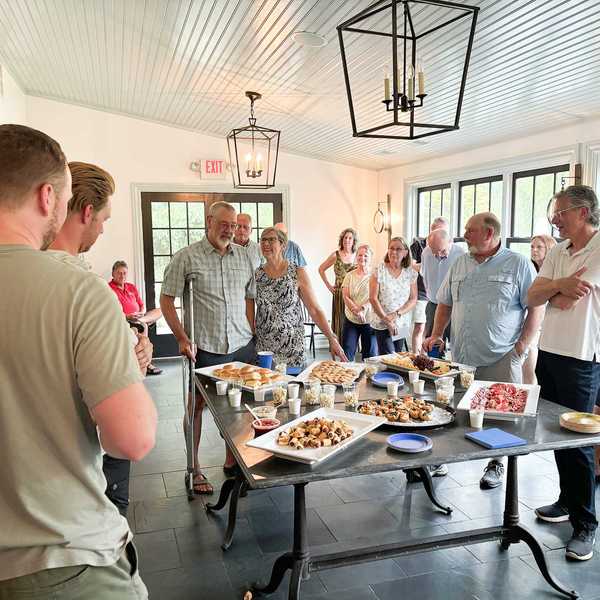
On Feb. 19, the three firms will officially launch the initiative at an invitation-only event at The Stissing Center in Pine Plains, where Hyalite Builders is leading the structural rehabilitation of the historic building. A limited number of “hard hat tour” reservations will be available by request, providing rare, behind-the-scenes access while work is actively underway. Those interested in attending may contact event organizer Lauren Fritscher of Berkshire Muse at hello@berkshiremuse.com.

Want more of our stories on Google? Click here to make us a Preferred Source.
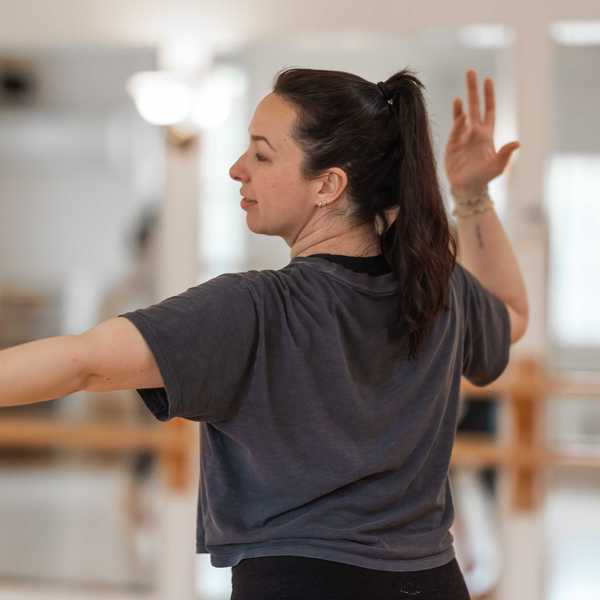
Autumn Knight will perform as part of PS21’s “The Dark.”
This February, PS21: Center for Contemporary Performance in Chatham, New York, will transform the depths of midwinter into a radiant week of cutting-edge art, music, dance, theater and performance with its inaugural winter festival, The Dark. Running Feb. 16–22, the ambitious festival features more than 60 international artists and over 80 performances, making it one of the most expansive cultural events in the region.
Curated to explore winter as a season of extremes — community and solitude, fire and ice, darkness and light — The Dark will take place not only at PS21’s sprawling campus in Chatham, but in theaters, restaurants, libraries, saunas and outdoor spaces across Columbia County. Attendees can warm up between performances with complimentary sauna sessions, glide across a seasonal ice-skating rink or gather around nightly bonfires, making the festival as much a social winter experience as an artistic one.
The Dark’s lineup includes several world and U.S. premieres. Highlights include Thomas Feng performing “Night Prayers,” a program of compositions by late Ethiopian composer and Orthodox nun Emahoy Tsegué-Maryam Guèbrou; Phil Kline’s outdoor participatory score “Force of Nature (February);” an audiovisual collaboration between composer David Lang and Academy Award-nominated filmmaker Bill Morrison; an interdisciplinary performance by Lee Ranaldo of Sonic Youth and multimedia artist Leah Singer; and “We Survived the Night: A Coyote Story in Four Parts” by Julian Brave NoiseCat.
For more information about The Dark or to purchase tickets, visit ps21chatham.org/the-dark
Exterior of the Linde Center for Music and Learning.
The Tanglewood Learning Institute (TLI), based at Tanglewood, the legendary summer home of the Boston Symphony Orchestra, is celebrating an expanded season of adventurous music and arts education programming, featuring star performers across genres, BSO musicians, and local collaborators.
Launched in the summer of 2019 in conjunction with the opening of the Linde Center for Music and Learning on the Tanglewood campus, TLI now fulfills its founding mission to welcome audiences year-round. The season includes a new jazz series, solo and chamber recitals, a film series, family programs, open rehearsals and master classes led by world-renowned musicians.
“We have been thrilled and humbled to see the Tanglewood Learning Institute embraced as a year-round destination for a breadth of exceptional programming, including classical, jazz and family-friendly events,” said BSO President and CEO Chad Smith. “Our 2025–26 fall, winter and spring season reflects our deepening commitment to engaging the vibrant, year-round Berkshires community and to fully exploring the potential of TLI as a space where BSO programs make thought-provoking connections between music, art and society.”
TLI is once again presenting its Chamber Concerts series on Sunday afternoons, with small ensembles of BSO musicians performing familiar favorites and classic mainstays, as well as new music by contemporary composers. There are upcoming chamber concerts scheduled for Feb. 22, March 8 and March 15.

New this season is the TLI Jazz series, which continues March 20 with the Sullivan Fortner Trio, led by Grammy Award-winning artist and educator Sullivan Fortner, whose eponymous ensemble won the 2024 DownBeat Critics Poll for Rising Jazz Group. “Soul-sax sensation” Nick Hemp brings his free-blowing blend of “barroom excitement and modern jazz finesse” for a rousing night of soul jazz April 10. Rounding out the jazz series, and back by popular demand, is Grammy Award-winning trumpeter and singer Jumaane Smith, who brings his repertoire of jazz and American Songbook standards to the Linde Center on May 9.
Another season highlight comes April 12 with an animated live concert screening of the 3D stop-motion adventure film “Magic Piano.” Produced by the Academy Award-winning BreakThru Films production company in Poland, the film will be accompanied by a screening of “The Chopin Shorts,” a collection of animated films set to Chopin’s etudes, performed by pianist Derek Wang.
All performances take place in Studio E, the Linde Center’s 4,000-square-foot multiuse room that serves as TLI’s main performance and event space. It features retractable seating, acoustic and technical systems, flexible configurations, and is accessible and comfortable for all patrons.
The entire Linde Center for Music and Learning is worth a visit in itself. The complex, which also includes the informal Cindy’s Cafe (seasonal) for a quick bite, is conceived not as a single building but as a cluster of pavilion-like spaces connected by an outdoor covered walkway and arranged around a century-old red oak tree. The center promotes a welcoming and serene sense of place and continuity with the rolling Tanglewood lawn and surrounding woodlands.
Smith said, “This ongoing work is also a passion project for our musicians, who form deep ties to the area and are eager to remain active in the Berkshires beyond the summer months. We look forward to welcoming new and returning audiences to experience all that TLI offers — all year long.”
The Tanglewood Learning Institute is located at 3 W. Hawthorne Road, Lenox, Mass. For more information and to purchase tickets,
visit bso.org/tli.
Natural light can be a powerful tool for wellness.
Wellness is often framed as something we do — a dog walk, a yoga class, a healthy resolution. But as we retreat indoors in winter, we are reminded that wellness is also something we live inside. Our homes quietly influence how we breathe, sleep, focus and feel — sometimes for better, sometimes not.
Interior design for wellness is less about color and style trends and more about intentional choices. Specialty designers create spaces aligned with the health-first framework of the World Health Organization’s guidelines. But with some basic knowledge, homeowners can borrow from that playbook and embrace wellness at home.
One of the most overlooked elements of a healthy home is air quality. In winter — especially this one, thanks to seemingly endless frigid temperatures — windows stay shut. As a result, heating systems run constantly and indoor air can become more than just stale. Many common household items — synthetic rugs, vinyl flooring, pressed-wood furniture, harsh cleaners and scented room sprays — release volatile organic compounds, or VOCs, that linger long after use or installation. Headaches, poor sleep and respiratory irritation are often traced back to what is quietly circulating in a home’s air.
Choosing natural materials makes a measurable difference. Wool rugs, for example, are naturally stain-resistant, biodegradable and free of the chemical treatments found in many synthetic alternatives. Wool helps trap airborne pollutants because it contains keratin, a naturally occurring protein that interacts with those particles, improving indoor air quality over time. Solid wood furniture, natural stone and low-VOC paints offer similar benefits, especially in bedrooms and living spaces where we spend the most time.
Light is another powerful wellness tool. Natural daylight regulates circadian rhythms, lifts mood and improves focus. Keep window treatments simple during the day. Trim back heavy drapery. Position seating to catch morning or afternoon sun. Even reflective surfaces — a mirror opposite a window or a lighter wall color — can amplify daylight without adding glare.
Just as important as letting light in is knowing when to shut it out. Good sleep thrives on darkness. Bedrooms benefit from blackout shades or lined drapery with minimal light bleed at the sides. Correctly measured and installed window treatments are key to blocking streetlights, early morning sun and winter glare off snow. Layering a rattan Roman shade with light-filtering drapery panels allows flexibility — bright and airy by day, cocooned and calm by night. This balance between exposure and protection is central to wellness-focused design.
Scent and atmosphere matter as well. Candles may seem like a small detail, but they play a significant role in air quality. Many are made from paraffin wax, a petroleum byproduct that releases toxins when burned. Beeswax or soy candles, especially those scented with essential oils rather than synthetic fragrances, burn cleaner and more slowly. I follow a simple, non-scientific rule: If a candle smells unbearably overpowering when the lid comes off, the ingredients are likely problematic. Price point can also be an indicator — not always, but inexpensive often means artificial and unsafe.
Sound and softness also contribute to well-being. Hard surfaces amplify noise, subtly increasing stress levels. Area rugs, upholstered furniture, curtains and bookshelves help absorb sound, making a home feel calmer. In open-concept spaces especially, these elements can dramatically improve comfort without altering architecture.
Finally, consider what you see first and last each day. Clutter increases cognitive load; calm visuals allow us to rest. Edit surfaces, simplify and restock nightstands and create intentional pause points — a chair by a window, a softly glowing lamp beside a favorite book, a clear kitchen table that feels welcoming in the morning.
Designing for wellness does not require a full renovation. It begins with awareness: what you breathe, what you touch, what you see in the quiet hours.

Want more of our stories on Google? Click here to make us a Preferred Source.

Want more of our stories on Google? Click here to make us a Preferred Source.