Thank you!
Your support is sustaining the future of local news in our communities.

Cause dictates the treatment

DEAR DR. GOTT: My healing wasn’t complete a year following rotator-cuff surgery. My shoulder became red and swollen. My doctor opened it up to see what was going on and found “rice bodies†— thousands of them. I understand this is a rare thing and that little is known about the cause or the treatment. I am specifically interested in knowing what antibiotics should be used. I am now on infusion therapy. Also, could these be elsewhere in my body?

DEAR READER: Identified and documented as far back as 1895, rice bodies were originally thought related to tuberculous arthritis. The name originated because of a similarity in appearance to grains of polished white rice.

Today, rice bodies are commonly linked with chronic rheumatoid arthritis (RA), as a complication of bursitis or an underlying systemic disorder. They appear to represent an unrelated group of particles that may contain fibrin, fibronectin, mononuclear and blood cells, collagen and amorphous materials.

Diagnosis is accomplished through X-ray, ultrasound or MRI. I cannot tell you which antibiotic to take because management depends on the underlying cause. For example, if your rice bodies are the result of chronic bursitis, an antibiotic may not be appropriate. Only your physician can direct you in that regard. Elimination of the offender in conjunction with treatment for any possible underlying disease should provide relief.

Infusion therapy is a means of administering medication through a needle or catheter intravenously. Infections and disorders unresponsive to oral medications, dehydration, diseases of the gastrointestinal tract, congestive heart failure and immune deficiencies are commonly handled through this form of therapy.

Thirty years ago, patients being infused were required to remain in the hospital for the duration of the treatment. However, with expenses as they are in a hospital setting, the same service can now be provided in an outpatient setting or at home.

I remember when a woman remained in hospital for close to a week following childbirth. Surgical patients undergoing relatively simple procedures spent almost the same amount of time recuperating before being sent home. Now, however, the sooner a patient returns to normal activity, the better.

Rice bodies can be found in joint areas such as the shoulder, knee or ankle. If your condition is the result of chronic bursitis or RA, multiple joints can be affected, but I can’t guess whether that will occur in your case.

To provide related information, I am sending you a copy of my Health Report, “Managing Chronic Pain.†Other readers who would like a copy should send a self-addressed stamped No. 10 envelope and a $2 check or money order to Newsletter, PO Box 167, Wickliffe, OH 44092-0167. Be sure to mention the title or print an order form off my Web site at AskDrGottMD.com.

DEAR DR. GOTT: Many publications have inserts in them for discounts on prescription drugs. When I see these, I tear them out, take them to my pharmacy, and present them at the window where prescriptions are filled. Employees save them to use for customers who don’t have insurance. Why do I do this? Because I have insurance and can help others who do not.

DEAR READER: Target and Wal-Mart offer $4 prescriptions for a one-month supply of medication. There may be other large chains I am unaware of that provide a similar program.

This is of enormous assistance to everyone, but primarily those on a fixed income who must watch every penny.

Over the years, I have known patients who cut their medication in half, making a prescription last twice as long. If we all take your lead and make an effort to help others in similar ways, we will be doing something good for our communities and perhaps might even feel better about ourselves.

Peter Gott practiced medicine in Lakeville for 40 years.
Latest News

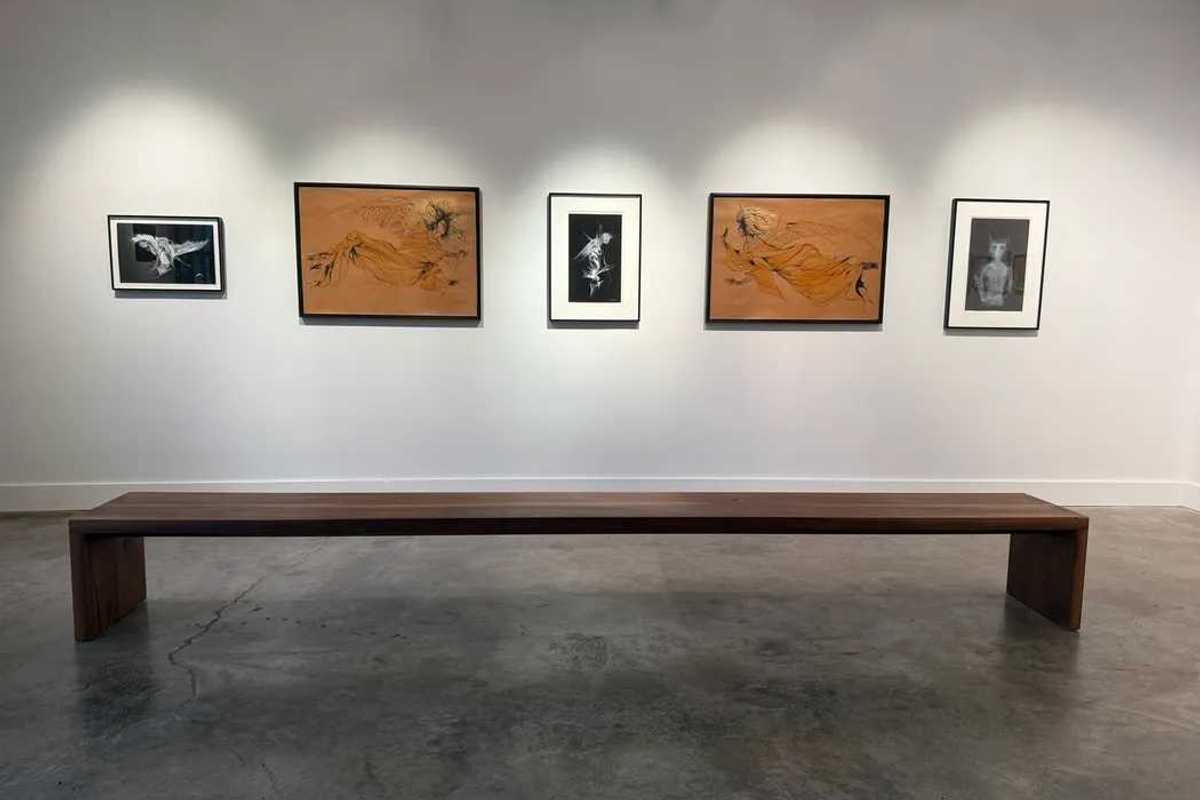
‘So Little to Do,’ so much to discover at James Barron Art

Curator Deborah Goodman Davis reads the Emily Dickinson poem “The Grass So Little Has to Do.” Spencer Finch’s “Following Three Bees (Zinnias)” buzzes in the background.

Photo by Natalia Zukerman

“The Grass Has So Little to Do,” on view at James Barron Art in Kent, takes its title from Emily Dickinson’s poem “The Grass So Little Has to Do,” written in 1862:

“The Grass so little has to do—
A Sphere of simple Green—
With only Butterflies to brood
And Bees to entertain—”

Keep ReadingShow less

Marina Kotchoubey is not a woodworker

Marina Kotchoubey is not a woodworker

Marina Kotchoubey at the Ian Ingersoll Cabinetmakers showroom in West Cornwall.

Photo by D.H. Callahan

After 40-something years navigating the world of custom fine furniture, Ian Ingersoll was getting ready to retire. Starting off with a little dovetail stool that he sold at a shop in West Cornwall in the 1970s, he’d grown his skill and his business into something he — and the whole town — could be proud of. Shutting down that business was not an option.

Ingersoll built Ian Ingersoll Cabinetmakers, which produced mainly classical Shaker furniture, on passion: the passion he had to make a living through creative challenges and the passion of his employees, who all seem deeply in love with their craft.

Keep ReadingShow less
A legacy of giving at Norfolk Chamber Music Festival

One hundred and twenty years ago, Carl and Ellen Stoeckel commissioned New York architect E.K. Rossiter to design The Music Shed in Norfolk, Connecticut. After nearly a decade of entertaining their friends and neighbors with the finest music of the day, they built a permanent home for their beloved Litchfield County Choral Union.

The commission and full funding of the construction was not unheard of in an era when great fortunes led to public enrichment. Railroad tycoon John D. Rockefeller was instrumental in funding institutes of higher education. Steel baron Andrew Carnegie was building libraries all over the country, and famously said that a man who dies rich is a disgrace, challenging his peers to give their fortunes back to the people.

Keep ReadingShow less
google preferred source

Want more of our stories on Google? Click here to make us a Preferred Source.

Two unique exhibitions at Geary Gallery

Henry Klimowicz with his sculpture, “Partial Pillar 1”

Photo by D.H. Callahan

On Saturday, Aug. 1, Geary Gallery opened its doors in Salisbury for two unique shows in its first- and second-floor gallery spaces. Art lovers flooded both floors over the course of the afternoon, giving the events a vibrant feeling that enhanced the importance of the art.

On the first floor is a show by Chicago-born, Colorado-based photographer Summers Moore, titled “Lobitos: Pueblo Fantasma,” or “Lobitos: Ghost Town.” The work centers around her daughter’s current hometown in Peru. Moore herself found a home away from home in Colorado in the mid-1980s and encouraged her children to seek out new places outside of their comfort zones.

Keep ReadingShow less

Writer’s retreat in the woods

Writer’s retreat in the woods

Participants in a 2024 Great Mountain Forest Woodland Academy workshop at Yale Camp.

Photo by Mike Zarfos

Great Mountain Forest (GMF) will host its first Nature Writing Retreat at the historic Yale Camp in Falls Village from Aug. 7-9, 2026. Writers of all levels are invited to draw inspiration from one of New England’s most notable forest landscapes. GMF envisions the retreat becoming an annual event celebrating writing, conservation and the relationship between people and forests.

This immersive three-day retreat reflects on the legacy of Hal Borland, the American writer and New York Times nature columnist whose work was deeply connected to this landscape. The retreat explores how wilderness shapes language, strengthens close observation and fosters environmental consciousness.

Keep ReadingShow less
From Cornwall to Rome, Adam Van Doren at Berkshire Botanical Garden

Artist Adam Van Doren and curator Donna Hassler talk to a group of visitors at the Berkshire Botanical Garden. A Stephen Proctor vessel sits to their left.

Photo by Natalia Zukerman

This summer, the Berkshire Botanical Garden in Stockbridge has hosted “Grounded in Nature: Paintings by Adam Van Doren,” an exhibition exploring the intimate relationship between architecture and the natural world.

On view for only a few more weeks in the Leonhardt Galleries, the exhibition features more than 35 watercolor and oil paintings by the New York-based artist, architect, author and Yale professor, curated by art historian Donna Hassler, director emerita of Chesterwood. The works span three distinct places that have shaped Van Doren’s artistic practice: New York City, Cornwall, Connecticut, and his travels throughout Europe.

Keep ReadingShow less
google preferred source

Want more of our stories on Google? Click here to make us a Preferred Source.

google preferred source

Want more of our stories on Google? Click here to make us a Preferred Source.