Latest News
Stonewood Farm launches chefs in residence program
Natalia Zukerman
Jun 17, 2026
Jocelyn Ueng is the first Chef in Residence at Stonewood Farm.
Provided
Stonewood Farm in Millbrook is expanding its educational and community food programs this summer with the launch of a new Chefs in Residence program, an eight-week immersion that brings culinary professionals to the nonprofit farm to live, cook, teach and work alongside farmers.
The program is led by Kristen Essig, Stonewood’s director of culinary outreach and development, an award-winning chef whose background includes work with Emeril Lagasse and multiple James Beard Award nominations.
“This is an opportunity for chefs to step outside the traditional restaurant environment and engage with farming, food access and community outreach,” Essig said.
The idea grew out of Stonewood’s broader mission and from a model more commonly associated with artists and writers than chefs.
“There are artist residencies everywhere,” Essig said. “But there are very few opportunities for chefs to have that same kind of dedicated time and space to think about their work outside the pressures of a restaurant.”
Founded by Ken Holzberg and Tom Kopfensteiner, Stonewood Farm began as a wooded 15-acre property that the pair spent years building before launching agricultural operations in 2013. The farm became a nonprofit in 2021 and now combines organic farming, educational programming and food justice initiatives.
Among those efforts is the First Harvest Food Pantry, which distributed fresh produce and prepared foods to approximately 2,800 food-insecure neighbors during the 2025 growing season through partnerships with local organizations including Meals on Wheels.
The inaugural residency cohort includes two chefs with extensive national and international experience.
Jocelyn Ueng, a Taiwanese-Chinese American chef, forager and former nonprofit professional, arrives this week for the first session, which runs through Aug. 7. Ueng has cooked at renowned restaurants including Noma, The French Laundry and Satoyama Jujo, and is currently developing a Hudson Valley restaurant slated to open in 2027.
The second residency session, Aug. 17 through Oct. 9, will feature Chatham native Daniel Conkling, a Culinary Institute of America graduate whose career has included Restaurant Daniel in New York City, Battersby in Brooklyn and Seattle’s L’Oursin. Conkling plans to lead workshops focused on food preservation, including pickling, canning and jam making.
In addition to cooking, the resident chefs will mentor Stonewood’s culinary assistant, Gabriella Hernandez, participate in youth education programs, contribute to prepared-food outreach efforts and work directly with the farm’s organic growing operation.
Essig said that connection to the land is central to the residency’s purpose.
“The farm creates a different pace,” she said. “Chefs spend so much time in kitchens that they don’t always get to see the larger picture. Here they can spend time in the garden, work alongside farmers, participate in community programs and really think about what food can do.”
The residency is one of several new and ongoing programs at Stonewood this season.
On July 11, the farm will host a flower-arranging workshop with Kate Farrar of Foxtrot Farm & Flowers. Additional workshops planned for later in the year include edible flower cake decorating and botanical pantry-making.
Stonewood’s guest chef Sunday Harvest Dinner series continues June 28 with chef Jovana Urriola, followed by dinners featuring Andrea Reusing on July 26, Jill Mathias and Juan Cassalett on Aug. 23, and Christine Lau on Sept. 20. The dinners showcase produce grown on the farm alongside ingredients from regional producers.
Visitors can also attend Stonewood’s seasonal on farm pop-up farm markets every other Friday, which offer freshly harvested vegetables, flowers, eggs, baked goods and prepared foods.
For Essig, the residency program reflects Stonewood’s larger mission.
“Chefs have an important role to play in local food systems,” she said. “We want to create opportunities for them to connect more deeply with agriculture, education and community service while continuing to develop their craft.”
For information about upcoming events and programs, visit stonewoodny.org and follow @stonewoodny on Instagram.
Keep ReadingShow less
A rare look inside Connecticut’s Colonial-era homes
Natalia Zukerman
Jun 17, 2026
The Hollister House, aka Whitbeck Estate, is believed to have been built circa 1780.
Provided
For anyone who has ever stopped to admire an old house and wonder what it looks like inside, HisTOURy’s Colonial Home Tour on June 20 offers a rare opportunity.
The four-hour guided tour will take participants inside four private colonial-era homes in Salisbury and Falls Village while highlighting another 20 historic properties along the route. Presented as part of HisTOURy’s series marking America’s 250th anniversary, the tour explores the architecture and history of northwestern Connecticut’s colonial settlement period.
Allison Casazza, HisTOURy’s tour research and production manager, said selecting homes involves a combination of research and experience.
“We have really well-trained eyes to say, ‘I think this would be a good house,’” she said. “And then we approach the homeowners and take it from there.”
Interior stops include the Samuel Robbins House, considered one of Falls Village’s finest examples of Federal-style architecture, and an 18th-century home once occupied by the sister of Noah Webster. The homes featured on the tour represent several architectural traditions from the colonial era, including vernacular farmhouses, Cape Cod houses and Federal-style dwellings.
“There’s a lot of symmetry in colonial architecture,” Casazza said. “The homes are much simpler in terms of how much ornamentation you can expect on them.”
Many of the architectural forms brought by settlers from England and Holland evolved in response to local conditions, she explained.
“They were bringing the styles that they knew,” Casazza said, “and then adapting them to local needs based on available materials and the harsher climate of the Northeast.”
Founded by preservationist Georgette Blau, HisTOURy focuses on cultural heritage tourism and historic preservation. The tours combine architectural history, local history and discussions about preservation with the opportunity to visit buildings that are rarely open to the public.
“What we do would fall into the category of cultural heritage tourism,” Casazza said. “We’re talking about these historic things with the purpose of promoting how much people understand them, how much people appreciate them, and hopefully planting the seeds to keep them thinking about preserving these places.”
The homeowners themselves are often part of the experience. Casazza said many participate simply because they enjoy sharing the homes they have restored and maintained.
“They’re all wonderful people that are just excited about living in a historic home,” she said. “They love it so much that they want to show it to a bunch of strangers.”
When homeowners are present, visitors hear firsthand about restoration projects, maintenance challenges and daily life in centuries-old houses.
“It means a lot to hear from them,” Casazza said.
The Colonial Home Tour runs from 2 to 6 p.m. on June 20. Information and tickets are available at histoury.org
Keep ReadingShow less
Local garden centers spotlight keystone plants
Dee Salomon
Jun 17, 2026
Eric Mendelson, owner of Salisbury Garden Center, stands with a selection of keystone native plants now available through a partnership with Homegrown National Park.
Michelle Alfandari
The Ungardener from May 13 was about a specific group of native plants called keystone plants. These are the ecosystem workhorses of our environment; they are essential to the survival of many animals that rely on them for food. Nutrition in this case includes, but goes beyond, nuts and pollen. It is the leaves of keystone native plants that make them superheroes. These leaves are essential to the survival of butterfly and moth caterpillars that, in their larval state, will eat only the leaves of very specific native plants.
And in this case, eating leaves is a good thing because caterpillars are relied upon by birds to feed their hatchlings. A single baby bird will be fed approximately 3,000 caterpillars from hatching to fledging; for most species, caterpillars are the sole source of food until they leave the nest. As native plants decrease, which they rapidly are, so do the numbers of caterpillars that rely on them. And as caterpillars decrease, so do the numbers of birds that rely on them.
Planting keystone species goes a long way toward restoring food webs: a serviceberry, or shadblow tree, supports 119 caterpillar species, pussy willow supports more than 400 and oak supports more than 500. While these particular plants are not hard to find in nurseries, other keystone plants, such as highbush blueberry and smooth blue aster, can be difficult to find at retail. Nurseries and garden centers tend to favor showier plants with greater shelf presence.
I dwell on the topic of keystone plants because Homegrown National Park, the organization co-founded by scientist and author Doug Tallamy, whose research on caterpillars led to our understanding of native plants’ role in food webs, and Sharon resident Michelle Alfandari, is partnering with three garden centers in the Northwest Corner to specifically promote Tallamy-designated keystone plants. There it is — a solution, and a local one at that!
Ward’s Garden Center in Great Barrington, Salisbury Garden Center and Paley’s in Amenia are now carrying ample inventory of beautiful keystone trees, shrubs and flowering plants in addition to the native plants they regularly stock.
“Every year we have seen an increase in customers asking for and buying native plants, so this partnership with Homegrown National Park is a great extension of the demand we are already seeing,” said Eva Ward of Ward’s Garden Center.
When you arrive at one of these garden centers — and I hope you will go this week — look for the “Homegrown National Park Native Plant Center” banner. Individual plant signs help inform customers about each keystone plant: what it looks like in bloom, its best growing conditions and why it is critical to butterflies, birds and other wildlife, including humans.
At Paley’s, owner Sarah Coon finds the signage a big step forward.
“Our customers and staff can now easily identify the native plants that will thrive in their gardens,” she said.
QR codes can be scanned for more information about each plant and to get on the HNP Biodiversity Map, which documents the number of people and acres being transformed through native plantings. The map currently records nearly 50,000 people committing more than 170,000 acres to native planting.
For Homegrown National Park, this program is a pilot it would like to expand nationally.
“A core objective of HNP is to make it easier for people to get started and making it easy to shop for productive native trees, shrubs and perennials does just that,” said Alfandari. “The leaders of these garden centers are visionary catalysts for positive change. They are passionate about making a difference and spreading the facts about native plants to their customers.”
For more information, visit homegrownnationalpark.org
Dee Salomon ungardens in Litchfield County.
Keep ReadingShow less

Want more of our stories on Google? Click here to make us a Preferred Source.
Books & Blooms returns with gardens, poetry and a summer evening party
Natalia Zukerman
Jun 17, 2026
A Cornwall garden featured on the Books & Blooms self-guided tour.
Provided
One of Cornwall’s most anticipated summer traditions returns June 20 and 21 when the Cornwall Library presents the 11th annual Books & Blooms, a two-day celebration of gardens, literature and community.
Part garden tour, part literary event and part neighborhood gathering, Books & Blooms begins Friday evening with a talk by acclaimed editor, poet and author Jonathan Galassi at Cornwall Town Hall. Galassi, former president and publisher of Farrar, Straus and Giroux and one of the most influential figures in American publishing, will speak on “Writing about Place and Living with a Garden.”
“Friday evening is fun because you start out listening to a learned and sometimes humorous take on your passion — or your partner’s passion — gardening,” said event organizer Kirk Van Tassel. “Then you proceed to the cocktail party on a beautiful evening, talking to friends old and new, including the speaker.”
Galassi is the author of four poetry collections, including his latest, “The Vineyard,” and has translated the works of Italian literary giants Giacomo Leopardi, Primo Levi and Nobel Prize winner Eugenio Montale. His poems have appeared in publications including The New Yorker, The Nation and The Threepenny Review.
Following the presentation, guests can walk next door to the Cornwall Library for a cocktail reception featuring live music by the Crownback Funk Trio, whose performances blend funk, blues and jazz.
The festivities continue Saturday with self-guided tours of four private Cornwall gardens, three of them appearing on the tour for the first time.
The featured landscapes range from exuberant village plantings and a traditional country garden that blends seamlessly into its surroundings to a landscape designed for a postmodernist icon and a contemporary ravine garden marked by dramatic sculptural elements.
“Every year the committee strives to find gardens that haven’t been on the tour before,” Van Tassel said. “This year three of the four are new, so you get that sense of discovery.”
Part of the appeal, he said, is simply spending a summer day exploring Cornwall itself.
“Cornwall is a beautiful place in which to walk and drive around,” Van Tassel said. “You’ve got farmland, rolling hills and quiet country roads.”
The gardens also offer visitors a chance to learn from passionate gardeners and see a wide variety of approaches to landscape design.
“The four gardens on the tour are tended by people who love gardening and know a lot about it,” Van Tassel said. “The gardens are beautifully kept and the grounds are often wonderful.”
Books & Blooms serves as a benefit for the Cornwall Library, which has hosted the event for more than a decade. For tickets and information, visit the cornwalllibrary.org or call (860)672-6874
Keep ReadingShow less
'Swingtime Canteen'
Lakeville Journal
Jun 17, 2026
Swingtime Canteen cast in rehearsal. Left to right, Lucy Rhoades (“Katie”), Claire Marie Spencer (“Topeka”), Michelle Lemon (“Lilly”), Margaret Dudasik (“Marian”), and Sarah Beth Palmer (“Jo”)
Ellie McKissick
The Sharon Playhouse opens its 2026 MainStage season June 19, with “Swingtime Canteen,” a rousing celebration of the songs, spirit and resilience of WWII. Created by Linda Thorsen Bond, William Repicci and Charles Busch, the production features popular hit songs from the 1940’s and is directed by Playhouse Artistic Director Carl Andress, with choreography by Krystyna Resavy and music direction by Eric Thomas Johnson. Runs through July 5. Tickets at sharonplayhouse.org
House of Books Celebrates 50 Years in Kent
D.H. Callahan
Jun 17, 2026
Cathy Hoffman Miller, whose parents opened House of Books 50 years ago, holds pictures of her family.
D.H. Callahan
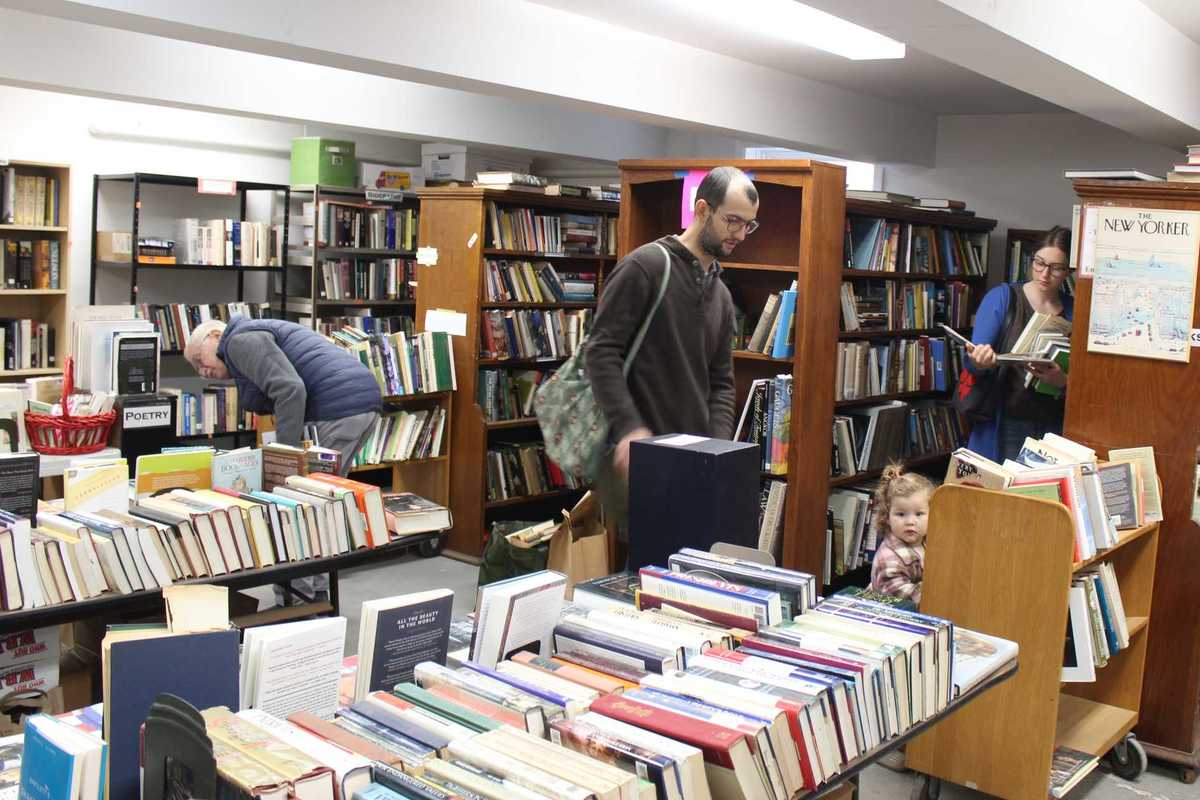
KENT – In 1976, John Miller, a teacher at the Berkshire School, quit his job, moved his family to Kent, Connecticut, and opened up a little book store. Fifty years later, the House of Books is still thriving as a small independent book store, and community hub.
To celebrate the rare feat of small business endurance, the House of Books invited customers, employees, and even a few Appalachian Trail through-hikers to celebrate with gentle jazz guitar, a full spread from beloved local eatery, Swyft, and of course, a whole house of books.

Among the attendees was Cathy Hoffman Miller, daughter of John and Carol Hoffman the original owners. Cathy wasn’t even a teen yet when the family settled down in Kent, after years of bouncing from boarding school to boarding school.
While she was happy to establish roots in the quintessentially quaint New England town, it quickly became apparent that this new business was going to be a family affair. Cathy and her sisters were put to work keeping the wire racks full of noir and wester paperbacks, and the shelves stacked with new releases. The sisters would soon enlist their friends to help out with the annual new year’s day inventory counts in exchange for free pizza from the Kent Pizza Garden, one of a handful of businesses still open today.
With a thriving art community in the area, famed mid-century painter, Eric Sloane utilized the store as a base for distributing his art books, often coming into the store to sign copies which House of Books would ship all over the country. They even converted the back of the store into an art gallery for a time, setting the stage, in a way, for today’s Kent Barns galleries.
The House of Books was clearly more than just a store. Kent residents would treat the shop as a place to hang out, taking their time to socialize and fraternize while leafing through pages. Buying something seemed like a secondary priority to gathering together to shoot the breeze. That was just fine with the House of Books.

Of course, this was all long before the fatal one-two blows of Big Box bookstores, and the online onslaught from Amazon. When the House of Books opened 50 years ago, there were an estimated 10,000 bookstores operating in the United States. In 2019, there were fewer than 2,000.
But manager Ben Rybeck believes the pendulum is swinging back in favor of the little guy. Rybeck was hired as the manager of the House of Books in April of 2020, a time when the whole world was shut down, and in-person shopping was a thing of the past. He witnessed first hand how the community rallied together to support the store that had been there for them over the decades.
Using online tools made more available to small businesses, customers were able to shop the House of Books inventory, sending their purchases directly to their homes, or picking them up outside the store. It was a great chance for the community to be there for House of Books, who had been there for the community for 50 years.
The next 50 years may be hard to predict, but Rybeck seems to be right about one thing. The pendulum is indeed swinging back. Since the pandemic, the number of small, independent bookstores across the country has nearly doubled. That fact, just like 50 years of this beloved store, is truly something to celebrate.
Keep ReadingShow less

Want more of our stories on Google? Click here to make us a Preferred Source.
loading