If you’ve driven down Main Street in Millerton, you’ve passed the former home and shop of one of the village’s earliest female entrepreneurs. At a time when most businesses were owned by men, Mary Kisselbrack made a name for herself in the late 1800s as a well-respected milliner and dressmaker.
On April 11, 1891, train conductor George Kisselbrack purchased a 124-by-232-foot vacant lot at 54 Main St. and hired locally renowned builders Beers and Trafford to design what would become their home and Mary’s business.
In a historical document, “A Beckon Call to a Village,” the house was referred to as “one of the handsomest, architecturally, in the village.” With gables, pointed roof lines and delicate shades of colors on its exterior ornamentation, the document noted that “no stranger passes it without an admiring glance.”
Today, the home still stands, and recently operated as a restaurant called Manna Dew Cafe, which closed its doors in 2023.
Mary Kisselbrack operated her business out of the west side of her home and developed a reputation for her skill, style, and business acumen.
“Mrs. Kisselbrack spares no pains in satisfying her patrons,” an 1890s Telegram article, the village’s newspaper at the time, said.
Kisselbrack’s reputation earned her customers from different parts of the country — some as far away as Florida — in addition to regular clients from Salisbury, Lakeville, Sharon, Amenia, Pine Plains, Copake and Hillsdale.
“With a woman of the long experience and exquisite taste of Mrs. Kisselbrack at the head of the millinery and dressmaking business, we may be sure that our wives and daughters will be reasonably supplied with the most stylish bonnets and dresses,” the article said.
In her 1905 obituary, Kisselbrack was described as a “self-made woman” who possessed “more than ordinary ability.”
On Oct. 5, 1905 — just over two months shy of her 56th birthday — Kisselbrack died following a severe, three-week illness. According to an obituary that appeared in the Millerton Telegram, she suffered a fibrous tumor and peritonitis.
“While she was not afraid to die, she lamented leaving home and loved ones,” the obituary said. “She talked of dying and of her funeral arrangements as calmly as if going away on a visit.”




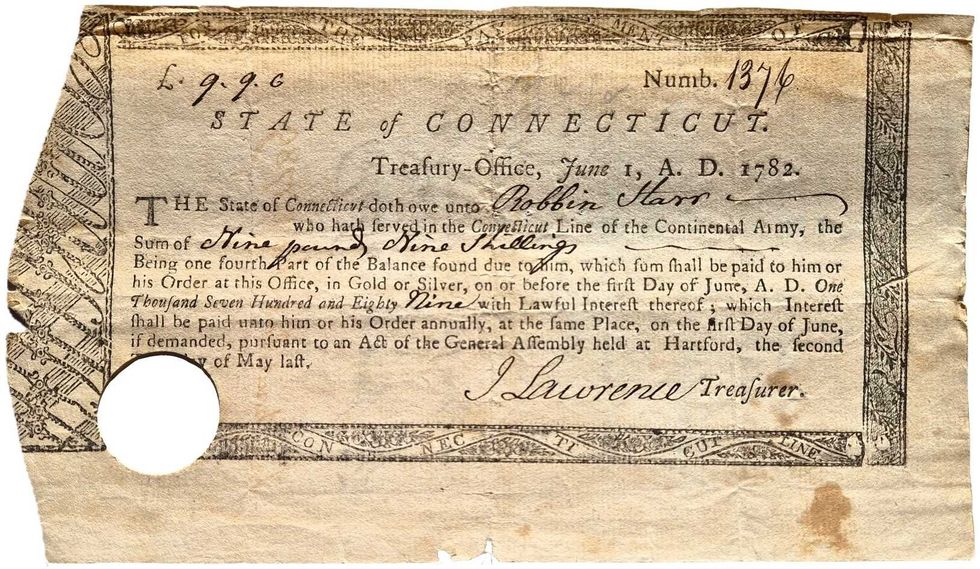 Pay Bill for Robin Starr’s service in the Continental Army.Courtesy the Alex Breanne Corporation
 John Mills speaking at Quinnipiac University.Courtesy the Alex Breanne Corporation
 Stephanie Saetta,with her rescue dog George and Blue (left), a shepherd mix awaiting his forever home.Madi Long
 Blue, a 7 year-old Shepard mix, is waiting for his forever home. Madi Long