Thank you!
Your support is sustaining the future of local news in our communities.

Lucky Orphans offers sanctuary for horses and healing for people

Lucky Orphans offers sanctuary for horses and healing for people

Deanna Hearn opened Lucky Orphans in 2003.

Provided
If horses could speak, Hearn believes they would offer just one piece of advice: “They’d tell us to slow down.”

From feeding retired racehorses before sunrise to guiding veterans, grieving parents and troubled teenagers through equine-assisted therapy sessions, Deanna Hearn rarely has a quiet day. As founder of Lucky Orphans Horse Rescue in Dover Plains, she oversees the care of more than 40 sanctuary horses while leading a nonprofit whose mission extends far beyond animal rescue.

What began as a childhood love of horses has evolved into a place where healing runs in both directions — for horses and for people. By the time you leave Lucky Orphans, it becomes clear that this place isn’t really about horses. The horses are simply how it begins. For Hearn, every rescued horse represents something much larger: hope, resilience, healing and second chances. The organization’s mission, she says, is simple: “People helping horses heal people.”

Growing up in the Bronx, Hearn was captivated whenever she saw horses. Her grandfather, a Korean War veteran, had cared for military horses during the war. After returning home, he struggled with addiction, and the invisible wounds of military service. Through every difficult chapter of his life, however, one thing consistently brought him peace.

“Horses bring peace,” he told his granddaughter.

When Hearn was 11, after years apart, Hearn and her grandfather began spending weekends riding together. Less than a year later, he was diagnosed with pancreatic cancer. Before he died, he asked family members to help buy Hearn’s first horse — a stubborn paint horse that bit, kicked and frequently threw her off. She wanted to sell him. Her father refused.

“Every life has value,” he told her.

Looking back, Hearn says that lesson became the foundation of everything she would later build.

What began as a boarding stable in 2003 took a different direction after the Dutchess County SPCA asked Hearn to care for horses seized in cruelty cases. She soon realized that although Dutchess County had one of New York’s largest horse populations, there was no dedicated nonprofit equipped to care for neglected and abused horses. Lucky Orphans officially became a nonprofit in 2008.
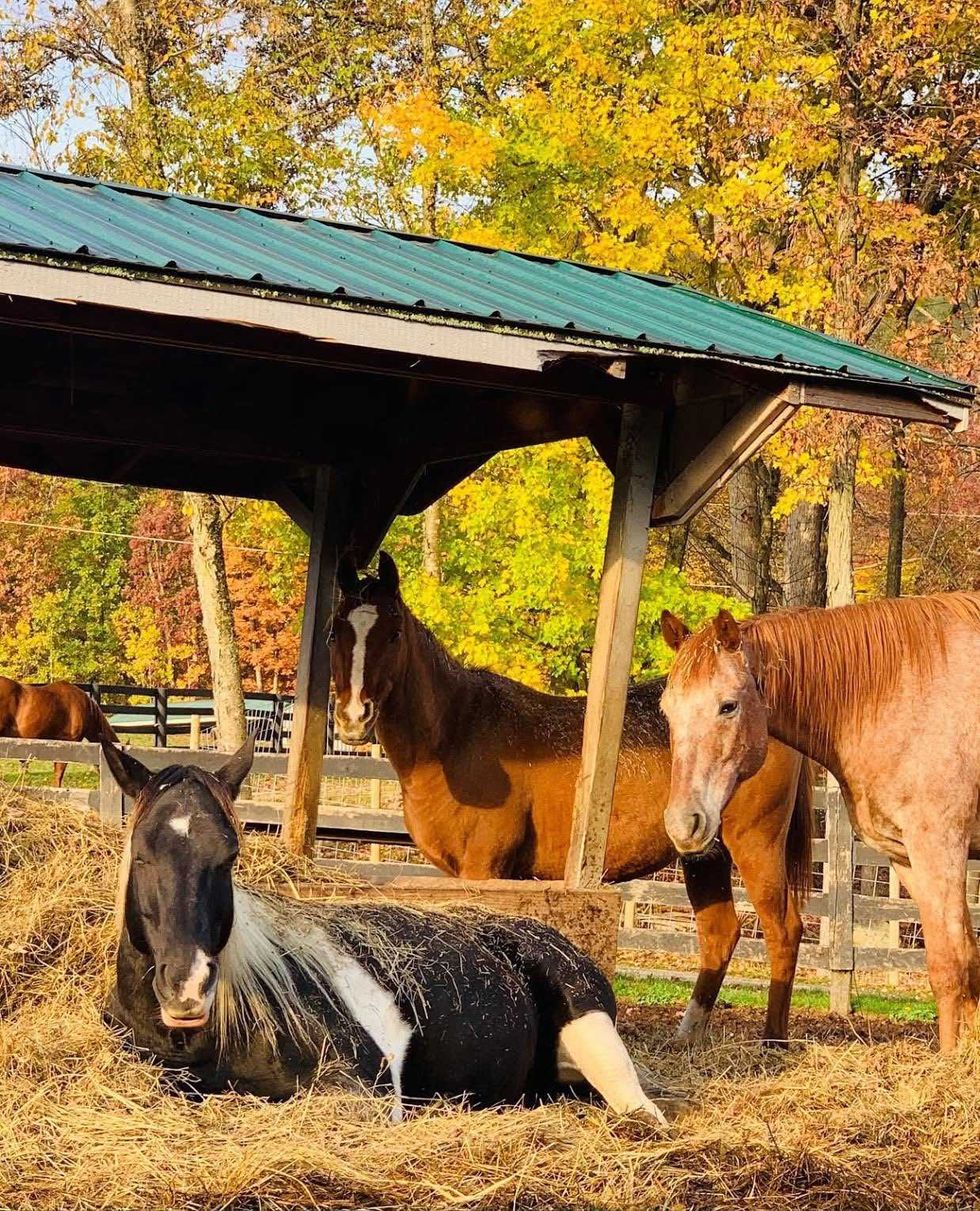
Some of the more than 40 horses at Lucky OrphansProvided

Today, Hearn is quick to point out that Lucky Orphans is not simply a rescue.

“We’re a sanctuary,” she said.

Many of the more than 40 horses living there arrive with broken bones, chronic illnesses, heart conditions, missing eyes or other injuries that make them unsuitable for riding or adoption. Rather than rehabilitating and rehoming them, Lucky Orphans makes a lifetime commitment to every horse.

In 2013, Hearn became certified in equine-assisted psychotherapy, combining her lifelong relationship with horses and the lessons she learned from her grandfather to create programs for veterans, trauma survivors, children and families facing emotional challenges. The transformations she witnesses continue to surprise her. She recalls one woman who arrived convinced she would not fit in with a group of strangers. During the session, a horse quietly chose to follow her without a rope or commands. For the first time in years, the woman said she felt truly seen.

Another memory has stayed with Hearn ever since. A teenager in a juvenile probation program, wearing an ankle monitor and struggling with anger, entered a round pen with a horse. As his frustration grew, the horse moved farther away. When he finally calmed himself, the horse walked directly toward him and rested its head against his chest.

“I told him, ‘If you can control your energy, you can control the world around you,’” Hearn said.

Stories like these sustain her through the difficult realities of running a nonprofit. Operating the sanctuary costs roughly $52,000 each month, and Hearn lives on the property, where the work never truly ends. Veterinary bills, staffing, fundraising and the daily care of dozens of horses are constant concerns. Then someone returns years later and tells her that the horses changed their child’s life.

“That’s why I keep going,” she said.

Looking ahead, Hearn hopes more people discover what makes Lucky Orphans unique. The organization is expanding its community programming with educational visits, yoga sessions, horse encounters, volunteer opportunities and family events designed to reconnect people with horses and with one another.

Her vision is simple: to create a place where people slow down, reconnect and remember something modern life often makes us forget. If horses could speak, Hearn believes they would offer just one piece of advice.

“They’d tell us to slow down,” she said.

After spending an afternoon at Lucky Orphans, it’s hard to disagree.

For more information or to plan a visit, go to luckyorphans.org
Latest News

August, one bass at a time

August, one bass at a time

This fish took a Wooly Bugger in basic black, with rubber legs. Always get the rubber legs.

Patrick L. Sullivan
Largemouth bass are not picky eaters. When engaged they usually dive and tug. Once in a while they leap. They are easily discouraged, however, and after a minute or two come meekly to the net.

Every August I shift gears and head to the ancestral HQ with no electricity, minimal plumbing and a warm-water lake chock-full of largemouth bass, not to mention smallmouth, perch, pickerel and panfish. The largemouth are the main attraction.

I used an antique rowboat for years. Then a canoe, which was awkward to manage solo, especially when the wind picked up.

Keep ReadingShow less

An outdoor festival for Broadway fans

An outdoor festival for Broadway fans

Broadway is going way off Broadway when it heads outdoors for The Festival at Hutton Brickyards in Kingston Aug. 14-16, transforming the Hudson River waterfront into a three-day celebration of show tunes, stars and sing-alongs. The inaugural event features an all-star lineup including Audra McDonald, Kelli O’Hara, Renée Elise Goldsberry, Brian Stokes Mitchell and dozens more, along with a 30th anniversary celebration of the musical “Rent” featuring original cast members.

Hutton Brickyards is a former 19th-century brickyard transformed into a historic riverfront hotel and event destination spanning 100 acres along the Hudson. Beyond the nightly concerts, festivalgoers can expect campfire sing-alongs, dance parties, master classes, costume contests and a marketplace highlighting Hudson Valley food, drinks and artisans.

Keep ReadingShow less
Crandell Theatre celebrates 100 years of film, community and Chatham history

The Crandell Theatre in 1948.

Provided
Originally built as an “atmospheric theater,” the Crandell was designed to transport audiences beyond the walls of the auditorium. Its sloped floor, proscenium arch, orchestra pit and balcony seating reflected the grandeur of early 20th-century movie palaces.

Crandell Theatre in Chatham has spent a century bringing stories to the big screen, and this December the historic theater will celebrate its 100th anniversary with a yearlong tribute to the films, filmmakers and community members who have helped keep it alive.

The celebration continues Sunday, Aug. 23, with a special screening of Martin Scorsese’s “The King of Comedy,” presented as part of the theater’s 100th Anniversary Series by Bill Kramer, CEO of the Academy of Motion Picture Arts and Sciences. Kramer will introduce the 1982 film, a darkly comic exploration of celebrity, obsession and the pursuit of fame.

Keep ReadingShow less
google preferred source

Want more of our stories on Google? Click here to make us a Preferred Source.

Arts Connected fundraiser celebrates Northwest Connecticut’s creative community

MOMIX is one of the featured performers at this year’s Arts Connected fundraiser on Aug. 29.

Provided

The Northwest Connecticut Arts Council will celebrate the region’s vibrant arts community with Arts Connected 2026, its annual fundraising event, on Saturday, Aug. 29, from 5 to 8 p.m. at Buck’s Rock Camp in New Milford.

More than a fundraiser, Arts Connected is designed as a celebration of the artists, performers and organizations that make the Northwest Corner’s cultural landscape thrive. Guests can enjoy live music and performances, a curated gallery of artwork by regional artists, local food and drinks, and opportunities to connect with fellow arts supporters. Tickets include hors d’oeuvres, an open bar and all entertainment.

Keep ReadingShow less
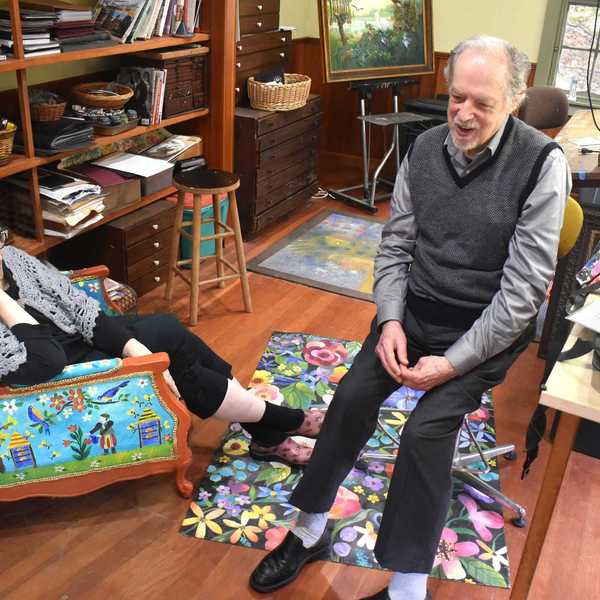
At 90, artist Robert Cronin still finds new ways to paint
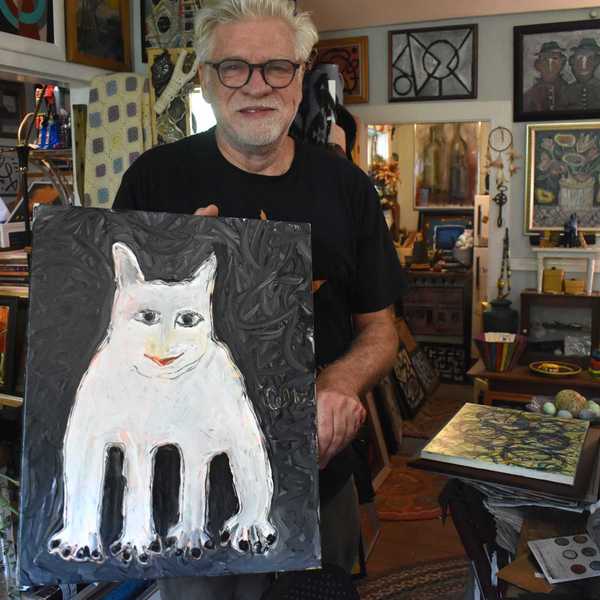
Falls Village Artist Robert Cronin describes his process, from drawing to painted canvas.
L. Tomaino
Once I get all the colors in, they change. Who knows? I might consider more radical colors and then bring it back a little.
— Robert Cronin

Renowned painter Robert Cronin of Falls Village celebrated his 90th birthday with an exhibition, “Robert Cronin: New Paintings,” at the Hunt Library in Falls Village which opened Aug. 8 and will be on view through Sept. 11.

Cronin paints most days in his home studio. He keeps his work fresh by trying new things and has had different phases of work, including figure paintings, paintings on paper, a modular, circle and enclosure series of paintings, as well as a tinplate sculpture series.

Keep ReadingShow less

All aboard the Litchfield County Clipper

All aboard the Litchfield County Clipper

The Litchfield County Clipper runs between Thomaston and Torrington.

Allison Gollenberg

Every Sunday until the end of August, passengers can ride back in time on the Litchfield County Clipper, a scenic train running between Thomaston and Torrington on the county’s only passenger rail line.

The train, operated by the Railroad Museum of New England and the Naugatuck Railroad, follows the Naugatuck River through Mattatuck State Forest and along the Thomaston Dam, making it the only railroad in the country that operates over the face of an active dam. For $26.50 passengers can ride all day, boarding or disembarking at any of the train’s three stops, which include two stops in Torrington and one in Thomaston.

Keep ReadingShow less
google preferred source

Want more of our stories on Google? Click here to make us a Preferred Source.

google preferred source

Want more of our stories on Google? Click here to make us a Preferred Source.