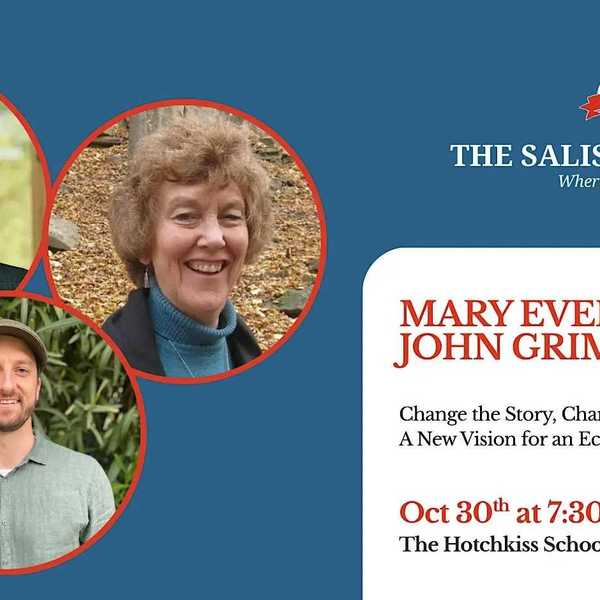
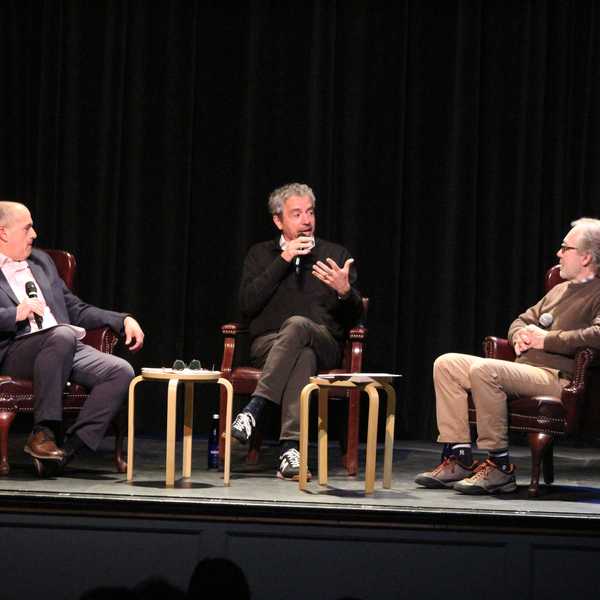
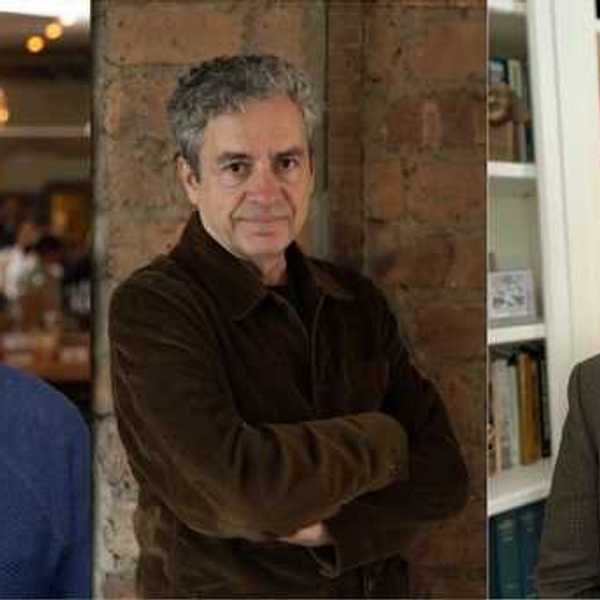
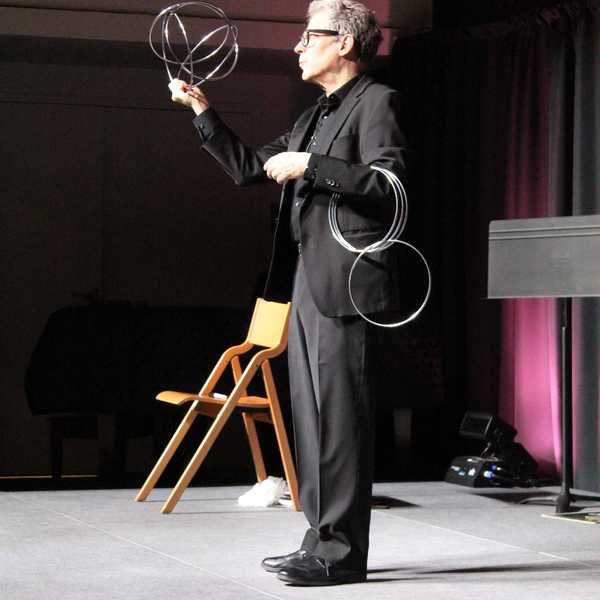
LAKEVILLE — Religious scholars Mary Evelyn Tucker and John Grim and environmentalist, writer and former Hotchkiss teacher Sam King delivered a presentation at The Hotchkiss School Friday, Oct. 30.
Sponsored by the Salisbury Forum, “Change the Story, Change the World: A New Vision for an Ecological Era” explored how religious tradition and modern science can be used together to address environmental and spiritual challenges.
Tucker and Grim are co-directors of the Yale Forum on Religion and Ecology. King is project director for Journey of the Universe and taught environmental humanities at Hotchkiss.
Tucker and Grim were both students of Thomas Berry, a Catholic priest and professor at Fordham University who advocated for humanity to see itself as part of an interdependent community with the Earth, rather than using scientific and technological advances to exploit the planet.
The speakers made frequent references to “Journey of the Universe,” an Emmy Award-winning documentary co-written by Tucker. The film tells the story of the evolution of the universe, the Earth and humans from the Big Bang to the present.
Tucker said Berry was looking “not just for ways of enlightenment but a new way forward.”
“We need a new story that will integrate the discoveries of science” with religious beliefs, she said. “This new story has to be told in many forms.”
Grim said the challenge of “Journey” was how to tell the story of the evolving universe in what was originally a two-hour program, later edited down to one hour for television.
The subject matter was daunting, and the film deals with questions such as “Where did gravity come from?”
Tucker said the response to the film was gratifying and surprising. “China has really picked this up because it works with their traditions.”
Grim said he met a student from Pakistan who wanted to bring the film to that country even though it might be seen as contradicting Islamic teachings.
The student “cracked that nut,” and the film was shown in private and public schools in Pakistan without incident.
King, whose work on “Journey” includes arranging screenings, publishing a newsletter and hosting a podcast, said he taught at Hotchkiss from 2016 to 2019 in interdisciplinary humanities courses that asked students questions such as “Where do we come from?” and “What is a good human society?”
He said he discovered the film at a retreat and knew he had found something.
“I felt like I was meeting my own teachers.”
He started thinking about “a new cosmology with a new science.”
“We stand at a profound cosmic moment. We’re in the sixth mass extinction event, and the first caused by humans.”
The question for King was how to inspire young people to move from a model of human exploitation of nature toward a mutually enhancing relationship with it.
“We need to instill in young people a sense of fulfillment as creatures.”
Tucker said the interest is there. “Young people are very keen on science and cosmology.”
“This generation has gone through cynicism, disempowerment and despair. They’re coming out in a new place of hope and possibility. I’m very excited.”