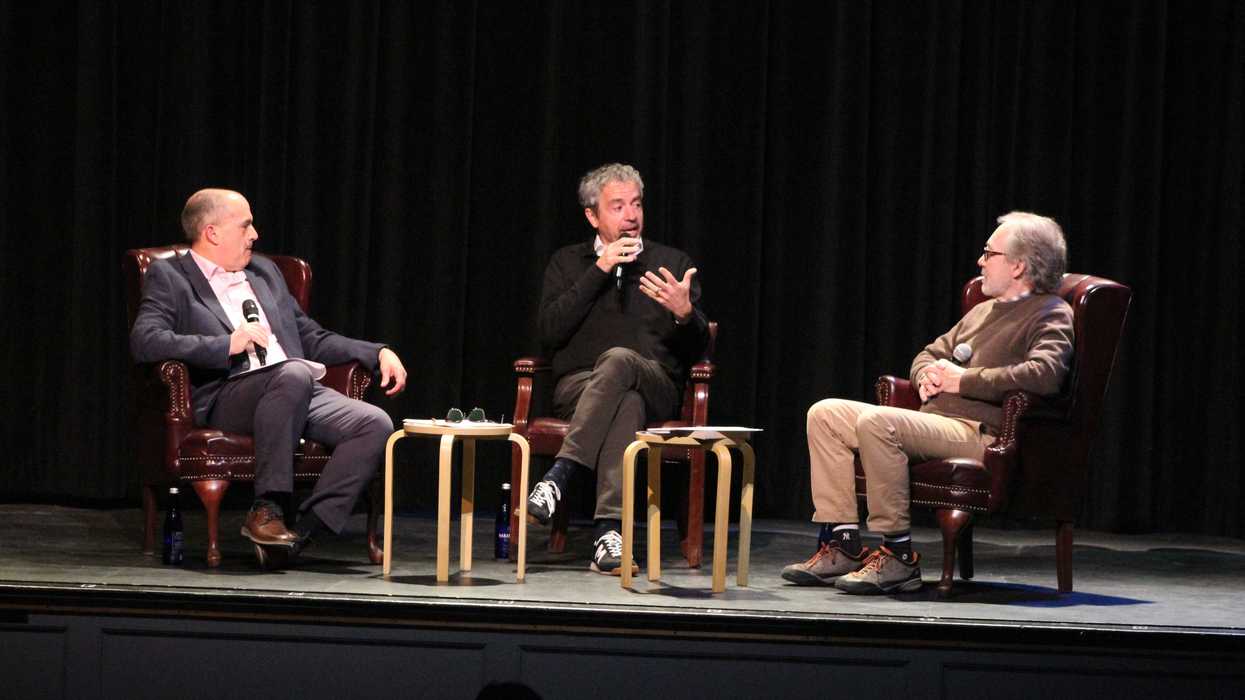
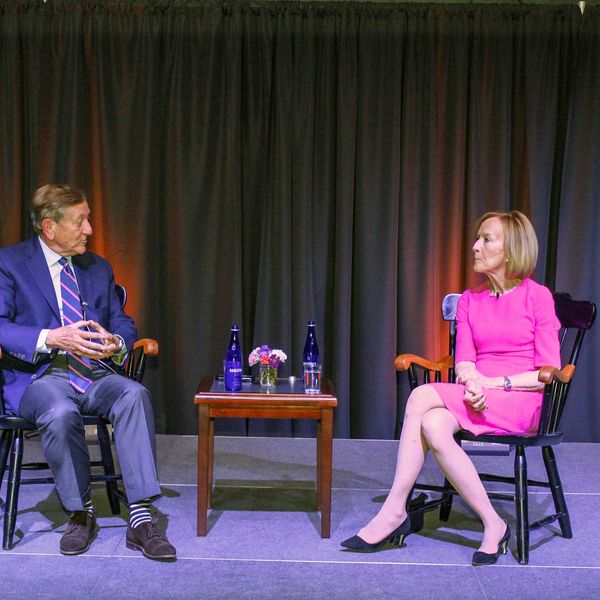
FALLS VILLAGE — Russell Shorto, author of “Revolution Song,” said his goal in writing the book was to tell the stories of the “lived experience” of six individuals from marginalized groups in the context of the American Revolution.
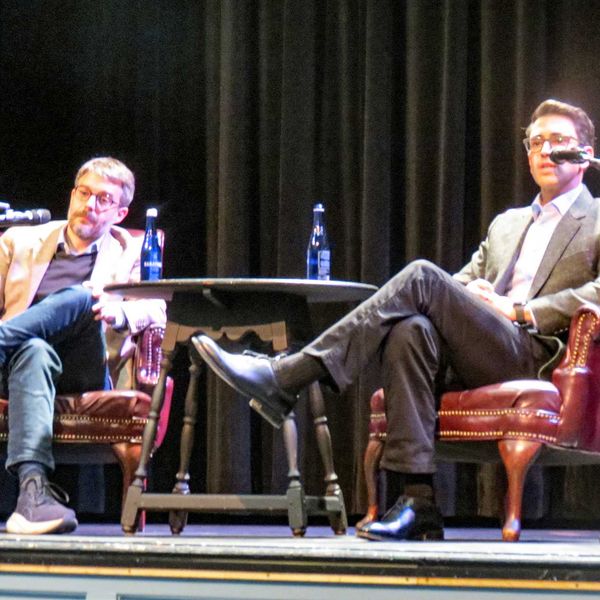
Shorto appeared with history teachers and fellow authors Peter Vermilyea of Housatonic Valley Regional High School and Rhonan Mokriski of Salisbury School at the Salisbury Forum on Friday, March 27, at HVRHS.
In picking the six subjects, Shorto said, “I sort of auditioned dozens.”
He wanted a diverse group, including an African and a Native American.
What he did not want were wealthy “white men wearing wigs.”
Finding primary source material on such people was a challenge. In the case of one of the subjects, Venture Smith, there was an autobiography, as told to a white newspaper editor and published in 1798 as “A Narrative of the Life and Adventures of Venture, a Native of Africa: But Resident above Sixty Years in the United States of America.”
Shorto said Smith “was all about money.” Having purchased his own freedom, he then set about earning enough to buy the freedom of his wife and sons.
Smith also bought slaves of his own, and was dismayed when they ran away.
Vermilyea noted the complexity of Smith’s story. For example, at one point, Smith had to decide whether to buy his wife or his children out of slavery.
Shorto said he thought Smith was above all a pragmatist, determined to make the best of the situation.
Another character in “Revolution Song” is Abraham Yates, a white shoemaker, entrepreneur and politician from Albany, New York. Shorto said Yates was influenced by Enlightenment philosopher John Locke and was an early proponent of the colonies breaking from Great Britain.
“Then they win, and he immediately turns.”
Yates was an anti-Federalist, backing the rights of New York state against a central government, and opposed the ratification of the Constitution.
And luckily for Shorto, there was a lot of material available on Yates.
Shorto said he wanted to avoid a history that concentrated on figures who are heroes in the popular imagination.
And he thought it important to tell the entire life stories of the six subjects, even allowing for inevitable gaps in the historical record.
“I wanted the whole life because the Revolution was a big event, but maybe not the biggest.”
Asked about the title, Shorto said he wanted to keep it short and punchy, having run into problems with a previous book, “The Island at the Center of the World,” about the period when New York was New Amsterdam and controlled by the Dutch.
“People kept coming up to me and saying they loved the book, what was it, The Center Island or the World of the Island or…” he said to laughter from the audience.
Shorto’s appearance was the result of a collaboration between the Scoville Memorial Library, the Salisbury Association, the Salisbury Forum, and Troutbeck Symposium, plus the Salisbury Commemorates 250 committee–in connection with Connecticut 250- all dedicated to observing and celebrating the 250th anniversary of the signing of the Declaration of Independence in 1776.






 Dick Hermans in the Oblong Bookstore on Millerton’s Main Street in 1985.Provided