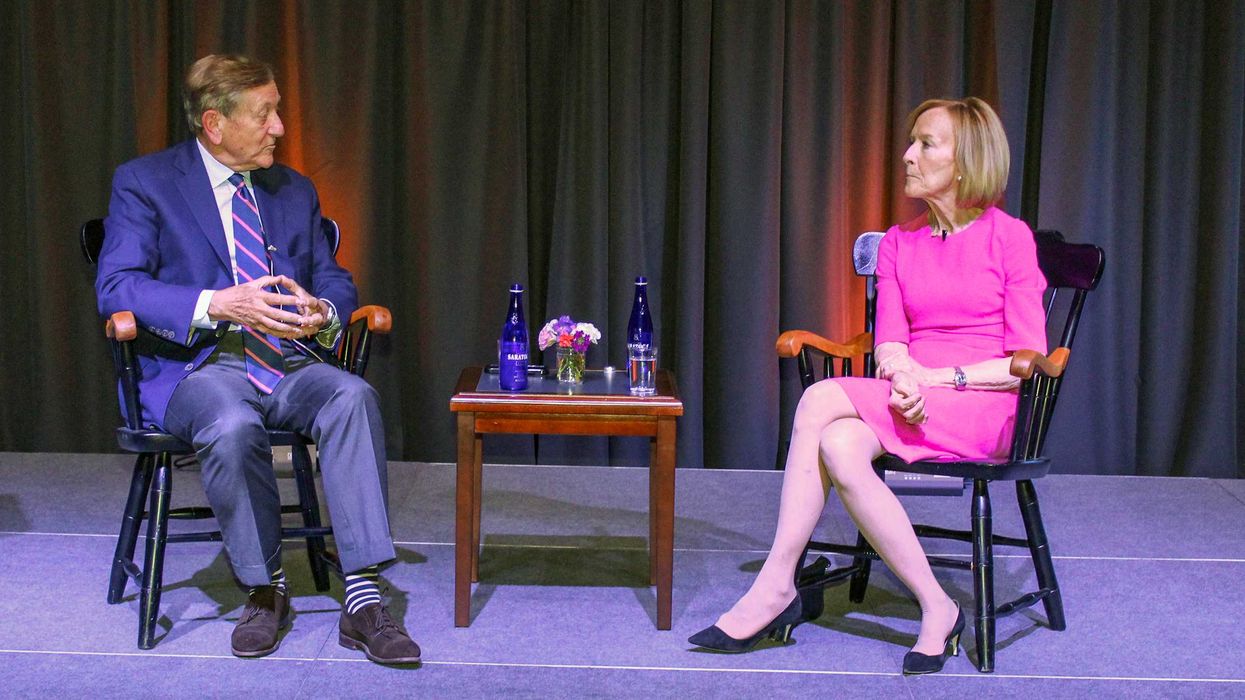
SALISBURY — Judy Woodruff, former anchor and managing editor of the PBS Newshour, said that her fellow journalists do tend to “live in a bubble” and need to get out into the country more, but pushed back on suggestions that national journalists are biased.
Woodruff appeared at the 20th anniversary Salisbury Forum at Salisbury School Saturday, Sept. 27. She was interviewed by Brian Ross, a veteran of television news with ABC News and NBC News (and a member of The Lakeville Journal board).
Ross noted that he and Woodruff broke into national TV news about the same time and invited Woodruff to share some of the story of her career path.
Woodruff said she was working in local TV news in Georgia and got to know Jimmy Carter when he ran for governor.
So when Carter started running for the Democratic nomination for President for the 1976 election, she had what she thought was an inside track
She told her bosses that Carter was worth their attention and was proved correct when he came in second in the New Hampshire primary.
But being the third-string political reporter, she “got knocked off” the campaign but kept hanging around, developing contacts within the Carter team and playing in the softball games between the campaign staff and the press.
It was during one of those games — “I was playing second base” — that she met her husband, Al Hunt.
Between her Carter contacts and consistent pushing on her part she finally landed a job as White House correspondent.
She said it took a while to find her feet. “I had to play catch-up.”
She said the Carter team came to Washington “believing they had the keys to the kingdom.”
Having received minimal help from the Democratic establishment during the campaign, they thought they didn’t need the party’s help in governing.
“It was called the ‘Georgia Mafia.’ Carter relied heavily on his original team.”
Woodruff gave Carter credit for the Camp David agreement between Israel and Egypt, a pact that has lasted to the present day.
Ross asked about left-of-center “groupthink” within the press corps.
“It’s very competitive,” Woodruff said. “You want to get it right, get it better and you’d love to get it first.”
She said she thinks news organizations pay too much attention to the White House “and not enough on the agencies.”
“We have given the White House the ability to set the agenda.”
As to the groupthink, she said “It’s a hothouse environment, no question. I call it a ‘bubble’. We don’t get out in the country enough and talk to people.
“I do think there is a kind of groupthink that sets in,” she continued. “But if everybody else is reporting a story and we don’t…”
Ross asked about the recent defunding of public television and radio, and President Trump’s remarks about “left-wing lunatics.”
“Lumping us in with ‘left-wing lunatics’ is absolutely not true,” said Woodruff.
She said the PBS Newshour is “straight down the middle journalism. It’s in our DNA.”
She said the loss of funding is a problem, and public broadcasting is reacting.
“We are not calling it quits. We are here to serve the American people.”
Ross asked about young journalists who are more familiar with new media such as Tik Tok and podcasts, which are heavy on opinion.
Woodruff said “there’s nothing wrong with having strong feelings but we always need straight factual reporting.”
So when she is asked about what she thinks about a particular issue, Woodruff said her reply is “That’s for others to say. I’m a reporter.”




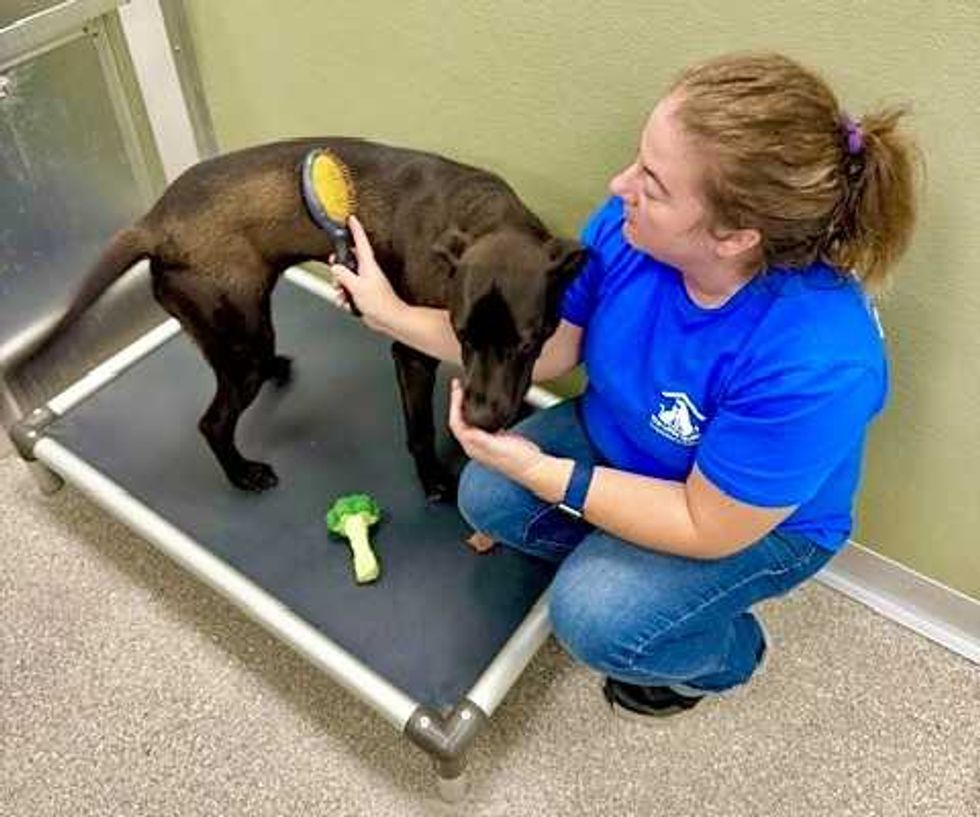 Tiffany Lemelin, shelter manager, brushing Marsala upon arrival.Provided
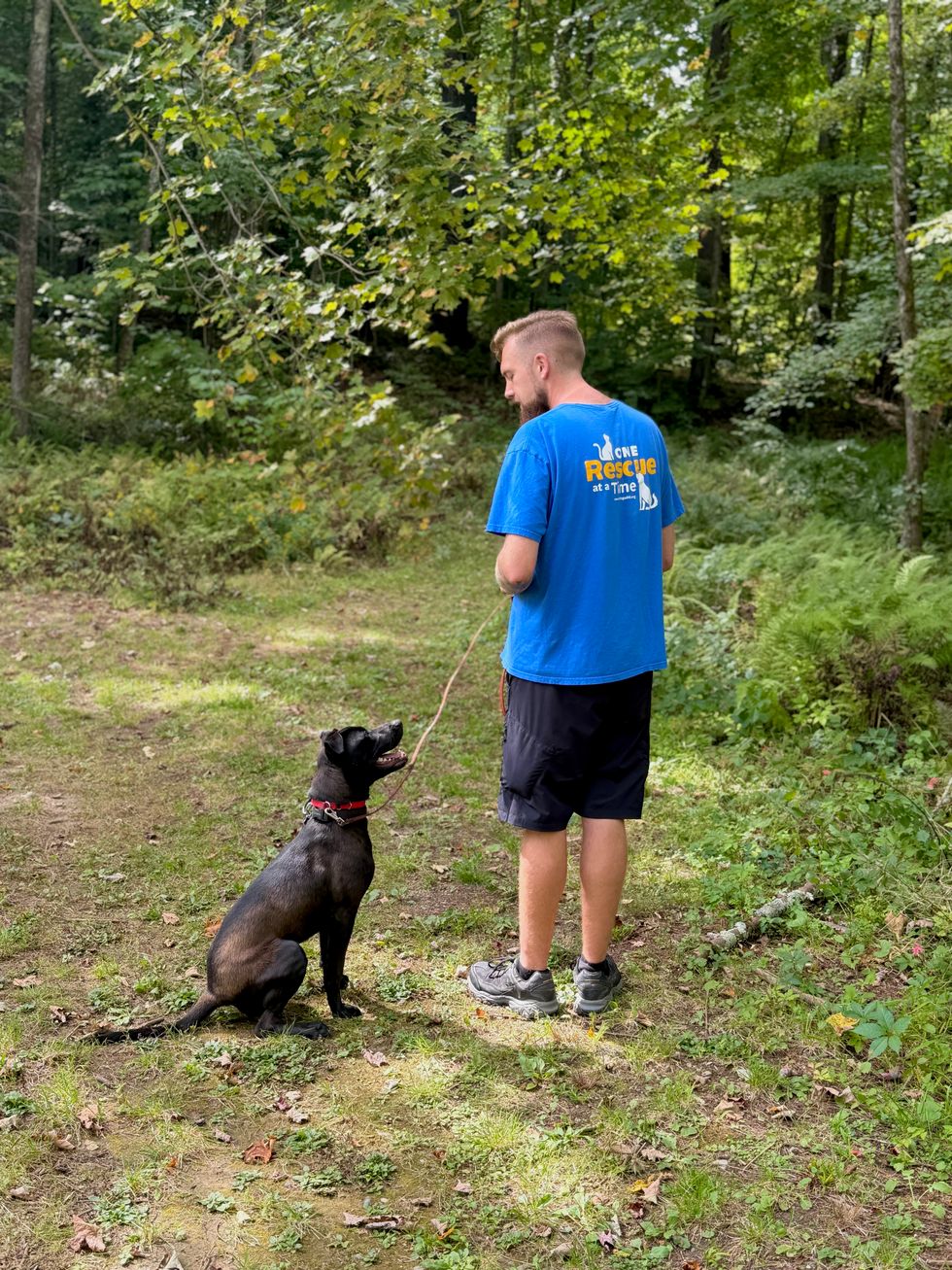 Michael DeBarba, certified dog trainer working with Marsala.Jennifer Almquist
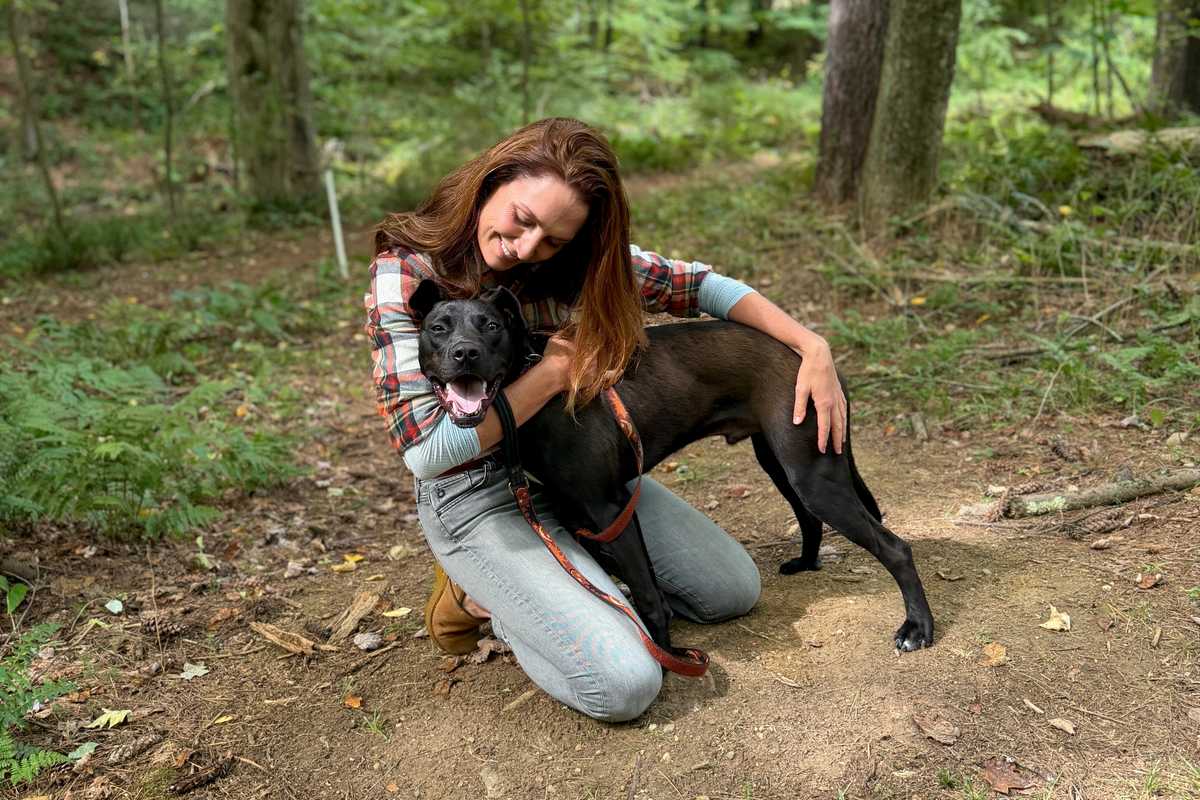 Marsala wins a heart.Jennifer Almquist
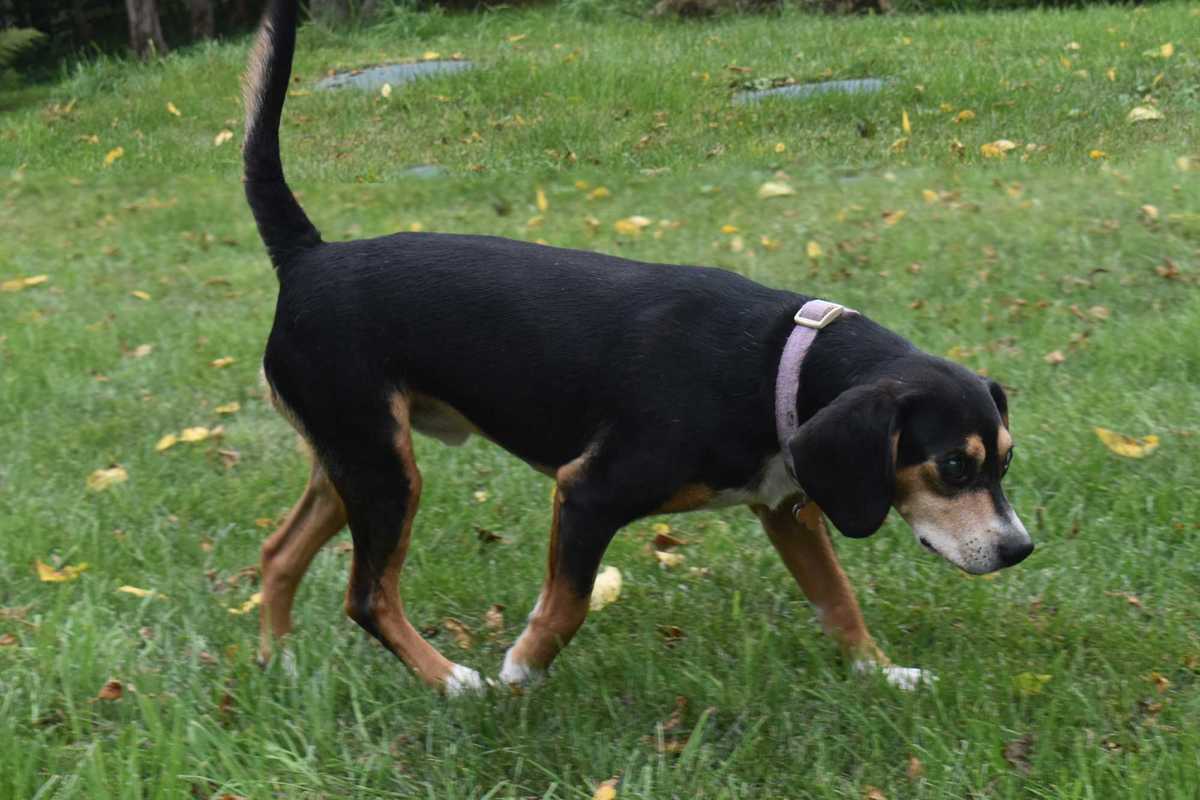
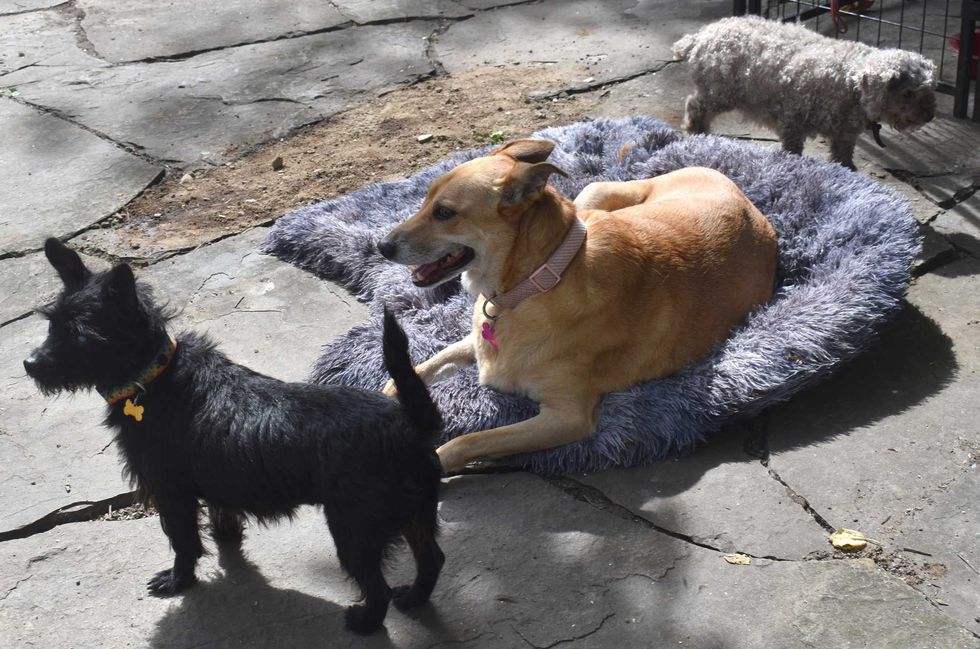 Sadie, center, a Carolina dog, plays with her friend Negra, a terrier mix. Bella Linda, the small poodle, has since been adopted.L. Tomaino
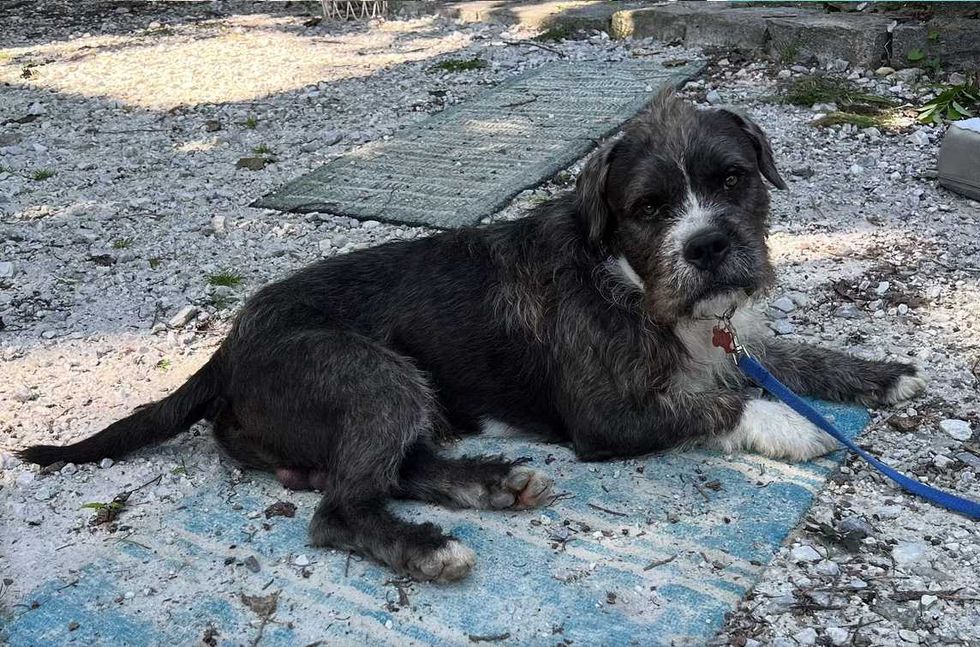 Wesley, a young, exuberant mix, is looking for an active home.L. Tomaino
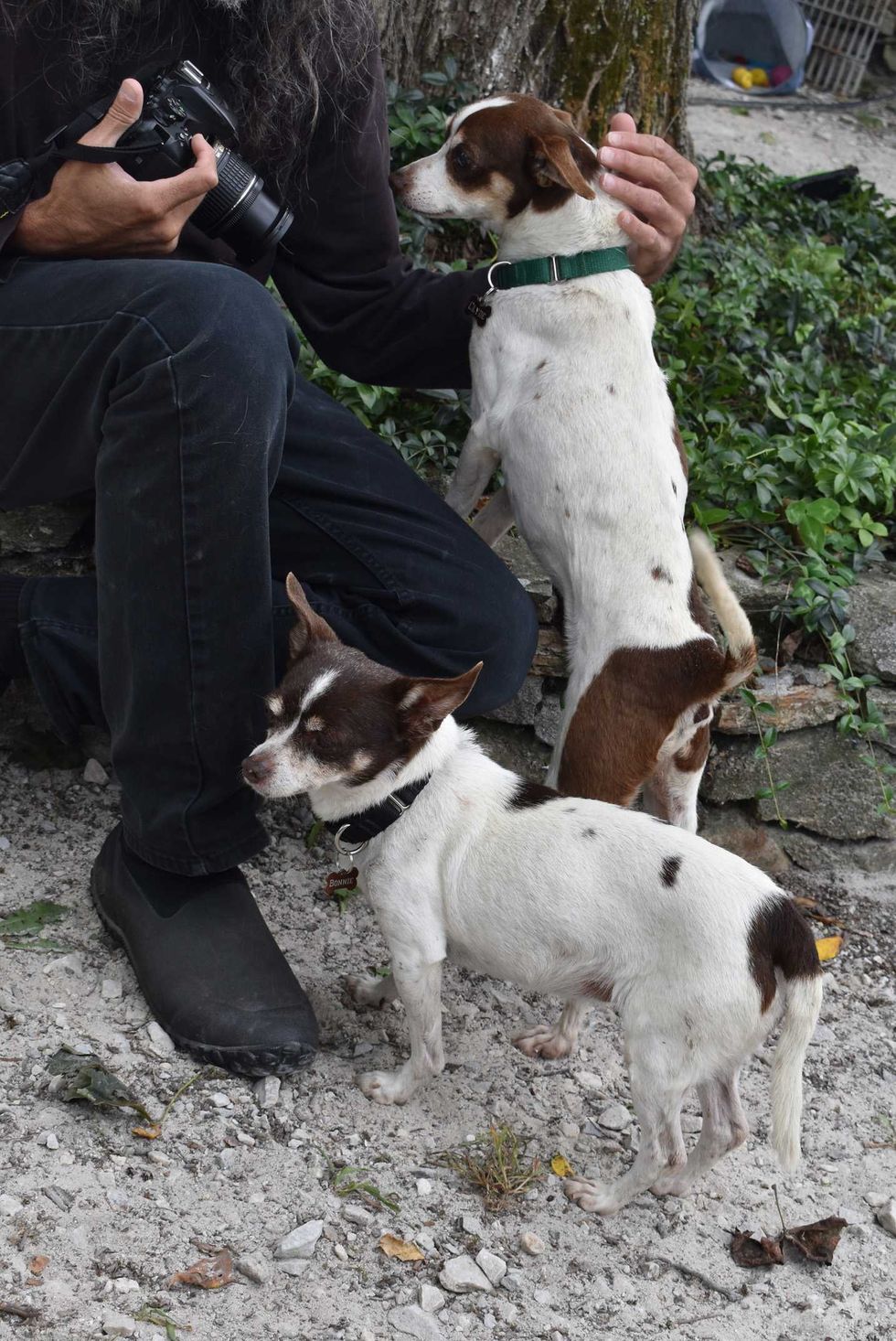 Bonnie and Clyde, an affectionate terrier pair.L. Tomaino

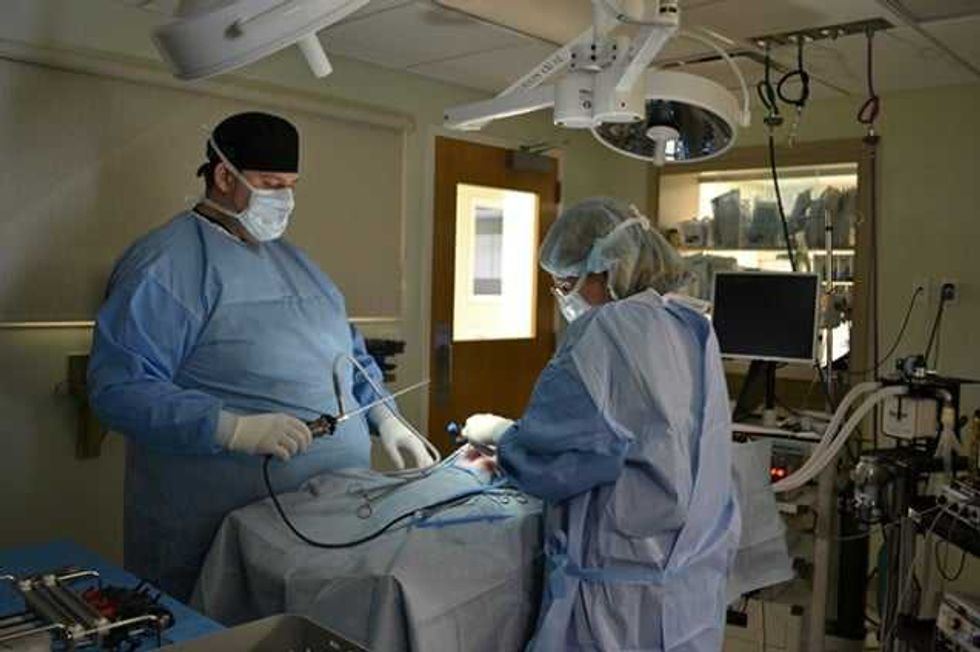 Provided