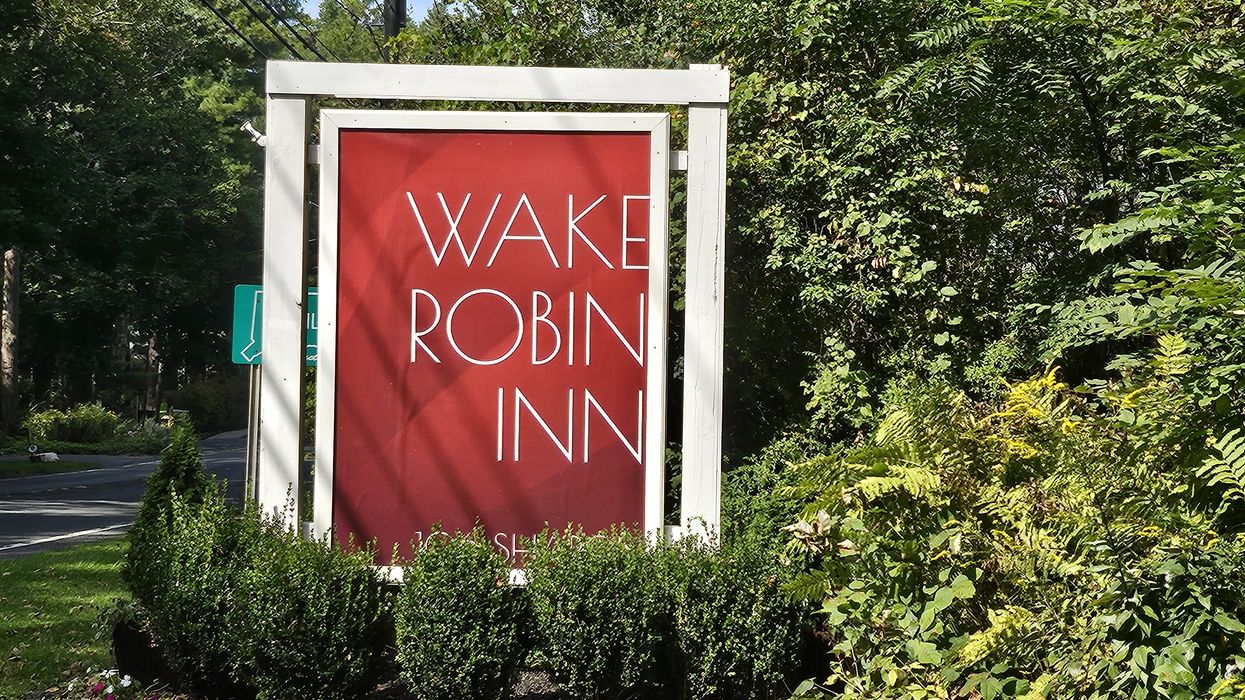
P&Z approves Wake Robin; court case still pending

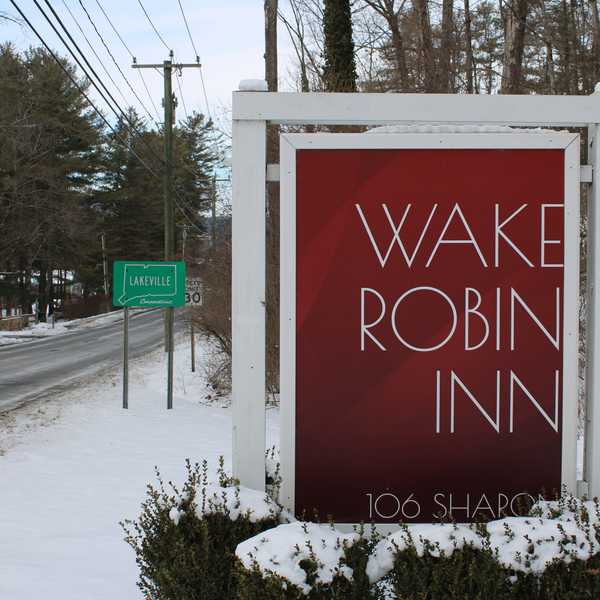
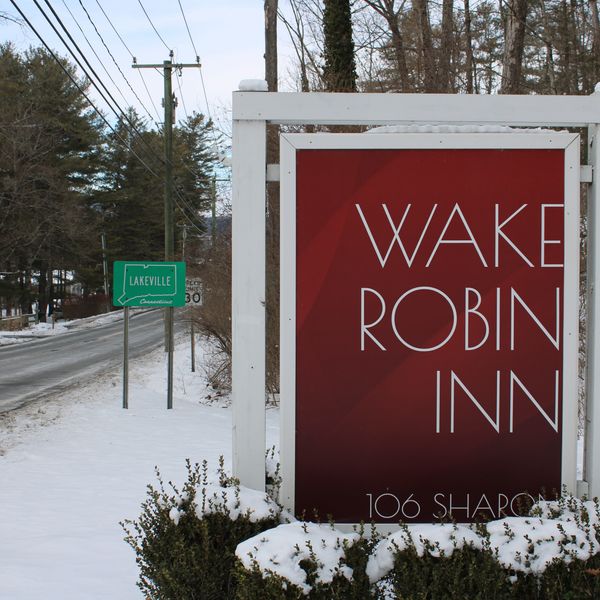
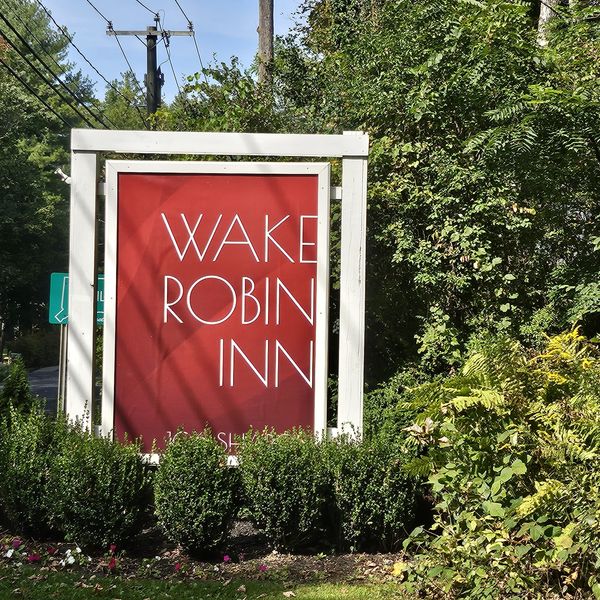
Wake Robin Inn is located on Sharon Road in Lakeville.
Photo by John Coston

The legal case, if approved by the court, would nullify a 2024 zoning regulation change that allows hotels in the RR1 zone via special permit application.
LAKEVILLE — At nearly 11 p.m. on Monday night, Oct. 20, Salisbury’s Planning and Zoning Commission voted 4-1 to approve, with conditions, Aradev LLC’s controversial application to redevelop the Wake Robin Inn.
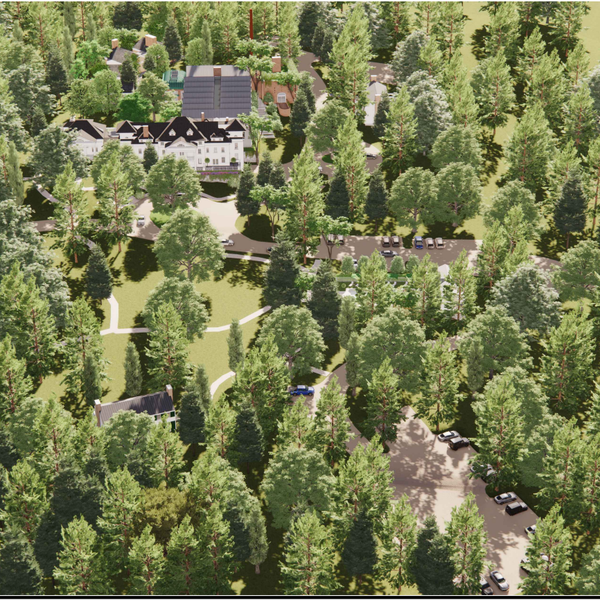
The decision came more than 4 hours after the meeting began at 6:30 p.m., and more than a year since Aradev submitted its first application to expand the longstanding country inn. The approved plans call for a new 2,000-square-foot cabin, an event space, a sit-down restaurant and fast-casual counter, a spa, library, lounge, gym and seasonal pool.
Aradev withdrew its first application in December 2024 after P&Z indicated it would likely deny it based on concerns about sewer approval, noise levels and the general size and intensity of the proposed development. During a pre-application meeting held with Aradev in January 2025, the Commission informed the developer that those three topics were the cruxes of both P&Z’s and the public’s objection to the first proposal.
The nine-page, 40-condition draft resolution that was ultimately approved on Monday night states that in the revised application, those “three major areas of concern have been addressed.” The document, which is available for public viewing on P&Z’s “Meeting Documents” web page, lists a number of changes that have eased doubts: a reduction in the number of auxiliary cabins, a tightening of the central campus that brings external elements like the spa and pool closer to the core of the development, a thorough sound analysis and noise pollution mitigation plan, approval from the town’s Water Pollution Control Authority, and moving the “event barn,” once planned to be a free-standing structure, into the main inn building expansion.
In the Commission’s deliberations following the closure of the public hearing for the revised application in September, several commissioners expressed their satisfaction with Aradev’s responsiveness to the commission’s and community’s concerns. During the first deliberation session on Oct. 7, Chair Michael Klemens said he found the new plans to be “much better designed this go around,” though he did qualify that the proposed development was “still large.”
At the same meeting, commissioner Allen Cockerline voiced his approval of the renewed application’s technical details, such as its sound survey, a robust stormwater management plan, and relocating the event facility inside the main building, which he described as a “very, very positive move.”
Vice Chair Cathy Shyer, though, felt differently. “The bottom line is, this is a big development,” she said during the Oct. 7 discussion. “It’s as big as the last one.”
During the seven public hearing sessions that took place in August and September, cries that the revised application had not mitigated in any meaningful way its most invasive components — namely, the “inappropriate” size and scale of the development in a rural residential (zoned RR1) neighborhood — were a common refrain from neighbors of the inn.
Over the course of those seven meetings, and an additional six during the hearing process for Aradev’s first application last year, P&Z heard hours of testimony from the community, the vast majority of it in opposition to the project.
Shyer echoed those sentiments at the Oct. 20 meeting: “Some things just don’t belong in some places.”
She expressed her frustration at the Commission for its debate over conditioning the approval to remove three of the four cottages in the site plans, which she felt was a red herring towards the broader issue. “This project is so big and so intense that taking three keys away is not making any difference.”
The meeting eventually took a 45-minute recess to allow Land Use Director Abby Conroy to draft a new resolution that included the stipulation to remove the three cottages, leaving only one still included in the plan. Upon resuming the meeting at 10:30 p.m., Klemens asked for a motion to approve the resolution, which was followed by a lengthy silence before Cockerline eventually offered it up. The vote passed 4-1, with Shyer voting no.
The moment marked the end of an application process that has seen heightened emotions, community organizing that includes two petitions against the project with hundreds of signatures each, and litigation against P&Z for a regulation change that allowed the proposal to see review in the first place.
The legal case, if approved by the court, would nullify a 2024 zoning regulation change that allows hotels in the RR1 zone via special permit application. Klemens said that, because of this, “the applicant is proceeding totally at its own risk.”
P&Z’s attorney Charles Andres stated that he believed it was unlikely Aradev would even be able to begin construction in the next several months as the case sees court review: “It’s highly unrealistic that they will proceed while that is still pending.”
Wes Allyn breaks away from the St. Paul defense for a reception touchdown Wednesday, Nov. 26.
BRISTOL — The Gilbert/Northwestern/Housatonic co-op football team ended the season with a 34-0 shutout victory over St. Paul Catholic High School Wednesday, Nov. 26.
It was GNH’s fourth consecutive Turkey Bowl win against St. Paul and the final game for 19 GNH seniors.
The Yellowjacket defense played lights out, holding St. Paul’s offense to 73 total yards and forcing three turnovers. Owen Riemer and Tyler Roberts each caught an interception and Jacob Robles recovered a fumble.

QB Trevor Campbell threw for three touchdowns: one to Wes Allyn, one to Cole Linnen and one to Esten Ryan. GNH scored twice on the ground with rushing touchdowns from Linnen and Riemer.
The game concluded in some confusion. A late run by Linnen ended when he was tackled near the end zone. The ball was spotted at the one-yard line and GNH took a knee to end the fourth quarter with the scoreboard reading 28-0. After the game, Linnen’s run was reassessed as a touchdown, and the final score was adjusted to 34-0.

Coach Scott Salius was thankful that his team went out on a high note. “We’re one of the few teams in the state that will finish with a win.” He commented on the “chippiness” of this year’s Thanksgiving matchup. “We have started a true rivalry.”
GNH won four of the last five games and ended with a record of 5-5.
“Battling back from 1-4, huge turnaround. I couldn’t be happier,” said GNH captain Wes Allyn after the win. “Out of the four years I’ve been playing, undefeated on Thanksgiving. No one will ever take that away from me.”

Looking back on his final varsity season, Nick Crodelle said he will remember “practice, complaining about practice, and getting ready for the games. Game day was a lot of fun.”
Hunter Conklin said ending on a win “feels great” and appreciated his time on the field with his teammates. “There’s no one else I’d rather do it with.”
“I’m so thankful to have these guys in my life,” said Riemer. “It’s emotional.”

“Once Upon a Time in America” features ten portraits by artist Katro Storm.
The Kearcher-Monsell Gallery at Housatonic Valley Regional High School in Falls Village is once again host to a wonderful student-curated exhibition. “Once Upon a Time in America,” ten portraits by New Haven artist Katro Storm, opened on Nov. 20 and will run through the end of the year.
“This is our first show of the year,” said senior student Alex Wilbur, the current head intern who oversees the student-run gallery. “I inherited the position last year from Elinor Wolgemuth. It’s been really amazing to take charge and see this through.”
Part of what became a capstone project for Wolgemuth, she left behind a comprehensive guide to help future student interns manage the gallery effectively. “Everything from who we should contact, the steps to take for everything, our donors,” Wilbur said. “It’s really extensive and it’s been a huge help.”
Art teacher Lilly Rand Barnett first met Storm a few years ago through his ICEHOUSE Project Space exhibition in Sharon, “Will It Grow in Sharon?” in which he planted cotton and tobacco as part of an exploration of ancestral heritage.
“And the plants did grow,” said Barnett. She asked Storm if her students could use them, and the resulting work became a project for that year’s Troutbeck Symposium, the annual student-led event in Amenia that uncovers little-known or under-told histories of marginalized communities, particularly BIPOC histories.
Last spring, Rand emailed to ask if Storm would consider a solo show at HVRHS. He agreed.
And just a few weeks ago, he arrived — paints, brushes and canvases in tow.
“When Katro came to start hanging everything, he took up a mini art residency in Ms. Rand’s room,” Wilbur said. “All her students were able to see his process and talk to him. It was great working with him.”
Perhaps more unexpected was his openness. “He really trusted us as curators and visionaries,” Wilbur said. “He said, ‘Do with it what you will.’”

Storm’s artistic training began at New Haven’s Educational Center for the Arts. His talent earned him a full scholarship to the Arts Institute of Boston, then Boston’s Museum School, where he painted seven oversized portraits of influential Black figures — in seven days — for his final project. Those works became the backbone of his early exhibitions, including at Howard University’s National Council for the Arts.
Storm has created several community murals like the 2009 READ Mural featuring local heroes, and several literacy and wellness murals at the Stetson Branch Library in New Haven. Today, he teaches and works, he said, “wherever I set up shop. Sometimes I go outside. Sometimes I’m on top of roofs. Wherever it is, I get the job done.”
His deep ties to education made a high school gallery an especially meaningful stop. “No one really knew who these people were except maybe John Lennon,” Storm said of the portraits in the show. “It’s really important for them to know James Baldwin and Shirley Chisholm. And now they do.”
The exhibition includes a wide list of subjects: James Baldwin, Shirley Chisholm, Redd Foxx, Jasper Johns, Marilyn Manson, William F. Buckley, Harold Hunter, John Lennon, as well as two deeply personal works — a portrait of Tracy Sherrod (“She’s a friend of mine… She had an interesting hairdo”) and a tribute to his late friend Nes Rivera. “Most of the time I choose my subjects because there are things I want to see,” Storm said.
Storm’s paintings, which he describes as “full frontal figuratism,” rely on drips, tonal shifts, and what feels like emerging depth. His process moves quickly. “It depends on how fast it needs to get done,” he said. “Sometimes I like to take the long way up the mountain. Instead of doing an outline, I just start coloring, blocking things off with light and dark until it starts to take shape.”
He’s currently in a black-and-white phase. “Right now, I’m inspired by black and white, the way I can really get contrast and depth.”
Work happens on multiple canvases at once. “Sometimes I’ll have five paintings going on at one time because I go through different moods, and then there’s the way the light hits,” he said. “It’s kind of like cooking. You’ve got a couple things going at once, a couple things cooking, and you just try to reach that deadline.”
For Wilbur, who has studied studio arts “ever since I was really young” and recently applied early decision to Vassar, the experience has been transformative. For Storm — an artist who built an early career painting seven portraits in seven days and has turned New York’s subway corridors into a makeshift museum — it has been another chance to merge artmaking with education, and to pass a torch to a new generation of curators.
Le Petit Ranch offers animal-assisted therapy and learning programs for children and seniors in Sheffield.
Le Petit Ranch, a nonprofit offering animal-assisted therapy and learning programs, opened in April at 147 Bears Den Road in Sheffield. Founded by Marjorie Borreda, the center provides programs for children, families and seniors using miniature horses, rescued greyhounds, guinea pigs and chickens.
Borreda, who moved to Sheffield with her husband, Mitch Moulton, and their two children to be closer to his family, has transformed her longtime love of animals into her career. She completed certifications in animal-assisted therapy and coaching in 2023, along with coursework in psychiatry, psychology, literacy and veterinary skills.
Le Petit Ranch operates out of two small structures next to the family’s home: a one-room schoolhouse for animal-assisted learning sessions and a compact stable for the three miniature horses, Mini Mac, Rocket and Miso. Other partner animals include two rescued Spanish greyhounds, Yayi and Ronya; four guinea pigs and a flock of chickens.
Borreda offers programs at the Scoville Library in Salisbury, at Salisbury Central School and surrounding towns to support those who benefit from non-traditional learning environments.
“Animal-assisted education partners with animals to support learning in math, reading, writing, language and physical education,” she said. One activity, equimotricité, has children lead miniature horses through obstacle courses to build autonomy, confidence and motor skills.

She also brings her greyhounds into schools for a “min vet clinic,” a workshop that turns lessons on dog biology and measuring skills into hands-on, movement-based learning. A separate dog-bite prevention workshop teaches children how to read canine body language and respond calmly.
Parents and teachers report strong results. More than 90% of parents observed greater empathy, reduced anxiety, increased self-confidence and improved communication and cooperation in their children, and every parent said animal-assisted education made school more enjoyable — with many calling it “the highlight of their week.”

Le Petit Ranch also serves seniors, including nursing home residents experiencing depression, social withdrawal or reduced physical activity. Weekly small-group sessions with animals can stimulate cognitive function and improve motor skills, balance and mobility.
Families can visit Le Petit Ranch for animal- assisted afterschool sessions, Frech immersion or family walks. She also offers programs for schools, libraries, community centers, churches, senior centers and nursing homes.
For more information, email info@lepetitranch.com, visit lepetitranch.com, follow @le.petit.ranch on Instagram or call 413-200-8081.