Experts testify at hearing ahead of Wake Robin decision

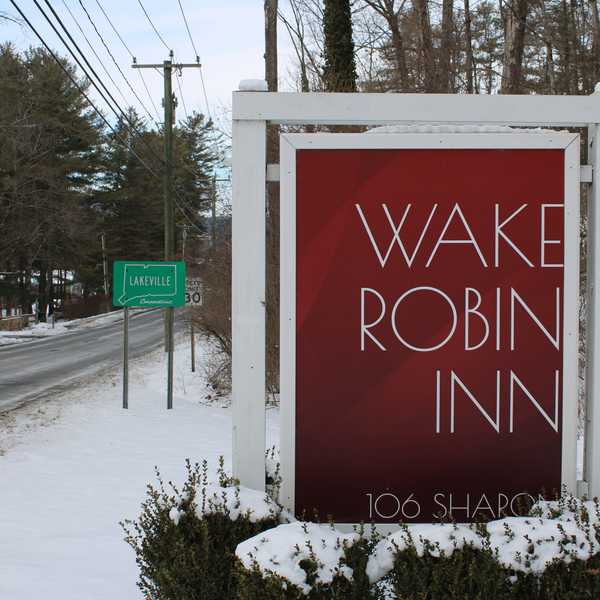
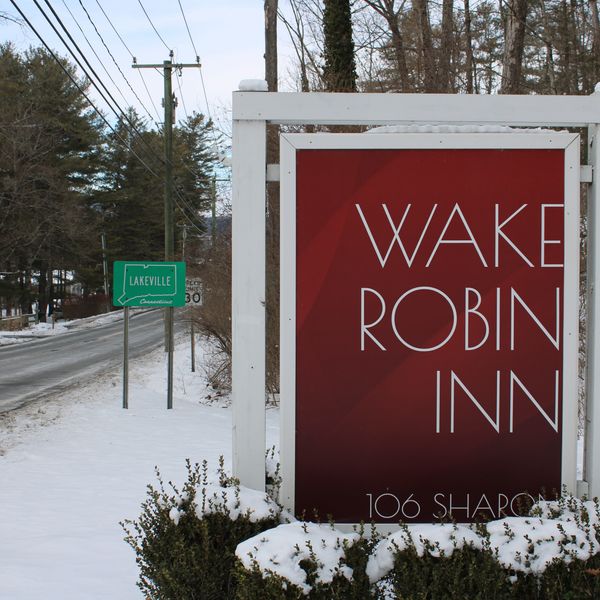
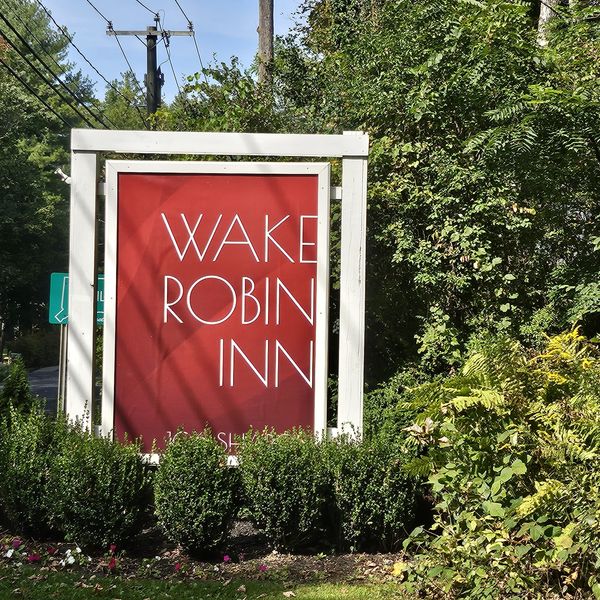
Wake Robin Inn is located on Sharon Road in Lakeville.
Photo by John Coston

LAKEVILLE — Noise pollution continues to be a crux of the public hearing to expand the Wake Robin Inn. On Aug. 26, the fifth hearing session of the month and second-to-last in the statutorily defined window, the question arose: is any additional sound permissible at all?
Bennett Brooks, founding sound engineer of Brooks Acoustics Corporation and an expert hired by Wells Hill Road residents William and Angela Cruger in opposition to the project, said no: “I think all the experts agree that the project will be audible and that’s the criterion.”
Attorney Josh Mackey, who has represented the applicant Aradev LLC since its first appearance before the Planning and Zoning Commission last fall, countered Brooks: “The idea that nuisance within the regulations means anything that is audible to neighbors is simply ludicrous.”
He referenced air conditioning units, dogs barking and children playing as inevitable sounds in a residential neighborhood. Herb Singleton, a sound engineer with Cross-Spectrum Acoustics and the Commission’s third-party expert reviewer, agreed with Mackey, explaining that defining nuisance as any sound emission that can be heard by neighbors “gets dangerous very, very quickly” due to those complicating factors. He suggested that nuisance “implies a level of annoyance based on audibility,” rather than audibility itself.
It was the third hearing in a row in which sound took center stage in the discussion, with the focal point being what constitutes “nuisance,” as it appears in the town’s zoning regulation 803.2 for special permit approval: “The use shall not create a nuisance to neighboring properties, whether by noise, air, or water pollution; offensive odors, dust, smoke, vibrations, lighting, or other effects.”
A sound study commissioned by Aradev for its application and Singleton’s third-party review both stated that the noise produced by the redeveloped hotel would be below a nuisance level at the property boundaries. At the Aug. 12 hearing, though, neighbors countered that any additional noise intrusion onto their own properties would be against the regulations, as they are intended to “protect abutters and neighbors” from intrusion beyond what they are used to, as Bill Cruger put it. Brooks argued in his Aug. 26 testimony that “in terms of size and scope, this project is almost identical to the former application,” which Aradev withdrew in December due to a likely denial.
Brooks was one of three experts brought into the Zoom room on Tuesday evening to provide testimony against the proposed hotel development. The Crugers, who were intervenors in the 2024 round of hearings for the first iteration of the Inn redevelopment proposal, decided not to formally intervene again during this cycle. Instead, P&Z Chair Michael Klemens stated that the Commission decided to allow the Crugers’ experts to “engage in a dialogue” during the process, but without formal party status in the proceedings.
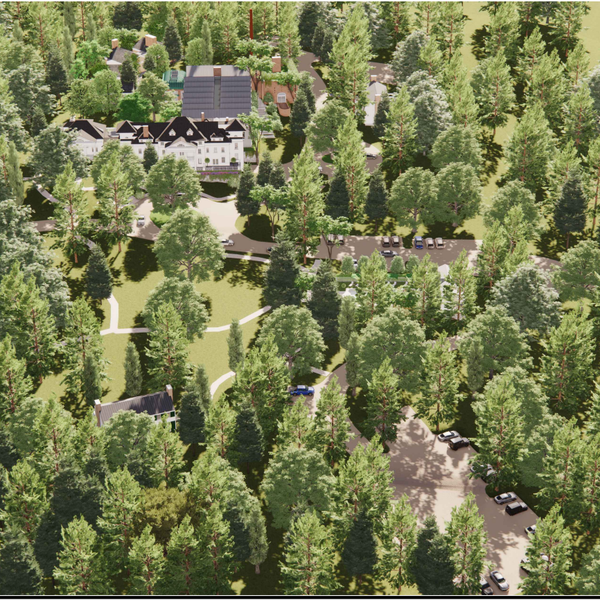
The other two presenters, wetland scientist George Logan of Rema Ecological Services and Brian Miller of Miller Planning Group, echoed Brooks in their testimonies that Aradev’s current application has not satisfactorily reduced the scale and intensity of the first proposal. Representatives of Aradev have continued to argue that the current plan, which reduces the total occupancy from 158 to 130 and downscales its build footprint, among other alterations, adequately address scale and intensity concerns raised by the Commission and the public.
Of Tuesday’s three-hour meeting, only 20 minutes were left for public comment, leading to a much-abbreviated session for residential input. Klemens announced that the next hearing session, scheduled for Thursday, Sept. 4, at 6:30 p.m., will prioritize the public’s chance to speak.
Thursday is the last scheduled date for the public hearing, which state law deems must close on Sept. 9.
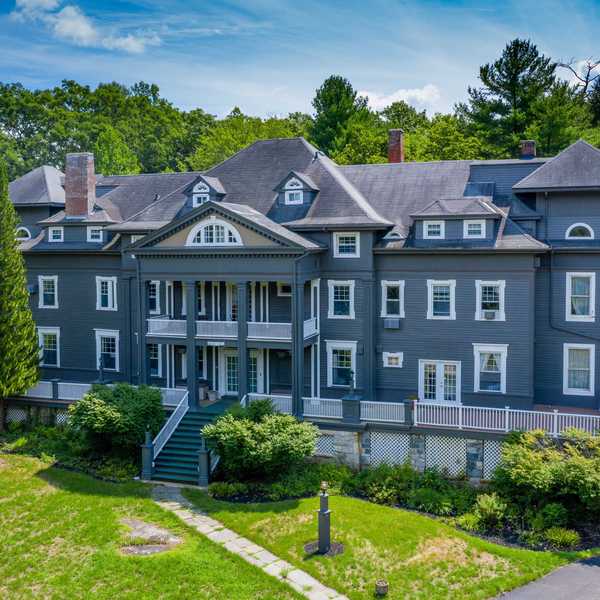
Housatonic Valley Regional High School, where the price of school lunch will increase to $4.00 beginning Jan. 5.
FALLS VILLAGE -- School lunch prices will increase at select schools in Regional School District No. 1 beginning Jan. 5, 2026, following a deficit in the district’s food service account and rising food costs tied to federal meal compliance requirements.
District officials announced the changes in a letter to families dated Monday, Dec. 15, signed by Superintendent Melony Brady-Shanley and Business Manager Samuel J. Herrick
Under the new pricing, lunches at Lee H. Kellogg School and Cornwall Consolidated School will increase by 25 cents to $3.75, while lunches at Housatonic Valley Regional High School will rise by 50 cents to $4.00.
According to the district, the food service program depends on revenue from lunch sales as well as federal reimbursement. Increased food costs and compliance requirements contributed to the shortfall during the 2024–2025 fiscal year.
School lunch prices have remained unchanged since the 2019–2020 school year, prior to the COVID-19 pandemic. In the years that followed, the district used COVID-19 relief funds to allow students to receive lunches at no cost.
Families who believe they may qualify for free or reduced-price lunch may apply at any time during the school year. Applications are available online for Housatonic Valley Regional High School, Lee H. Kellogg School and Cornwall Consolidated School.
The lunch price increase applies only to these three District No. 1 schools, as Housatonic Valley Regional High School oversees the food service programs at Lee H. Kellogg School and Cornwall Consolidated School. Other schools in the district operate independent food service programs and are not affected.
Runners line up at the starting line alongside Santa before the start of the 5th Annual North Canaan Santa Chase 5K on Saturday, Dec. 13.
NORTH CANAAN — Forty-eight runners braved frigid temperatures to participate in the 5th Annual North Canaan Santa Chase 5K Road Race on Saturday, Dec. 13.
Michael Mills, 45, of Goshen, led the pack with a time of 19 minutes, 15-seconds, averaging a 6:12-per-mile pace. Mills won the race for the third time and said he stays in shape by running with his daughter, a freshman at Lakeview High School in Litchfield.

Don Green, 64, of Red Hook, New York, was second among male runners with a time of 21:17 and a 6:52-per-mile pace. Becky Wilkinson, 47, of Southfield, Massachusetts, was the first woman to cross the finish line with a time of 22:16, averaging a 7:11-per-mile pace. Wilkinson finished fourth overall.
Margaret Banker, 52, of Lakeville, finished second among women runners with a time of 23:59 and a 7:44-per-mile pace.
Runners came from all over Connecticut, Massachusetts and New York. One runner listed home as London, England. Many were members of the Run 169 Towns Society, a group that is dedicated to completing races in every one of Connecticut’s 169 towns. Elizabeth Smith, 32, of Manchester, a member of Run 169, said this was her 162nd town.
“I started 10 years ago,” Smith said. Her husband, Daniel, 33, has run races in 73 Connecticut towns, now including North Canaan. He was eager to know where to get a good cup of coffee after the race.
Santa, who got a head start on the group of runners but finished next to last with a time of 44:14, has been a feature in the North Canaan race since it started five years ago.
The 5K proceeds from a start in front of the North Canaan Elementary School on Pease Street to course around the Town Hall parking lot, up West Main Street past the transfer station to the state line and back. Cheryl Ambrosi, 45, of Danbury, was the last to cross the finish line with her dog Benji. “It was so much fun,” she said as she ended, even though she didn’t catch Santa.

The Torrington Transfer Station, where the Northwest Resource Recovery Authority plans to expand operations using a $350,000 state grant.
TORRINGTON — The Northwest Resource Recovery Authority, a public entity formed this year to preserve municipal control over trash and recycling services in northwest Connecticut, has been awarded $350,000 in grant funds to develop and expand its operations.
The funding comes from the Department of Energy and Environmental Protection via its Sustainable Materials Management grant program. It is intended to help the NRRA establish operations at the Torrington Transfer Station as well as support regional education, transportation, hauler registration and partnerships with other authorities.
Founded by the City of Torrington in May 2025, the NRRA was established to oversee regional municipal solid waste management. Its creation followed a $3.25 million offer by USA Waste & Recycling to purchase the Torrington Transfer Station — a sale that would have privatized trash services in the region.
The proposed sale was initially approved by the MIRA Dissolution Authority, the entity responsible for dissolving the state’s former Materials Innovation and Recycling Authority, which owned the Transfer Station at the time. Before the transaction could close, the state intervened and directed that the facility’s operating permit be assigned to the NRRA to preserve a publicly controlled alternative.
MIRA has since dissolved, and the Transfer Station is currently operated by the state Department of Administrative Services. Many towns in northwest Connecticut have expressed interest in joining the NRRA. As of December, Torrington and Goshen were the only two municipalities in the authority.
At the Dec. 11 meeting of the Northwest Hills Council of Governments (COG) — a regional planning body representing 21 municipalities in northwest Connecticut — Director of Community and Economic Development Rista Malanca encouraged more towns to sign on.
“We need towns to join the Northwest Resource Recovery Authority to show your support, show this is what you want to do,” Malanca said.
Salisbury First Selectman Curtis Rand said his municipality is planning a town meeting in January to vote on a resolution to join the NRRA. Cornwall’s Board of Selectmen recently discussed scheduling a town meeting in the winter for the same purpose. Sharon, Falls Village and North Canaan have also expressed continued interest in pursuing a public option.
Kent is the northernmost member of the Housatonic Resource Recovery Authority, a regional solid waste authority representing 14 municipalities stretching south to Ridgefield. COG towns expressed interest in joining HRRA in 2024, but they were denied and set out to develop the NRRA.
“We also have been having conversations with the Capital Region Council of Governments and the Naugatuck Valley Council of Governments to think about how we can use existing resources, maybe some of these grant funds, to bring in shared resources or shared staffing that will help with some of the recycling coordinating efforts,” Malanca said.
With grant funds secured, NRRA aims to grow to a point that it can take over operations at Torrington Transfer Station to serve as a regional hauling hub. What happens to the trash after that has yet to be determined. Currently, it is being shipped to a landfill out of state. The existing municipal refuse hauling contracts that were established with the state expire in 2027.
The Salisbury Winter Sports Association (SWSA) will host its annual Junior Jump Camp, a two-day introduction to ski jumping, on Saturday and Sunday, Dec. 27 and 28, from 9 a.m. to 2 p.m. at Satre Hill in Salisbury.
The camp is open to children ages 7 and up and focuses on teaching the basics of ski jumping, with an emphasis on safety, balance and control, using SWSA’s smallest hill. No prior experience is required.
The cost is $50 per child and includes instruction and lunch on both days. For more information or to register, visit www.skireg.com/swsa-camp or email info@jumpfest.org