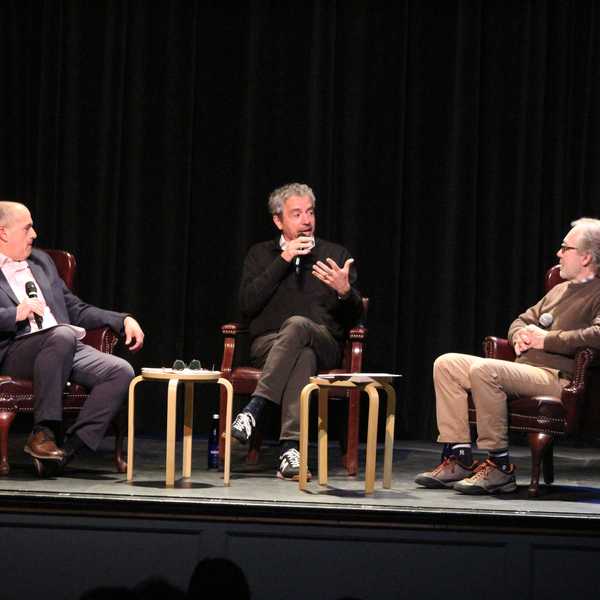
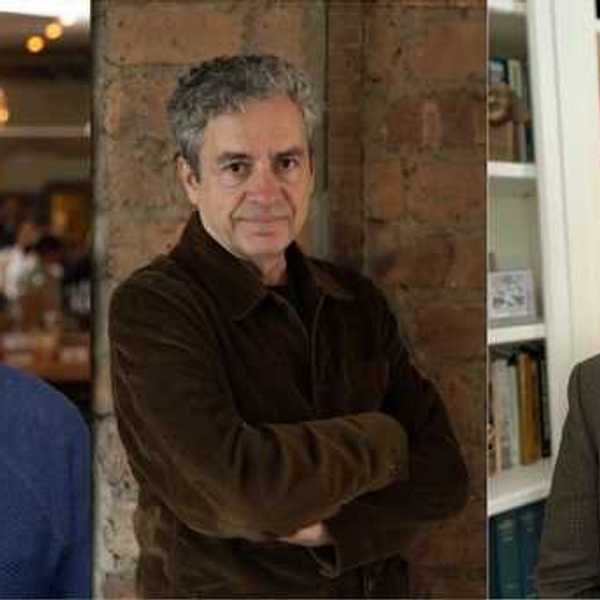
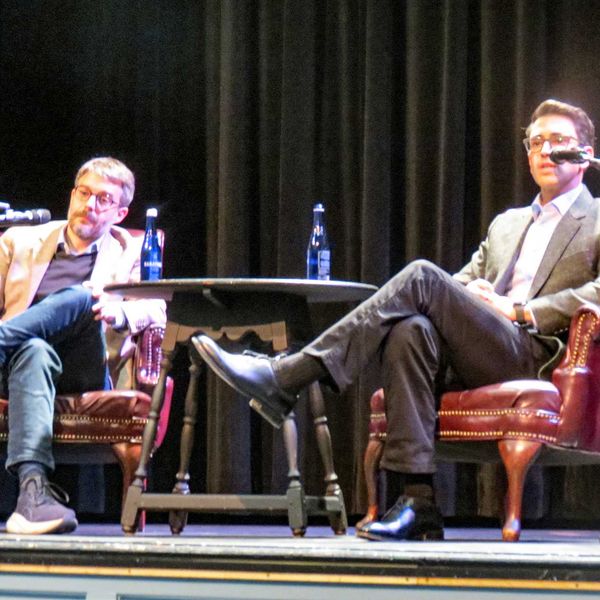
On Friday, Oct. 30, the Salisbury Forum will host Mary Evelyn Tucker, John Grim and Sam King, co-producers of the Emmy Award-winning film “Journey of the Universe,” for a conversation about “Change the Story, Change the World: A New Vision for an Ecological Era.” They will explore how ancient wisdom and contemporary science can guide a new era of planetary health and flourishing. The Hotchkiss School in Lakeville, Connecticut. 7:30 to 9 p.m. Free; registration required at salisburyforum.org.

Latest News
A life reshaped by clay in “Matin”
D.H. Callahan
Oct 27, 2026
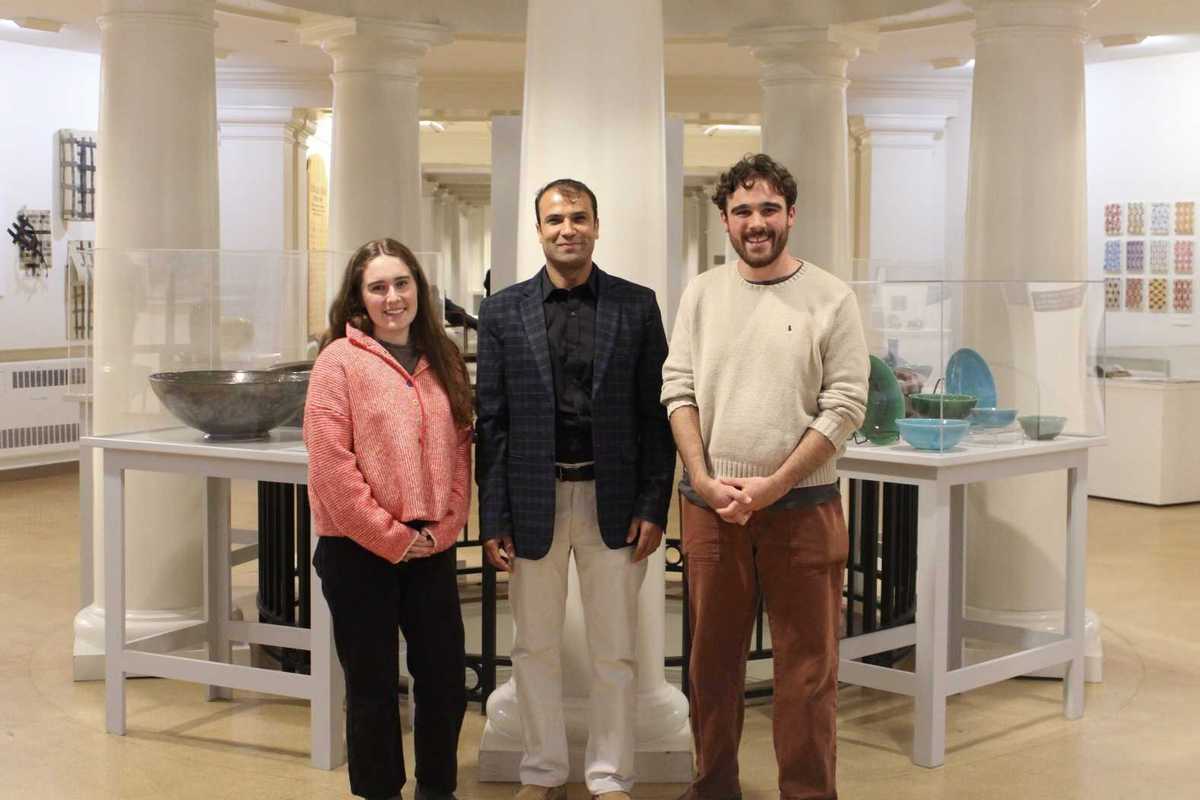
Left to right: Hannah Wheeler, Matin Malikzada and Yonah Sadeh.
D.H. Callahan
On Monday, Oct. 26, a group of students, teachers and local residents gathered at the Hotchkiss School in Lakeville for a screening of the new short documentary “Matin.” The film tells the story of Matin Malikzada, a seventh-generation Afghani potter making a new life in New Milford, Connecticut. The film was made by local filmmaker Yonah Sadeh, creator of the Video Wall at the David M. Hunt Library, and Berkshires-based potter Hannah Wheeler, who were both present for the screening, along with Malikzada himself.
As a member of the seventh generation of his family to master the art of pottery, Malikzada had done things the way his family had for over a century. Istalif, the village where his family has lived for generations, was known throughout Afghanistan for its pottery, with wares sent across the country for use as everyday cups, bowls, plates and other vessels. The pottery-making families of Istalif gathered clay from the same mountain, about 30 to 45 minutes away by donkey. Every July, they would head north toward the Uzbekistan border to gather ishkar, a plant they processed by hand to make their signature glazes.
By the time Malikzada became a master potter, he no longer processed or gathered the clays and glazes himself. He had assistants and family members to prep everything for him, allowing him to stay seated at the electricity-free kick wheel all day long, sometimes making more than 100 pieces a day.
Eventually, Malikzada became the head of the ceramics department at the Turquoise Mountain Institute, an NGO founded by King Charles III, where he had also trained as a student. After graduating, Malikzada was hired as a master ceramicist and eventually became head of the department. It’s through his role there that he first started visiting the United States. Thanks to a relationship with Yale, he quickly took to Connecticut and eventually decided to move his family to New Milford.
The film explores Malikzada’s challenges in relearning his craft far from the traditions and materials of his home. In Istalif, his family would fire a wood-fueled kiln packed with 1,800 to 2,000 pieces once a month. Now, he would have to rely on the much smaller, standardized electric kilns found in most ceramic studios today. Without access to his ancestral clay, he had to learn to use an entirely new material, which he would now have to process and prepare himself. Perhaps most challenging, he was forced to develop a new method for creating glazes that could match his signature colors and textures. As he tells the filmmakers, he experimented with the glazes through 415 firings. “The 416th, I got result.”
“Matin” avoids the fraught political questions that have dominated public discourse in recent years, choosing instead to focus on Malikzada’s art, ingenuity and determination. The filmallows the artist to tell his story in his own words, with a remarkably calming voice.
Though the students, faculty, and ceramics enthusiasts thoroughly enjoyed the screening, the filmmakers hope to continue developing the story, incorporating animation andmore of their footage. As Malikzada teaches his children the family trade, maybe someday they will film an eighth generation at work.
To learn more about Malikzada’s work, visit malikzadapottery.com.
Keep ReadingShow less
Meg Sher finds her calling among the stacks
Robin Roraback
Oct 27, 2026
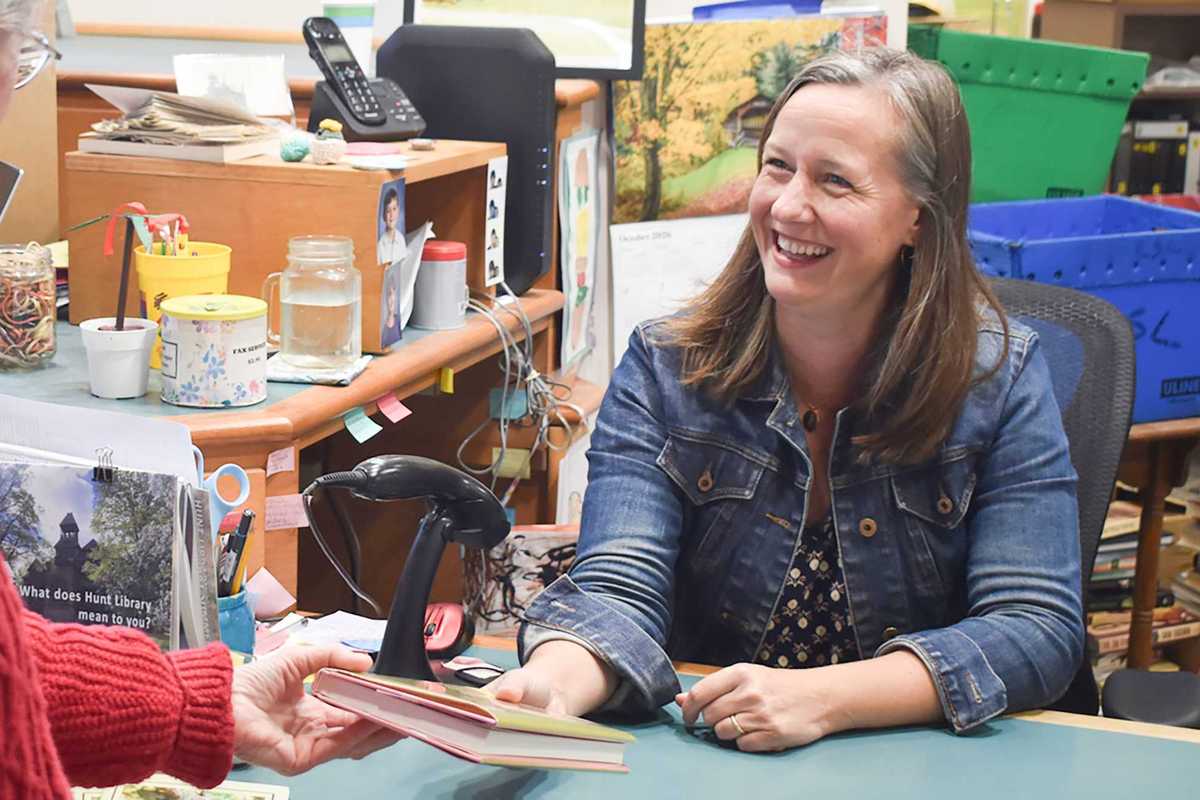
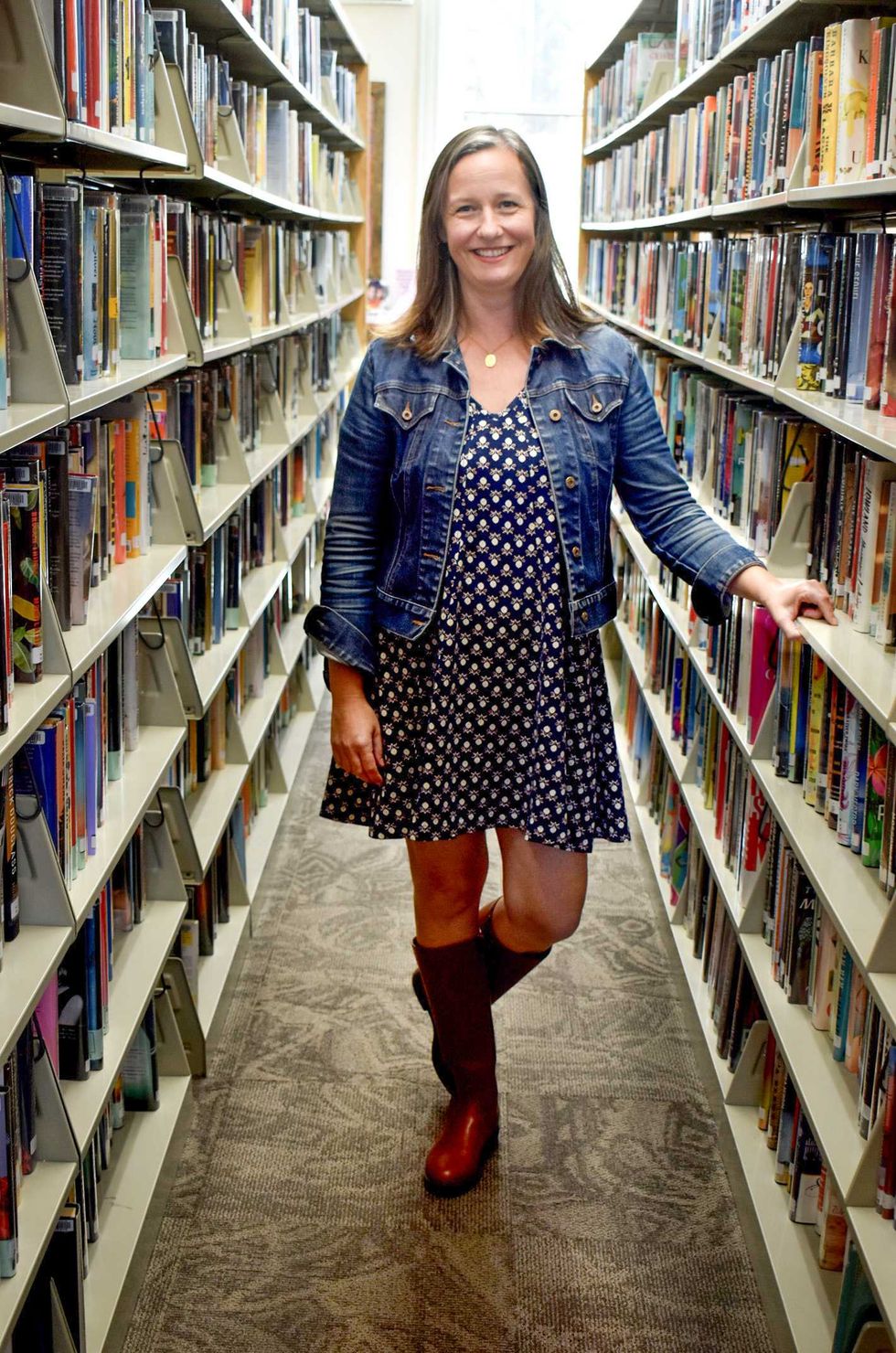
Meg Sher, executive director of the David M. Hunt Library in Falls Village.
L. Tomaino
When Meg Sher came to Falls Village in 2006 from Old Lyme, Connecticut, where she grew up, she never imagined she’d someday be the executive director of the David M. Hunt Library.
Although, in hindsight, perhaps it makes sense.
“I was a library kid. I walked to the library after school,” she said.
For Sher, the library is as much about the people as it about the books.
“Part of the job I love so much is that running the library is such a community,” she said.
She treasures the relationships she has built, whether recommending books, celebrating accomplishments or helping patrons through difficult times.
“I am thankful that our community is so supportive of the library, unlike what is happening in some other places where librarians are villainized,” Sher said.
Sher takes pride in the Hunt Library’s reputation for being “open and welcoming to everyone. People come in and see things and get pulled into things they weren’t expecting. Our library is seen as a positive force.”
Sher came to Falls Village after being awarded a fellowship at Adamah Farm, then a program of the Isabella Freedman Jewish Retreat Center. She worked at pickling, in the greenhouse and later in the development office. She also worked as a nanny.
At the same time, “I was in the library all the time,” she recalled. “I’m a voracious reader. The library is where I met a lot of my first friends in Falls Village.”
She became assistant librarian at Hunt and worked in that position for almost a decade before becoming the executive director four years ago.
Sher met her husband, Adam, while working at Adamah. They had their wedding there in 2012. He now emcees many events which she co-organizes with the Falls Village Recreation Commission.
Sher and her family live near the library.
“It’s an easy commute,” she said with a smile. “My kids run back and forth. I can go home to walk the dog if I need to.”
“My kids have grown up here.” Her oldest son, Eli, “loves volunteering. He helps with Augustfest and often helps set up chairs for ArtWall gatherings.” Her younger son, Noah, is often at events and was eager to taste cookies at last year’s holiday cookie swap.
When she is not at the library, Sher likes to hike with her family. Bella, their Portuguese water dog, often accompanies them.
Sher enjoys seeking out people to offer events at the library.
“I do a lot of different community programming. It is one of my favorite parts of the job.”
Augustfest, featuring food, music and an auction, is the library’s biggest fundraiser.
“This summer we had a record 152 attendees, which was pretty incredible.”
Yonah Sadeh, a filmmaker from Falls Village, inaugurated the VideoWall this year, Sher explained.
“I’ve known Yonah since he was two. It’s wonderful to work with him as an adult.”
The VideoWall complements the library’s ArtWall, which showcases a new artist each month. Sher praised the ArtWall committee for its work and highlighted December’s popular “12x12 Show,” featuring works by local artists, each measuring 12 by 12 inches and priced at $150.
Sher added that some of the artists who exhibit at the ArtWall offer workshops to students at Kellogg School, next door to the library. In September, artist Danielle Mailer worked with the children. Vincent Inconiglios taught a class last November.
Being next to the school, said Sher, is a great advantage.
“Kids are coming after school, to see friends, work on projects, find a great book. Kids that love the library end up using the library as grownups.”
This past year, in partnership with Adamah, the library and school created a garden, with excess produce made available at The Center on Main.
This year is Sher’s second year participating in the Troutbeck Symposium in Amenia with James King, director of the library at Salisbury School. The Troutbeck Symposium is “a gathering of a year of student historical inquiry across the region” in which students “uncover stories that have been overlooked, forgotten, or never recorded.”
Last year, Sher and King began a project with a group of students researching Irish immigrants in Falls Village, exploring ancestry and creating small magazines about their findings.
They continued this year, visiting St. Patrick’s Catholic Cemetery on Dublin Road, cleaning seven gravestones and even righting one with the help of stonemason and gravestone restoration expert Karl Munson. Paul Kozeazny, a representative of the Catholic archdiocese, helped secure access to the site.
A film documenting their activities will be shown at the symposium in spring 2027.
A full schedule of programs and events, ranging from tech help to ceramic mug-making, can be found on the library’s website.
Despite spending her days surrounded by books, and a busy schedule of programming, Sher still loves to settle in with a book at home.
For more information on library programs and events, visit huntlibrary.org
Keep ReadingShow less
Crescendo’s 23rd season speaks to the heart and mind
Caitlin Hanlon
Oct 27, 2026
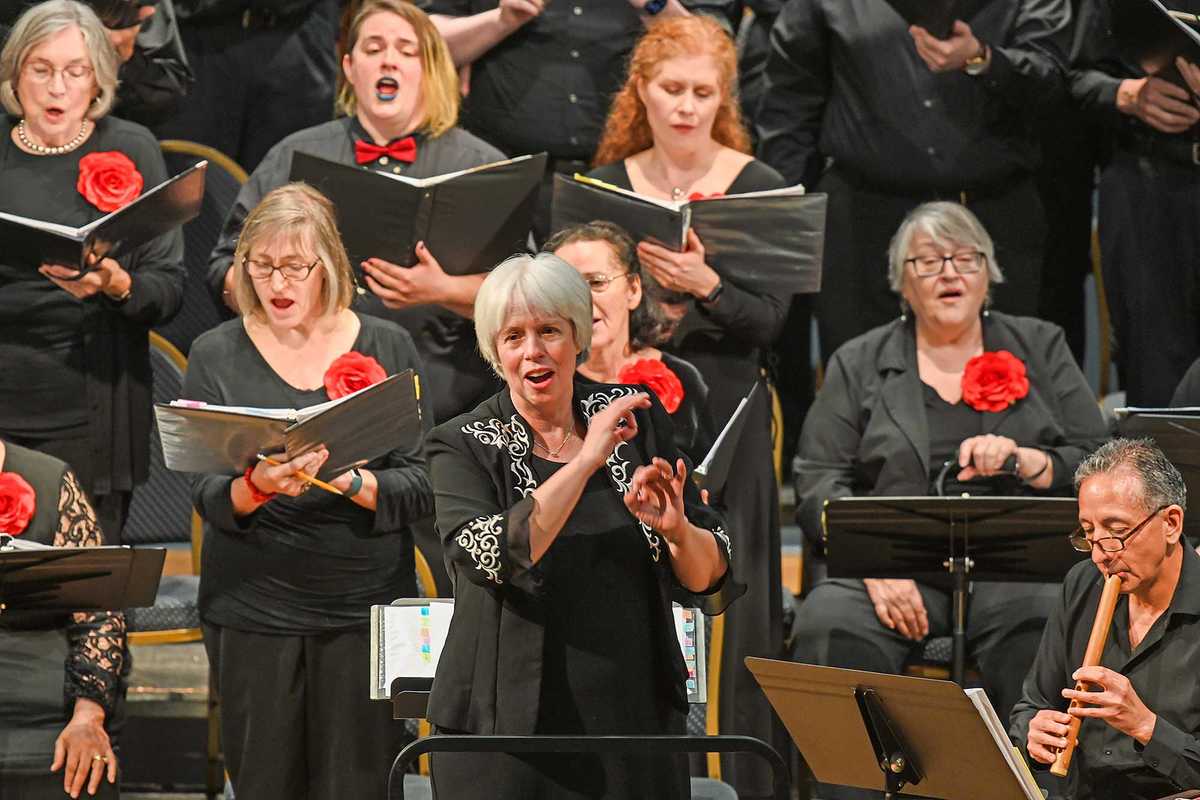
Christine Gevert, founding artistic director of Crescendo, conducts the audience at a performance.
Steve Potter
For Christine Gevert, founding artistic director of Crescendo, music from centuries past is anything but a relic. It is a living, breathing art form, full of drama, emotional complexity and, occasionally, surprises. As the regional choral and period-instrument ensemble launches its 23rd season, Gevert is once again bringing forgotten masterpieces into the present.
“Early Music has been my lifelong passion and the focus of my specialization in Europe and South America,” Gevert said. “Bringing this repertoire to our audiences in a nuanced way that does justice to its incredible depth, intensity, and beauty is deeply important to me.”
The season opens Oct. 31 and Nov. 1 with “Galant Fire — Masterpieces of Venice and Naples,” featuring the Crescendo Chorus, a period string ensemble and guest soloists Douglas Ray Williams, Caroline Christopher, Laura Evans and Kevin Ray.
Among the program’s highlights is Antonio Vivaldi’s “Laetatus sum,” a rarely heard choral work whose manuscript was rediscovered in 2017. Its obscurity, Gevert explained, was not entirely accidental.
“In the case of the Vivaldi piece, the bias stretches right back to his own lifetime; his work was intentionally mislabeled and ‘rebranded’ under the name of a more famous contemporary to financially benefit the owners of the manuscript.”
Rediscovering works like this is what Crescendo is all about.
“It is a privilege to champion repertoire that is underrepresented in modern concert halls,” Gevert said. “So much incredible music has been silenced over time due to historic cultural biases, lost manuscripts, or the simple fact that modern performing editions do not yet exist.”
Crescendo was recently awarded a $50,000 grant from the Arthur F. and Alice E. Adams Charitable Foundation. The funding will support a large-scale production during the 2027-28 season devoted to historic female composers, including Antonia Bembo, Marianna Martines and Amalia of Saxony.
“Female composers not only faced immense restrictions in their own eras, but remain underrepresented today,” Gevert said.
As a music editor, arranger and specialist in early music transcription, Gevert often prepares performing editions herself, making otherwise inaccessible works available to contemporary musicians.
“Crescendo has a proud history of presenting U.S. and East Coast premieres of early music, and being part of this rediscovery process is profoundly exciting for both our performers and our audiences.”
The season also ventures into new territory with Celtic and Gaelic repertoire from Ireland and Scotland, presented alongside English traditions in two December programs, “The First Spark” and “A Celtic Wintertide.”
“We are introducing Irish and Scottish Celtic and Gaelic repertoire alongside English traditions, which is a first for Crescendo,” Gevert said.
The holiday concerts will feature soprano and historical harpist Zoe Vandermeer, who sings while accompanying herself on triple harps, as well as recorder player Tricia van Oers. Vandermeer will contribute an original composition, while Gevert will introduce new arrangements of English and Welsh holiday tunes.
“In our Holiday concerts, we juxtapose early music with folk tunes and contemporary arrangements,” Gevert said. “This gives our audiences something familiar to connect with, offering the joy of hearing and singing along with beloved carols.”
The programming continues into spring with “The Paris Confluence,” featuring works by Telemann, Bach and Marais, followed by April’s “Sovereign Grandeur,” a dramatic exploration of a 1701 London musical competition inspired by the myth of “The Judgment of Paris.” The season concludes June 12 with “Forgotten Voices,” a solo keyboard program featuring early female composers.
Throughout the season, audiences can expect ambitious vocal writing, including compositions with as many as 10 independent vocal parts and contemporary works requiring improvisation.
“This music is highly ‘text-driven’ and strongly appeals to both the emotions and the intellect,” Gevert said, “which is the unifying thread running through all of our productions this season.”
“Galant Fire — Masterpieces of Venice and Naples” will be performed Saturday, Oct. 31, at 4 p.m. at Saint James Place in Great Barrington and Sunday, Nov. 1, at 4 p.m. at Trinity Episcopal Church in Lime Rock. For the full season schedule and tickets, visit crescendomusic.org.
Keep ReadingShow less

Want more of our stories on Google? Click here to make us a Preferred Source.
Close Encounters with Music celebrates 35 years of musical discovery
Natalia Zukerman
Oct 27, 2026
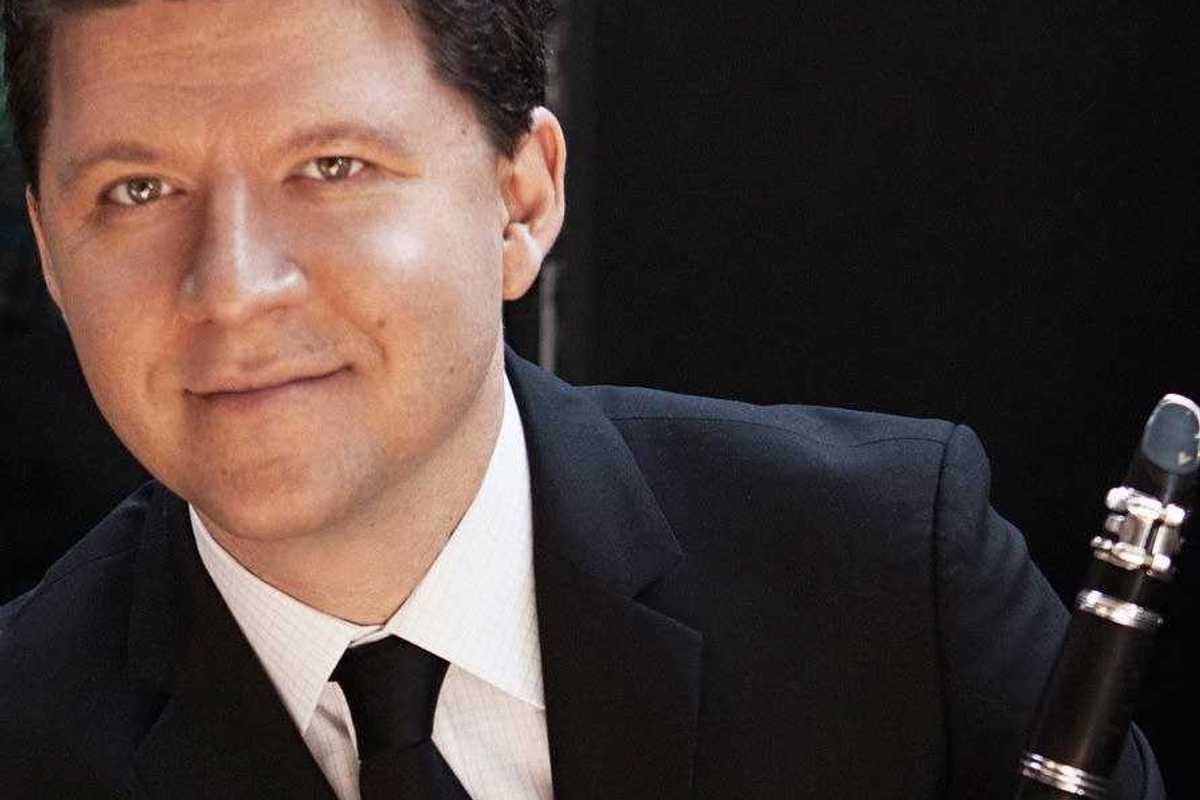
Close Encounters with Music’s 35th season opens with “Saluting the Clarinet” featuring clarinetist Alexander Fiterstein.
Provided
For 35 years, cellist Yehuda Hanani has been inviting audiences to experience classical music in unexpected ways. As founder and artistic director of Close Encounters with Music, Hanani has built a concert series that goes beyond the music itself, exploring connections to literature, history, politics and the human experience.
This year, Close Encounters celebrates its 35th season with “Celebration & Discovery,” a seven-concert series that opens Sunday, Nov. 1, at the Mahaiwe Performing Arts Center in Great Barrington.
From Mozart and Gershwin to a cabaret inspired by Paris and Weimar Berlin, a full orchestra and the world premiere of a commissioned work, the season reflects Hanani’s longstanding belief that classical music should be accessible, adventurous and relevant.
As classical music has moved further from the cultural mainstream, Hanani has looked for creative ways to bring audiences into the concert hall.
“We try to figure out ways of drawing them into the concert hall,” he said. “This was the idea behind thematic programs. Every concert had a theme, and my goodness, after 35 years, we’ve covered hundreds of themes.”
Those themes haven’t always been strictly musical. Over the years, Close Encounters has explored the relationship between creativity and mental illness, celebrated women’s suffrage with a program featuring 15 female composers and presented music of political protest in response to a proposed cement plant along the Hudson River.
For Hanani, these connections are part of what makes the series distinctive.
This season opens with “Saluting the Clarinet,” featuring acclaimed clarinetist Alexander Fiterstein alongside pianist Michael Chertock, violinists Xiao-Dong Wang and Helena Baillie, violist Daniel Panner and Hanani on cello.
Why the clarinet?
“It’s so versatile. It can be velvety and smooth and sexy, and it can be brash and biting and it can bend notes,” he continued. “It’s perfectly suitable for jazz. It’s prominent in operatic literature. It’s symphonic. It’s all over the place.”
The opening program demonstrates that versatility with works by Beethoven, Mozart, Bartók and Gershwin. Among the highlights is Bartók’s “Contrasts,” commissioned by jazz clarinetist Benny Goodman and violinist Joseph Szigeti, with Bartók himself at the piano for the premiere.
The program also includes a jazz-inspired reimagining of Gershwin’s “Rhapsody in Blue” by a female composer, which Hanani described as “a pretty crazy kind of jazzy piece of music.”
The concert concludes with Mozart’s Clarinet Quintet.
The musical variety continues Dec. 13 with “Come to the Cabaret! Paris and Weimar Berlin,” featuring Israeli singer and actress Yael Rasooly in her Close Encounters debut. The theatrical program draws on the music of Édith Piaf, Marlene Dietrich and the cabaret traditions of interwar Europe, complete with elaborate costumes and life-size puppets.
On Feb. 21, pianist Simone Dinnerstein joins Hanani and cellist Hannah Sohn for a more intimate program at Saint James Place devoted to Bach and Handel.
Although the two Baroque composers are often grouped together, Hanani is interested in their differences.
“It sounds like the same Baroque music, two guys with a big wig on their head,” he joked. “But they were so, so different.”
“Handel was affluent and lived in style, and he owned two Rembrandts, believe it or not,” Hanani said. “Very worldly. And Bach, of course, is in another sphere altogether.”
The season continues March 14 with the four-time Grammy-nominated Skylark Vocal Ensemble, presenting music inspired by gardens, birdsong and the natural world.
On April 18, Close Encounters turns to Dvořák, whose music bridges European and American traditions. The program includes the composer’s “American” Quartet, Piano Quintet and vocal selections performed by baritone Tyler Duncan.
“We are going to just have a musical portrait of Dvořák, including some of his songs that are very seldom heard, sung in Czech,” Hanani said.
Another milestone arrives May 16 with “The Golden Chain of Classical Music,” featuring the 26-member Vivace Orchestra under conductor Joshua Gerson. The program includes Haydn’s “Surprise” Symphony, Mozart’s Sinfonia Concertante and Beethoven’s First Symphony.
“We’re having something we’ve never done before,” Hanani said, describing the orchestral program as a way to illustrate “the three golden rings linked, which really make the foundation of the classical style.”
The season concludes June 13 with perhaps its most personal offering: the world premiere of “Metamorphosis: Love,” a work commissioned by Close Encounters from Cuban composer Jorge Martín.
The piece was inspired by the writings of Matt Morris, a young poet and librettist whom Hanani befriended in the Berkshires. Morris studied at the Royal Academy in London and struggled with serious mental health challenges before dying by suicide.
“We became very close,” Hanani recalled. “What we did is we collected all his writings, his poems, his musings, even his libretto.”
Martín used those writings to create a work for soprano and tenor with an unusual instrumental ensemble. The tenor represents Morris, while the soprano takes the role of his muse.
“Very unusual combination of sounds,” Hanani said. “Very eerie, kind of very spiritual.”
The new composition is part of a commissioning tradition that has become central to Close Encounters’ identity. More than 20 composers have created works for the organization over the years, often bringing together musical traditions that might seem worlds apart. After 35 years, that spirit of exploration remains at the heart of Close Encounters.
“This is the nature of our series,” Hanani said, “exploring old masterpieces, sometimes neglected masterpieces, commissioning a lot of composers and looking forward to the future.”
Close Encounters with Music opens its 35th season Sunday, Nov. 1, at 4 p.m. with “Saluting the Clarinet” at the Mahaiwe Performing Arts Center in Great Barrington. The seven-concert season runs through June 13, 2027, with performances at the Mahaiwe and Saint James Place. Tickets and information are available at cewm.org.
Keep ReadingShow less
Shinbone Alley brings spooky songs to Spencertown
D.H. Callahan
Oct 27, 2026
Seeing isn’t always believing. Sometimes it’s the lack of a defined picture that can be the most compelling. And when Alex Harvey of Shinbone Alley sings his supernaturally charged sea shanties and street ballads, the unseen will be downright scary. On Oct. 30, the historically inclined storyteller and performer will create a spooky evening of forbidden tales and yarns through a carefully chosen series of songs at Spencertown Academy of Arts.
The repertoire for the performance is a bit fraught. Over the years, Shinbone Alley has explored the world of folklore through music. Though the group usually features two musicians, Harvey, a multi-instrumentalist and singer, will be performing solo. That is, of course, unless you include the spirits.
Harvey believes there’s power in a good ballad. When those ballads are spooky in nature, unfamiliar feelings have a tendency to permeate the atmosphere.
With two or three decades of performing under his belt, Harvey, a trained ethnomusicologist, has sought out and stumbled upon quite a few of these haunting ballads, many of which date back hundreds of years. Through some of his many musical projects, he’s cautiously dabbled in performing the tunes, but only one or two at a time.
Even nonbelievers in the supernatural can feel the power in these tunes. The musicians, therefore, treat them with care. Unleashing too many on an unsuspecting audience could simply be too much to handle. The selection Harvey will perform at Spencertown is what he refers to as the “superheroes of supernatural ballads.”
With this program, Harvey is tempting the darkness, bringing all his most powerful ballads together in one performance. Will it be too much? Will everybody make it out alright? Will a portal open to another dimension, unleashing ancient demons into the realm that is upstate New York? Only time will tell.
Adding to the unsettling subject matter and lore of the tunes is the nature of song as a form of storytelling. Harvey is a firm believer in the tradition of passing stories along orally. Though he spent years as a filmmaker, he’s decidedly avoiding screens these days. In fact, he doesn’t even have a smartphone.
To him, a story told through words and music demands more of the audience and their imaginations than video ever could. In turn, it rewards listeners with more intimate versions of the stories, each visually unique to every single person present.
While Harvey has a series of seasonal repertoires, it’s this special time of autumn that stirs up the most unsettling notions. It’s not just Halloween, either. As the darkness creeps in, the trees reveal their skeletal forms and the verdant bounty of summer starts to decay, a profoundly grim feeling can wash over New England and the Hudson Valley.
Many despair at the thought of shorter days and colder nights. But some are willing to succumb to the season and embrace the darkness. Those hearty few will find themselves quite at home with the supernatural ballads and shanties of Shinbone Alley.
For morning information and tickets, visit spencertownacademy.org.
Keep ReadingShow less
Malian blues and Moroccan Gnawa meet in Sheffield
James Fitzgerland
Oct 27, 2026
Vieux Farka Touré
Proivded
Desert winds rarely blow into the Berkshires, but on Nov. 5, they will carry the Malian blues and Moroccan Gnawa music to Race Brook Lodge.
That evening, Malian guitarist Vieux Farka Touré, often called “the Hendrix of the Sahara,” and Moroccan musician Samir LanGus will play at the lodge’s Event Barn in Sheffield, Massachusetts, at a benefit for the foundation Touré directs.
Touré was born in northern Mali in 1981. His father, the renowned guitarist Ali Farka Touré, came from a family of soldiers and wanted his son to join the army. The younger Touré studied drums and the calabash and practiced guitar in secret. He earned his father’s blessing to pursue music shortly before Ali died in 2006, and they played two tracks together on Vieux’s debut album.
Touré is known for his deft, polyrhythmic playing, and his songs grow out of riffs that repeat and layer to hypnotic effect. He draws on rock, blues, Latin music and various African traditions. This distinctive blend builds on his father’s work adapting the sonic traditions of Mali’s arid north to the guitar.
Vieux’s album “Mon Pays” (“My Country,” 2013) honored Mali’s culture after Tuareg separatists and extremist groups seized the north in 2012. “Samba” (2017) was recorded before about 50 listeners in Woodstock, New York. In 2022 came “Les Racines” (“The Roots”), a return to his father’s desert blues, and “Ali,” on which he and the trio Khruangbin reworked eight of the elder Touré’s songs.
Touré leads the Ali Farka Touré Foundation, which focuses on cultural and educational work in Mali. Around the anniversary of Ali’s death, it holds a festival in Bamako, Mali’s capital. Bamako has been under blockade for much of the past year, besieged by JNIM, an al-Qaeda affiliate. Against this backdrop, Touré continues to carry the music of Mali to audiences abroad.
At the Nov. 5 concert, Touré’s desert blues will share the bill with Gnawa, the music LanGus plays, which developed in Morocco among West Africans who were brought north across the desert as enslaved people. Gnawa is religious music traditionally performed at all-night healing ceremonies called lila, intended to carry participants into trance.

LanGus was born and raised outside Agadir, Morocco, and began learning Gnawa from its masters at age 8. He plays the sintir, a three-stringed bass lute made of wood and camel skin. The player strikes a low string with the thumb to create a deep, resonant pulse. Iron castanets clatter over the sintir’s bass line, and vocalists trade call-and-response refrains.
LanGus infuses the tradition with jazz and improvisation. In New York, he founded the ensemble Innov Gnawa. His first solo album, “Gnawa Love,” came out in February.
Touré and LanGus’s Nov. 5 concert is one of the last public events at Race Brook Lodge, which is for sale and ended full-service operations at the end of 2025. The lodge’s final scheduled event, on Nov. 6, is an evening of Rumi’s poetry with translator and vocalist Haleh Liza Gafori, cellist Isabel Castellvi and ceremonial bard James Bird.
For tickets, visit rblodge.com.
James FitzGerald is a student at Yale Law School, where he focuses on ecological restoration and international environmental cooperation. He splits his time between Lakeville and New Haven.
Keep ReadingShow less

Want more of our stories on Google? Click here to make us a Preferred Source.

loading