If you think it’s over, you’re most likely not going work your heart out to try to make a difference.
— Nancy Elle Smith
Coyotes move quietly through tall grass. Bobcats wait at the edges of yards for rabbits and squirrels. Deer emerge from a punishing New England winter to dance across a meadow. Spiders construct elaborate webs using different kinds of silk. Bears leave trails through the woods and cubs climb familiar trees.
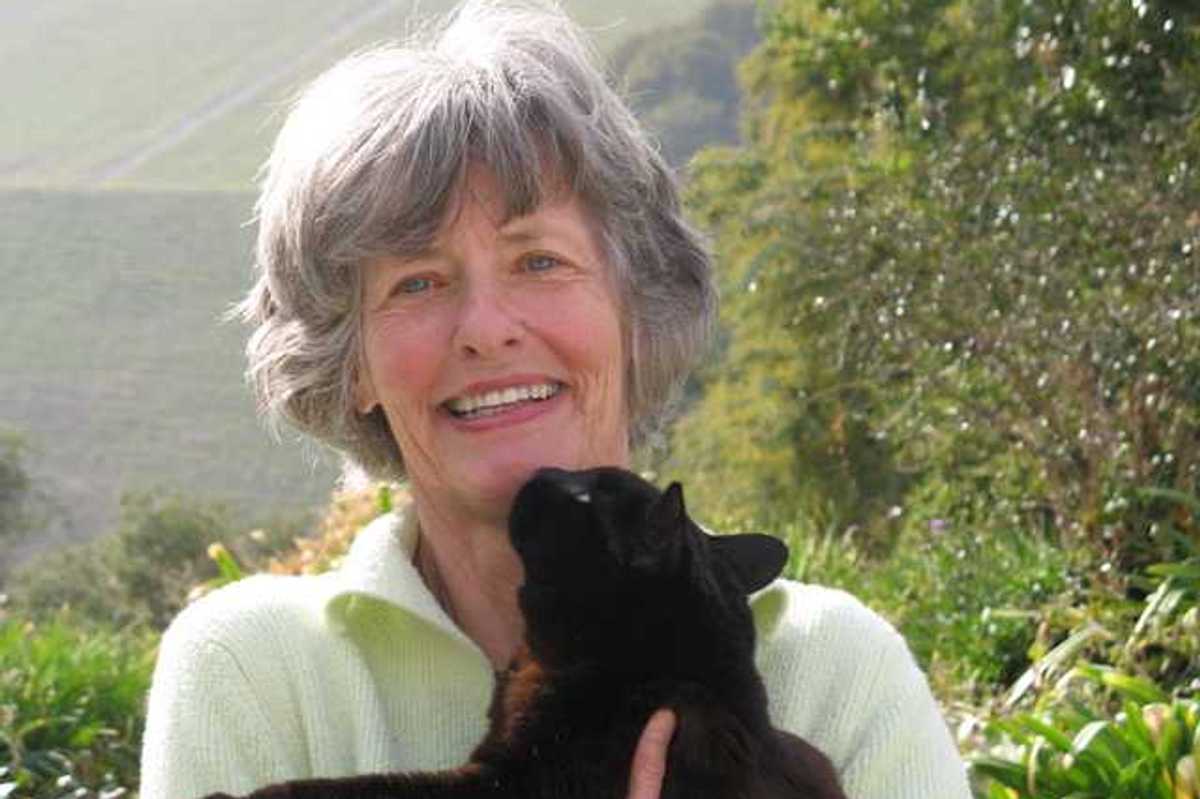
For years, Nancy Elle Smith has been watching.
Her new book, “Downwind: The Wild Pulse of the Berkshires,” is part natural history, part memoir and part love letter to the animals living alongside us — often without our noticing. Combining essays with images gathered largely from motion-activated trail cameras, the book documents what Smith calls the “quirkiness, the exuberance, and the fierce beauty” of the wild creatures of the Berkshires.
On Thursday, Oct. 15, Smith will bring those stories to the Norfolk Library for “Wild Animals in the Neighborhood — The Gift of Second Chances,” a slide presentation and talk about the return of wildlife to a landscape where many species were once nearly or completely wiped out.
The Berkshires Smith writes about are beautiful, but she is wary of romanticizing their past. The forests that seem timeless today are, in ecological terms, relatively young. For generations, trees were felled for charcoal and timber and wildlife was trapped, hunted and displaced. Beaver, wolf, mountain lion, moose, bear, deer, otter and other species vanished or became scarce. Most of the forest disappeared with them.
And yet, the wild came back.
“We have these animals with us now,” Smith said. “We need to keep them here.”
Smith came to conservation by a circuitous route. She studied art, lived for years in New York City and eventually worked for Sweet Water Trust, helping protect large areas of habitat throughout New England and Quebec. But she says her real education began much earlier.
“My background in conservation is just that I am a total animal lover,” she said.
Growing up in the suburbs of Washington, D.C., Smith was fascinated by whatever crawled, wriggled or flew through the altered landscape around her. She watched grubs and beetles, searched for crayfish beneath creek rocks and examined fleas and insects under a small microscope.
“Even in a ruined place, the diversity of life was astounding,” she said.
Then, when she was 11 or 12, Smith took a bus by herself to the National Zoo.
There she encountered an orangutan alone in a small enclosure of concrete and iron bars. What she saw in his face — anger, misery, confinement — stayed with her. In the preface to “Downwind,” Smith describes the encounter as the moment her “passion for wildness and freedom” was born through witnessing its loss.
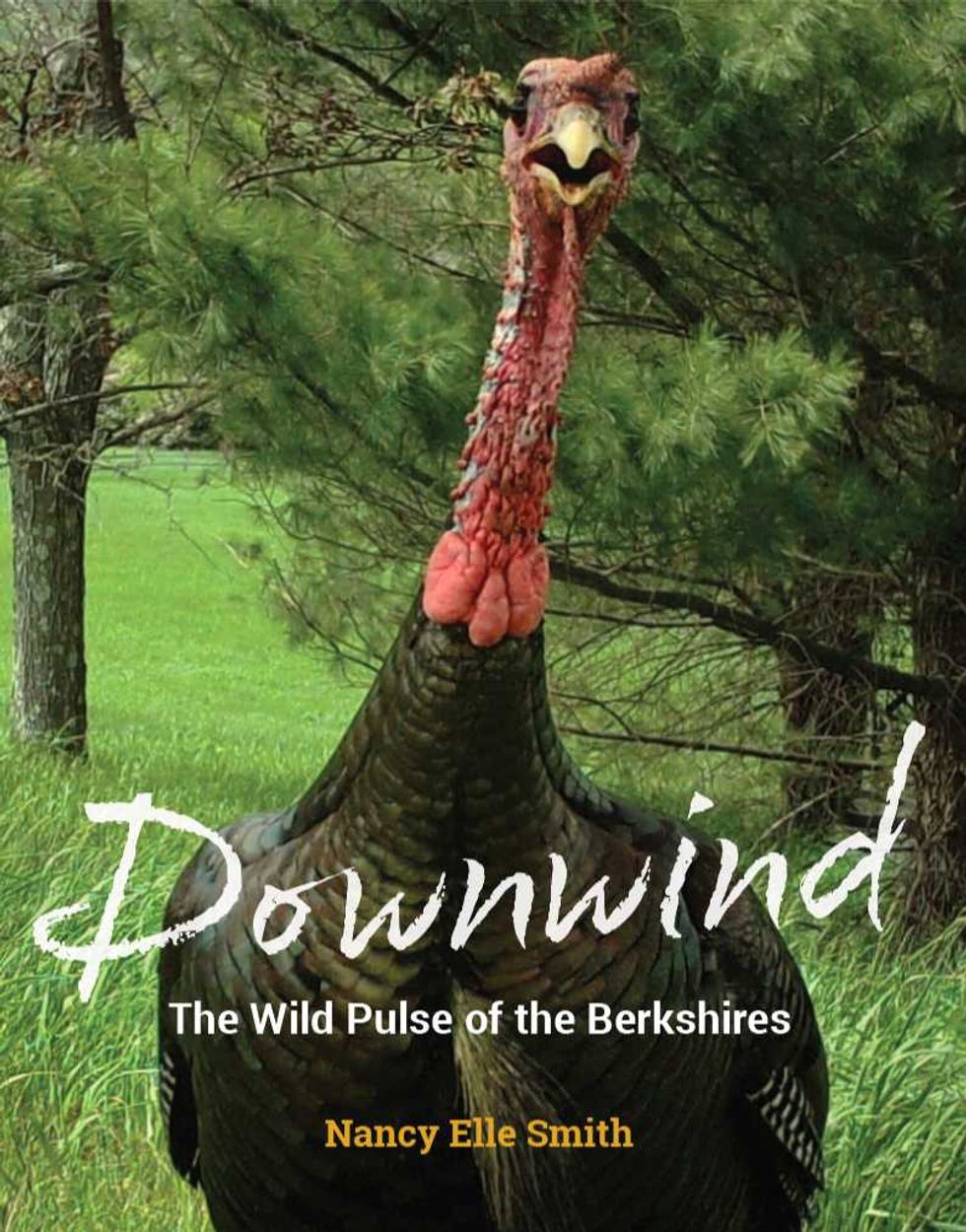 Cover of “Downwind: The Wild Pulse of the Berkshires” by Nancy Elle SmithProvided
Decades later, wild animals would become not only the subject of Smith’s conservation work but a way of understanding the place she had chosen as home.
After leaving New York City, she came to the Berkshires on a day trip and walked into a windy valley beneath an enormous sky. Animal tracks crossed the landscape. A mountain rose in the distance.
“I remember laughing,” she writes. “I think I leapt around a bit.”
She stayed. Her children were born at Sharon Hospital, and Smith put down what she calls her “taproots” in the Berkshires. For roughly 15 years, she has also worked to conserve rare wetlands and habitat on and around her Sheffield property.
Eventually, wanting to know more about the animals passing through that landscape, she began putting out trail cameras.
One became several. At the height of the project, Smith had about 40 cameras scattered through the region — beside fields and stone walls, near cliffs and trails, mounted high in trees or barely a foot above the ground.
What came back on the memory cards was a parallel Berkshire County: coyotes, bobcats, deer, owls and tiny animals nearly invisible against the snow. One camera captured what at first appeared to be a hundred photographs of nothing. Looking more closely, Smith found a pinpoint of reflected light — the eye of a tiny white ermine moving through a snowy stone wall in search of food.
The cameras were not always sophisticated. Some cost $15. Many eventually succumbed to years of heat, snow and rain. The photographs can be grainy or pixelated.
But Smith is emphatic about what matters.
“That’s not what this is about,” she said. “It’s about the animals.”
The result is not quite a photography book and not quite an essay collection.
“It’s a both book,” Smith said.
The images led her toward stories and questions. What was a coyote doing outside her fence? How did animals use a field differently as the grass grew taller? How did spiders build, hunt and respond to disturbance? What allows an animal to adapt to a landscape increasingly shaped by humans?
And what, in turn, might humans learn from paying closer attention?
“They’re awesome and resilient,” Smith said. “What they have to do to survive is just amazing.”
Smith spent two years observing spiders around her home, watching webs illuminated from behind by sunlight and studying how they spun, hunted and reacted to her presence.
“They’re beautiful, and they’re very alien and do unusual things if you really watch them,” she said.
The attention altered something in her. Instead of seeing a spider and instinctively recoiling, she now finds herself wondering, “What’s that one gonna do?”
Smith is troubled by species loss and by the question she poses in the book: “Where is the outer edge to nature’s redemptive powers, at what point does resilience crash?” But she resists despair.
“I just don’t want to think that it’s over,” she said. “For one thing, that’s very defeatist. If you think it’s over, you’re most likely not going work your heart out to try to make a difference.”
So where does that work begin?
“You start to care,” she said.
Humans, Smith believes, need to “enlarge their circle of compassion” beyond themselves, their families and their communities to encompass the other species with whom they share the landscape.
“The more you study them,” she said, “the deeper it goes — and the more respect that you have for these life forms.”
In “Downwind,” Smith argues that the return of wild animals to the Berkshires has given humans something earlier generations nearly squandered: another chance to live among them.
“And they have as much right to exist as we do,” she said.
Smith will present “Wild Animals in the Neighborhood — The Gift of Second Chances” Thursday, Oct. 15, at 5:30 p.m. at the Norfolk Library. The free program is co-sponsored by the Norfolk Library, Norfolk Nature Alliance and Aton Forest. Smith will sign copies of “Downwind: The Wild Pulse of the Berkshires” following the talk.