Thank you!
Your support is sustaining the future of local news in our communities.

Family Eye: generational artistry at The Re Institute

Family Eye: generational artistry at The Re Institute

“Cowskull” by Emily Clark.

Provided

The Re Institute is a 2,000 square foot exhibition space situated in the hay loft of a 1960’s barn on Boston Corners Road in Millerton. The goal of the Re Institute is to allow artists to observe their work in a new context. From May through October, art is celebrated, discussed, and shared, with each opening night transforming into a potluck feast. Strangers become friends over casseroles, and conversations about creation and perception flow as freely as wine. This is a place where art and community intertwine, sparking unexpected connections and blending diverse mediums.

Henry Klimowicz is the heart and hands behind The Re Institute. His work with recycled, corrugated cardboard is a constantly changing exploration of the material and its organic, ever evolving nature, giant testaments to transformation and renewal.
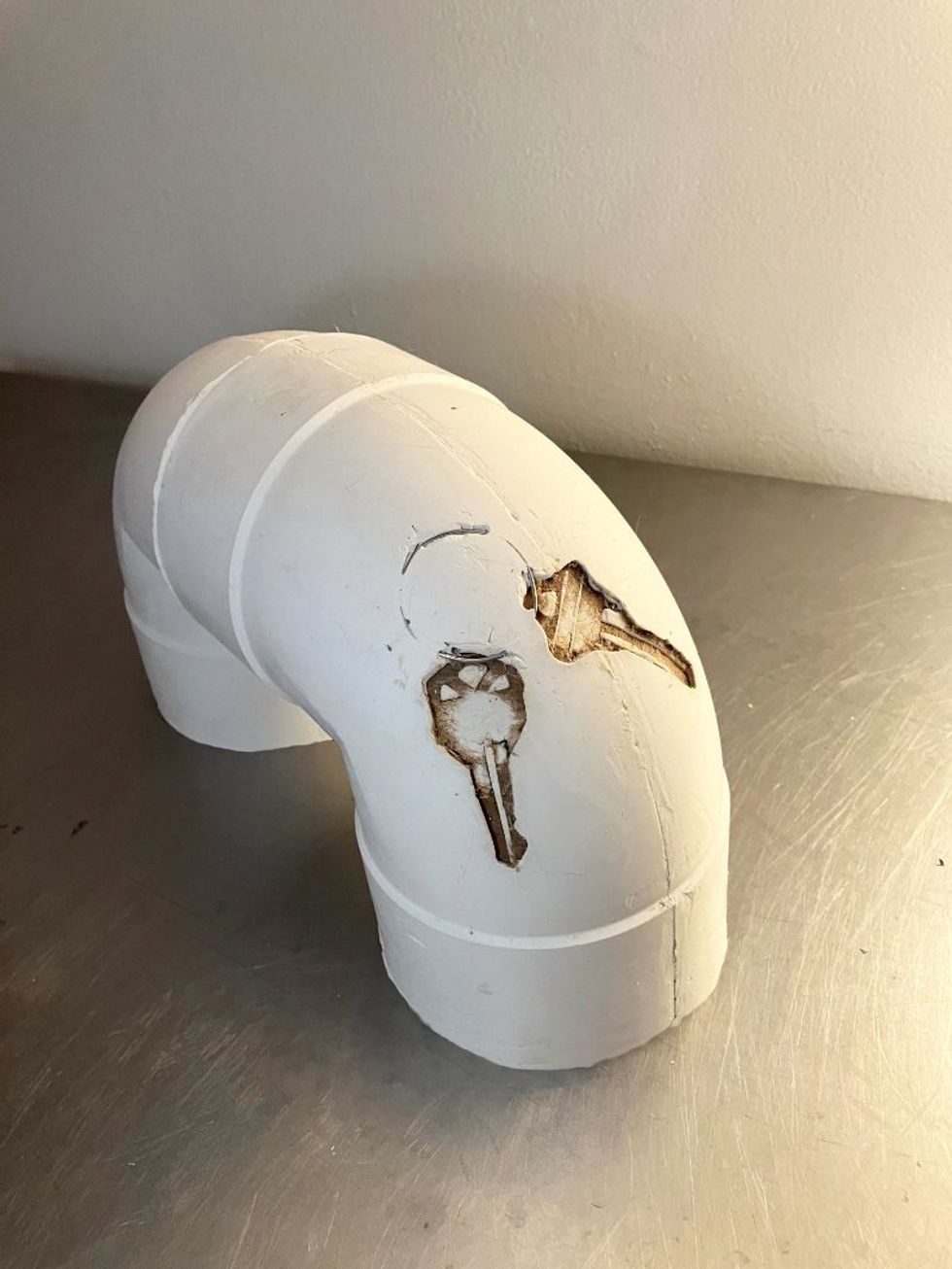
“Untitled” by Nate Millstein.Provided

The artists paired for shows at the barn are always connected, whether through the conversation their work engenders or through direct collaboration. A new show, “Family Eye” is set to open at the Re Institute on August 10 (running through September 14), and will feature a group of artists that are particularly connected — by the primal bonds of family. Through pairings of duos and trios of parents and children, a familial dialogue emerges exploring how family shapes vision and creation. Does the artist’s eye carry the imprint of lineage? Does creativity flow through bloodlines, spanning generations? Posing and answering these questions are the family artists of Adolph Rosenblatt, Eli Rosenblatt, Joshua Rosenblatt, Eileen Coyne, Caitlin Harris, Emily Clark, Jon Millstein, Nate Millstein, Mara Manning, Kiefer Waterman Frank Jackson, Amy Podmore, Ruby Jackson, Donald Fabricant, Gwen Fabricant and Jonathan Fabricant.

In Jonathan Fabricant’s statement about the work being shown, he writes: “As for the formal, spiritual, conceptual or political influences that exist, or not, between my family’s work, a small snapshot of which is exhibited here at The Re Institute – I’m going to withhold comment, as I hope that the work speaks to that itself, and that you the viewer can tell me what you see.”

Come and see for yourself on August 10 from 4 p.m. to 6 p.m., and stay for the potluck, where food and art, conversation and community come together in a lively and meaningful gathering.
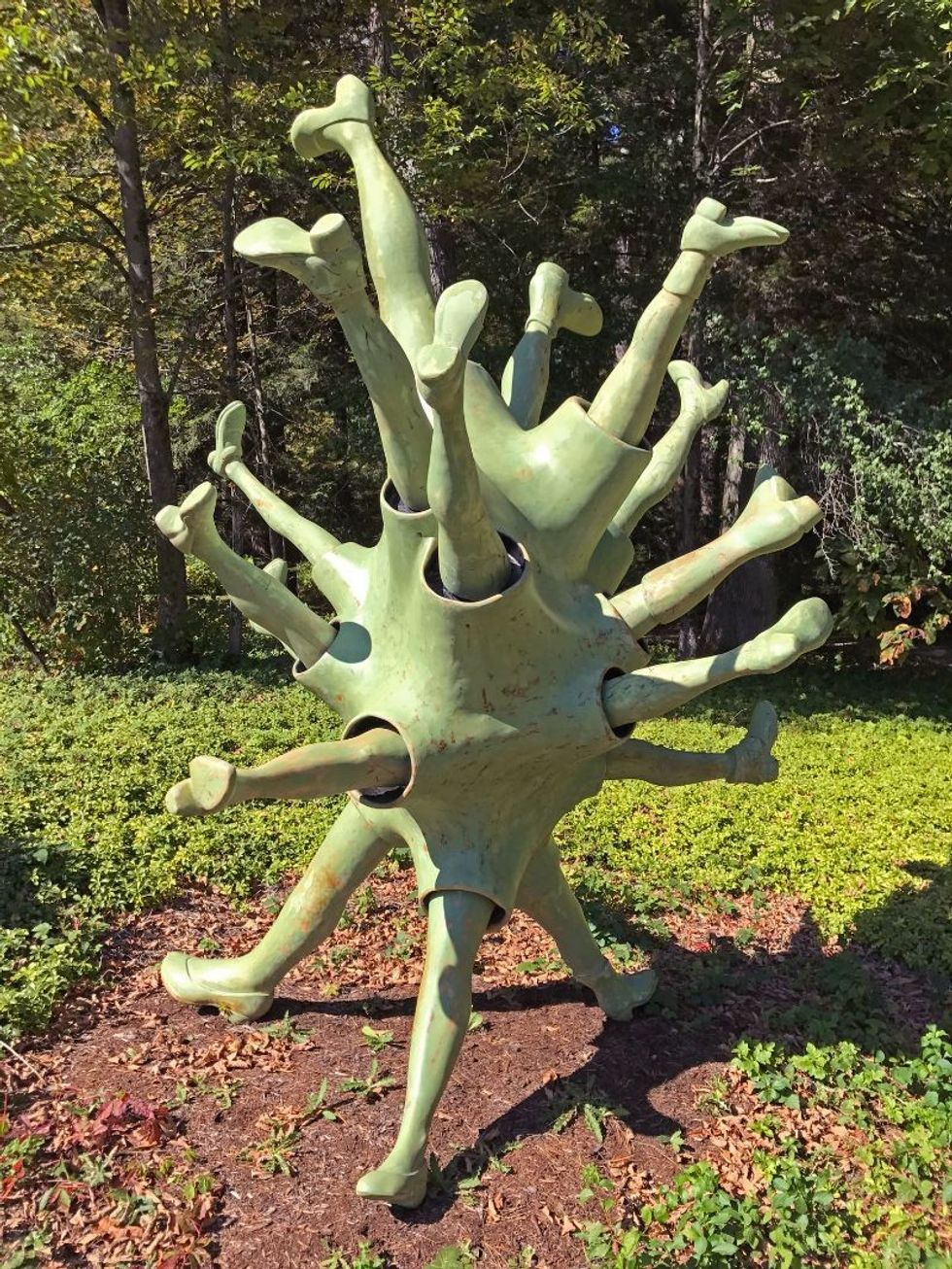
”WHIPLASH” by Amy Podmore.Provided

Latest News

Jam leaves Sharon, prepares for Salisbury opening

Jam Food Shop’s future home at 19 Main St. in Salisbury. The shop ended service in Sharon on Oct. 3, but an opening date for the new location has yet to be set.

Patrick Stachniak

SALISBURY — Jam Food Shop has officially closed its Sharon location, with its much-anticipated standalone store still under renovation in Salisbury.

Jam Food Shop, previously operating out of the Sharon Farm Market, is in the middle of renovating its new location at 19 Main St. Construction crews are renovating the former Neo Restaurant and Bar space as locals await the deli’s opening.

Keep ReadingShow less

Dinner with the dog

Dinner with the dog
Georgie, enjoying a late-summer “pup cup” on the porch at Grassland Dessert Cafe in Lakeville.
Natalia Zukerman

Dog owners know the dilemma: You’re out for the day with your four-legged sidekick when hunger strikes. Fortunately, a number of area restaurants, cafés and breweries welcome dogs, mostly at outdoor tables. Policies and outdoor seating can change with the season, so calling ahead is always a good idea.

The White Hart and Provisions in Salisbury is particularly pet-friendly. The inn welcomes pets on request, and its front porch and sprawling lawn make inviting places to settle in with a canine companion. They even welcome well-behaved patrons — bipedal and quadruped alike — in the cozy dining area.

Keep ReadingShow less

A day in the life of a rescue dog

A day in the life of a rescue dog

Marsala is eager to go home with you.

Jennifer Almquist

“It’s unbelievable that this sweet, loving boy hasn’t found his home yet,” said Tiffany Lemelin, shelter manager of The Little Guild, whose mission is to rescue, love and heal homeless cats and dogs. She smiled at the small dog wagging his tail. “This is one of the most deserving dogs you could ever meet, with so much love to give.”

Marsala is an energetic, 1-year-old, 45-pound black Labrador mix waiting to be adopted. He arrived March 25 as a stray named “Chicken” from Toccoa, Georgia.

Keep ReadingShow less
google preferred source

Want more of our stories on Google? Click here to make us a Preferred Source.

A second chance in Wingdale

A second chance in Wingdale

Sampson, a playful and independent blind hound mix, explores the rescue’s large yard.

L. Tomaino

Meade Canine Rescue and Sanctuary is not the average rescue. Situated on a quiet dirt road on 8 acres in Wingdale, the dogs living there are, for the most part, uncaged, roaming the yard, sleeping in the house, resting in the shade of a tree or lounging in the open van that often takes them for rides.

“We go on lots of adventures,” said the rescue’s founder, Charlotte Meade.

Keep ReadingShow less
The bear necessities of living in bear country

A bear outside Cornwall Consolidated School in West Cornwall.

D.H. Callahan
Take down bird feeders when bears are active. Secure garbage cans left outside, and never leave pet food or trash on porches, screened-in or otherwise.

This here is bear country. In fact, Connecticut has an unusually high rate of bear home entries compared with neighboring states. So far this year, the state has documented more than 60 home entries, and bears have been spotted in all 169 towns and cities.

Bears are also part of life in neighboring Dutchess County. But don’t worry. It’s not as bad as it sounds.

Keep ReadingShow less

When your pet needs help after hours

When your pet needs help after hours

Newtown Veterinary Specialists

Provided

Anyone who has ever had a dog swallow something it shouldn’t, a cat suddenly struggle to breathe or a pet get hurt late at night knows how quickly panic can set in. In our corner of the world, there’s an added complication: emergency veterinary care may mean getting in the car and driving some distance.

That makes it worth knowing your options before you need them — and knowing the difference between a local veterinary practice that can handle an urgent case and a fully staffed, 24-hour emergency hospital.

Keep ReadingShow less
google preferred source

Want more of our stories on Google? Click here to make us a Preferred Source.

google preferred source

Want more of our stories on Google? Click here to make us a Preferred Source.