Part 2 of 2 - The Solution
The futures market, particularly what are called commodities futures, originally served laudable purposes.
Futures purchases permitted farmers, miners, energy producers, manufacturers and others to go ahead and plant crops, explore for resources, create energy and make products of value to society, knowing in advance that they could count on future marketability to customers and consumers. These were what we might call long sales. They were bets in favor of the future.
But nothing cannot be gamed. Along came the likes of Enron, who used the futures purchase and sales techniques to corner the energy market. Enron gave up being a producer of energy and they certainly never were a consumer. They found a way to become middlemen profiteers.
By using leveraged financing and buying forward even before the energy had been produced, Enron could drive up the price of energy for their own benefit. Later, when it came time for a California school district to buy energy for their schools, schools had to buy at the artificially high prices Enron had falsely created. Today, Wall Street and the hedge funds are accomplishing much the same thing.
It is reliably estimated that over 30 percent of the price of gasoline at the pump today is not due to imbalance in supply and demand, but is due solely to Wall Street, hedge fund, Enron and Ponzi-style trading in global financial markets.
These investors do not sow, nor do they weave or spin, but they do reap. Using their wealth and leverage, they buy up all available fuel ahead of time, in effect monopolizing the free market and driving up the price for everyone else. Then they cash in, all the way to the bank. This has to be regulated.
Just when you might expect the effect of such financial futures speculation should at least be to always drive up prices and favor industry, along came the global financial speculators and hedge-funders who bet against stocks, bonds, derivatives, mortgages, currencies, products, industries and whole economies.
The short sellers win if such ventures fail. They win if the economy fails. They win if America fails — provided they take their loot out on time. Loyalty to country does not enter the picture. It’s time to change how the game is played.
Should we weep tears for the global financial speculators who game the system? They are notorious for tax avoidance (questionable ethics) and tax evasion (criminal behavior), which together more than account for the entire U.S. national debt. Therefore, why should we hesitate to reduce tax breaks for the super-wealthy? They buy and sell, flip and gamble, trillions of dollars a year and pay no sales tax.
The sensible answer, of course, would be to adopt a 1 percent securities and financial transaction tax (like a sales tax) on such high volume speculation. A 1 percent transaction tax on a $200 trillion market turnover would yield $2 trillion in additional U.S. revenue in a short period of time.
That alone would wipe out the U.S. national debt in no time and restore America to permanent solvency. There would be no need to cut social programs or ever worry again about the national debt ceiling. Problem solved.
Nevertheless, the utility, integrity and legality of many of these current financial products and practices need to be comprehensively reviewed with a view to introducing responsible regulation and control in the national interest.
We need to seriously consider in particular whether any form of short selling or betting against an enterprise, investment vehicle, the economy or the nation, should be permitted in the absence of proof of an underlying commercial or other useful social or economic purpose.
Who will enforce this? What we need is a powerful, independent, executive administrative enforcement authority, a sort of combined SEC/CFTC/CFPB with real teeth, to determine what investment products and practices have legitimate underlying purpose, such as the financing of commercial transactions, and what products and practices are deceptive and counter-productive, serving only middle-man speculative gambling purposes, putting the national economy and markets at pointless risk.
The devil will reside in the details, but we’ll have to be willing to address those details in the national interest. Otherwise, the United States will be subject to future roller coaster cycles of booms and busts, for the enrichment of the already wealthy speculators and at the expense of most Americans.
One day, we may never be able to pull out of the bust. We have to clean house now. Let’s do it. Let’s not short sell America.
Sharon resident Anthony Piel is a former director and general legal counsel of the World Health Organization.

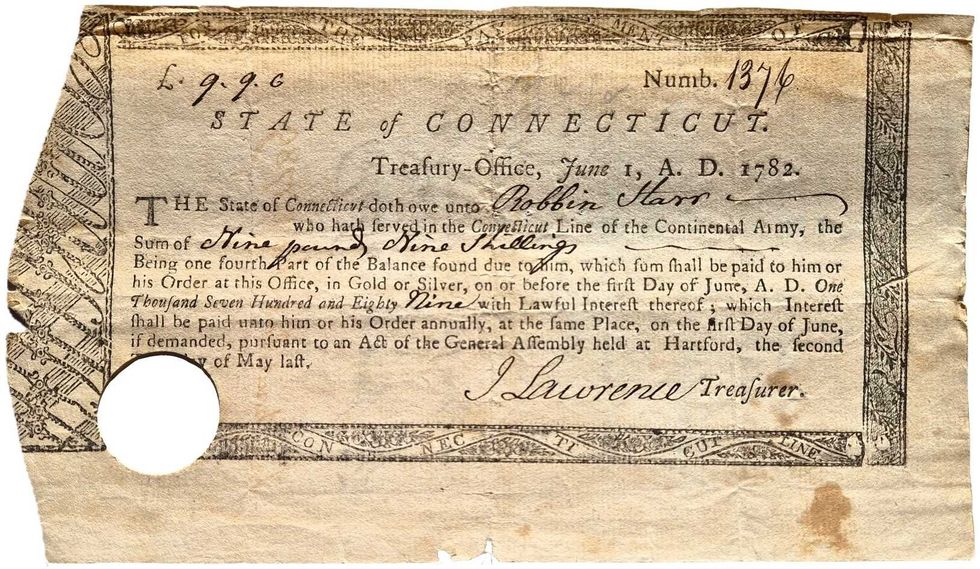 Pay Bill for Robin Starr’s service in the Continental Army.Courtesy the Alex Breanne Corporation
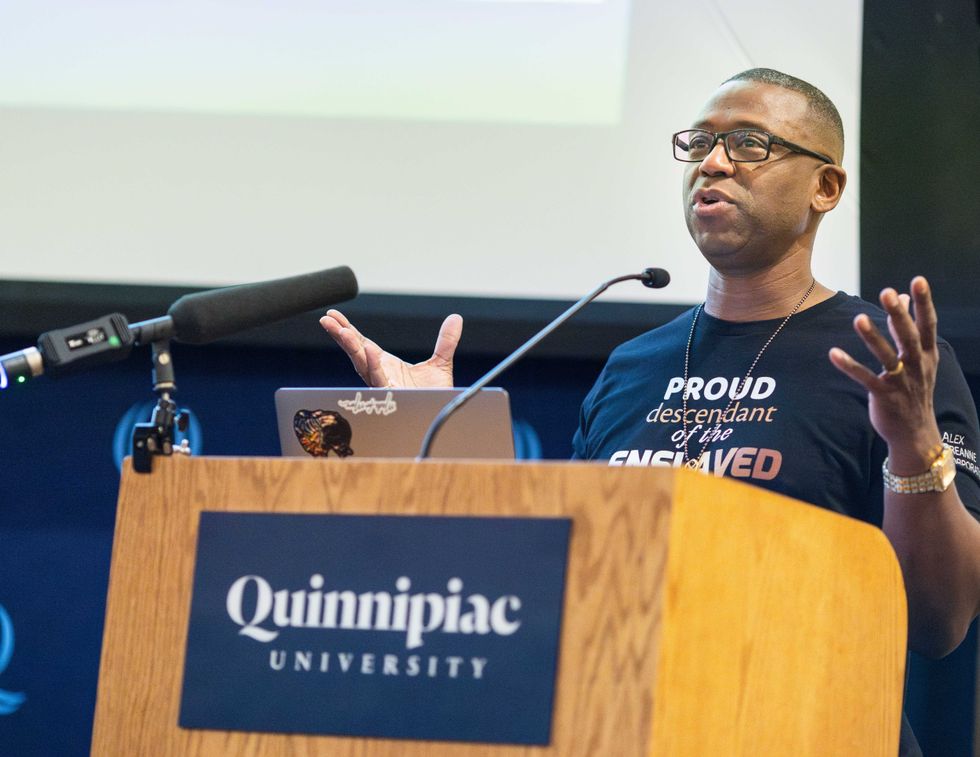 John Mills speaking at Quinnipiac University.Courtesy the Alex Breanne Corporation
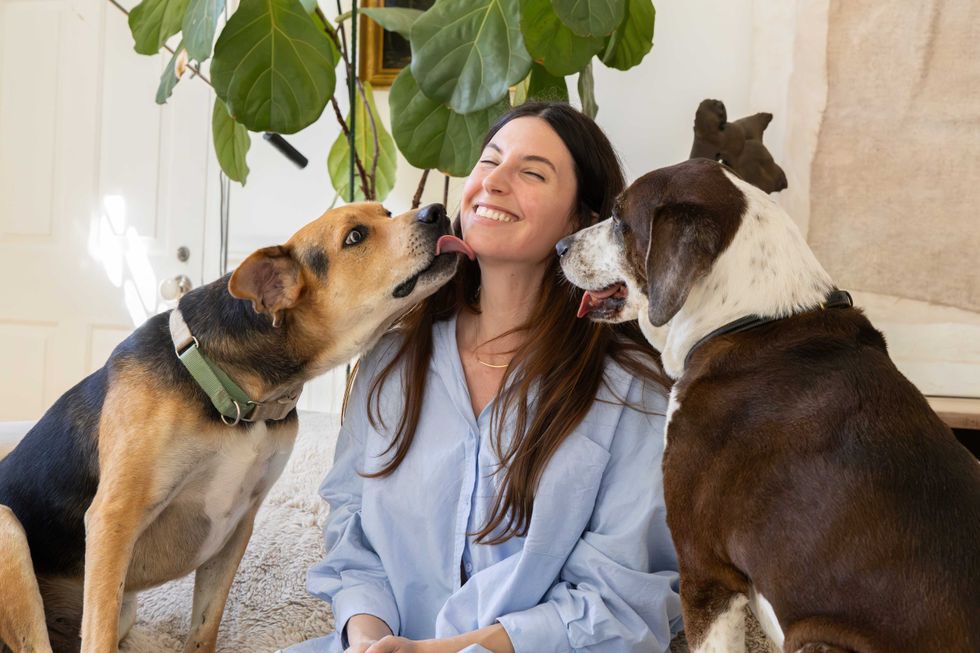 Stephanie Saetta,with her rescue dog George and Blue (left), a shepherd mix awaiting his forever home.Madi Long
 Blue, a 7 year-old Shepard mix, is waiting for his forever home. Madi Long