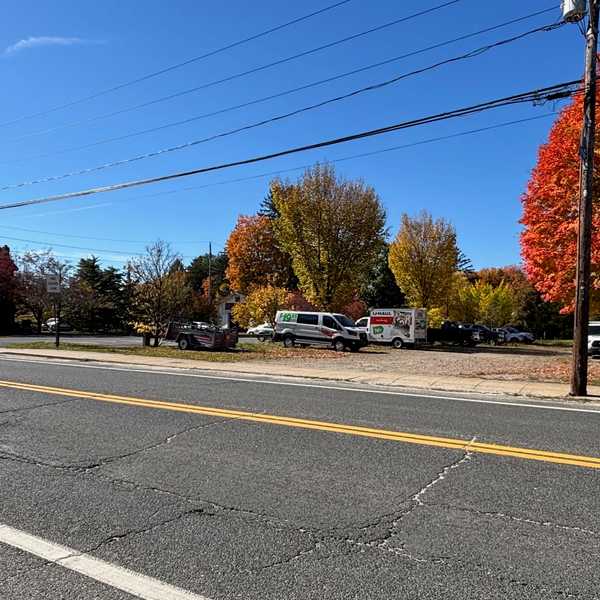
Highway number 3 is also known as the Sandisfield Road, or Smith Hill Road, meets Route 183, or the Colebrook Road, at the north end of the Green in front of the Congregational Church. The last house is No. 474, which is also the intersection of Cooper Lane, a town-owned road that leads to the Colebrook Recreational Area. This area was established in 1979 with the swimming area added in 1986.
The name Cooper honors a family that once owned 474, where they conducted a general store and gas station as well as the Colebrook post office at various times. The family, although no longer living in town, still owns a strip of forest situated between the recreational area and the Consolidated School.
There is a stone marker on the lawn of 474 that is the last original monument demarking the 1772 alignment of Smith Hill. When the late afternoon sun is properly aligned, the words can still be discerned.
Originally, there was no road between the present Town Hall, post office and historical society and the Colebrook Store; this also is a result of the 1772 realignment. The initial layout had the Sandisfield Road crossing present Route 183 as if it was going to follow along Rockwell Road, or Route 182-A, but after passing the Woodbine Cottage behind the store, it made a sharp right turn, taking it along the edge of the meadows where it passed west of the store and 561 Colebrook Road before turning right and joining with the present alignment and proceeding northward over the bridge that separates the stream into two different names: Loon Brook upstream and Center Brook downstream.
As early as 1768 pig iron from the blast furnace in Salisbury was brought to this now abandoned section of road. What business was carried on here remained a mystery, as the Rockwell brothers didn’t approach the town to lease land for their iron works for 20 more years.
However, the bill from the teamster for transporting this iron is in a collection at Rutgers University in New Jersey, and a copy was made and brought back to the historical society when we were researching Smith’s forge.
After 1772, the road through the center was called the Sandisfield Road until the turnpike era arrived, and from 1800 until 1850, from Prock Hill on Colebrook’s north boundary southward through the center and along present Route 183 as far as Millbrook Road, then down that road to Hannafin Road and on into Winchester, the official name was the Waterbury River Turnpike.
There never was a geographical feature named “Waterbury River”; they were referring to the Naugatuck River, which flowed south past Wolcottville (Torrington) and Waterbury, the largest population center in the valley, and eventually Long Island Sound.
Following the demise of the turnpike, the road went back to being called Sandisfield again, and remained that way until the advent of state highways and the numbering system, beginning in 1932.
The name Colebrook Road, as well as other named and numbered roads, was applied when emergency personnel from outside town, such as ambulance attendants, extended their services into all the towns of the state.
Route 182-A, or Rockwell Road, has an interesting history. When established in 1772, it, like most connecting highways in town, had no official name, being described as the road between one road and another, or perhaps to a universally known point of interest such as a store or prominent large boulder.
This particular road was so described until the 1870s, when a mapping concern published an atlas of Litchfield County. A man was sent to each town to gather information to be included in the atlas. The quickest means of achieving this is to interview prominent citizens, which is what happened here.
Just prior to printing, someone was sent out to verify a few items that needed some final polishing. He was told to contact Mr. Reuben Rockwell if the need arose, as he was considered to be the final authority on Colebrook matters. There were a couple of things, one of which was the fact that the road from the center westward to the intersection of what is now Route 182 had no name.
Our cartographer sought out Reuben and showed him a preliminary copy of the map of Colebrook. Apparently this was the first time Reuben had seen the newly compiled map, and he studied it closely. Lo and behold, the road that we call Schoolhouse Road, which leaves the center and heads east to its conjunction with Pisgah Road, bore the name “Carrington Avenue.”
The word “avenue” had never been applied to any road in Colebrook, being a moniker usually associated with wealthier neighborhoods in high-end communities. It was instantly recognized by Reuben that the Carrington family was behind this.
The Carringtons and the Rockwells were on opposite sides of the political spectrum, not to mention that each operated a general store a stone’s throw apart. This perceived act of snobbery on the part of the Carringtons did not sit well with Reuben, and he knew how to let some air out of their balloon.
There was an immigrant family from Ireland living on that unnamed road adjacent to the Lily Pond by the name of O’Connor. Apparently the Carringtons held these people in utter and complete contempt, just for being what they were.
Reuben, knowing this, therefore told the information gatherer that the name of the road was O’Connor Avenue (note the use of that word again!), and it was so recorded and published.
The Carringtons were livid with rage and even went so far as to attempt to buy up as many copies as they could in order that their name not be sullied by the close proximity with Irish immigrants.
It didn’t work, of course, and the name remained until 1957, when it was officially changed to Norfolk Road. Subsequently it was renamed Rockwell Road, which I believe is the best choice, and one that Reuben Rockwell would have seen some humor in.
Years later, when Ed Simonds (1864-1955), then a young clerk at Reuben’s store, asked Reuben about this, the reply was that he felt the O’Connors were just as entitled to have the road past their house carry their name as did the Carringtons. It was Mr. Simonds, a close friend of my parents, who related this tidbit of information to me.
The previously mentioned Schoolhouse Road originally was Beech Hill Road in the 18th century, a most confusing choice to an uninitiated researcher. What they meant was that it led to the section of town called Beech Hill. It was referred to as such until the middle of the 19th century.
Interestingly, all the time I was a student at the Center School, it didn’t have an official name. Only after the school’s demise was the current name applied.
Thompson Road is the shortest road in town, connecting Smith Hill Road with Colebrook Road. It is located between the Congregational church and the two Thompson houses, although there is some confusion as to whether this is a private or public road.
The last road in the center is Center Street, the short, curving road running from Colebrook Road along the south side of Center Brook to its intersection with Schoolhouse Road.
From the 1780s until the first half of the 19th century, this was either the Forge Road, or the Rockwell Iron Works Road, but eventually it became simply Water Street, and so it remained until a town meeting in 1957 when it was renamed Centre Brook.
That spelling didn’t sit well with many in town, and today the official spelling is Center Brook, although the town 911 list refers to it as Centerbrook.
Bob Grigg is the town historian in Colebrook.

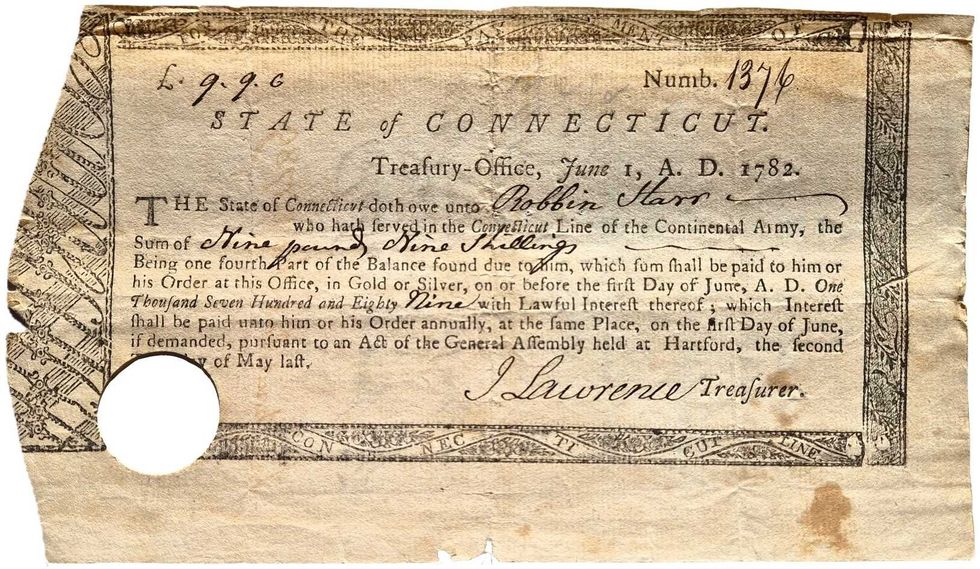 Pay Bill for Robin Starr’s service in the Continental Army.Courtesy the Alex Breanne Corporation
 John Mills speaking at Quinnipiac University.Courtesy the Alex Breanne Corporation
 Stephanie Saetta,with her rescue dog George and Blue (left), a shepherd mix awaiting his forever home.Madi Long
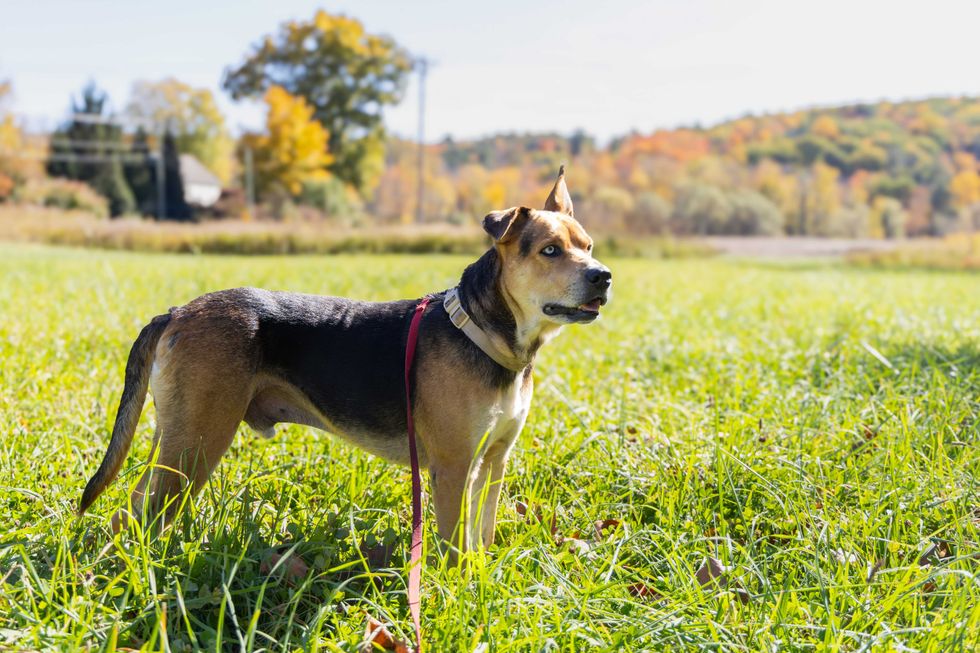 Blue, a 7 year-old Shepard mix, is waiting for his forever home. Madi Long