Historical Society reaches its own century milestone

SHARON — This month the  Sharon Historical Society marks the 100th anniversary of its first meeting, which was held on Jan. 20, 1911.

The society, originally named the Poconnuck Historical Society of Sharon after a Native American word that means “hamlet or small plantation,†was founded in 1911 with the goal of collecting and preserving historical information and artifacts from Sharon’s past.

At the time of its formation, the United States was in the midst of a Colonial revival that had been sparked at the Centennial International Exhibition of 1876 in Philadelphia, which was the first World’s Fair held in America.

Thanks to the exhibition, Americans first began to realize that the artifacts of their country’s past were important and valuable, and they began to seek out and display items from the Colonial era.

This revival led to the creation of historical societies across the country — including Sharon’s. These societies then began to amass large collections of artifacts.

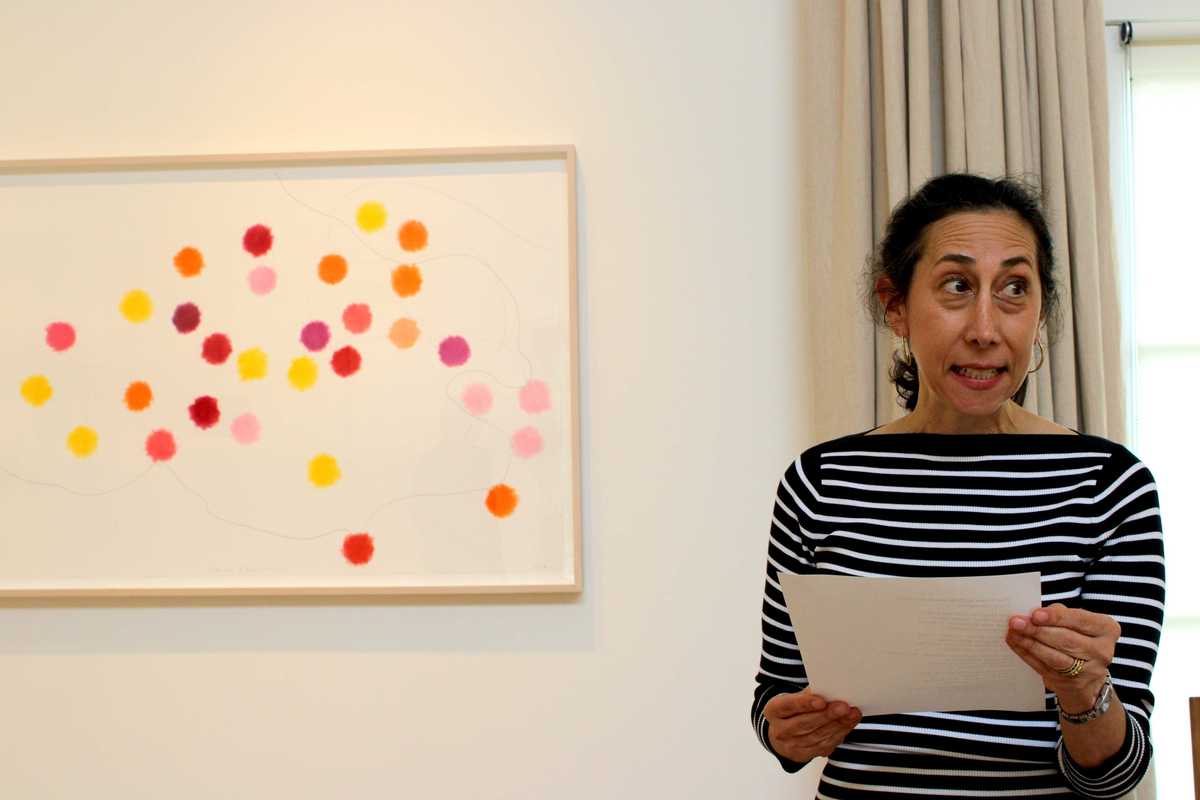
“A historical society is basically a museum,†said Elizabeth Shapiro, who is executive director of the Sharon Historical Society.

In the beginning, the Historical Society met in the Hotchkiss Library of Sharon (the collections were stored in the upper rooms). Ruth Prindle was the organization’s first president, and served until 1935.

Anne Sherman Hoyt assumed presidency of the society in 1939, and served for 10 years. During that time, the library announced that it could no longer house the growing history collection, and the society members began searching for a new home.

Hoyt, who owned a home on Main Street that had originally been built in 1775 by Ebenezer Gay, ended up donating the property to the society in 1951. The Gay-Hoyt  house remains the home of the Sharon Historical Society to this day.

In 1987, the Gay-Hoyt house and the Historical Society were in danger of closing due to a lack of public interest. Peter and Sally Pettus, who were neighbors of the building, became very interested in it and gathered together more Sharon residents to help support it.

A grant of $13,000 was acquired from the Connecticut Humanities Council, and major changes began to take place. With Shapiro’s help, the organization began to rethink its place in the community.

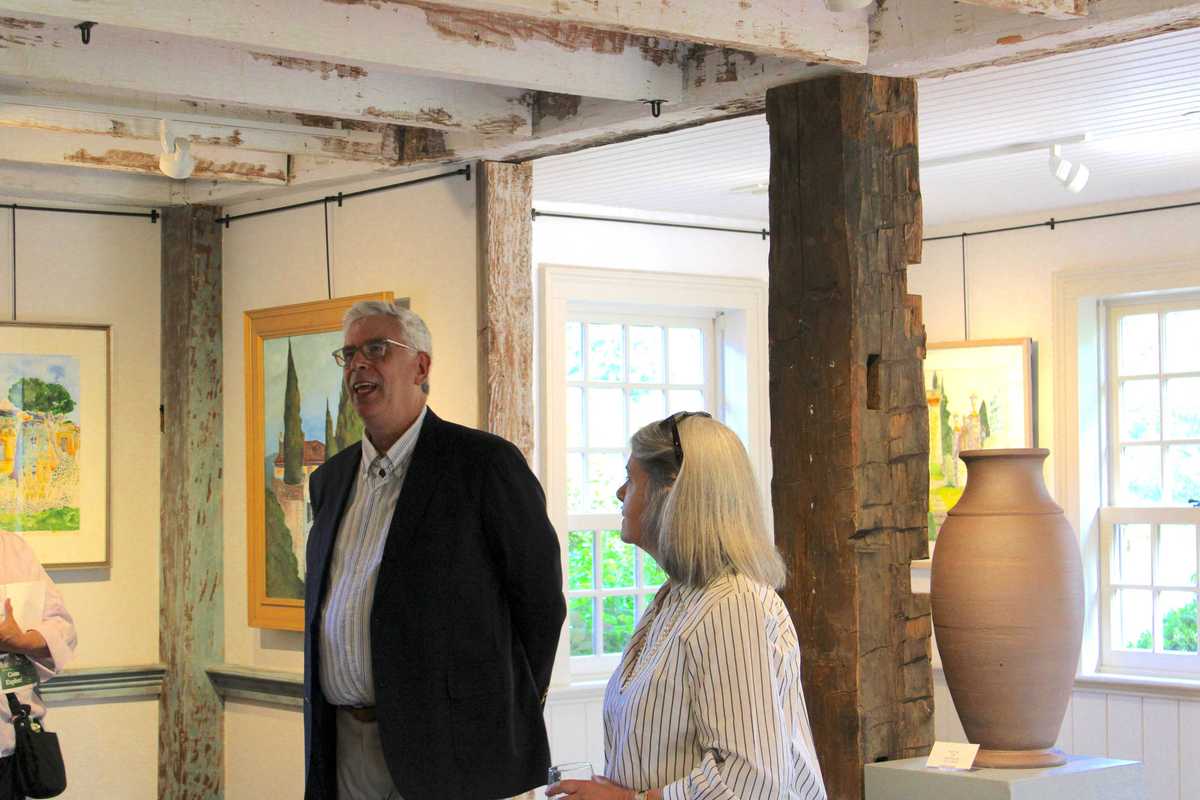
A new and modern Sharon Historical Society has emerged in the years since, and it now acts as a community center and gallery for local artists, in addition to being the repository for the town’s history.

“Our mission is to forge connections within the town,†Shapiro explained. “You can’t be a good citizen without feeling connected.â€

The Gay-Hoyt house is now a center of activity in Sharon, and a place where workshops, talks and social events are held. Shapiro and volunteers at the Historical Society do their best to make children and their families feel comfortable stopping in. One room in the building is dedicated to hands-on activities, and is filled with historical items that children can touch and play with.

The Sharon Historical Society is currently working on building partnerships in the area, such as a pairing with the Housatonic Youth Service Bureau (HYSB), which recently held a marionette-building workshop there.

Other partnerships have been forged with local businesses such as Sharon Hospital, Prindle Insurance and Salisbury Bank.

The society has also begun a Community Curator program, which allows  Sharon residents to suggest and plan exhibits at the Gay-Hoyt house.

“Of course we still take care of artifacts and objects and focus on history,†Shapiro said. “We just approach it differently.â€

The Sharon Historical Society has embraced the digital age, using the Internet as a tool for communication.

In addition to a website that contains extensive information on Sharon’s history and information on past and present residents, the society also uses social networking sites such as Facebook and Twitter, to post historical tidbits and information on current events. The website is sharonhist.org.

Latest News

Kent's towering snowman honors Robbie Kennedy

Jeff Kennedy visits the 20-foot-high snowman located in the Golden Falcon lot in Kent that was created in honor of his late brother Robbie Kennedy.

Photo by Ruth Epstein

KENT – Snowman Robbie stands prominently in the center of town, just as its namesake — longtime Kent resident Robbie Kennedy — did for so many years.

The 20-foot-high frozen sculpture pays tribute to Kennedy, who died Feb. 9, at the age of 71. A beloved member of the community, he was a familiar sight riding his bicycle along town roads waving to all he passed. Many people knew him from his days working at Davis IGA, the local supermarket. He was embraced by the Kent Fire Department, where he was named an active emergency member and whose members chipped in to buy him a new bike, and by the Kent School football team where coach Ben Martin made him his assistant. At Templeton Farms senior apartments, he was the helpful tenant, always eager to assist his neighbors.

Keep ReadingShow less

Classifieds - February 26, 2026

Classifieds - February 26, 2026

Help Wanted

PART-TIME CARE-GIVER NEEDED: possibly LIVE-IN. Bright private STUDIO on 10 acres. Queen Bed, En-Suite Bathroom, Kitchenette & Garage. SHARON 407-620-7777.

The Salisbury Association’s Land Trust seeks part-time Land Steward: Responsibilities include monitoring easements and preserves, filing monitoring reports, documenting and reporting violations or encroachments, and recruiting and supervising volunteer monitors. The Steward will also execute preserve and trail stewardship according to Management Plans and manage contractor activity. Up to 10 hours per week, compensation commensurate with experience. Further details and requirements are available on request. To apply: Send cover letter, resume, and references to info@salisburyassociation.org. The Salisbury Association is an equal opportunity employer.

Keep ReadingShow less
To save birds, plant for caterpillars

Fireweed attracts the fabulous hummingbird sphinx moth.

Photo provided by Wild Seed Project

You must figure that, as rough as the cold weather has been for us, it’s worse for wildlife. Here, by the banks of the Housatonic, flocks of dark-eyed juncos, song sparrows, tufted titmice and black-capped chickadees have taken up residence in the boxwood — presumably because of its proximity to the breakfast bar. I no longer have a bird feeder after bears destroyed two versions and simply throw chili-flavored birdseed onto the snow twice a day. The tiny creatures from the boxwood are joined by blue jays, cardinals and a solitary flicker.

These birds will soon enough be nesting, and their babies will require a nonstop diet of caterpillars. This source of soft-bodied protein makes up more than 90 percent of native bird chicks’ diets, with each clutch consuming between 6,000 and 9,000 caterpillars before they fledge. That means we need a lot of caterpillars if we want our bird population to survive.

Keep ReadingShow less
google preferred source

Want more of our stories on Google? Click here to make us a Preferred Source.
Stephanie Haboush Plunkett and the home for American illustration

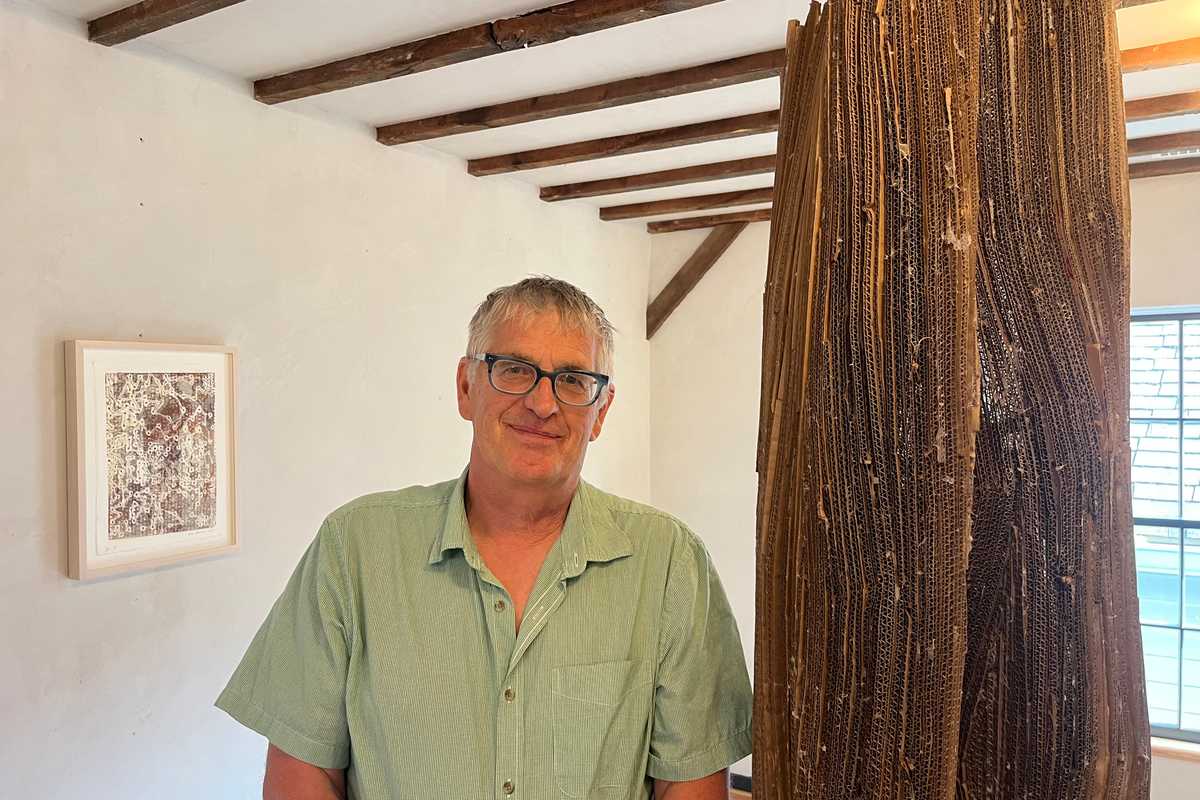
Stephanie Haboush Plunkett

L. Tomaino
"The field of illustration is very close to my heart"
— Stephanie Plunkett

For more than three decades, Stephanie Haboush Plunkett has worked to elevate illustration as a serious art form. As chief curator and Rockwell Center director at the Norman Rockwell Museum in Stockbridge, Massachusetts, she has helped bring national and international attention to an art form long dismissed as merely commercial.

Her commitment to illustration is deeply personal. Plunkett grew up watching her father, Joseph Haboush, an illustrator and graphic designer, work late into the night in his home studio creating art and hand-lettered logos for package designs, toys and licensed-character products for the Walt Disney Co. and other clients.

Keep ReadingShow less
Free film screening and talk on end-of-life care
‘Come See Me in the Good Light’ is nominated for best documentary at this year’s Academy Awards.
Provided

Craig Davis, co-founder and board chair of East Mountain House, an end-of-life care facility in Lakeville, will sponsor a March 5 screening of the documentary “Come See Me in the Good Light” at The Moviehouse in Millerton, followed by a discussion with attendees.

The film, which is nominated for best documentary at this year’s Academy Awards, follows the poet Andrea Gibson and their partner Megan Falley as they are suddenly and unimaginably forced to navigate a terminal illness. The free screening invites audiences to gather not just for a film but for reflection on mortality, healing, connection and the ways communities support one another through difficult life transitions.

Keep ReadingShow less

The power of one tray

The power of one tray

A tray can help group items in a way that looks and feels thoughtful and intentional.

Kerri-Lee Mayland

Winter is a season that invites us to notice our surroundings more closely and crave small, comforting changes rather than big projects.

That’s often when clients ask what they can do to make their homes feel finished or fresh again — without redecorating, renovating or shopping endlessly. My answer: start with one tray.

Keep ReadingShow less
google preferred source

Want more of our stories on Google? Click here to make us a Preferred Source.
google preferred source

Want more of our stories on Google? Click here to make us a Preferred Source.