The findings of a commissioned report on jail alternatives, coupled with $3.6 million in emergency spending that the Legislature appropriated in July to cover increased jail costs, spurred the Legislature this month to form a committee to study the jail situation. This committee, which will report back in December, is expected to recommend jail expansion.
Under consideration is the county’s flawed decades-old policy of housing out inmates to other counties’ jails. In July, the daily housed-out count exceeded 200 for the first time in county history. It has since stabilized back to the 180-count. A year ago, this count was the exception, not the norm.
To date we have spent $23 million in housing out inmates since 1994. It is expected that Dutchess County will spend $5.2 million this year alone in housing-out costs. This number is likely to grow as a new state law turns cell space into a commodity by permitting other states’ inmates to bid on available jail space.
Housing out began when the inmate count at the county jail exceeded the maximum allowable rate of 257. Judging it unwise and imprudent to undertake a jail expansion then, the county pursued an aggressive Alternatives to Incarceration (ATI) program to keep low-level offenders out of jail.
These include releasing on one’s recognizance, electronic monitoring, substance abuse housing and other means. Nationally recognized as possessing one of the most progressive ATI programs in the nation, consistently Dutchess County has about 500 people out of jail on the ATI program.
The Criminal Justice Council’s (CJC) report, issued this month, surveyed existing and potential programs to evaluate further means to alleviate jail crowding. Its conclusion suggested the county was already at optimum levels with respect to ATIs.
Instead, the CJC advised studying the current population and trends to develop a systematic review of the entire criminal justice system, which will be the chief aim of the new committee.
Perhaps most startling about the jail population is that 40 percent of the current jail census has a mental health diagnosis, a number that seems to endorse my call to study converting the Hudson River Psychiatric Center (HRPC), which is soon to be closed, into a jail.
A one-time HRPC employee/constituent wrote me recently to endorse my plan. She wrote of recent hospital renovations “which would ease its adaptation as a jail.” She wrote:
“Wards have both four and single bedrooms; a fenced-in recreation yard; rehab job training areas, especially car wash and sign-making; safety features such as extensive video monitor surveillance; staff personal alarms connected to the safety department; as well as two sally port entrances, one for staff and the other for visitors.”
I have requested the new jail committee study this proposal, particularly because hospital officials have so far refused to let jail administrators perform their own inspection.
The Jail Study Advisory Committee formed at our August meeting will study the jail population, emerging technologies, jail upgrades and ways to streamline services. The committee is comprised of key stakeholders including the sheriff, the jail administrator, the CJC chairwoman, the public works commissioner and the key legislators.
Michael Kelsey represents Amenia, Washington, Stanford, Pleasant Valley and Millbrook in the Dutchess County Legislature. Write him at KelseyESQ@yahoo.com.

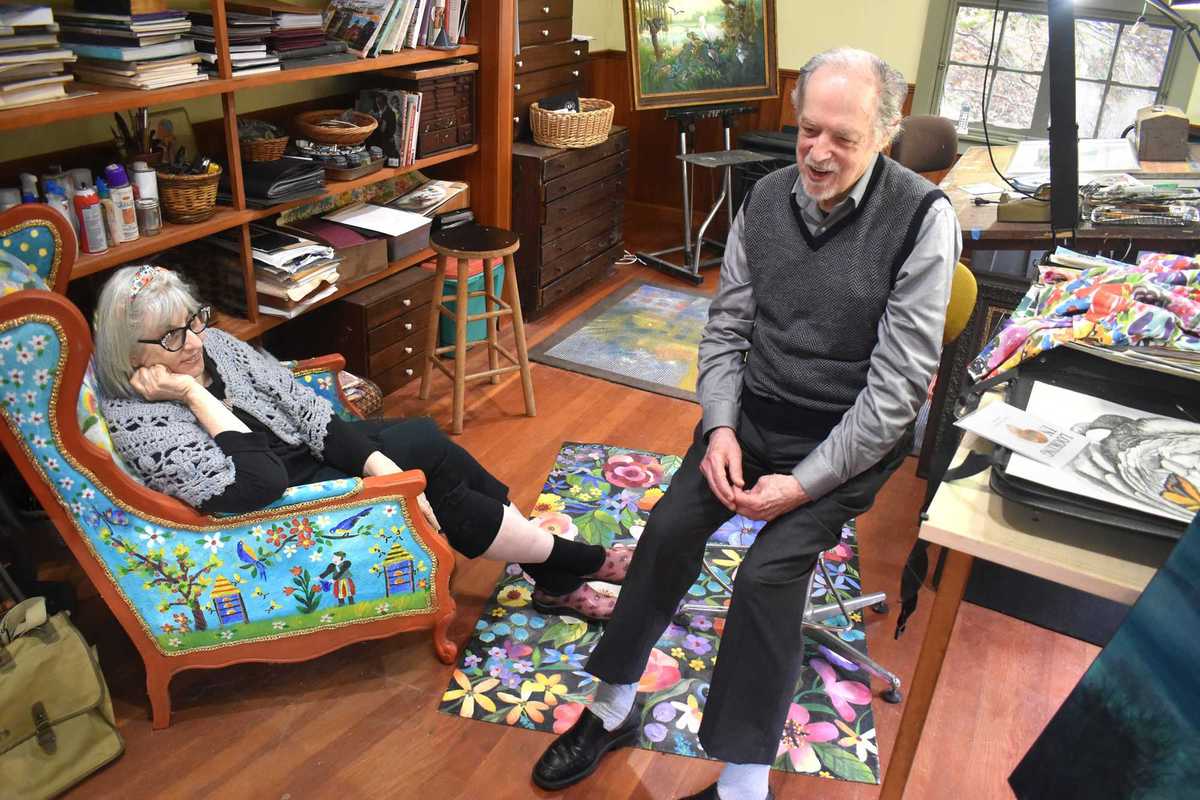
 Justine and Victor Valla in their studio with a painting of Victor’s,”Jonah and the Whale.” Robin Roraback



 A ceramic vase by Kathleen Heidemann.Provided
 Joy Brown’s delightful ceramic sculptures.Provided