

Part two of two
Last week, I described the monumental miscalculation of the Bush Administration: designing Guantánamo Bay’s prison and courtroom complex for the short term, when the decaying complex recently became 20 years old, and counting. The prisoner population has plummeted to a meager 35, three of whom have never been charged yet continue to be imprisoned. Sen. Dick Durbin, chair of the Judiciary Committee, had this to say on that: “Holding people without charge or trial for years on end cannot be reconciled with the values we espouse as a nation….” Yet my client, Abu Zubaydah (AZ), falls officially within that category, and no one can predict when, if ever, he will be transferred to another country where he would be subjected to security restrictions.
On March 28, 2002, the U.S. joined forces with Pakistani police to conduct a sweep of safe houses in Faisalabad, Pakistan. AZ, caught in a crossfire, took three slugs into his body that nearly killed him. While he was recovering from his surgery, FBI Special Agent Ali Soufan interviewed him. AZ repeatedly expressed his willingness to cooperate, providing information the CIA described as “quite important” and “vital,” including that Khalid Sheikh Mohammed was the “mastermind” of the 9/11 attacks who had trained the hijackers. (Unless noted otherwise, all statements relating to AZ’s 4 ½ years of captivity, interrogation, and torture by the CIA appear in the over 6 MM pages of CIA records, from which the Senate Select Committee on Intelligence drafted and published a 500 page Executive Summary of its Study of the [CIA’s] Detention and Interrogation Program [SSCI ES]). Nonetheless, the CIA elected to torture AZ to test his avowals that he had no information about future attacks on the U.S. and the possible presence here of enemy operatives.
So the Agency hired two contractors, James Mitchell and Bruce Jessen, who had zero experience in interrogating anyone, to design so-called “enhanced interrogation techniques.” But during AZ’s interrogations, the CIA and its contractors applied the torture techniques in a manner that a Justice Department attorney concluded “was quite different from the descriptions” in Justice’s memo approving the use of enhanced techniques.
From August 4 through 23, 2002, “the CIA subjected [AZ] to its [torture] on a near 24-hours-per-day basis.” The torture began when “security personnel entered [AZ’s] cell, shackled and hooded [him], and removed his towel (so he was naked). Without asking any questions, the interrogators placed a rolled towel around his neck as a collar” then used the collar “to slam AZ (‘headfirst’) against a concrete wall.” For a prisoner with shrapnel “lodged in his skull,” this was an absurdly dangerous technique to employ, and nothing like the benign description of “walling” approved by the Justice Department.
Yet this was just the beginning. Those terrible days included waterboarding AZ 83 times (as reported by The New York Times), one session of which nearly killed him. (I have omitted the description intentionally.) After the use of torture finally stopped (for a while only) the CIA personnel at the detention site concluded that AZ “had been truthful throughout all that torment as he did not possess any new terrorist threat information.” Mitchell and Jessen even cabled from the CIA interrogation site that the interrogation had been a “success,” not because their torture had produced useful information, but rather since their use confirmed that AZ had been telling the truth throughout. This bizarre reasoning prompted two experienced writers, one of which had worked for the CIA, to declare in their book: “This paradox should be terrifying to any sane man.”
But the end of the “aggressive phase” of AZ’s torture by no means signaled that his torment would stop. The CIA then flew him from “black site” to “black site” around the globe. While it has long been publicly known that AZ lost his left eye while in the CIA’s custody, details remain classified. Further, as the result of their complicity in AZ’s captivity and torture in those countries, the European Court of Human rights, among other forms of relief, ruled that Poland and Lithuania each owed him 100,000 Euros, plus costs.
The U.S. used a litany of falsehoods to get to this point. Desperate to appear strong following the 9/11 disaster, President Bush in a April 9, 2002, speech boasted: “The other day we hauled in a guy named AZ. He’s one of the top operatives plotting and planning death and destruction on the [U.S.] He’s not plotting and planning anymore. He’s where he belongs.” Apart from AZ’s capture, not a word of Bush’s remarks was true.
After the CIA studied AZ and his life more thoroughly, according to the prominent author Ron Suskind (“The One Percent Doctrine”, 2006) an opinion that was the polar opposite of Bush’s bombastic claims gained acceptance in the upper reaches of the CIA. When CIA chief George Tenet included this turnabout in a daily briefing to the president, Bush said: “I said he was important. You’re not going to let me lose face on this, are you?” Tenet replied dutifully: “No sir, Mr. President.” Thus, according to Suskind, the CIA’s chief was willing to lie to the country to protect the image of its leader.
To obtain Justice’s clearance of the torture techniques, the CIA on July 24, 2002, sent to the now-notorious John Yoo, the lawyer at Justice who would draft the memo, a “Psychological Assessment” (PA) to provide the factual predicate for Yoo’s legal opinion. The PA’s review of AZ’s background is chock-a-block with falsehoods. Most blatantly, the PA several times charged AZ with belonging to al Qaeda, yet the CIA has admitted that AZ never belonged to that, or any other terrorist group. Incredibly, the PA even claims that AZ was one of the planners of the 9/11 attacks, when the several million pages of CIA records fail to support this claim. To conserve space, I will conclude this discussion with a major finding in the SSCI ES: “The CIA repeatedly provided inaccurate information to [Justice], impeding a proper analysis of the CIA’s Detention and Interrogation Program.”
Why all this fuss by the U.S. about AZ, and his being held for so long without charge nor formal indication that he will be transferred? That’s a puzzle. A close review by AZ’s lawyers of the government’s statement of facts claimed to justify his ongoing detention leaves them convinced that the U.S. has committed a gigantic error. Stay tuned.
Salisbury’s Charles Church is a lawyer who serves as Co-Counsel for Abu Zubaydah. His comments reflect his own views, and not those of this newspaper.



 Tiffany Lemelin, shelter manager, brushing Marsala upon arrival.Provided
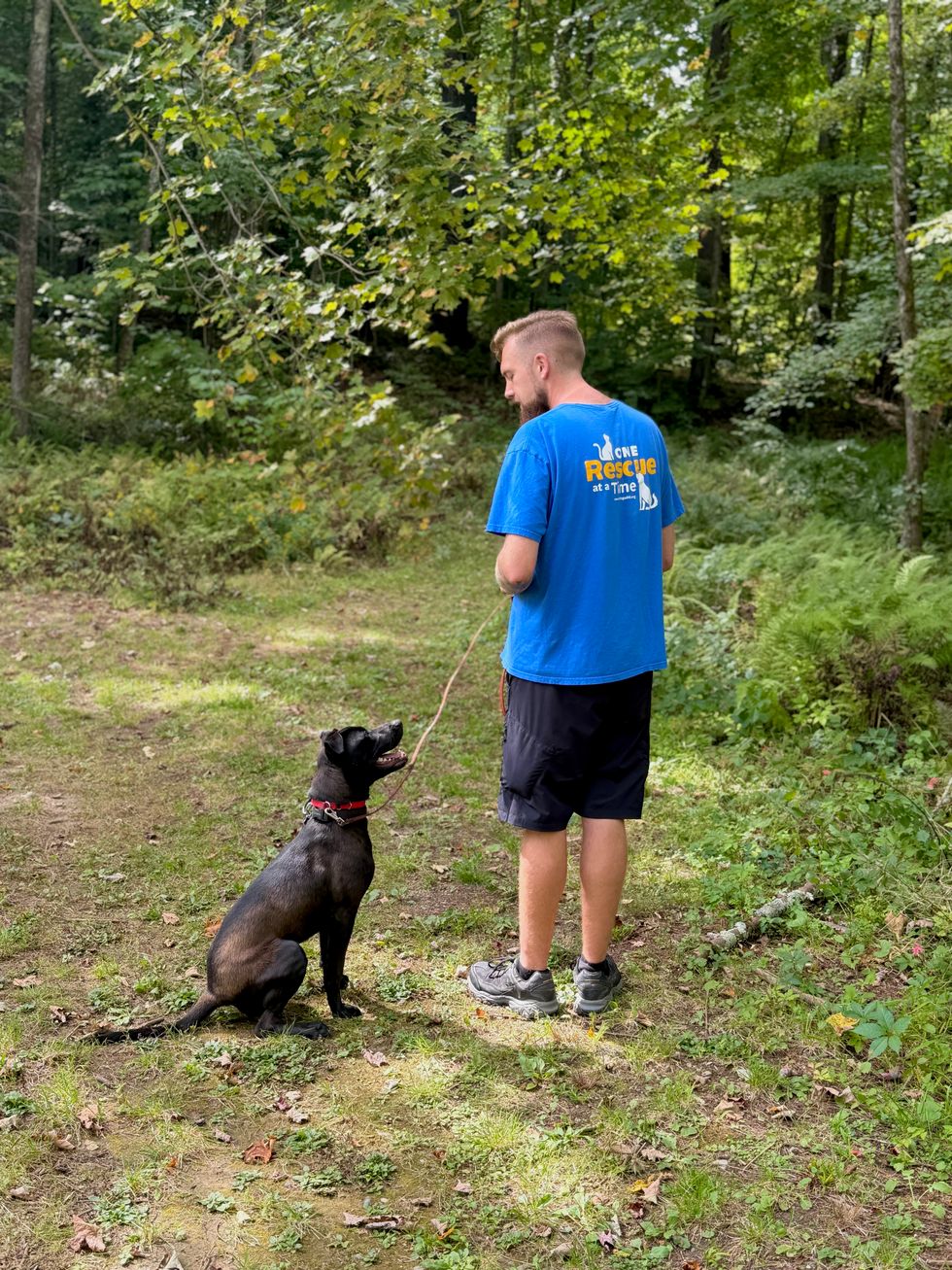 Michael DeBarba, certified dog trainer working with Marsala.Jennifer Almquist
 Marsala wins a heart.Jennifer Almquist

 Sadie, center, a Carolina dog, plays with her friend Negra, a terrier mix. Bella Linda, the small poodle, has since been adopted.L. Tomaino
 Wesley, a young, exuberant mix, is looking for an active home.L. Tomaino
 Bonnie and Clyde, an affectionate terrier pair.L. Tomaino

 Provided



Abu Zubaydah: His brutal torture ‘justified’ by so many falsehoods