

Jonathan Miller. One of the four in “Beyond the Fringe”, first done in London, then in New York, then, when I saw it, in the center of the universe, Milwaukee, Wisconsin, at the Pabst Theater (named after and supported by the brewing company – “What’ll you have, Pabst Blue Ribbon? Pabst Blue Ribbon Beer.”)
The other three? Dudley Moore, deceased; Michael Bennett, still very much alive; and Peter Cook.
The four came out of that Oxbridge circle and transformed satire in ’50s- ’60s England.
That’s not quite right. Because before them were The Goons — Peter Sellers, Spike Milligan, Harry Secombe — the first show being called “Crazy People”, then The Goon Show.
And about that time, The Establishment. Four comedians, Jeremy Geidt, John Bird, John Fortune and Eleanor Bron. One priceless routine had Jeremy and one of the Johns auditioning Eleanor. She was to sing “You say Tomato and I say Tomato, you say Potato and I say Potato” saying the words exactly the same. The auditioners try, in vain, to stop her from repeating the same pronunciations over and again. Priceless.
Jeremy was in 1966 one of the founders of the Yale Repertory Theater, where I, a student, met him that Fall. There was a big bash on the stage and he introduced me to Stella Adler. I didn’t know who she was. The Yiddish Theater? The Group Theater? The Thirties? John Houseman? Franchot Tone? I knew from bupkis. She didn’t say a word to me, but looked at Jeremy and said “He looks absolutely terrified.”
I wasn’t really. I was mystified. Get me back to Milwaukee!
Fast forward. I am a third-year student and Jonathan Miller is directing Robert Lowell’s adaptation of Aeschylus’s “Prometheus Bound” with Kenneth Haigh in the title role. Haigh had been Jimmy Porter in John Osborne’s titanic, if that is the word I should be using in proximity to the Aeschylus, “Look Back in Anger,” the play that changed the English-speaking theater in 1956. For the first time, the working class was presented in a hugely articulate major character.
Kenneth Tynan, the Titanic Tynan, who had reviewed “Beyond the Fringe” well when everybody else panned it, said, after everyone had panned “Look Back…,” I cannot imagine loving anyone who doesn’t love “Look Back…”. And history was made.
I am having a play done in the Ex(perimental) theater in the basement of the Drama School. The directing students don’t like my play. Miller wanders in and sees the performance. A the end he jumps on the stage and says he has just been in New York where he has seen “American Hurrah”, by Jean-Claude Van Itallie, which was getting all the buzz. Miller says that my play is saying the same things but Better! Suddenly the directing students play a different tune.
That summer I won the Best Play Award and its prize of $300 which got me and my wife through the summer.
Years later, I am in a London theater and I see Miller. I go up to him and thank him. I am certain he was being gracious in saying he recalled that moment. I loved him all the same.
His production of the Aeschylus, with Ron Liebman who later played Roy Cohn in “Angels in America’, remains indelible. My friend David Epstein and I were standing in the back of the theater for the last performance and I don’t recall who said it first, I will bow to David, but it was, “I want to see this production once a week for the rest of my life.”
The set by Michael Annals had Prometheus on his rock, the shaft below going down forever and the shaft above going up as well. To this moment I have never see anything like it.
It was the great Irene Worth who played Io. She stood at the back of the stage and when it was her turn to stand and deliver the searing speech of being hounded by flies because she was being punished by Hera for having the affair with Zeus, it stopped all our hearts.
It stops mine now.
Lonnie Carter is a writer who lives in Falls Village. Email him at lonniety@comcast.net., or go to his website at www.lonniecarter.com.

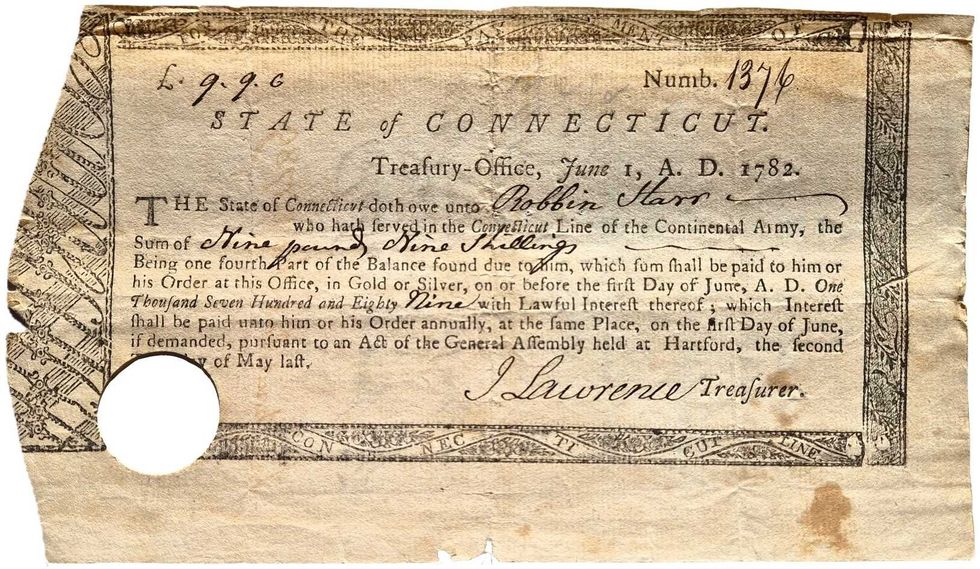 Pay Bill for Robin Starr’s service in the Continental Army.Courtesy the Alex Breanne Corporation
 John Mills speaking at Quinnipiac University.Courtesy the Alex Breanne Corporation
 Stephanie Saetta,with her rescue dog George and Blue (left), a shepherd mix awaiting his forever home.Madi Long
 Blue, a 7 year-old Shepard mix, is waiting for his forever home. Madi Long


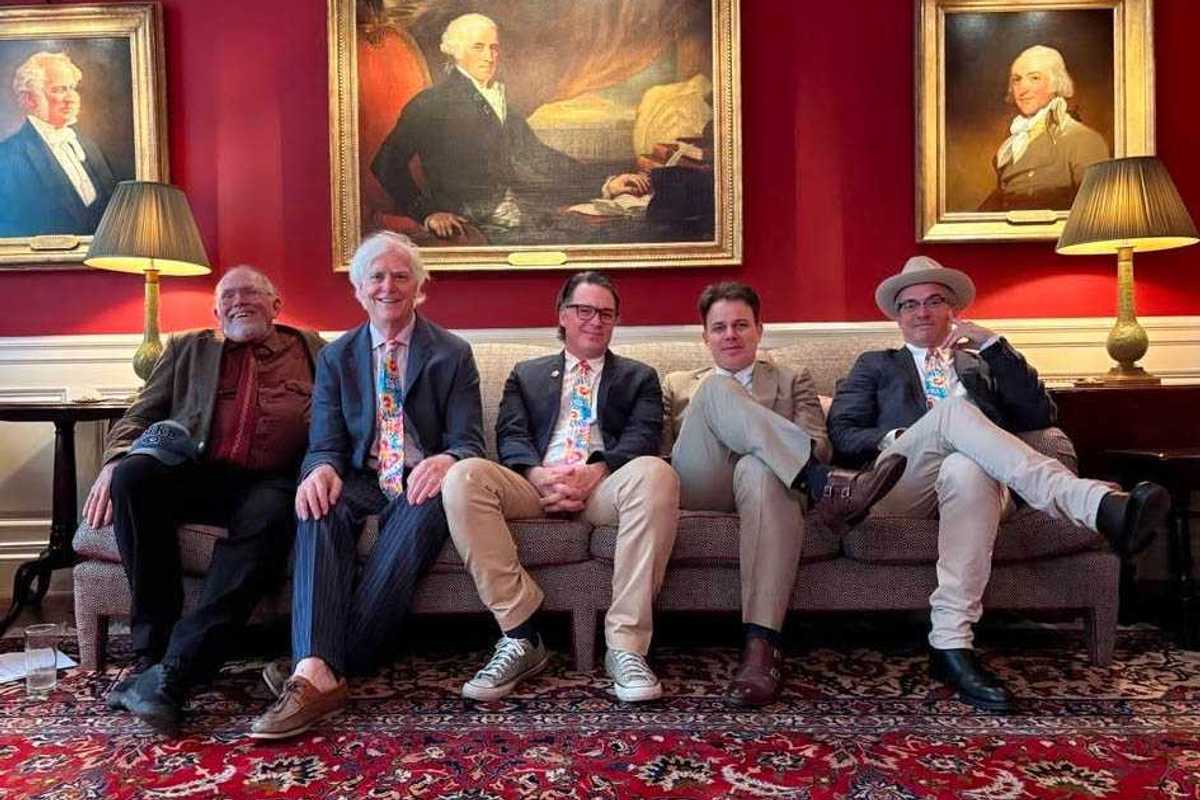







A path of discovery into theater, fully wrought