Water levels in river & lakes remain dangerous

Water levels in river & lakes remain dangerous
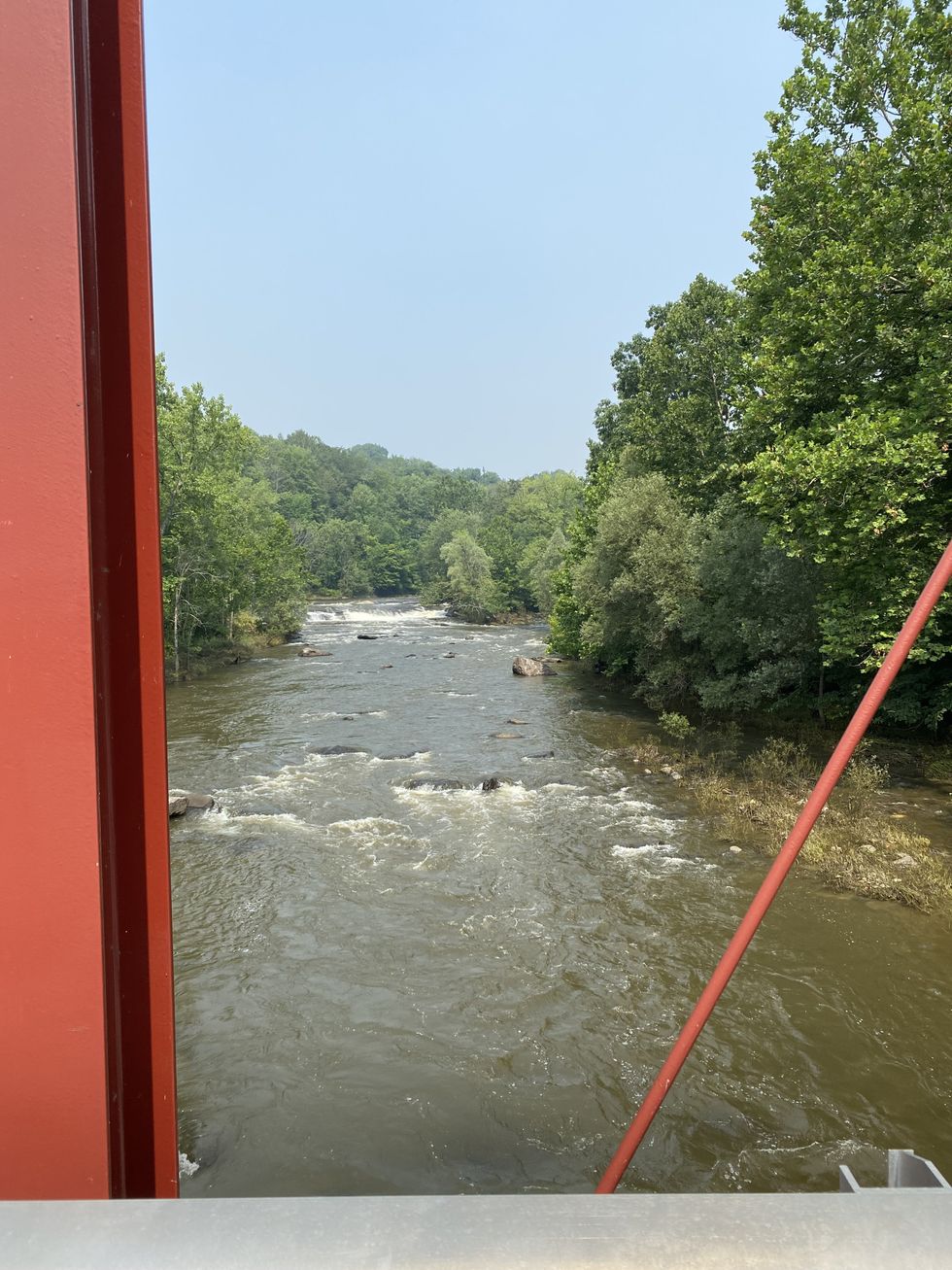
While in a normal year The Lakeville Journal would have gone down to the shore to take a photo of the rushing water at the Great Falls, this year the levels are high enough that the most prudent place from which to take a photo was on the Iron Bridge between Falls Village and Salisbury. 
Photo by Cynthia Hochswender

After a brief respite, it rained again on Sunday, July 25, and the Housatonic River, which had been dropping, leveled off and began to rise again.

Monday morning, July 26, the United States Geological Survey measured the river at 1,890 cubic feet per second (cfs) at Falls Village. The historical median flow is a little over 300 cfs.

The river peaked at over 7,000 cfs on July 20-21.

The river remained discolored on Monday. 

The high flow and lack of visibility combine to make the river extremely dangerous to recreational users. 

It hasn’t been much better on the Farmington River, where the situation is complicated by excess water in the two reservoirs that feed the West Branch.

That water had to go somewhere  — and it was released into the river.

The flow from the dam in Riverton was cut back on Friday, July 23, from over 2,000 cfs to about 500 cfs (historical median is between 200-300 cfs). 

That means the stretch of the West Branch of the Farmington between Riverton (and the junction with the Still River) and the dam was fishable over the weekend. 

The Still RIver had dropped significantly and by Monday morning, July 26, was adding between 100-200 cfs to the overall flow of approximately 700 cfs.

That’s a high but manageable flow for recreational users. But it does not mean that precautions should be abandoned or silly risks taken. Two weeks ago two teenage boys drowned in the swollen Farmington.

It isn’t only river levels that are high. Lakes, creeks and ponds also have much more water in them than usual. Although these water bodies may seem placid on the surface, they are all still very dangerous. 

In particular, parents of young children should be alert to the fact that the water is deeper than normal in children’s swimming areas. Where a child might have been safe in a normal year walking out a particular distance in the water, this year the water is likely to be much deeper than normal. Parents should keep a close eye as the water levels continue to rise and fall on a daily level.

And as always, the Housatonic might seem like a small river but it is mightier than it looks. Even in a normal year there are drownings in Falls Village and/or Kent; there has already been one fatality this year.


Latest News

Jacob assumes leadership role at William Pitt Sotheby’s Litchfield Hills offices

Eddie Jacob was recently promoted to Assistant Brokerage Manager for four Litchfield Hills offices of William Pitt Sotheby’s International Realty.

Photo provided

William Pitt Sotheby’s International Realty has appointed Eddie Jacob as Assistant Brokerage Manager for its four Litchfield Hills offices, the company announced on Nov. 19.

In his new role, Jacob will support agents and help oversee operations in the firm’s Kent, Litchfield, Salisbury and Washington Depot brokerages.

Keep ReadingShow less
Winter sports season approaches at HVRHS

Mohawk Mountain was making snow the first week of December. The slopes host practices and meets for the HVRHS ski team.

By Riley Klein

FALLS VILLAGE — After concluding a successful autumn of athletics, Housatonic Valley Regional High School is set to field teams in five sports this winter.

Basketball

Keep ReadingShow less
Bears headline DEEP forum in Sharon; attendees call for coexistence, not hunting

A mother bear and her cubs move through a backyard in northwest Connecticut, where residents told DEEP that bear litters are now appearing more frequently.

By James H. Clark

SHARON — About 40 people filled the Sharon Audubon Center on Wednesday, Dec. 3, to discuss black bears — and most attendees made clear that they welcome the animals’ presence. Even as they traded practical advice on how to keep bears out of garages, porches and trash cans, residents repeatedly emphasized that they want the bears to stay and that the real problem lies with people, not wildlife.

The Connecticut Department of Energy and Environmental Protection (DEEP) convened the meeting as the first in a series of regional Bear Management Listening Sessions, held at a time when Connecticut is increasingly divided over whether the state should authorize a limited bear hunt. Anticipating the potential for heated exchanges, DEEP opened the evening with strict ground rules designed to prevent confrontations: speakers were limited to three minutes, directed to address only the panel of DEEP officials, and warned that interruptions or personal attacks would not be tolerated.

Keep ReadingShow less
Kent unveils two new 'smart bins' to boost composting efforts

Rick Osborne, manager of the Kent Transfer Station, deposits the first bag of food scraps into a new organics “smart bin.” HRRA Executive Director Jennifer Heaton-Jones stands at right, with Transfer Station staff member Rob Hayes at left.

By Ruth Epstein

KENT — Residents now have access to around-the-clock food-scrap composting thanks to two newly installed organics “smart bins,” unveiled during a ribbon-cutting ceremony Monday morning, Dec. 1.

Rick Osborne, manager of the Kent Transfer Station, placed the first bag of food scraps into the smart bin located at 3 Railroad St. A second bin has been installed outside the Transfer Station gate, allowing 24/7 public access even when the facility is closed.

Keep ReadingShow less