

Thank you!
Your support is sustaining the future of local news in our communities.

On the Lam: Escaping the Northwest Corner by Rail


Much as been made about how the coming of the railroads expanded the cultural and commercial opportunities in rural areas like the the Northwest Corner. Like any new technology, the railroads brought some negative impacts as well. One of those was to provide a means of escape for people who had some reason to flee. This tale is about two types of "getaways": criminals and runaway spouses.

We are tempted to believe that crimes such as "blowing a safe" and gun battles are the stuff old Western novels. That is a false impression, however, and our local area was the scene of more than one shootout and daring robbery.

Consider two events that occurred in North Canaan during the 1890s.


From The Connecticut Western News, which was printed in Salisbury Conn., in the 1890s: "On Tuesday morning, about 2:45 o’clock, burglars broke into the store of Geo. L. Parsons & Son. They forced open the front door with tools procured at Mr. Pasmore’s wagon shop. The safe was then blown open by filling the cracks around the edge of the door with nitro-glycerine, or some other powerful explosive, and igniting it by means of a piece of paper inserted into the crack. The force of the explosion was so great that the door of the safe was blown off and completely shattered and the front lights of the windows in the front of the store were broken."

The two men who committed this robbery left town via the railroad and escaped.

Not long after, robbers struck the firm of Fuller & Peet:

"Martin Rood, who has slept in Fuller & Peet’s store every night for several months past woke Sunday morning about four o’clock and heard men moving about and talking in low tones in the front part of the store. As he raised himself up on his couch, in the space partitioned off for the bank office, he heard one of the men say ‘Hark, there’s somebody.’ It was too dark in the store to see anything, but Martin seized his trusty revolver and fired four shots in the direction of the voice... It is believed that one of the burglars was hit because an unflattened bullet was found on the floor and also drops of blood on the floor and on the depot platform, across which the burglars were heard running by the night operator in the P. R. & N. E. office."

These would-be robbers also made good their escape by rail and it is doubtful that much energy was expended in chasing them as they had not succeeded in taking anything.


These events certainly sound more like the Wild West than the Northwest Corner of Connecticut and escape by rail offered an effective means of avoding capture and punishment for one’s misdeeds. Indeed it might have been a very reliable means of escape but for the use of another technological advancement: the telegraph. Railroads depended on the telegraph for running trains. Most early railroads had a single track and trains had to be carefully managed so that travel in both directions could be accomplished safely. The telegraph was the means of providing the necessary communication between stations to accomplish safe scheduling.

It also provided communication to assist in capturing fleeing criminals. One example of that use of the telegraph is the fate of two robbers who struck in Canaan one night in November 1894. This story appeared in the Nov. 15, 1894, issue of the Connecticut Western News:


"During Saturday night or in the ‘wee sma hours’ of Sunday morning the store of Fuller & Peet was entered by tramps, probably four in number who affected an entrance by breaking in one of the cellar windows. They made a complete change of their wardrobes supplying themselves with new clothing including hats (or caps)and shoes and stockings and underwear. They also took pistols and knives. The value of goods stolen amounted to about $100. Their old clothes were left in the store. They left town the same morning on the six o’clock west bound freight although they were put off once before the train started. Telegrams were sent, however, in all directions.

"Tuesday afternoon Fuller & Peet received a telegram from Fishkill Landing, N.Y. stating that men answering the description had been arrested there. Fuller & Peet telegraphed a description of the property stolen and yesterday a message came back that the men arrested were the parties wanted. Accordingly George S. Fuller and Deputy Sheriff William B. Perry of Lakeville, went to Fishkill Landing by the 12:38 p.m. train yesterday to take the proper steps to secure their atendance before a justice in this town."

Note also that justice was much faster in 1894 than it is today. The robbers in this story probably found themselves captured, tried and sentenced within two weeks of their misdeed! It also appears that Fuller & Peet got tired of being a burglary target and hired the watchman who shot at the burglars in the previous story.


While usually somewhat less violent than the safe crackers and robbers, domestic disputes also led to escapes by rail. It is much harder to judge these events as it is easy to imagine someone trapped in a bad marriage cracking under the strain and jumping on the next train train out of town. Divorce was not really an option until the latter part of the 20th century, so domestric stress was probably more common in the 19th century. Based on the stories in the contemporary press, running out on one’s spouse was indeed much more common than divorce in the 19th century. Instances of "The French leave," as it was called, were frequent fodder for the press in those days.

The experience of one Edward Boinay is an example of elopement by rail. The story has an interesting twist, though, that leads to questions about the motives of the fleeing spouse. The story begins as follows:


"If the News was a sensational paper it would devote a column or more to the elopment which took place in this town last Thursday, but everything is not fish which comes to the net of the News and the elopment will not be made the leading feature of this issue. Suffice it to say that Edward Q. Boinay is a charcoal burner by occupation and with his wife, two daughters, one 17 years of age, the other 6 years, one son 12 years old, has resided in a cabin on his coal bush on the west side of Canaan mountain and about 1 1/2 miles south of this village. For five or six years one Fred Avery has been in the employ of Mr. Boinay, but until recently Mrs. Boinay seemed to have an aversion to Avery, and the husband never suspected there was any undue attentions on the part of Avery."

From this preamble you can guess the course of events. It began when Mrs. Boinay announced that she and the children were planning a trip.

"Mr. Boinay states that Mrs. Boinay and the three children left home last Thursday moring, and Mrs. Boinay told him she and the children were going to Falls Village on the 9:40 a.m. train, to visit relatives, and would return by the noon train on Saturday."

Needless to say, they did not return on Saturday and Mr. Boinay discovered that all their clothing and linens were missing in addition to all the ready cash he had on hand. So far, this sounds like a pretty simple case of a wife running off with the hired hand, but this story has an odd twist. In the very same issue of the paper that carried this story were listed the marriage announcements from nearby towns. Included in the list was an item from Millerton announcing the marriage of Mary Jane Deane and Ferdinand Avery. It seems that Mrs. Boinay (nee Deane) and "Fred" Avery had taken the train west to Millerton and gotten married in a ceremony of dubious legality, or as the editor of the News put it: "Can it be possible that Mrs. Boinay has added the crime of bigamy to the elopement?"

As of this writing, no further information on this event has come to light. It could have been that Mrs. Boinay was simply fed up with life on the "coal bush" and wanted out. In fairness to her, however, charcoal burners were known to be a tough lot and it is quite possible Mr. Boinay drove her away. We will never know, but whatever the case the fleeing couple certainly did not cover their tracks very well.

These snapshots of 19th-century life show clearly how tightly life in those times was tied to the railroads, both for better or worse.


Richard Paddock lives at Twin Lakes and volunteers at Beckley Furnace.

Latest News

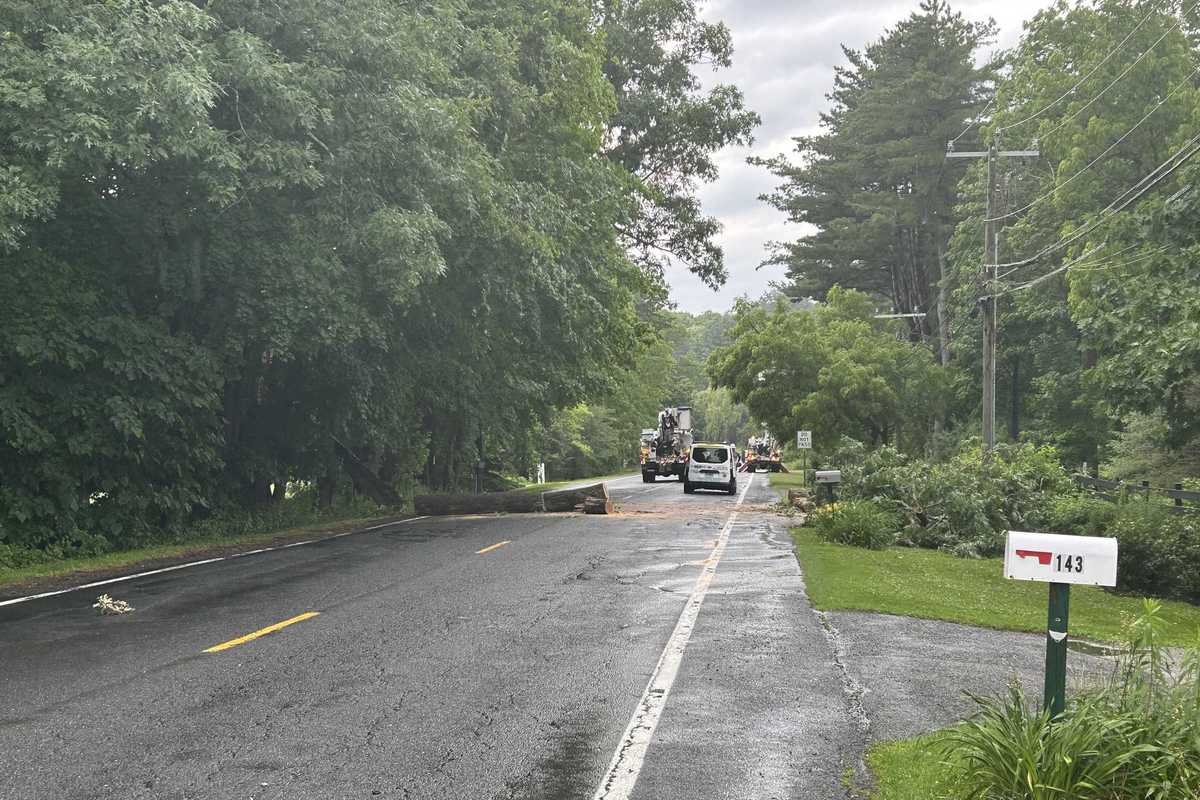
Fallen tree downs power lines, blocks Route 112

Eversource crews work to repair damaged power lines after a tree fell near onto Route 112 just north of the Interlaken Inn on Monday, June 22.

Photo by Nathan Miller

LAKEVILLE — A tree fell on Route 112 Monday, June 22, downing power lines and blocking traffic north of Route 41 near the Hotchkiss Four Corners.

Eversource crews on scene at 4:45 p.m. said power lines were being repaired and utility service had been restored to customers in the area.

Keep ReadingShow less

Francis Lynehan

Francis Lynehan

DOVER PLAINS — Francis “Butch” Lynehan, 75, a twenty-year resident of Dover Plains, New York, formerly of Sharon, passed away unexpectedly on Thursday, May 7, 2026 at Vassar Bros. Medical Center in Poughkeepsie, New York.

Born Aug. 29, 1950, in Sharon, he was the son of the late William W. and Nellie (Kluun) Lynehan.

Keep ReadingShow less

Richard McGriff

Richard McGriff

TACONIC — Richard McGriff died unexpectedly on May 16, 2026. This is a collection of loving reminiscences.

With a smile like that and a laugh like that and a soul like that, how could you not love him? Macey Levin and Gloria Miller

Keep ReadingShow less
google preferred source

Want more of our stories on Google? Click here to make us a Preferred Source.
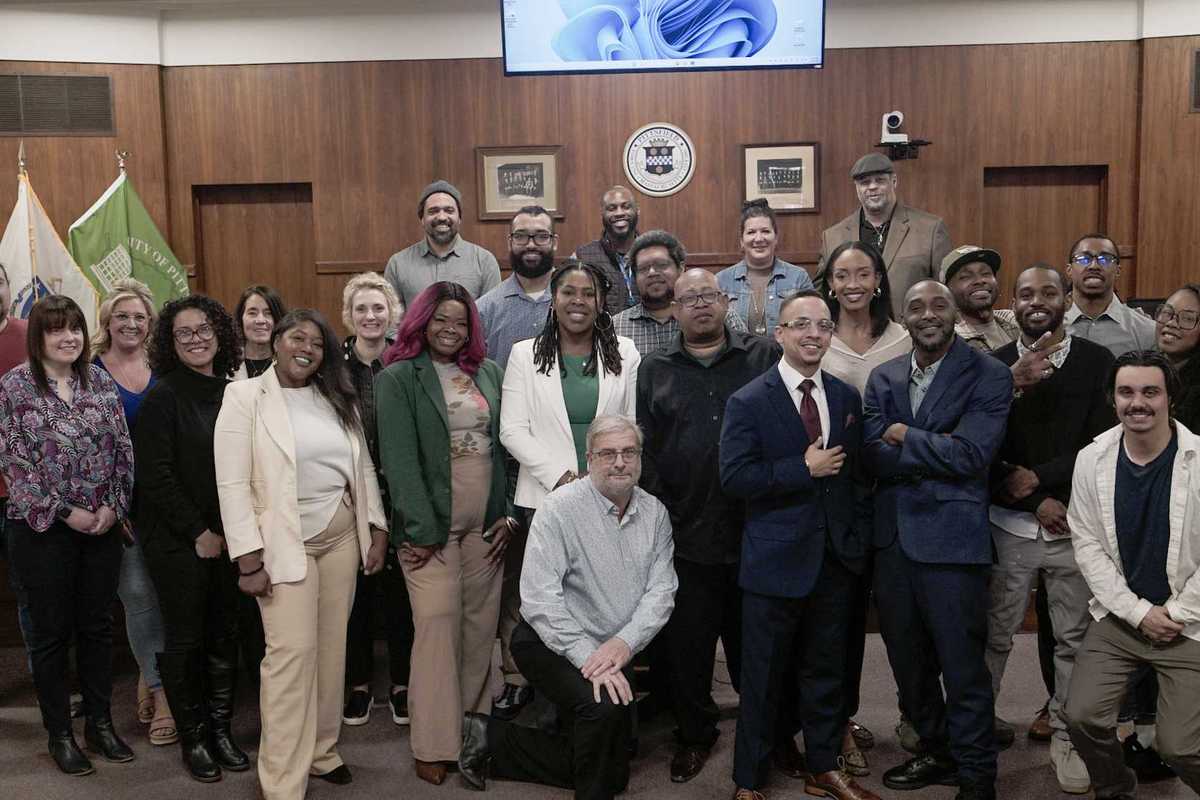
Juneteenth graduation celebrates Berkshire’s next generation of leaders

Cohort 2026 members Abigail Horace, Adam Liccardi, Adrian Lynch, Cameo Brown, Chauncey Dozier, Claudette Grant, Erline Saintilet, Harmony Edwards, Kamayue Gomes, Mackenzie Colvin, Otis West, Shadre Domingo, TJ West and Tyeesha Keele-Kedroe and Blackshires’ leadership team John Lewis, Patrick Danahey, Dubois Thomas and Julie Haagenson gather at the Blackshires City Hall Fishbowl alongside Mayor Peter Marchetti and city officials Michael Obasohan, Brandon Gill, Katherine VanBramer, Heather Brazeau, Justine Dodds and Jesse Tobin McCauley.

Provided

When designer Abigail Horace joined the Blackshires Leadership Accelerator, she was looking for support for her business, Casa Marcelo, which was founded in Salisbury in 2019. Through the Accelerator, she created the Black Berkshires Social Club, which creates culturally grounded social spaces for Black and BIPOC residents in the region. Throughout her experience, Horace found a community of peers invested in one another’s success.

“Finding Blackshires has been transformative,” Horace said. “Being a BIPOC founder in this region can feel isolating, and this community has changed that. They see my work, champion my business and have opened doors I couldn’t have opened alone.”

Keep ReadingShow less
Forged by curiosity: Art, craftsmanship and big fun with Izzy Fitch

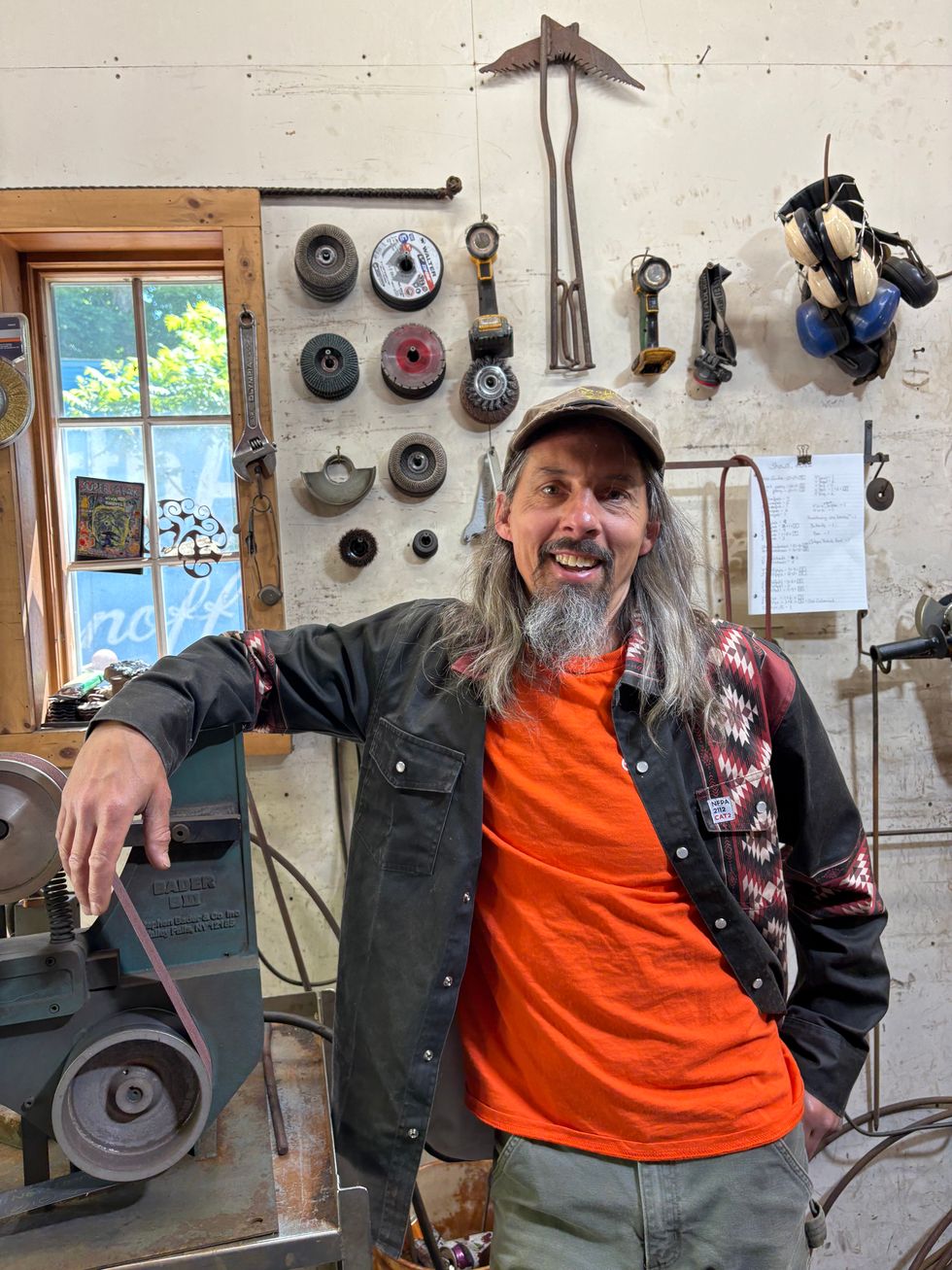
Izzy Fitch at Battle Hill Forge in Wassaic.

Madi Long
I’m not really inventing anything new. I just tweak it a little bit.— Izzy Fitch

A steel praying mantis stands among garden accents at Battle Hill Forge in Wassaic, its folded forelegs ready for prayer and mischief in equal measure.

“She’s very nice,” said blacksmith, sculptor and Battle Hill Forge owner Izzy Fitch, patting the giant insect affectionately. Then he added, “Just don’t go out to dinner with her.”

Keep ReadingShow less
Unexpected subjects, familiar beauty in new Kent exhibits
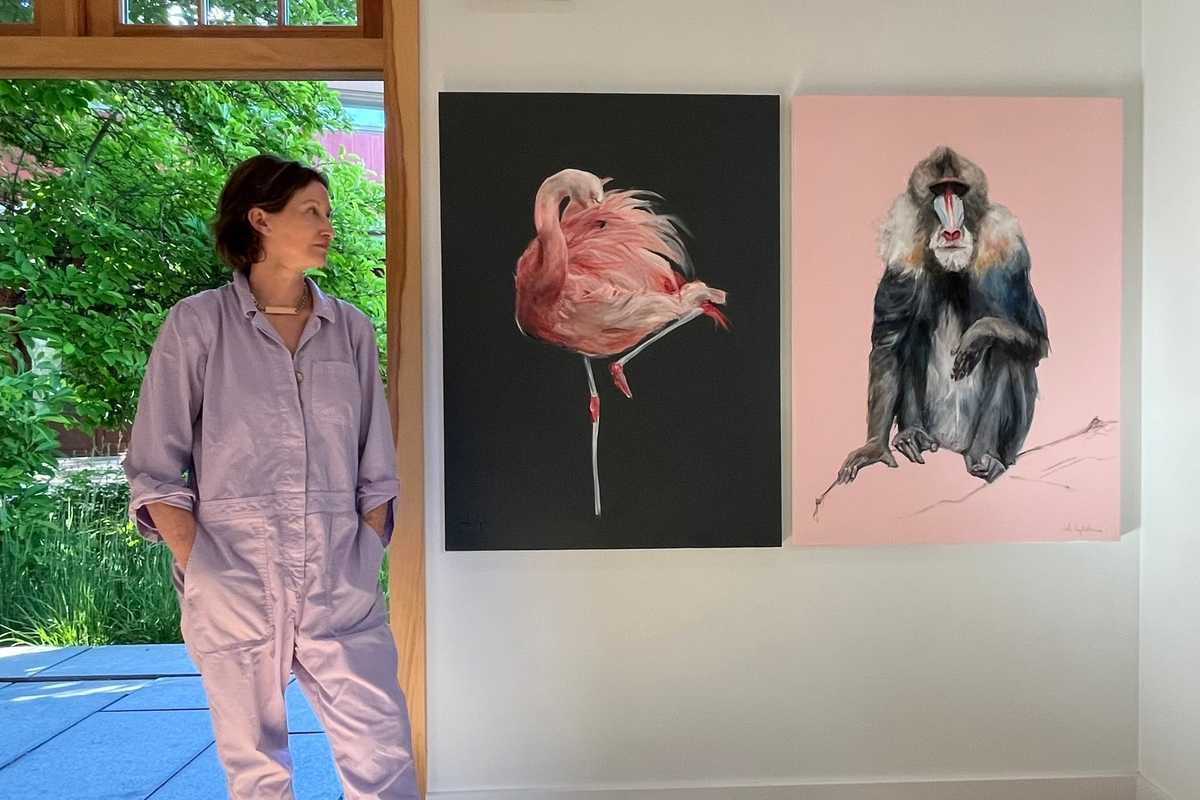
Millerton-based artist Alexis England with her flamingo and mandrill portraits at Peggy Mercury in Kent.
D.H. Callahan

Kent Barns was alive with art on Saturday, June 13, as three new shows opened at Peggy Mercury and Kenise Barnes Fine Art, featuring a variety of fascinating paintings and drawings from four local artists.

Peggy Mercury, which in just two years has earned a reputation for curating remarkable collections of fine beauty products and accessories, continues to find exciting art to complement its offerings. The new show, “Portraits,” features four pairs of paintings by Millerton-based artist Alexis England. The “portraits” she paints, however, feature some pretty unexpected sitters.

Keep ReadingShow less
google preferred source

Want more of our stories on Google? Click here to make us a Preferred Source.

google preferred source

Want more of our stories on Google? Click here to make us a Preferred Source.