Many Region One students can access school health care if enrolled

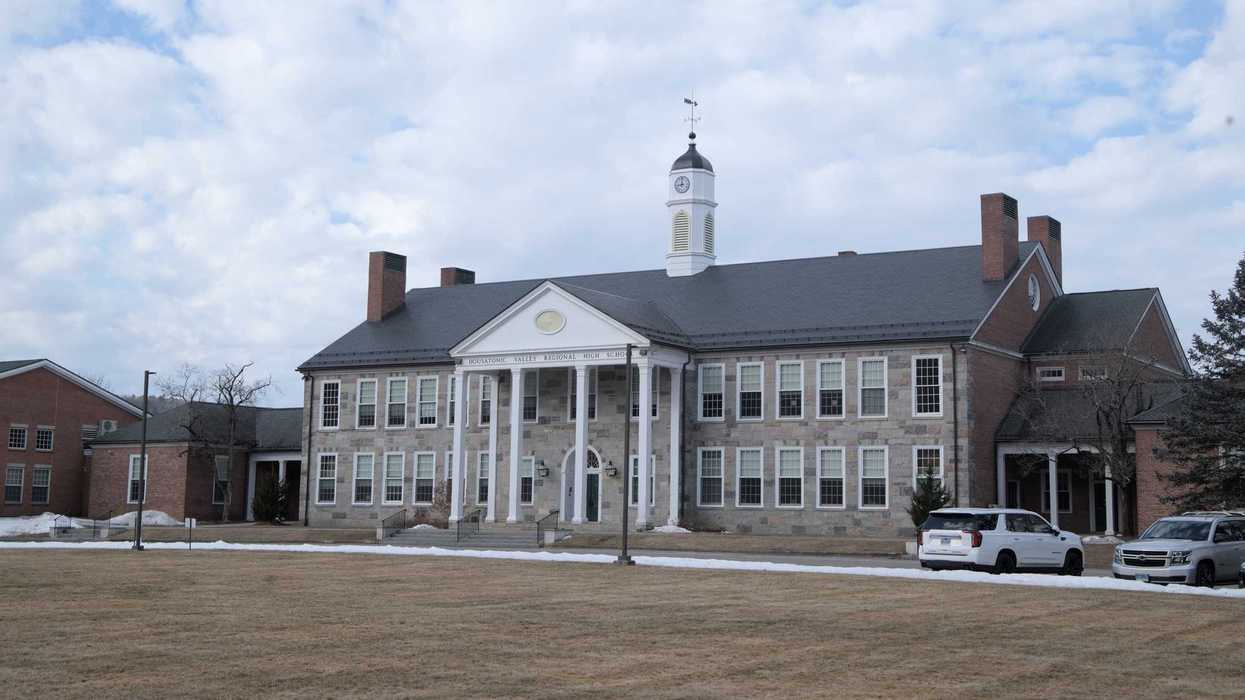
Housatonic Valley Regional High School
File photo

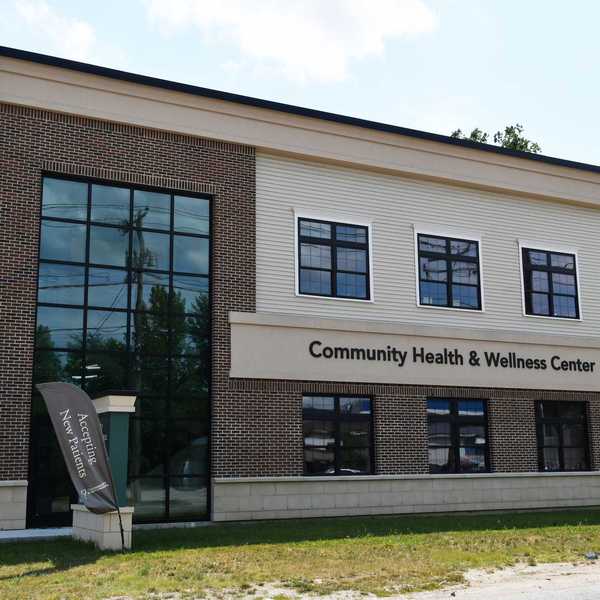
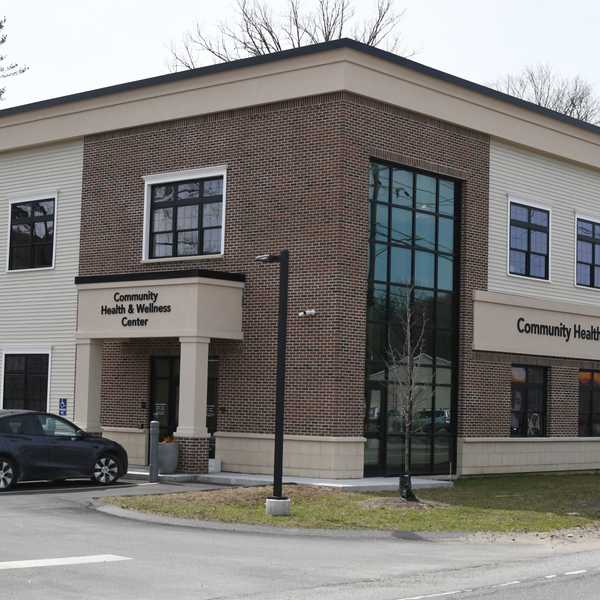
Community Health and Wellness (CHWC), based in Torrington, operates three school-based health centers (SBHC) in Region One schools, giving students access to medical health services during the school day. However, medical staff cannot treat students unless their families enroll them in the program.
Becca Malone,a nursewith the program, urged parents during an online discussion Wednesday, March 11, to sign their children up. She emphasized that participation in the SBHC program does not replace a child’s pediatrician.
“It’s just another layer of support.”
CHWC currently operates centers at Housatonic Valley Regional High School, North Canaan Elementary School and Sharon Center School. Both medical and behavioral health services are available at the high school and North Canaan. Sharon currently offers behavioral health only.
There are 276 children enrolled in Region One.
Malone said she believes the school-based model is especially effective “because I get to see the students in their natural habitat.”
When families enroll, anything from routine health procedures to emergencies can be dealt with promptly at school.
Malone said this takes pressure off parents, who otherwise have to miss work in order to get their children to and from medical appointments that often involve a lengthy drive. A prompt response can also preclude an expensive visit to the emergency room at a hospital.
The in-school staff can also coordinate quickly with the school nurse, administrators and teachers.
Raneem El-Ayoub, a licensed clinical social worker, spoke about how the school-based team can respond to signs that a student is experiencing a behavioral problem.
“Are they withdrawn, flat and sad? Or are they acting out, being verbally or physically aggressive?”
With behavioral health, parents tend to react when “something big” happens.
The in-school team can act before the problem gets to that point.
Malone said in the last couple of years she has seen more eating disorder cases at HVRHS than in 15 years at an outpatient facility.
Catching it early is critical. “By the time the parents bring the child to the pediatrician they’re really sick. With school-based health my kids are able to be honest about it so much earlier in the disease process.”
One young woman was in trouble with an eating disorder. Malone was able to get the student to open up about it, and set up a schedule for a twice-weekly check-in.
After six months of that, the frequency changed to once a week, and then once every other week. The child completed an intensive outpatient course of treatment as well.
All of this was done in coordination with the parents, the child’s primary physician, and the high school staff.
“If we hadn’t caught it, it would have been much worse.”
Malone offered another case, that of a young woman who got hit on the head playing volleyball.
She said she saw the child an hour later for what was “an obvious concussion.”
“The whole thing happened quickly and collaboratively,” with the parents, pediatrician and school nurse all involved.
And for follow-up, the pediatrician, who was going on vacation, asked Malone and her team to provide the follow-up.
“We are able to assess a situation and create a safety plan. The child is seen and heard. And we can do it all in a couple of hours.”
Lakeville Journal
Christine Bates
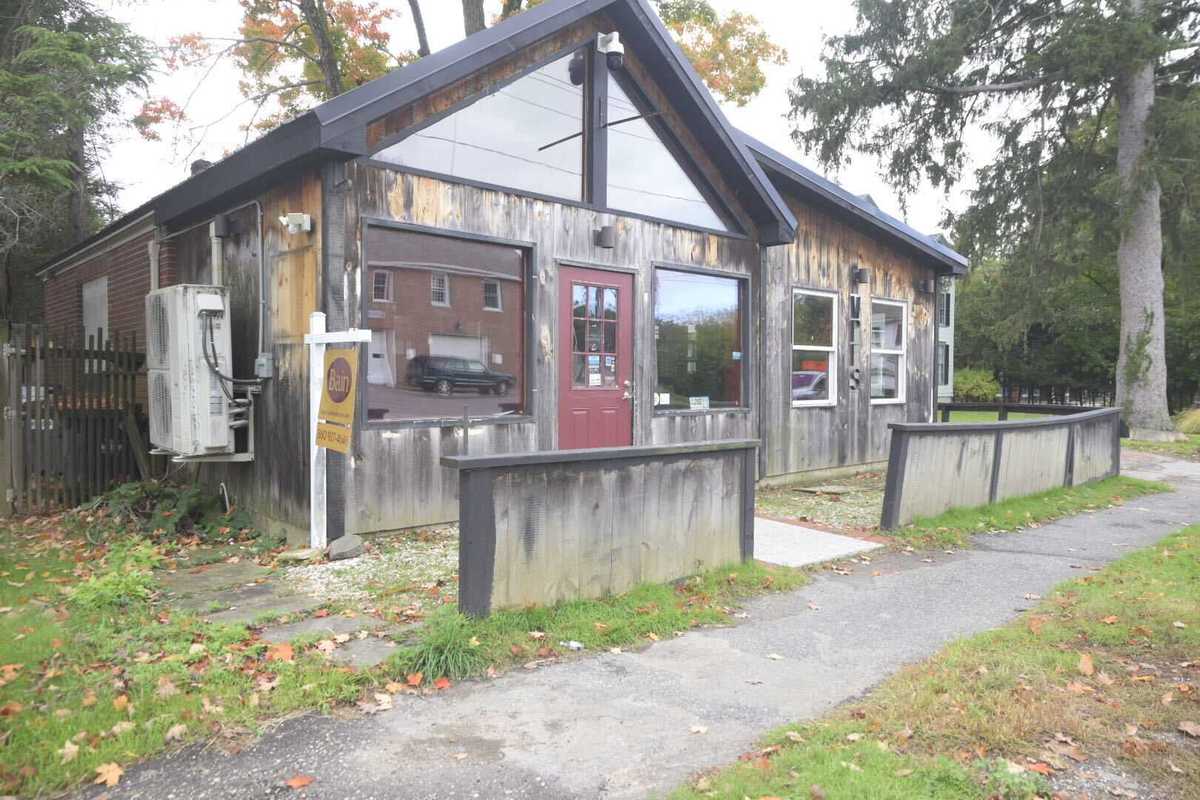
The property at 16 Upper Main St., located just behind Sharon Green, sold for $525,000 on March 23. The 0.15-acre parcel had been assessed at $261,700.
SHARON — The median price for a single-family home in Sharon continued to climb on an annual basis, even as it edged down slightly from the previous month.
The 12-month trailing median price, excluding condominiums, reached $710,000 for the period ending March 31, 2026. That marks a 34% increase from $530,000 in the same period a year earlier and an 8% rise from $655,000 two years ago.
Sales activity remained steady within Sharon’s typical range. A total of 39 single-family homes sold in the 12 months ending March 31, compared with 44 sales in the prior year and 38 sales in the same period ending March 31, 2024. Historically, annual sales in town tend to fall between 35 and 45 transactions.
The seasonal spring surge of new listings has not yet appeared and inventory in all categories remains limited.
As of April 3, there were nine single-family homes on the market. Of those, seven were listed above $1 million and no residential properties were listed below the current $710,000 median price. Eleven parcels of land are listed for sale on the MLS ranging from $139,000 to $2,495,000. Furnished rentals account for six out of seven rental listings.
Sharon March Transfers
8 Mudgetown Road – 4 bedroom/4.5 bath home built in 1750 plus 600 square foot cottage built in 1989 was sold by Arete Warren to Robert Nestor and William Reynolds for $1,450,000
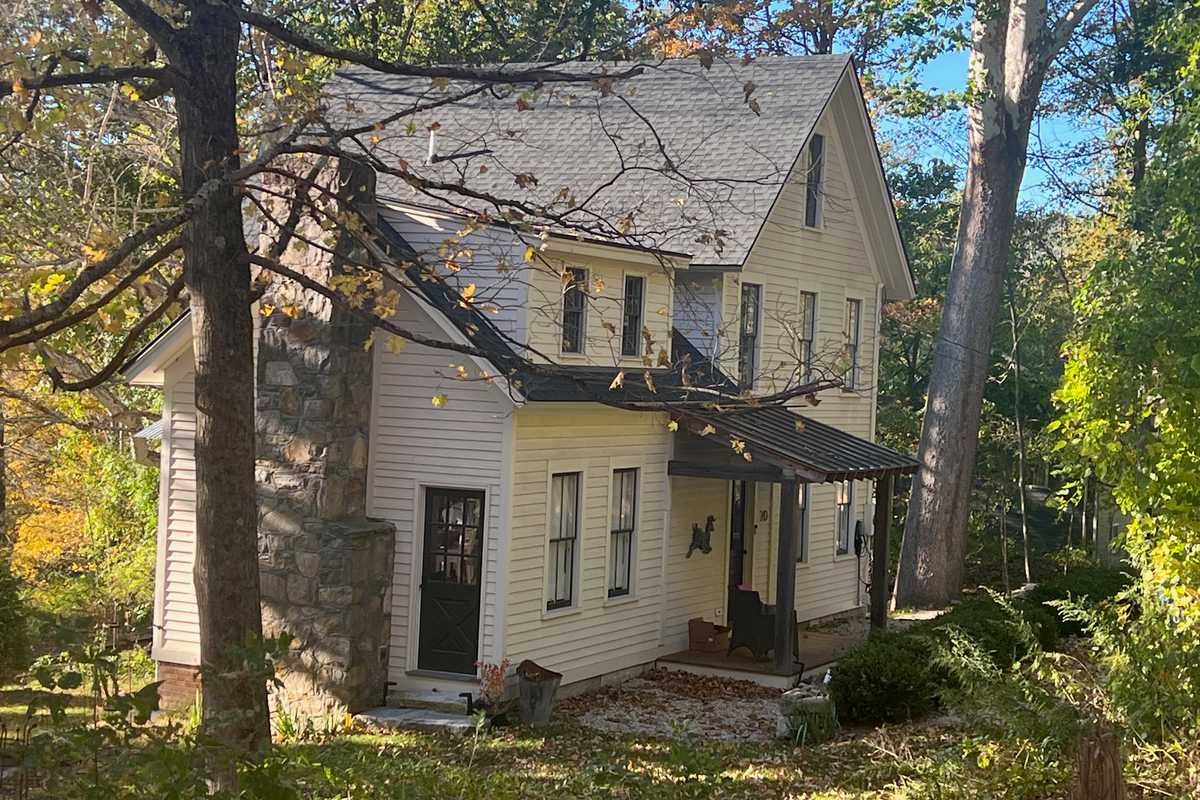
16 Upper Main Street – 3 bedroom/1 bath home on .15 acres built in 1870 was sold by Jeanne Xanthos to Peter and Nichole O’Reilly for $525,000
50 Dug Road – 4 bedroom/2.5 bath home on .26 acres was sold by Laura Geer to Timothy Halle and Stephanie Saetta for $481,144.75.
* Town of Sharon real estate transfers recorded between March 1, 2026, and March 31, 2026, provided by Sharon Town Clerk. Transfers without consideration are not included. Current market listings from Smart MLS and market statistic from Infosparks. Note that recorded transfers frequently lag sales by a number of days. Compiled by Christine Bates, Real Estate Salesperson with William Pitt Sotheby’s International Realty, Licensed in CT and NY.
Patrick L. Sullivan
SCS students take the stage in “How to Eat Like a Child” Tuesday, March 31.
LAKEVILLE – The cafeteria at Salisbury Central School was alive with music and laughter on Tuesday, March 31, as fourth and fifth graders presented a rollicking performance of “How to Eat Like a Child and Other Lessons in Not Being a Grown-Up.”
The show – directed by music teacher Jennifer Moros – maintained a blink-and-you’ll-miss-it pace, unfolding in a series of 22 vignettes. Each story addressed an aspect of childhood, like how to stay home from school, how to ride in a car and how to laugh hysterically.
Audience members of a certain age were reminded of squabbling with a sibling over territory in the back seat of the station wagon, or making prank phone calls.
Each segment was quick and to the point, and the cast and crew handled the frantic pace with an ease that indicates a lot of rehearsals.
The show was supported by the Berkshire Taconic Community Foundation and by SOAR.

Want more of our stories on Google? Click here to make us a Preferred Source.
Patrick L. Sullivan
FALLS VILLAGE – The Board of Finance received the proposed spending plan for 2026-27 from the Board of Selectmen at a special meeting Monday, March 30.
First Selectman Dave Barger presented the proposal, which totals $2,600,436 — an increase of $177,610, or 7.33%, from the current year.
The plan does not include a pay increase for the selectmen. All town employees will receive an increase of 2.5%, except the highway department, whose employees are on a separate step-based pay scale. The average increase for those employees is 3.73%.
Barger said the selectmen’s goal is to “invest in residents and infrastructure” to ensure the town remains “affordable and welcoming.”
Board of Finance member Andrea Downs observed that while several budget lines have large percentage increases, the dollar amounts are far less dramatic.
The Board of Education will present its proposed spending plan on Thursday, April 9, at Town Hall
at 6 p.m.
Ruth Epstein
Connecticut Attorney General William Tong talks with students Jonas Johnson (left) and Ayden Wheeler at the 21st Century for HVRHS event held at the Interlaken Inn on March 31.
FALLS VILLAGE – Housatonic Valley Regional High School students have traveled the world, built robots and helped steward the environment thanks to support from the 21st Century Fund for HVRHS, whose impact was on display March 31 at a showcase at the Interlaken Inn.
The event, titled “Celebration of the Lives We’ve Touched,” featured student-led displays highlighting those experiences, all supported by grants from the fund.
Founded in 1994, the fund was the brainchild of the late Jack Mahoney, a longtime teacher and principal at the school. While on a sabbatical, he visited other high schools across the country and learned that many had established organizations to fund student and teacher projects outside the annual budgets. He brought the idea back, paired up with Salisbury resident, the late Diane Hewat, and in 1994, the 21st Century Fund for HVRHS was born. It has since raised and distributed close to $1 million to the HVRHS community.
The fund supports projects that allow students and teachers to expand learning beyond the classroom, encouraging creativity, exploration and real-world experience. The fund also supports the high school journalism program with the Lakeville Journal.

Students lined the room with their displays. Addie Diorio and Ivy Zheng of Canaan, members of the Robotics team, explained how they have to build a robot from scratch and program it to participate in two competitions a year. “You have to make a commitment,” said Diorio. “From January to March, we worked on it six days a week.” The 13 members are mentored by Devin Rout and Ben Lesch.
Both students said the experience has opened their eyes to the field of engineering, which they may pursue. They, like the others, expressed their deep gratitude for the assistance given by the fund. “It costs a lot of money for parts and competition fees,” Diorio said. “The 21st Century Fund has given us a lot of grants.”
Logan Padelli of Canaan and brothers Owen and Alastair Schnepf of Wassaic, NY, were at the Envirothon booth. That club’s members, which has teacher David Moran as its advisor, aim to improve the environment and ecosystem.
“We like to spend time in nature,” said Owen Schnepf.
This year, students will compete in New Haven on May 21, where they will be tested in five areas: wildlife, forestry, soils, aquatics and current issues, the latter of which changes every year. This year, the topic is non-point soil solutions.

They are appreciative of the fund that, among other things, paid for soil kits and allows them to travel to competitions.
Chris Crane of Canaan and Michael Gawel of Sheffield, Mass., were at the vo-ag table, where they described the lab land, a two-acre parcel just down the road from HVRHS that the school is leasing from Eversource. Students are learning how to monitor irrigation practices at the nearby Housatonic River and will be installing gardens to provide fruits and vegetables for the school cafeteria.
“Everything is student-driven,” said Crane, “and we get industry leaders to guide us.” They both remarked how much help the project has received from the fund.
International Travel Club teachers Danielle Melino and Letitia Garcia-Tripp said they have sent 300 students around the world on service trips to places such as Japan, Thailand, Italy, Greece, Ireland, Scotland, Iceland and the Galápagos Islands. Students visited schools and interacted with children, planted gardens and worked at an elephant sanctuary.
While the teens have to help fundraise for such trips, financial barriers were reduced given the help of the 21st Century Fund. One student showed a video of a trip she’d taken, using it as her capstone project.

Among those who addressed the audience was state Rep. Maria Horn, D-64, of Salisbury, who said nonprofits are facing uncertainty because of federal funding cuts. She praised Mahoney and Hewat for their foresight in establishing the fund to “widen students’ horizons and let them pursue new ideas. There are so many in this community who support our kids.”
Connecticut Attorney General William Tong, who was in attendance, said he was so impressed by the projects he saw and, even though it sounds like a cliché, noted that education is the answer. He touched on some of the issues his office is working on and then mentioned the Birthright Clause now before the Supreme Court, something of which he, as the son of immigrants, has great interest.
Tong said he still marvels that someone who once worked in his parents’ Chinese restaurant could grow up to become Connecticut’s 25th attorney general. “My life was only possible here and no other place in the world,” he said.
Debra A. Aleksinas
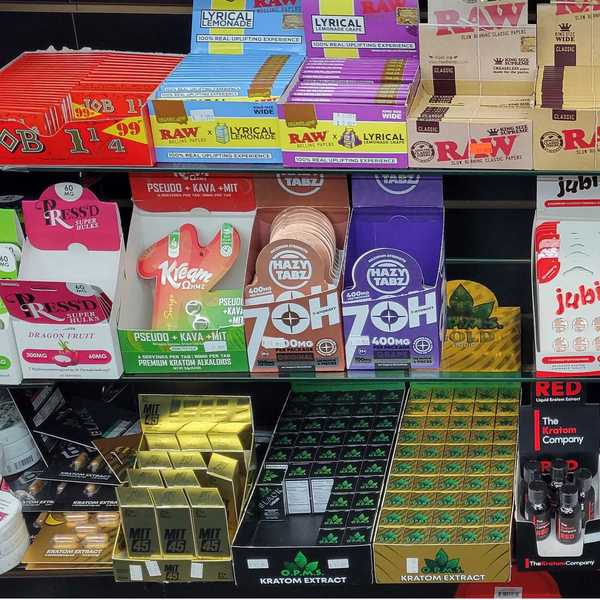
Empty shelves mark where kratom products were removed at Smoker’s Choice in North Canaan following Connecticut’s statewide ban on the substance.
NORTH CANAAN —With kratom now illegal in Connecticut, some Northwest Corner residents are already crossing state lines to get it.
The substance — a controversial herbal product with opioid-like effects — can cause dependence and withdrawal, prompting state officials to warn of serious health risks.
Just a few miles from towns like North Canaan, Sharon and Salisbury, smoke shops and convenience stores in neighboring New York and Massachusetts continue to sell the once-common substance, drawing interest from Connecticut customers in the days since the March 25 ban took effect.
State officials have made the message clear about kratom, used for its stimulant and pain-relieving effects, and for some, to relieve symptoms of withdrawal from opioids.
“It’s illegal. You can’t buy it, you can’t sell it or possess it because it’s dangerous, unregulated and unsafe,” said Connecticut Attorney General William Tong in a statement announcing the ruling.
Bryan T. Cafferelli, commissioner of the state Department of Consumer Protection, also issued a warning to licensees and business owners.
“As of March 25, it is illegal to have this substance on your shelf,” he said. “We look forward to working with our local and state partners as we target this.”
The ban is already reshaping behavior across the Northwest Corner — affecting local businesses, prompting cross-border sales and raising concerns among clinicians about withdrawal and a potential shift toward more dangerous substances.
Kratom products, commonly sold in gas stations, smoke shops, convenience stores and online as powders, capsules, gummies and concentrated liquid “shots,” have long existed in a regulatory gray area.
Connecticut’s recent classification now places the substance alongside heroin and LSD, effectively banning its state sale, transport and possession.
Impact on merchants’ bottom line
In North Canaan, the change is immediate and visible.
At Smoker’s Choice and nearby The Smoking Ape — two North Canaan smoke shops within a mile of each other— kratom products have been removed entirely.
A large portion of the wall behind the counter at Smoker’s Choice that once held kratom products is now bare.
During a March 31 visit, an employee declined to elaborate beyond confirming that all kratom is no longer being sold. “You can see the empty shelves,” he said.
At The Smoking Ape, which opened at 61 East Main St. in January, owner Omar Nasser said all kratom products have been pulled from the shelves. They have also been removed from hisstore in Torrington.
“We gave everything back to our vendors,” he said, noting that the loss was significant. “It was a big contributor to our sales,” he said.
Nasser said many shopssaw big losses with the ban.
“Some sellers lost a lot of money — threw it away or sold it at a discount,” he said. “It would be no surprise if others are taking it over the border into New York to sell it or are selling it under the table.”
In the days leading to the ban, he said, demand at his shops surged.
“I sold what I could,” he said, noting that some customers were buying in bulk as the deadline loomed.
Clinicians warn of a critical window for intervention
Clinicians say they are concerned about a largely unaddressed consequence: people going into sudden withdrawal without support.
New data from Mountainside Treatment Center, an addiction rehabilitation facility in North Canaan, shows kratom-related admissions have nearly tripled over the past year, pointing to a growing population of residents who may be physically dependent as access disappears overnight.
Clinicians say the days immediately following the ban are a critical intervention window — and warn that, without support, some individuals may seek more dangerous alternatives.
“With the ban taking effect, we are deeply concerned about what happens next for the people already using kratom daily,” said Jana Wu, director of clinical integration at Mountainside and a national expert on kratom dependence treatment.
Many individuals, Wu explained, don’t realize they’ve developed a physical dependence until they try to stop.
“Withdrawal symptoms can include anxiety, insomnia, nausea and intense cravings. When access disappears overnight, people may find themselves in crisis without knowing where to turn.”
Since the ban took effect, Nasser said customers have continued to come into his North Canaan and Torrington shops — some, he said, seeking relief from withdrawal.
“They’re looking for something,” to replace kratom, he said. In response, the store owner has been recommending various botanical extracts in pill form.
However, he doubts that it is meeting the needs of kratom consumers.
“I don’t think it does the same job as kratom. I don’t think it’s even close. Withdrawal from kratom is very serious, like heroin. It’s not a joke,” he said.
He also believes the ban is already shifting behavior.
Some customers, he said, are traveling across the border into neighboring Dutchess County, where kratom remains legal for those 21 and older.
Others, particularly at his Torrington location, he fears, may turn to stronger substances.
“I think people will be going, definitely, to hardcore drugs,” Nasser said.
At Shawn’s City Smoke in Torrington, owner Shawn Chowdhury said his family-run business removed kratom products immediately following the state’s Feb. 24 announcement, weeks before the ban took effect.
“We took it off the shelves right away,” he said of his inventory, which consisted only of all-natural kratom leaf powder. “We did not want to take any chances.”
Chowdhury said kratom made up only a small share of his business and that removing it will not significantly affect his bottom line.
He added that more concentrated forms of kratom are particularly concerning and expressed support for restricting them.
“They should take it out if it’s bad,” he said, referring to 7-hydroxymitragynine, or 7-OH, a concentrated compound derived from the kratom plant. 7-OH has a much higher potency.
Treatment providers watch for fallout
At Mountainside, clinicians say the effects of the ban are already being felt.
“We are definitely seeing more calls — not only from Connecticut but from other states,” said Wu, referring to the concentrated compound. “People are getting nervous.”
She said the anxiety reflects a broader national moment, pointing to a rise in overdose-related calls to the CDC pertaining to 7-OH and national poison control centers.
“Those numbers have spurred more political action, and in this election year, a lot of politicians are speaking up.”
The federal Food and Drug Administration (FDA) is among several agenciesworking to address concerns about the growing availability and use of 7-OH.
“Vape stores are popping up in every neighborhood in America, and many are selling addictive products like concentrated 7-OH,” said FDA Commissioner Marty Makary in a statement.
“7-OH is an opioid that can be more potent than morphine. We need regulation and public education to prevent another wave of the opioid epidemic.”
Connecticut, Wu noted, is the eighth state in the country to enact a full ban on kratom, which includes 7-OH. “We are being watched. All eyes are on Connecticut. It’s a bold move, and a divisive move.”
Wu said Mountainside clinicians have been counseling individuals experiencing cravings and withdrawal, including the use of medications such as naltrexone and injectable Vivitrol.
At the same time, she confirmed that cross-border purchasing is already part of the conversation. “People are definitely going into New York to buy kratom,” she said.
Wu noted that prior to the ban, the substance had been widely available throughout the Northwest Corner.
“It’s a very contentious topic,” Wu said. “Many people are very upset about the ban. There is a lot of grief and a lot of frustration, which is understandable.”
She noted that people who had been taking kratom for chronic pain and anxiety, or veterans suffering with post-traumatic stress disorder, are now left to find alternative relief.
“The fear is that people who are dependent will turn to other illicit drugs,” added Wu.
Crossing the line
Just across the state line in Millerton, N.Y., the shift is less visible.
Along Route 44 and into nearby Amenia, smoke shops continue to operate under New York’s regulatory framework, where kratom remains legal for adult purchase.
On Saturday, visits to several gas stations and smoke shops — including Cumberland Farms just over the border in Millerton and Smokes 4 Less in nearby Amenia — found clerks hesitant to discuss the volume of Connecticut customers.
At Smokes 4 Less, a worker would only say that he has seen an uptick in Connecticut customers in recent weeks, as did a Cumberland Farms employee.
While it is too early to quantify any sustained increase, the proximity of the Northwest Corner to the New York border — in some cases just minutes away — is already shaping consumer behavior.
The same holds true to the north, where Sheffield, Mass., just across the border from North Canaan, offers another option, since Massachusetts does not have a comparable statewide ban.
Currently, the state legislature in Massachusetts is weighing two different regulatory options – either a total ban or establishing a new set of safety measures. One plan would mirror Connecticut’s policy, while the other would institute kratom control rules, including lab testing for dangerous chemicals and not allowing anyone under 21 to purchase the substance, as is the case in New York.
Online questions — and legal risk
Another question is surfacing in smoke shops and treatment settings alike: Are Connecticut residents permitted to order kratom online?
While some residents have wondered whether online purchases could bypass the ban, Connecticut’s law applies to possession — not just retail sales. That means even if a product is shipped from out of state, having it in Connecticut could carry legal consequences.
At the same time, enforcement is not expected to center on tracking individual consumer shipments, but rather to mirror other controlled substances.
Still, shop owners say the guidance they give customers is straightforward.
“It doesn’t matter where it comes from,” Nasser said. “It’s illegal here now.”
On March 25, Connecticut officially classified kratom — derived from the tropical tree Mitragyna speciosa — as a Schedule I controlled substance, placing it in the same legal category as drugs with a high potential for abuse and no accepted medical use.
The change, approved on Feb. 24 by the state’s Legislative Regulation Review Committee, made it illegal in Connecticut to possess, sell, distribute, manufacture or transport kratom.The ban officially went into effect on March 25.
State officials directed retailers to remove all kratom products from shelves ahead of the effective date and to return or properly dispose of remaining inventory.
The ban applies to kratom in all forms, including powders, capsules, extracts and products containing 7-hydroxymitragynine (7-OH), a potent derivative.
Violations may carry criminal penalties under Connecticut’s controlled substance laws.
Across the border, laws differ. New York permits regulated adult sales of kratom, while Massachusetts does not have a comparable statewide ban, allowing the substance to be sold in many retail settings.
The differing policies create a patchwork across the region, particularly in border communities like those in the Northwest Corner.
For residents near the state line, access may now depend less on availability — and more on geography.
Where to get help
In an emergency: call 911.
Mountainside Treatment Center, North Canaan: (860) 824-1397
High Watch Recovery Center, Kent: (860) 775-4769
McCall Behavioral Health Network, Torrington: (860) 496-2100

Want more of our stories on Google? Click here to make us a Preferred Source.

Want more of our stories on Google? Click here to make us a Preferred Source.