Tick threats rising across state as biodiversity declines

Tick threats rising across state as biodiversity declines

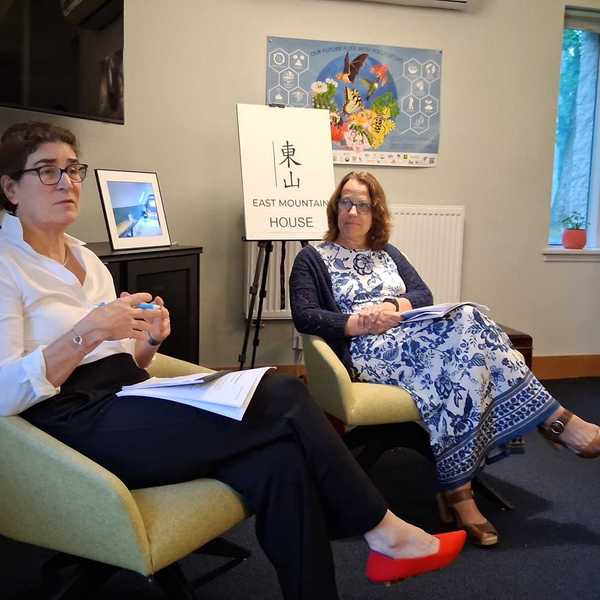
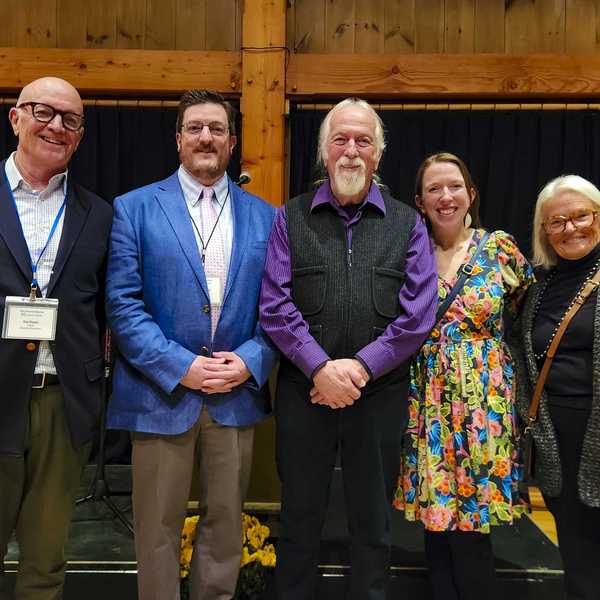
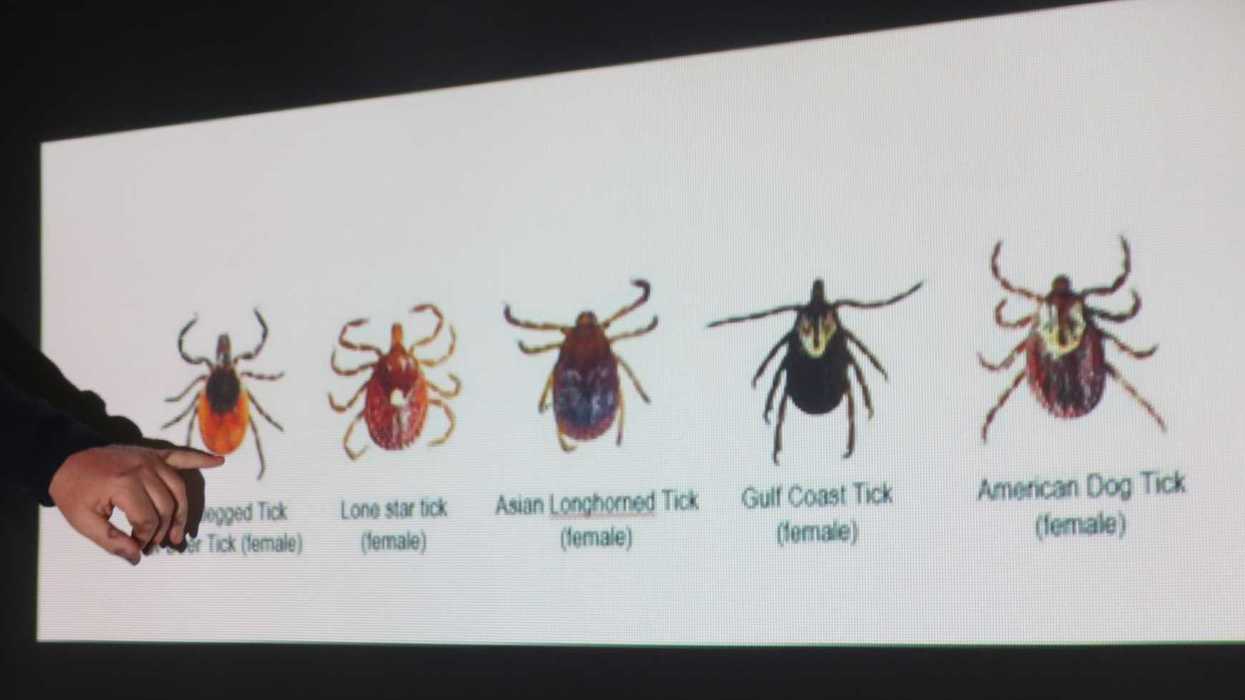
Dr. James Shepherd displays illustrations of various tick species during a talk at the Policy Potluck at Sharon Audubon on March 19..

Ruth Epstein
From 1999 to 2004, there were 31 cases of Lyme Disease reported in Ontario, but by 2022, there were 1,478.

SHARON – With the arrival of spring comes thoughts of flowers and gardens — and, unfortunately, ticks.

The disease-carrying arachnids were the focus of the latest Policy Potluck session hosted by Sharon Audubon on March 19.

The speaker was Dr. James Shepherd, an infectious disease physician at Yale School of Medicine and Yale New Haven Hospital, specializing in tuberculosis and other mycobacterial infections. He teaches climate change, biodiversity loss, and other global processes shaping infectious disease. Shepherd is also the owner of Smokedown Farm, which was once the largest hop grower in Connecticut, but is now transitioning to native and novel fruits.

Connecticut, said Shepherd, is one of the most tick-infested states. Ticks feed on the blood of mammals, birds, reptiles and amphibians and often transmit disease.

He named a variety of ticks, including the blacklegged, Lone Star, Asian longhorned, Gulf Coast and American dog ticks, noting they are transmitting a whole new set of diseases, besides the commonly known Lyme disease. “We’re seeing a wider biodiversity of pathogens,” he said.

Projecting maps on a screen, Shepherd displayed the types of ticks found in various sections of the United States, noting that incidences of Lyme disease are moving northward into Canada. In 2000, cases were largely concentrated in New England. From 1999 to 2004, there were 31 cases reported in Ontario, but by 2022, there were 1,478. The main reason is due to migratory birds, such as robins, along with mice and chipmunks.

Scientists believe the increase in Lyme disease is also linked to decreased biodiversity, driven in part by suburban expansion.

Researchers have linked the spread of tick-borne disease to declining biodiversity and habitat disruption across the Northeast. Shepherd spoke of the dilution effect, notably studied in Lyme disease, that concludes that high biodiversity reduces the transmission of pathogens to humans.

He presented a slide depicting the idea put forth by the Cary Institute of Ecosystem Studies in Millbrook, NY, that when many species exist in a community, vectors (like ticks) are more likely to bite hosts that are not good reservoirs for the disease, preventing the pathogen from spreading efficiently.

He said biodiversity is taking another hit from the rise of invasive species, which provide ideal habitats for ticks and their hosts. Japanese barberry is a prime example.

Climate change is also a major factor, as is habitat fragmentation, the process in which large, continuous natural habitats are divided into smaller patches, usually by such activities as road construction or urban development. This separation restricts wildlife movement, reduces population sizes, and disrupts ecosystems, acting as a major threat to biodiversity.

“We got problems,” Shepherd declared.

So what can people do? Shepherd asked. He then listed activities that often don’t work, such as excessive landscaping, deer fencing and spraying, which restricts biodiversity. He suggested having more respect for the environment by installing native plants, reducing habitat fragmentation, monitoring biodiversity and using personal protection.

Shepherd has worked in Nigeria, Botswana, India and Bangladesh, implementing national HIV and TB treatment programs and supporting COVID-19 treatment in refugee camps for both the U.S. government and the World Health Organization.

Latest News

To mow or not to mow?

To mow or not to mow?

A partially mowed meadow in early spring provides habitat for wildlife while helping to keep invasive plants in check.

Dee Salomon

Love it or hate it, there is no denying the several blankets of snow this winter were beautiful, especially as they visually muffled some of the damage they caused in the first place.There appears to be tree damage — some minor and some major — in many places, and now that we can move around, the pre-spring cleanup begins. Here, a heavy snow buildup on our sun porch roof crashed onto the shrubs below, snapping off branches and cleaving a boxwood in half, flattening it.

The other area that has been flattened by the snow is the meadow, now heading into its fourth year of post-lawn alterations. A short recap on its genesis: I simply stopped mowing a half-acre of lawn, planted some flowering plants, spread little bluestem seeds and, far less simply, obsessively pluck out invasive plants such as sheep sorrel and stilt grass. And while it’s not exactly enchanting, it is flourishing, so much so that I cannot bring myself to mow.

Keep ReadingShow less

Where the mat meets the market

Where the mat meets the market

Kathy Reisfeld

Elena Spellman

In a barn on Maple Avenue in Great Barrington, Kathy Reisfeld merges two unlikely worlds: wealth management and yoga, teaching clients and students alike how stability — financial and emotional — comes from practice.

Her life sits at an intersection many assume can’t exist: high finance and yoga. One world is often reduced to greed, the other to “woo-woo” stretching. Yet in conversation, she makes both feel grounded, less like opposites and more like two languages describing the same human need for stability.

Keep ReadingShow less
Capitol hosts first-ever staging of Civil War love story

Playwright Cinzi Lavin, left, poses with Kathleen Kelly, director of ‘A Goodnight Kiss.’

Jack Sheedy

Litchfield County playwright Cinzi Lavin’s “A Goodnight Kiss,” based on letters exchanged between a Civil War soldier and the woman who became his wife, premiered in 2025 to sold-out audiences in Goshen, where the couple once lived. Now the original cast, directed by Goshen resident Kathleen Kelly, will present the play beneath the gold dome of Connecticut’s Capitol in Hartford as part of the state’s America250 commemoration — marking what organizers believe may be the first such performance at the Capitol.

“I don’t believe any live performances of an actual play (at the Capitol) have happened,” said Elizabeth Conroy, administrative assistant at the Office of Legislative Management, who coordinates Capitol events.

Keep ReadingShow less
google preferred source

Want more of our stories on Google? Click here to make us a Preferred Source.

Hunt Library launches VideoWall for filmmakers

Yonah Sadeh, Falls Village filmmaker and curator of David M. Hunt Library’s new VideoWall.

Robin Roraback

The David M. Hunt Library in Falls Village, known for promoting local artists with its ArtWall, is debuting a new feature showcasing filmmakers. The VideoWall will premiere Saturday, March 28, at 6 p.m. with a screening of two short films by Brooklyn-based documentary filmmaker and animator Imogen Pranger.

The VideoWall is the idea of Falls Village filmmaker Yonah Sadeh, who also serves as curator. “I would love the VideoWall to become a place that showcases the work of local filmmakers, and I hope that other creatives in the area will submit their work to be shown,” he said.

Keep ReadingShow less

A bowl full of stars

A bowl full of stars

A bowl full of stones.

Cheryl Heller

There’s a bowl in my studio where pieces of the planet reside. I bring them home from travels, picking them up not for their beauty or distinction but for their provenance. I choose the ones that speak to me — the ones next to pyramids, along hiking trails, on city sidewalks or volcanic slopes.

I like how stones feel in my hand: weighty, grounding. I don’t mind them making my pockets and suitcase heavier. The bowl is about the size of an average carry-on. It has been years since it was light enough for me to lift.

Keep ReadingShow less
One-woman show brings Mumbet’s fight for freedom to Scoville Library

On March 29, writer, producer and director Tammy Denease will embody the life and story of Elizabeth Freeman, widely known as Mumbet, in two performances at the Scoville Library in Salisbury. Presented by Scoville Library and the Salisbury Association Historical Society, the performance is part of Salisbury READS, a community-wide engagement with literature and civic dialogue.

Mumbet was the first enslaved woman in Massachusetts to sue successfully for her freedom in 1781. Her victory helped lay the legal groundwork for the abolition of slavery in the state just two years later. In bringing Mumbet’s story to life, Denease does more than reenact history.

Keep ReadingShow less
google preferred source

Want more of our stories on Google? Click here to make us a Preferred Source.

google preferred source

Want more of our stories on Google? Click here to make us a Preferred Source.